No products in the cart.
How to Mechanically Eliminate Backlash in CNC Rack and Pinion Systems
Contents
- Introduction and Technical Analysis
- Definition and Effects of Backlash in Rack and Pinion Systems
- Mechanical Backlash Elimination Methods and Operating Principles
- 1. Dual Pinion (Split Pinion) Systems
- 2. Adjustable Eccentric Bushings or Pinion Housings
- 3. Preloaded Rack and Pinion Systems (General Approach)
- System Selection and Engineering Approach
- Field Considerations
- Common Problems and Solutions
- Expert Advice
- FAQ
CNC Rack and Pinion Backlash Mechanical Elimination: Field Guide and Technical Article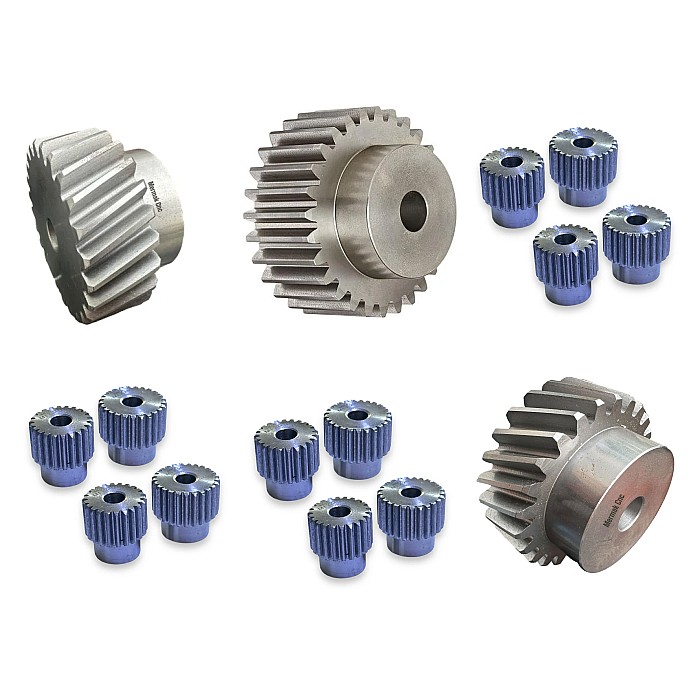
body { font-family: Arial, sans-serif; line-height: 1.6; color: #333; margin: 20px; }
h1, h2, h3, h4, h5 { color: #2c3e50; margin-top: 25px; margin-bottom: 15px; }
p { margin-bottom: 15px; text-align: justify; }
strong { font-weight: bold; }
ul { list-style-type: disc; margin-left: 20px; margin-bottom: 15px; }
li { margin-bottom: 8px; text-align: justify; }
table { width: 100%; border-collapse: collapse; margin: 20px 0; }
th, td { border: 1px solid #ddd; padding: 10px; text-align: left; }
th { background-color: #f2f2f2; }
thead { background-color: #f8f9fa; }
Introduction and Technical Analysis
CNC (Computer Numerical Control) machines, an indispensable part of industrial automation, offer precision, speed, and repeatability in manufacturing processes. One of the fundamental motion transmission systems in these machines, rack and pinion gear systems, stands out for providing high rigidity and dynamic performance, especially in long-axis movements. However, mechanical backlash that can arise in these systems over time or by design is a critical factor negatively affecting machine performance. This backlash refers to the dead zone where the pinion gear can move freely between the rack teeth but does not transmit any torque. Considering that CNC applications expect precision at the thousandths of a millimeter (micron) level, even the smallest amount of backlash can have devastating effects on final product quality, tool life, machine dynamics, and even safety. This article provides an in-depth guide for industrial automation experts and field technicians on how to detect mechanical backlash in CNC rack and pinion systems, its causes, and most importantly, how to effectively eliminate it using various engineering methods. Our goal is to provide practical and technical information to maximize machine precision, thereby increasing production efficiency and quality.
Definition and Effects of Backlash in Rack and Pinion Systems
Mechanical backlash is the angular or linear distance traveled by the driven gear before it begins to move, at the moment the driving gear changes direction in a gear pair. In rack and pinion systems, this manifests as a “dead zone” where the pinion gear can move back and forth between the rack teeth without any force being transmitted. This backlash can arise for various reasons: manufacturing tolerances of the gears, assembly errors, lack of overall system rigidity, wear over time, and thermal expansion. The effects of this backlash in CNC machines are quite serious. Firstly, it directly reduces positioning accuracy. Especially when the axis changes direction, an error margin equal to the backlash occurs, which can cause the machined part to fall outside dimensional tolerances. Secondly, backlash can lead to vibration and resonance in the system. This shortens tool life, reduces surface quality, and causes premature wear in machine components, especially during high-speed cutting or machining operations. Additionally, shock loads caused by backlash create extra stress on servo motor and drive systems, which can reduce the performance of the control system and increase energy consumption. Rack and pinion systems are generally produced with straight (spur) or helical gear types. Helical gears offer more tooth contact surface than spur gears, providing smoother operation and higher torque capacity, but they generate axial thrust forces and are often used with backlash elimination mechanisms. Spur gears, while simpler and more economical, can be more sensitive to backlash.
Mechanical Backlash Elimination Methods and Operating Principles
The primary goal of eliminating mechanical backlash in CNC rack and pinion systems is to ensure continuous contact and preload between the gear pairs. This guarantees that the pinion teeth are always in tight contact with the rack teeth, eliminating all negative effects caused by backlash. The most common and effective mechanical backlash elimination methods in industrial automation applications are:
1. Dual Pinion (Split Pinion) Systems
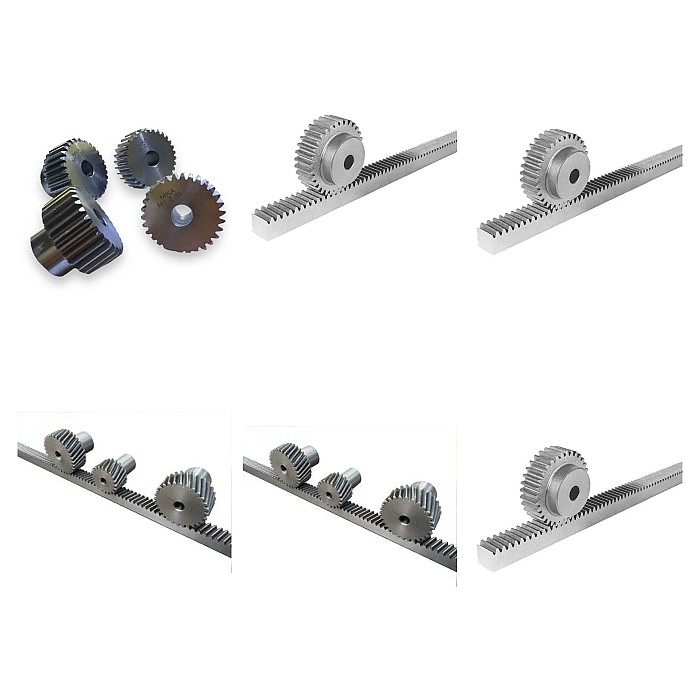
Dual pinion systems are one of the most frequently used and effective backlash elimination methods in high-precision CNC applications. In this system, two pinion gears are mounted on the drive shaft. These pinions are positioned slightly angularly relative to each other, and preload is applied between them using a spring mechanism (usually helical or disc springs). These springs rotate the two pinions in opposite directions, ensuring that the teeth of one pinion continuously press against one side of the rack, and the teeth of the other pinion press against the other side of the rack. This eliminates all backlash between the pinion and rack teeth, ensuring continuous tooth contact. The main advantages of this method are its very high precision, high rigidity, and dynamic performance. Its disadvantages include the system being more complex, costly, and potentially subject to more wear, as continuous preload creates additional friction. However, with proper material selection, lubrication, and periodic maintenance, these disadvantages can be minimized. Correct adjustment of the preload force between the pinions during assembly is critical; excessive preload increases friction and wear, while insufficient preload leads to incomplete backlash elimination.
2. Adjustable Eccentric Bushings or Pinion Housings
This method offers a simpler and more cost-effective backlash elimination solution. The pinion gear is mounted in an eccentric bushing or housing. When this eccentric bushing is rotated, the center of rotation of the pinion shifts, and the center distance between the pinion and the rack can be adjusted. In this way, the pinion is pushed towards the rack, eliminating the backlash between the teeth. After adjustment, the eccentric bushing is locked in place with fastening bolts. The advantages of this method are its relatively easy assembly and adjustment, fewer parts, and thus lower cost. However, it generally offers lower rigidity compared to dual pinion systems and may require readjustment in case of wear. Furthermore, eccentric adjustment may not be as successful as dual pinion systems in ensuring even load distribution across all teeth. It is generally preferred for medium-precision and lower-load applications.
3. Preloaded Rack and Pinion Systems (General Approach)
In some systems, continuous pressing of the pinion towards the rack is achieved by using specially designed rack or pinion profiles or by an external mechanical force. For example, springs placed behind the rack or pneumatic cylinders can be used to push the pinion towards the rack. This general approach varies according to specific applications and usually requires custom design. The basic principle is to always maintain a positive contact force between the teeth. While these systems offer flexibility, the correct and consistent application of force is critically important.
System Selection and Engineering Approach
The selection of the mechanical backlash elimination method must be carefully made according to the application’s requirements. Precision is the most important factor; dual pinion systems are indispensable for applications requiring sub-micron precision. Load capacity and rigidity must also be considered; machines operating under heavy machining or high dynamic loads require more robust and rigid backlash elimination solutions. Speed affects the dynamic behavior of the system; more advanced backlash elimination mechanisms should be preferred in high-speed systems to reduce the risk of vibration and resonance. Cost and ease of maintenance also influence practical decisions. Applications such as laser cutting, plasma cutting, and 3D printing generally achieve sufficient precision with eccentric bushing systems, while applications like mold making, precision milling, and grinding require dual pinion systems. In the engineering approach, all components of the system (servo motor, gearbox, couplings, linear guides) should be evaluated as a whole, and the compatibility of the backlash elimination mechanism with this whole must be ensured. Calculations should be made considering the expected maximum loads, speeds, and accelerations, and preload forces should be determined at optimum levels. Excessive preload increases friction and energy consumption, while insufficient preload leads to incomplete backlash elimination.
| Parameter | Value/Description |
|---|---|
| Backlash Elimination Method | Dual Pinion System (Highest Precision) / Adjustable Eccentric Bushing (Medium Precision) |
| Target Backlash Value | 0 – 5 micrometers (μm) (Varies by application and system, ideally zero) |
| Preload Force | Calculated based on pinion diameter and module, generally should be checked against manufacturer datasheet value. |
| Gear Module (Module) | 0.5 – 10 mm (Selected according to application load and precision) |
| Gear Type | Helical (Smoother operation, axial load) / Spur (Simpler, no axial load) |
| Precision Class (DIN/ISO) | Q5 – Q10 (Q5 is highest precision, should be checked against manufacturer datasheet value.) |
| Lubrication Type | Special gear grease or lubricant (Should be selected according to manufacturer’s recommendation.) |
Field Considerations
- Correct Assembly and Alignment: The absolute flatness of the surface on which the rack is mounted and the parallel and perpendicular positioning of the pinion and rack are critically important. Even the slightest misalignment can lead to stresses, premature wear, and incomplete backlash elimination. Special alignment jigs should be used to ensure perfect transitions between rack segments.
- Preload Adjustment and Verification: Correct adjustment of the preload force is vital, especially in dual pinion systems or eccentric bushing systems. Manufacturer-specified torque or force values must be strictly adhered to. Excessive preload increases friction, energy loss, heating, and accelerated wear, while insufficient preload leads to incomplete backlash elimination. Verification with a dynamometer or a special torque wrench after adjustment is recommended.
- Effective Lubrication: Proper and regular lubrication is indispensable for the life and performance of gear systems. Lubricant of the type (grease or oil) and quantity recommended by the manufacturer should be used. Lubrication reduces friction between gear surfaces, prevents wear, and controls heating. Automatic lubrication systems ensure consistent lubrication, especially in continuously operating machines, reducing maintenance burden.
- Periodic Inspections and Wear Monitoring: Signs of wear on the gears and backlash elimination mechanisms in the system should be checked at regular intervals. Abnormalities such as pitting, cracks, or metallic sheen on tooth surfaces may indicate the onset of wear. The backlash value should be periodically checked with precision measuring instruments such as a dial indicator or laser interferometer. If necessary, preload should be readjusted or worn parts replaced.
- Environmental Factor Management: Dust, dirt, moisture, and temperature changes in the operating environment directly affect the performance of gear systems. Protective bellows, sealing elements, and specially coated gears should be used for aggressive environments. High temperature fluctuations can cause materials to expand and contract, affecting the backlash value; in such cases, thermal stabilizing systems or materials with a wider operating temperature range should be preferred.
Common Problems and Solutions
Some common problems encountered in the field related to backlash elimination in CNC rack and pinion systems and suggested solutions:
- Sudden Increase in Backlash or Reversal Backlash: This usually results from excessively worn gears, loosened mounting bolts, or weakened springs in dual pinion systems. The solution is to first check the tightness of all mounting bolts according to their torque values. If there is visible wear on the gears, the relevant rack or pinion may need to be replaced. In spring-mechanism systems, spring tension should be checked and replaced if necessary.
- High Friction and Overheating: Excessive preload, insufficient or incorrect lubrication, or misalignment are the main causes of this problem. As a solution, the preload adjustment should be reduced to the values recommended by the manufacturer. The lubrication system should be checked, ensuring that the correct type and sufficient amount of lubricant are used. If the problem persists, the system’s alignment should be rechecked and corrected if necessary.
- Noisy Operation or Vibration: Misalignment, wear on gears, insufficient preload, or operation near the system’s resonance frequencies can lead to this situation. First, alignment and preload settings should be checked. If gears are worn, they should be replaced. If noise persists even after mechanical issues are resolved, servo drive parameters (gain settings) should be checked, and the system’s dynamic response should be analyzed to identify resonance points, and an operating strategy should be determined to avoid these frequencies.
- Positioning Errors Persist (Despite Backlash Elimination): If positioning errors persist even though mechanical backlash has been effectively eliminated, the problem is usually elsewhere. This could be due to faulty or contaminated feedback elements such as encoders or resolvers, problems with the servo motor itself, backlash in the gearbox, friction or binding in the linear guides, or even errors in the CNC control unit’s parameter settings. In this case, all motion axes of the system should be checked individually, feedback systems tested, and servo drive tuning settings reviewed.
Expert Advice
Effectively eliminating mechanical backlash in CNC rack and pinion systems is one of the cornerstones of modern industrial automation. In manufacturing environments requiring precision, speed, and repeatability, a backlash-free motion transmission system directly impacts product quality, tool life, and machine efficiency. Mechanical solutions such as dual pinion systems and eccentric bushing adjustment mechanisms, discussed in this detailed field guide, can fundamentally solve the backlash problem with engineering principles and careful application. However, it should not be forgotten that even the best design cannot deliver expected performance under incorrect assembly, insufficient maintenance, or unsuitable operating conditions. Our field experience shows that backlash elimination is not a one-time adjustment but a continuous monitoring and maintenance process. Machine operators and maintenance teams must thoroughly understand the operating principles of gear systems, the potential effects of backlash, and preventive maintenance steps. Regular inspections, proper lubrication regimes, periodic preload checks, and wear monitoring will ensure the system’s long-term and precise operation. Furthermore, during the troubleshooting phase, it is critically important to evaluate electrical and control systems with a holistic approach, in addition to mechanical components. To maximize efficiency from CNC machines and achieve competitive production goals, embracing the advantages provided by backlash-free motion and continuously increasing knowledge in this area should be a priority for every expert in the industrial automation sector. The production of high-quality parts and the optimization of production processes are only possible with attention to such details. Remember, precision is not a choice, but a necessity.
FAQ
What is mechanical backlash in CNC rack and pinion systems?
Backlash in CNC rack and pinion systems refers to the small amount of free play or lost motion between the teeth of the pinion and the rack. This dead zone occurs when the driving pinion changes direction, causing a delay before the driven rack begins to move. It can lead to inaccuracies in positioning, vibrations, and reduced overall machine performance.
What causes backlash in CNC rack and pinion systems?
Mechanical backlash can be caused by several factors, including manufacturing tolerances of the gears, improper assembly, lack of rigidity in the system, wear and tear over time, and thermal expansion of components. These factors contribute to the gap between the gear teeth, allowing for unwanted movement.
What are the primary mechanical methods for eliminating backlash?
The most effective mechanical methods for eliminating backlash include dual pinion (split pinion) systems, which use two preloaded pinions to maintain continuous contact with the rack, and adjustable eccentric bushings or pinion housings, which allow for fine-tuning the mesh between the pinion and rack. Preloaded rack and pinion systems, which use external forces or special profiles, are also used.
What are the benefits of eliminating backlash in CNC machines?
Eliminating backlash significantly improves positioning accuracy, reduces vibration and noise, extends tool life, enhances surface finish quality, and increases the overall lifespan and efficiency of the CNC machine. It ensures consistent and repeatable motion, which is crucial for high-precision manufacturing.
What factors should be considered when choosing a backlash elimination method?
Key considerations include the required precision level (sub-micron applications often need dual pinion systems), load capacity and rigidity, operating speed, and budget. Proper installation, precise alignment, correct preload adjustment, and consistent lubrication are vital for the long-term effectiveness of any backlash elimination method.