




































































Inductive Sensor vs. Mechanical Switch in CNC Machines: A Comprehensive Field Guide
📑 Table of contents (Click to open)
Introduction and Technical Analysis
The heart of industrial automation, CNC (Computer Numerical Control) machines, are an indispensable part of modern manufacturing processes. The precision, speed, and repeatability of these machines are critical for production quality and efficiency. For CNC machines to operate accurately and safely, various sensors and switches are required. These components perform vital functions such as detecting the position of the machine’s moving axes, verifying the presence of a tool or workpiece, defining safety limits, and stopping the system in emergencies. In this context, inductive sensors and mechanical limit switches are among the most commonly used detection elements. However, determining which application requires which detection technology is a significant decision that demands engineering and field experience. This article aims to provide a comprehensive guide for industrial automation specialists and field engineers by in-depth examining the operating principles, advantages, disadvantages, and specific application areas of both technologies in a CNC environment. The correct sensor selection directly impacts not only cost-effectiveness but also system reliability, ease of maintenance, and overall performance.
Operating Principles and Technical Data
Inductive Sensors: Non-Contact Detection Technology
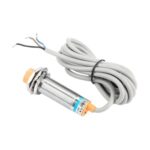
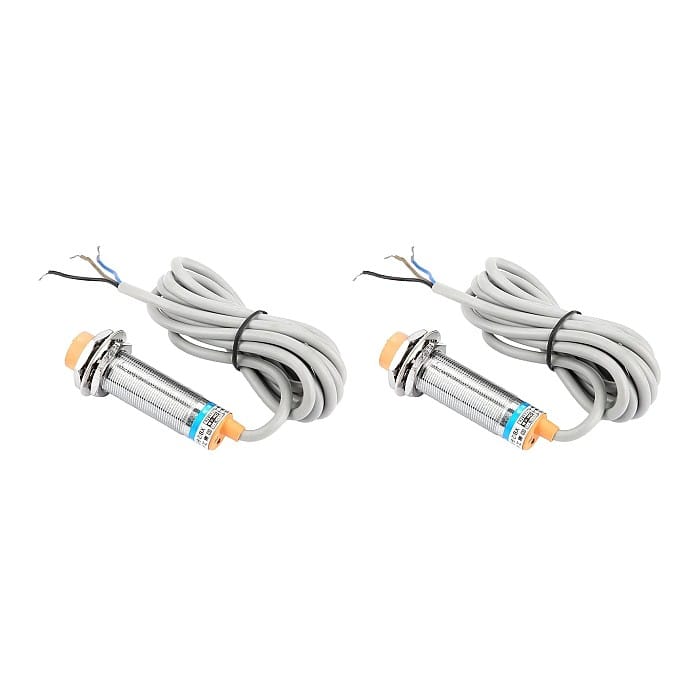
Inductive sensors utilize the principle of electromagnetic fields to detect the presence of metal objects without physical contact. Inside the sensor, there is a coil and an oscillator. The oscillator generates a high-frequency electromagnetic field around the coil. When a metal object enters the sensor’s detection field, Eddy currents are induced within this magnetic field. Eddy currents reduce the inductance of the sensor’s coil and, consequently, the amplitude of the oscillator’s oscillation. This change in amplitude is detected by an evaluation circuit, which generates a switching signal (open or closed) at the sensor’s output. This non-contact operating principle ensures that there is no mechanical wear and tear, significantly extending the sensor’s lifespan and making it ideal for high-speed applications. Inductive sensors are typically manufactured in cylindrical or rectangular forms and are available in standard metric sizes such as M8, M12, M18, M30, or smaller miniature versions. Detection distances, depending on the sensor’s diameter and coil design, can range from a few millimeters to several centimeters. In CNC machines, they are used in numerous critical applications such as detecting tool changer positions, verifying correct workpiece placement, as axis limit switches (often for coarse positioning), and detecting the status of hydraulic clamps. Their resistance to environmental conditions, especially in CNC environments with high concentrations of oil, dust, and chips, offers a significant advantage. However, their limitation to detecting only metal objects and their restricted detection range can be a constraint in some applications.
Mechanical Switches: Physical Contact and Robustness
Mechanical switches are electromechanical devices that operate through physical contact via an actuator (lever, roller, plunger, etc.). When the actuator comes into contact with an object, it moves and opens or closes the electrical contacts inside the switch. These contacts typically have Normally Open (NO) and Normally Closed (NC) configurations. The physical contact allows mechanical switches to detect any material (metal, plastic, wood, etc.). Mechanical limit switches, generally having a robust construction, can withstand high switching currents and are usually less expensive than inductive sensors. In CNC machines, they are used as door safety switches, emergency stop buttons, manual adjustment position indicators, and in some cases, as axis limit switches. They may be preferred in heavy-duty industrial applications or where there is a high risk of impact. However, due to physical contact, wear and tear on the actuator and internal contacts occur over time, resulting in a shorter lifespan compared to inductive sensors. Contact bounce, a phenomenon where the switch generates multiple open/close signals during switching, can also occur in high-precision applications, requiring additional filtering or software solutions. Furthermore, the ingress of dust, dirt, and moisture into the contacts can lead to malfunctions.
| Parameter | Inductive Sensor | Mechanical Switch |
|---|---|---|
| Detection Principle | Non-contact, electromagnetic field (Eddy currents) | Physical contact and mechanical movement |
| Detectable Material | Metal only (ferromagnetic or non-ferromagnetic) | All materials (metal, plastic, wood, etc.) |
| Contact Type | Non-contact | Requires physical contact |
| Average Lifespan | Very high (millions of switching cycles, non-contact) | Medium (hundreds of thousands to millions of switching cycles, mechanical wear) |
| Response Time | Very fast (typically <1 ms) | Slower (typically >5 ms, potential contact bounce) |
| Environmental Resistance | High resistance to dust, dirt, moisture, oil, coolants | Susceptible to dust and dirt ingress, moisture, vibration (depends on protection class) |
| Accuracy/Repeatability | Very high (micron level) | Lower (dependent on mechanical tolerances, millimeter level) |
| Cost (General) | Medium to high | Low to medium |
| Installation Complexity | Medium (detection distance and alignment are critical) | Low (actuator contact point adjustment) |
| Typical Application Area | Axis reference point, tool magazine, workpiece detection, hydraulic clamp status | Emergency stop, door safety interlock, manual positioning, legacy limit systems |
Field Considerations
- Accurate Analysis of Application Requirements: First and foremost, the critical requirements of the application must be clearly defined. Detection speed, accuracy, repeatability, the type of material to be detected, environmental conditions (temperature, humidity, vibration, chemicals, chips), and cost constraints are decisive factors in sensor selection. For high-speed and precise positioning, inductive sensors are preferred, while mechanical switches may be considered for applications where safety and robustness are paramount, and precision is secondary.
- Mounting and Physical Protection: For inductive sensors, the correct detection distance and a mounting area free from metal are critical. Incorrect mounting can lead to the sensor continuously detecting the target or not detecting it at all. Protection from magnetic fields and high-frequency interference is also important. For mechanical switches, correct actuator positioning, avoiding excessive force, and protection against physical impacts are necessary. For both sensor types, proper sealing against dust, chips, and coolant is essential to ensure longevity and reliable operation.
- Integration with Control Systems: Both sensor types need to be correctly integrated with the CNC machine’s control system (PLC or motion controller). Inductive sensors typically output a digital signal (PNP or NPN) that is directly compatible with most control inputs. Mechanical switches, depending on their configuration, can also provide digital signals. Ensuring correct wiring, voltage levels, and signal logic (positive or negative logic) is crucial for proper system function.
- Maintenance and Replacement Strategy: While inductive sensors offer a longer lifespan due to their non-contact nature, they are not indestructible. Regular checks for damage or contamination are still recommended. Mechanical switches, due to their wear components, will eventually require replacement. Establishing a proactive maintenance schedule, including periodic testing and replacement of mechanical switches, can prevent unexpected downtime. Keeping spare parts readily available for both types of sensors is a good practice for minimizing production interruptions.
Conclusion
The choice between inductive sensors and mechanical switches in CNC machines is not a matter of one being universally superior to the other, but rather selecting the most appropriate technology for a specific task. Inductive sensors excel in applications demanding high speed, precision, and long life in environments where only metal targets are involved. Their non-contact operation minimizes wear and tear and offers excellent resistance to harsh industrial conditions. Mechanical switches, on the other hand, provide a cost-effective solution for detecting any material type and are often chosen for safety-critical functions like emergency stops or door interlocks, where their robust physical actuation is advantageous. However, their susceptibility to wear, environmental factors, and potential for contact bounce must be carefully considered. By thoroughly analyzing application requirements, understanding the technical characteristics of each sensor type, and implementing proper installation and maintenance practices, manufacturers can optimize the performance, reliability, and safety of their CNC machinery. Making the right choice ensures that your CNC router machine and other automated equipment operate at peak efficiency, contributing to higher productivity and reduced operational costs.
For expert advice on selecting the right sensors and switches for your specific CNC applications, or to explore our range of industrial CNC router machines equipped with state-of-the-art motion control systems, contact us today. Get a personalized quote and consultation via WhatsApp!