







































































What is a Spindle Motor and What Does it Do in CNC Machines?
📑 Table of contents (Click to open)
- Introduction and Technical Analysis: What is a Spindle Motor and What Does it Do in CNC Machines?
- Working Principle and Technical Data: What is a Spindle Motor and What Does it Do in CNC Machines?
- Field Considerations: What is a Spindle Motor and What Does it Do in CNC Machines?
- Common Problems and Solutions: What is a Spindle Motor and What Does it Do in CNC Machines?
- Conclusion and Expert Advice: What is a Spindle Motor and What Does it Do in CNC Machines?
- FAQ
Introduction and Technical Analysis: What is a Spindle Motor and What Does it Do in CNC Machines?
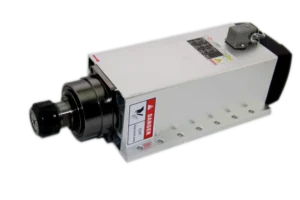
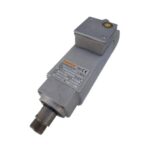
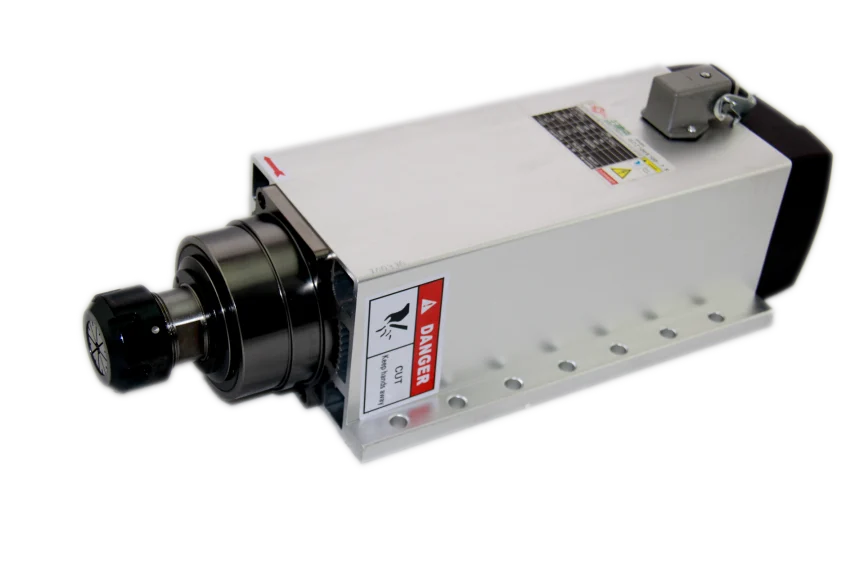
Computer Numerical Control (CNC) machines form the backbone of the industrial automation and manufacturing sector, making them indispensable components of modern production. At the heart of these machines, directly influencing the performance of machining processes, is one of the most critical components: the Spindle Motor. In short, a spindle motor is an electromechanical drive unit that enables the cutting tool or workpiece to rotate at high speeds and specific torque. In every type of chip-removal machining operation we perform on CNC machines – milling, turning, drilling, grinding, engraving – the action of removing material from the workpiece is directly achieved by the rotational motion provided by the spindle motor. Therefore, the performance of the spindle motor has a decisive impact on a CNC machine’s machining speed, precision, surface quality, and ultimately, the quality of the manufactured product. This field guide and technical article will delve into the detailed structure, operating principles, technical specifications, field considerations, and potential issues of spindle motors for industrial automation professionals. Our goal is to illuminate this critical component from all angles, contributing to the development of correct selection, effective use, and optimal maintenance strategies. Spindle motors are far more than simple rotational units; they are complex engineering marvels incorporating high technology, and they are one of the keys to gaining a competitive advantage in modern manufacturing.
Working Principle and Technical Data: What is a Spindle Motor and What Does it Do in CNC Machines?
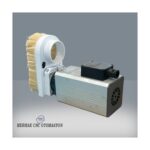
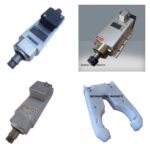
A spindle motor is the motor unit in CNC machines that provides rotation for the cutting tool (milling cutter, drill bit, turning tool, etc.) or, in some cases, the workpiece. This rotational motion provides the necessary energy and speed for the tool to contact the workpiece, remove chips, or shape it. Spindle motors are typically designed to operate at high speeds (RPM – Revolutions Per Minute) and specific torque. The operating principle is fundamentally based on that of an electric motor; it converts electrical energy into mechanical rotational energy through magnetic fields. However, due to the specific requirements in CNC applications (high speed, precision, dynamic torque, vibration-free operation), they differ significantly from standard electric motors.
Spindle motors are generally divided into two main categories: AC Asynchronous Motors and AC Synchronous (Servo) Motors. Both types have their unique advantages and application areas:
- AC Asynchronous Spindle Motors: These are generally more cost-effective and available in a wide range of power and speed. They are controlled by a Variable Frequency Drive (VFD). The VFD adjusts the motor’s speed by changing the supply frequency and voltage. These motors typically have a higher moment of inertia, and their acceleration and deceleration times are slightly longer compared to synchronous motors. However, they are widely used and sufficient for general-purpose milling, drilling, and turning applications. Their ease of maintenance and robust construction are reasons for their preference.
- AC Synchronous (Servo) Spindle Motors: These motors generally offer higher performance, faster dynamic response, and more precise speed and position control. They are equipped with an integrated encoder or resolver, which are feedback devices that report the exact position and speed of the motor’s rotor to the drive. This allows the drive (servo drive) to achieve the desired speed and position much more precisely and quickly. They are preferred in applications requiring high dynamics, precise machining (mold making, 5-axis machining), and where synchronized movements are critical. They typically have higher power density and lower moment of inertia.
The technical data and performance of spindle motors are evaluated based on several critical parameters:
- Power (kW): The maximum mechanical power the motor can produce. It is directly related to the hardness of the material to be machined and the depth of cut. High-power motors can machine harder materials with deeper cuts.
- Speed (RPM): The maximum number of rotations per minute of the motor. The type of cutting tool, the type of material to be machined, and the expected surface quality play a critical role in determining the optimal speed. High speeds are important for fine machining with smaller diameter tools and for surface quality.
- Torque (Nm): The rotational force of the motor. High torque capacity is required especially when making heavy cuts at low speeds or machining hard materials. There is a direct relationship between torque and power (Power = Torque x Angular Speed).
- Cooling Type: Spindle motors operating at high speeds and power generate a significant amount of heat. Effective dissipation of this heat is vital for the motor’s lifespan and performance.
- Air-Cooled: Generally used in smaller and medium-power spindle motors. It dissipates heat from the motor’s surface via a fan. It is simpler and more cost-effective but may be insufficient for high-power applications.
- Liquid-Cooled: Preferred for high-power and high-speed spindle motors. A cooling fluid (usually water or special cooling fluids) circulates inside the motor, dissipating heat through a radiator and pump system. It provides more effective cooling, allowing the motor to operate at high performance for longer periods, and is generally quieter.
- Bearing Type and Structure: The precision and lifespan of spindle motors largely depend on the bearings used. Specially designed angular contact ball bearings are used to operate at high speeds and under radial/axial loads. These bearings are preloaded for high precision, rigidity, and low friction. Ceramic ball bearings are lighter, harder, have less friction, and are more resistant to high speeds compared to steel bearings, making them generally preferred in high-performance spindle motors.
- Tool Holder Interface: The part of the spindle that holds the cutting tool. Different standards such as ISO, BT, and HSK exist. HSK (Hollow Shank Taper) taper is increasingly preferred in modern CNC machines due to its better rigidity and precision at high speeds.
The functions of a spindle motor are not limited to providing rotational motion. Through integrated sensors (temperature, vibration, encoder), it is continuously monitored and works in conjunction with the CNC control unit to dynamically adjust speed, torque, and position to ensure optimal performance at every moment of the machining process. This integration plays a critical role in machining complex geometries, improving surface quality, and extending tool life. The correct spindle motor must be selected according to the machine’s application area, the type of material to be machined, and the desired machining quality. Incorrect selection can both reduce machine performance and increase operating costs.
| Parameter | Value/Description |
|---|---|
| Motor Type | AC Asynchronous (Induction) or AC Synchronous (Servo) |
| Power Range | From 0.5 kW up to 100 kW and above (Varies by application) |
| Maximum Speed (RPM) | From 6,000 RPM up to 80,000 RPM (Even higher in high-speed spindles) |
| Torque Range | From 1 Nm up to 500 Nm and above (High torque is important at low speeds) |
| Cooling Type | Air-Cooled (Fan) or Liquid-Cooled (Water/Oil) |
| Bearing Type | Angular Contact Ball Bearings (Steel or Ceramic Balls) |
| Control Method | VFD (Variable Frequency Drive) or Servo Drive |
| Tool Holder Interface | ISO, BT, CAT, HSK (Varies by application and machine type) |
Field Considerations: What is a Spindle Motor and What Does it Do in CNC Machines?
- Correct Installation and Alignment: Proper alignment during the installation of the spindle motor to the machine is critically important. Incorrect alignment leads to vibration, premature bearing wear, reduced machining precision, and shortened tool life. The flatness of mounting surfaces, tightening of fasteners to appropriate torque values, and correct use of vibration-damping elements, if any, are essential. This becomes even more vital in direct-drive spindles.
- Effective Cooling System Management: Overheating of spindle motors is one of the most common issues leading to performance degradation and permanent damage. In liquid-cooled systems, the quality, flow rate, temperature, and cleanliness of the cooling fluid must be regularly checked. Cooling fluid filters should not be clogged, radiator fins must be kept clean, and pump performance should be monitored. In air-cooled systems, ensure that fans are operating correctly and that air intake/outlet channels are not blocked by dust or chips. Periodic replacement of cooling fluid and correct proportioning of antifreeze/corrosion inhibitors are important.
- Bearing Maintenance and Lubrication: Bearings, the heart of the spindle motor, require special care as they operate at high speeds and under loads. Some spindle motors have sealed, lifetime-lubricated (greased) bearings, while others have an external lubrication system (oil-air, oil mist). In external lubrication systems, the oil level, pressure, and quality must be regularly checked, and lubrication intervals must be strictly adhered to. Any blockage or malfunction in the lubrication system can cause rapid bearing damage. Vibration analysis is an effective way to monitor bearing health.
- Dynamic Balancing and Vibration Control: Imbalance in high-speed spindle motors leads to severe vibrations. These vibrations degrade machining quality (surface ripples), shorten tool life, and damage motor bearings. It is critically important that tools and tool holders are dynamically balanced. Additionally, the internal balance of the spindle motor itself should be checked periodically. Continuous monitoring via vibration sensors provides valuable information for early diagnosis of potential problems.
- Electrical Connections and Drive Settings: The spindle motor’s power supply, signal cables, and ground connections must be made correctly and securely. Ensure that cable insulation is undamaged, connectors are tightly fitted, and proper shielding is in place to prevent electromagnetic interference (EMI). The parameters of the spindle drive (VFD or servo drive) must be set correctly according to the motor’s technical specifications and application requirements. Incorrect settings (e.g., acceleration/deceleration ramps, torque limits) can lead to excessive motor strain or failure to deliver desired performance.
Common Problems and Solutions: What is a Spindle Motor and What Does it Do in CNC Machines?
Spindle motors, due to their complex structure, can exhibit various malfunctions. Most of these problems can be prevented or resolved with regular maintenance and correct diagnosis:
- Overheating:
- Causes: Insufficient cooling (clogged cooling channels, low fluid level/flow, faulty fan/pump), overloading, incorrect bearing preload, bearing friction.
- Solutions: Check and clean the cooling system (filters, radiator, fans). In liquid-cooled systems, check the cooling fluid and its flow rate, replace if necessary. Reduce motor load or optimize cutting parameters. Check bearing condition, replace if faulty, and set correct preload. Monitor data from thermal sensors.
- High Vibration and Noise:
- Causes: Unbalanced tool or tool holder, worn or damaged bearings, rotor imbalance within the motor, incorrect mounting or alignment, loose connections.
- Solutions: Dynamically balance tools and tool holders. Check spindle motor bearings, replace if faulty. Check and correct motor mounting and alignment if necessary. Check and tighten connection bolts. Perform vibration analysis to precisely determine the source of the problem.
- Loss of Power or Low-Speed Performance:
- Causes: Spindle drive malfunction or incorrect parameter settings, short circuit or open circuit in motor windings, low supply voltage, overloading, encoder/resolver feedback error (in servo motors).
- Solutions: Check spindle drive error codes and compare parameter settings with factory data. Check motor windings with a multimeter (resistance and insulation). Ensure correct supply voltage. Adjust cutting parameters. In servo motors, check encoder/resolver connections and function, replace sensor if necessary.
- Spindle Not Rotating or Stalling:
- Causes: Motor or drive malfunction, mechanical jamming (e.g., in the tool changer mechanism), completely seized bearings, emergency stop (E-Stop) condition, incorrect command from the control unit.
- Solutions: First, examine control unit and drive error codes. Visually check for any mechanical jamming. Test if the motor can be turned by hand (when power is off). Check electrical connections and fuses. Test/replace motor or drive if necessary.
- Deterioration of Surface Quality or Tool Breakage:
- Causes: High vibration, excessive spindle runout, worn bearings, incorrect cutting parameters, tool imbalance or dullness.
- Solutions: Measure spindle runout with a precision dial indicator; if outside acceptable limits, check bearings or spindle shaft. Balance tools and tool holders and check their sharpness. Optimize cutting parameters (speed, feed, depth of cut) according to the material to be machined and the tool.
Conclusion and Expert Advice: What is a Spindle Motor and What Does it Do in CNC Machines?
The spindle motor is not merely a component of CNC machines; it is a fundamental determinant of machining performance and production quality. As discussed in this comprehensive technical article, the correct selection, installation, regular maintenance, and effective intervention in case of malfunctions of a spindle motor are vital for the continuous and efficient operation of industrial automation processes. As the demand for high-speed and precise machining increases, spindle technologies are continuously evolving, offering higher RPMs, greater power density, lower vibration, and longer lifespans. Our field experience as experts shows that investing in spindle motors is not just a cost item, but a strategic investment in terms of production efficiency, product quality, and competitive advantage. Therefore, it is essential for businesses to consider not only the initial cost but also long-term operating costs, maintenance requirements, and technological compatibility when selecting a spindle motor. The condition of the bearings, the efficiency of the cooling system, and the correct adjustment of drive parameters are critical factors directly affecting the spindle motor’s lifespan and performance. Proactive maintenance approaches such as periodic vibration analysis, thermal camera inspections, and regular lubrication/cooling fluid changes will detect potential faults at an early stage, preventing costly repairs and production losses. Let’s remember that as long as the heart of a CNC machine beats healthily, your production line will continue to operate smoothly. In the future, with AI-supported predictive maintenance systems and smart sensor integrations, spindle motors will become an important part of self-monitoring and optimizing smart manufacturing systems. Keeping pace with these developments and utilizing technology correctly is an indispensable part of modern manufacturing.
FAQ
What is a spindle motor in a CNC machine?
A spindle motor is an electromechanical component in CNC machines that provides the high-speed rotational motion for the cutting tool or workpiece. It is crucial for chip-removal operations like milling, drilling, and turning, directly impacting machining speed, precision, and surface quality.
What are the main types of spindle motors used in industrial CNC routers?
Spindle motors are typically categorized into AC Asynchronous (Induction) Motors and AC Synchronous (Servo) Motors. Asynchronous motors are cost-effective and controlled by VFDs, suitable for general machining. Servo motors offer higher performance, faster response, and precise control, ideal for high-precision and dynamic applications, controlled by servo drives with encoder feedback.
What are the critical technical specifications to consider when selecting a spindle motor?
Key technical specifications include Power (kW), indicating cutting capability; Speed (RPM), crucial for tool type and surface finish; Torque (Nm), important for heavy cuts and hard materials; Cooling Type (air or liquid), essential for heat dissipation and longevity; Bearing Type, affecting precision and lifespan; and Tool Holder Interface (ISO, BT, HSK), for tool clamping.
What are the most important maintenance practices for a CNC spindle motor?
Proper installation and alignment, effective cooling system management, regular bearing maintenance and lubrication, dynamic balancing of tools, and correct electrical connections with optimized drive settings are crucial for ensuring optimal performance and extending the lifespan of a spindle motor.
What are common problems encountered with spindle motors and how can they be resolved?
Common issues include overheating (due to poor cooling or overloading), high vibration/noise (from imbalance or worn bearings), power loss (due to drive faults or winding issues), spindle stalling (mechanical jams or control errors), and poor surface quality/tool breakage (from runout or incorrect parameters). Regular checks and professional intervention are recommended.