No products in the cart.
Sensor Technologies: Differences Between Optical, Capacitive, and Inductive Sensors
Contents
- Sensor Technologies: Introduction and Technical Analysis of Optical, Capacitive, and Inductive Sensor Differences At the heart of industrial automation, sensor technologies play an indispensable role in the efficiency, safety, and quality of manufacturing processes. In today’s competitive industrial environment, selecting the right sensor for the right application is a critical engineering decision that directly impacts system performance. This “Field Guide and Technical Article” delves into the fundamental differences, working principles, advantages, disadvantages, and typical application areas of the three most commonly used basic sensor technologies for industrial automation professionals: optical sensors, capacitive sensors, and inductive sensors. Our aim is to provide engineers and technicians in the field with a comprehensive and practical guide to help them make the most suitable sensor selection for complex automation systems. Each sensor type has its unique capabilities and limitations; therefore, accurately analyzing the requirements of an application and choosing the most appropriate technology is vital for both initial costs and long-term operational efficiency. This guide goes beyond mere technical information, incorporating expert insights and recommendations for real-world scenarios in the field. Sensor Technologies: Working Principles and Technical Data of Optical, Capacitive, and Inductive Sensors
- Inductive Sensors: The Reliable Solution for Metal Detection
- Capacitive Sensors: Flexibility in Detecting All Types of Materials
- Optical Sensors (Photoelectric Sensors): Long Range and High Sensitivity
- Sensor Technologies: Field Considerations for Optical, Capacitive, and Inductive Sensors
- Sensor Technologies: Common Problems and Solutions for Optical, Capacitive, and Inductive Sensors
- Sensor Technologies: Conclusion and Expert Advice on Optical, Capacitive, and Inductive Sensor Differences
- FAQ
Sensor Technologies: Introduction and Technical Analysis of Optical, Capacitive, and Inductive Sensor Differences
At the heart of industrial automation, sensor technologies play an indispensable role in the efficiency, safety, and quality of manufacturing processes. In today’s competitive industrial environment, selecting the right sensor for the right application is a critical engineering decision that directly impacts system performance. This “Field Guide and Technical Article” delves into the fundamental differences, working principles, advantages, disadvantages, and typical application areas of the three most commonly used basic sensor technologies for industrial automation professionals: optical sensors, capacitive sensors, and inductive sensors. Our aim is to provide engineers and technicians in the field with a comprehensive and practical guide to help them make the most suitable sensor selection for complex automation systems. Each sensor type has its unique capabilities and limitations; therefore, accurately analyzing the requirements of an application and choosing the most appropriate technology is vital for both initial costs and long-term operational efficiency. This guide goes beyond mere technical information, incorporating expert insights and recommendations for real-world scenarios in the field.
Sensor Technologies: Working Principles and Technical Data of Optical, Capacitive, and Inductive Sensors
Sensors are devices that convert a physical quantity (such as proximity, distance, level, temperature, etc.) into an electrical signal. As fundamental building blocks of industrial automation, these sensors are used to detect the presence, position, or characteristics of objects on production lines. Let’s take a closer look at the working principle and technical details of each sensor type:
Inductive Sensors: The Reliable Solution for Metal Detection
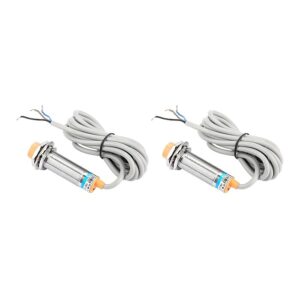
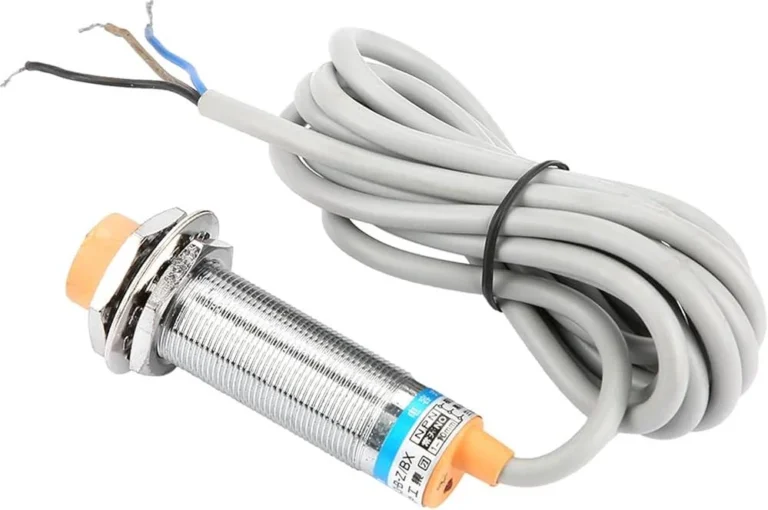
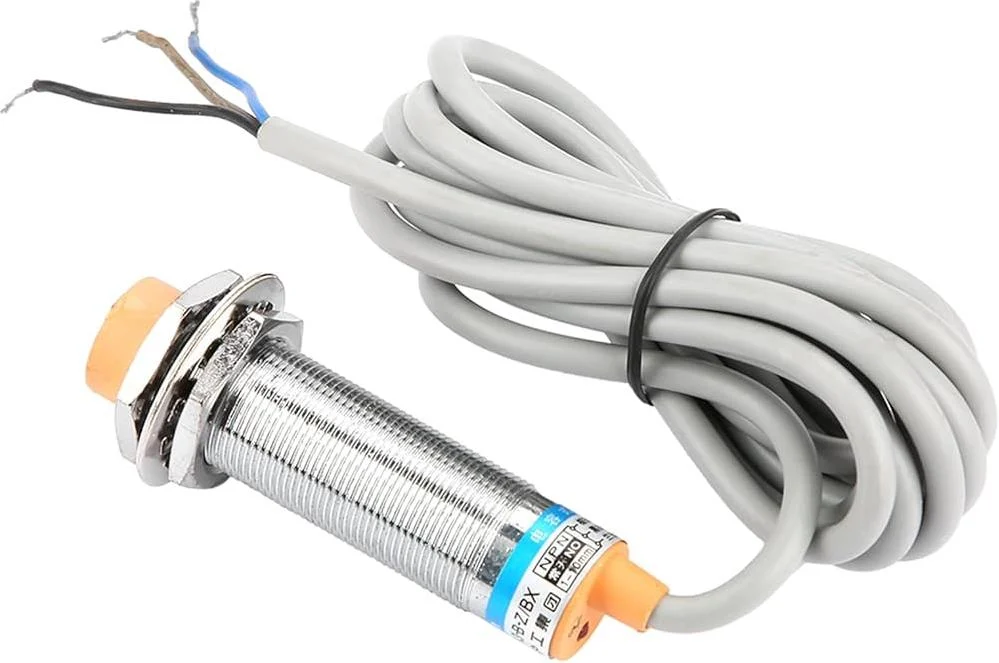
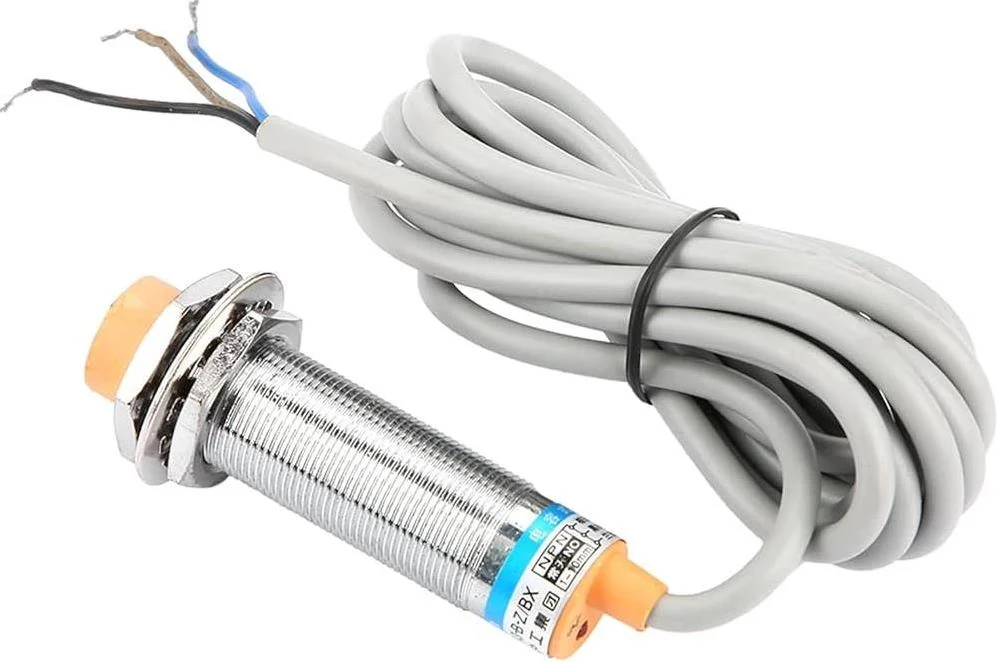
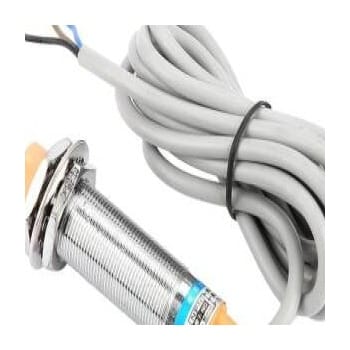
Inductive sensors operate on the principle of electromagnetic induction and detect only the presence of metallic objects. Inside the sensor, there is a coil that generates a high-frequency magnetic field. When a metallic object approaches the sensing surface of the sensor, Eddy currents are induced within this magnetic field. These Eddy currents cause an energy loss in the sensor’s magnetic field, which leads to a change in the coil’s inductance. The sensor’s electronic circuit detects this change in inductance and generates a switching signal. Inductive sensors are often referred to as proximity sensors and perform non-contact detection. Their operating frequencies are typically in the kHz range, and sensing distances vary from a few millimeters to several centimeters. The sensing distance depends on the sensor’s diameter, coil design, and the type of metal to be detected (iron, aluminum, copper, etc.). Ferromagnetic metals like iron are detected more easily, while the sensing distance for non-ferromagnetic metals like aluminum or copper is generally shorter. These sensors can operate with high reliability even in harsh industrial environments such as dust, dirt, oil, or moisture, as these environmental conditions do not affect their magnetic fields. Their durability in challenging conditions can be enhanced with protection factors (e.g., IP67, IP68). Application areas include position detection of metal parts, counting, speed control, and use as limit switches for machine components.
Capacitive Sensors: Flexibility in Detecting All Types of Materials
Capacitive sensors operate by detecting changes in an electric field. A capacitive sensor contains a capacitor that acts like two parallel plates. The electrodes on the sensor’s sensing surface generate a high-frequency electric field by the sensor’s oscillation circuit. This electric field propagates in front of the sensing surface. When any material (metal, plastic, wood, glass, liquid, powder, granules, etc.) approaches the sensor’s sensing area, the sensor’s capacitance changes due to the material’s dielectric constant (εr). The sensor’s electronic circuit detects this capacitance change and generates a switching signal when it exceeds a pre-set threshold value. The biggest advantage of capacitive sensors is their ability to detect non-metallic materials. This makes them ideal for level detection applications; for example, they can detect the liquid level in a tank or the amount of powder in a silo from the outside, without touching the tank wall. Sensing distances are generally similar to inductive sensors, ranging from a few millimeters to several centimeters, and are directly proportional to the dielectric constant of the material to be detected. Materials with a high dielectric constant, like water, are detected more easily and from a greater distance, while materials with a low dielectric constant, like air, are more difficult to detect. Environmental conditions (humidity, temperature fluctuations) and changes in the dielectric constant of the detected material can affect the sensor’s sensitivity. Therefore, some advanced capacitive sensors feature automatic calibration or temperature compensation.

Optical Sensors (Photoelectric Sensors): Long Range and High Sensitivity
Optical sensors, or photoelectric sensors, use light energy to detect the presence, position, color, or distance of objects. These sensors consist of a light emitter (usually an LED or laser diode) and a light receiver (phototransistor or photodiode). Optical sensors are primarily divided into three main operating principles:
- Through-beam Type: The emitter and receiver are in separate housings and are aligned opposite each other. When an object enters between the emitter and receiver, it interrupts the light beam, and the receiver stops receiving the signal, which triggers the switching signal. This type offers the longest sensing distances and highest detection reliability.
- Retro-reflective Type: The emitter and receiver are in the same housing. The light beam is sent to a reflector and returns to the receiver after being reflected by the reflector. When an object enters between the sensor and the reflector, it interrupts the light, and the receiver stops receiving the signal. Retro-reflective sensors with polarized filters are used to prevent false detection of objects with shiny surfaces.
- Diffuse-reflective Type: The emitter and receiver are again in the same housing. The light beam is sent directly to the object to be detected and returns to the receiver after being reflected by the object’s surface. This type of sensor can be affected by the sensing distance and the object’s surface properties (color, shininess, texture). Background suppression and foreground suppression models have been developed to precisely detect objects at a specific distance and eliminate interference from background objects.
Optical sensors can detect a wide variety of materials (metal, plastic, wood, glass, paper, etc.) and have sensing distances ranging from millimeter precision to tens of meters. Thanks to their high switching frequencies, they are effective in detecting fast-moving objects. However, they can be affected by environmental factors such as dust, dirt, water vapor, or intense ambient light. Laser-based optical sensors can detect smaller objects more precisely and from longer distances.
| Parameter | Inductive Sensor | Capacitive Sensor | Optical Sensor |
|---|---|---|---|
| Detection Principle | Electromagnetic induction (Eddy currents) | Capacitance change in electric field | Light emission and reception (reflection/interruption) |
| Material Detected | Only metallic objects (ferromagnetic/non-ferromagnetic) | Metal, plastic, liquid, powder, granules, glass, wood (anything with a dielectric constant) | Almost all materials (color, surface, transparency are important) |
| Sensing Distance | Short (a few mm – 60 mm), depends on sensor diameter and metal | Short (a few mm – 30 mm), depends on material dielectric constant | Medium – Long (a few cm – tens of meters), depends on type and environment |
| Environmental Durability | High (unaffected by dust, dirt, oil, moisture) | Medium (can be affected by humidity, temperature fluctuations) | Low – Medium (affected by dust, dirt, water vapor, ambient light) |
| Sensitivity and Accuracy | High (for metal detection) | Medium (depends on dielectric constant, may require calibration) | High (especially for laser types, for position and distance) |
| Typical Applications | Metal part detection, positioning, RPM counting, limit switch | Liquid/solid level detection, material flow control, non-metallic object detection | Object presence/absence, counting, positioning, color/shape detection, distance measurement |
| Cost-Effectiveness | Generally low | Medium | Low to high (varies by type and features) |
Sensor Technologies: Field Considerations for Optical, Capacitive, and Inductive Sensors
- Analysis of Environmental Conditions: Field conditions are one of the most critical factors in sensor selection. For dusty, dirty, humid, oily, vibrating, or high-temperature environments, inductive sensors are generally more durable. While lens cleanliness is critical for optical sensors, capacitive sensors can be affected by humidity and temperature changes. In environments with excessive electromagnetic interference (EMI), the performance of inductive sensors may decrease; in such cases, shielded sensors or fiber optic sensors may be considered.
- Target Material Properties: The material of the object to be detected directly determines the sensor type. If only metal needs to be detected, inductive sensors are the most suitable and cost-effective solution. If non-metallic materials (liquids, plastics, wood, glass, etc.) need to be detected, capacitive sensors or optical sensors come into play. Transparent or very shiny surfaces can pose challenges for optical sensors; in these situations, retro-reflective optical sensors with polarized filters, laser-based sensors, or ultrasonic sensors can be alternatives. For liquid or powder level detection, capacitive sensors offer the advantage of detection from outside the tank wall.
- Sensing Distance and Accuracy Requirements: The required sensing distance and accuracy of the application greatly influence sensor selection. Inductive sensors are ideal for very short distances (millimeters) and high-precision metal detection. For longer distances (meters) and fast object detection, optical sensors (especially through-beam type) are preferred. When precise distance measurement or detection of very small objects is required, laser-based optical sensors or high-resolution inductive/capacitive sensors should be used.
- Ease of Mounting and Alignment: The sensor’s mounting area and alignment requirements must be considered. Inductive and capacitive sensors generally require less precise alignment. Optical sensors, especially through-beam and retro-reflective types, require accurate alignment between the emitter and receiver/reflector, which can increase installation time and labor. Diffuse-reflective optical sensors, however, offer the advantage of single-point mounting.
- Cost and Maintenance Costs: In addition to the initial investment cost, maintenance costs that may arise throughout the sensor’s lifespan should also be considered. Inductive sensors are generally the most cost-effective and require the least maintenance. Optical sensors may require lens cleaning in dirty environments. Capacitive sensors may require calibration and sensitivity adjustments due to environmental conditions.
- System Integration and Output Types: Compatibility of the sensor with the PLC or control system is important. PNP/NPN, NO/NC, analog (0-10V, 4-20mA), or digital (IO-Link) output types should be selected according to the application’s requirements. In modern automation systems, IO-Link-enabled sensors offer more data and remote configuration possibilities, simplifying system integration.
Sensor Technologies: Common Problems and Solutions for Optical, Capacitive, and Inductive Sensors
Problems encountered with sensors in the field usually stem from incorrect sensor selection, improper mounting, environmental factors, or lack of maintenance. Here are some common problems and suggested solutions:
- Inductive Sensor Problems:
- Problem: Inability to detect non-metallic objects or insufficient sensing distance.
Solution: Inductive sensors only detect metal. If the application requires detecting a non-metallic object, switch to capacitive or optical sensors. If the sensing distance is insufficient, consider a larger diameter inductive sensor or a different technology. - Problem: False triggering due to interference from surrounding metallic structures or other sensors.
Solution: Adjust the sensor’s mounting to be at a sufficient distance (usually 3 times the sensor’s diameter) from surrounding metallic structures. Shielded inductive sensors can reduce such interference by keeping their magnetic fields more localized. Avoid mounting sensors too close to each other or use sensors with synchronization features. - Problem: Operating problems at high temperatures.
Solution: For high-temperature applications, inductive sensors specifically designed with a wide temperature range should be preferred.
- Problem: Inability to detect non-metallic objects or insufficient sensing distance.
- Capacitive Sensor Problems:
- Problem: Unstable detection or false triggering due to ambient humidity or temperature changes.
Solution: Optimize the sensitivity setting. Use advanced capacitive sensors with humidity or temperature compensation features. Ensure the sensor’s sensing surface is clean. - Problem: Inconsistency in detecting materials with different dielectric constants.
Solution: Recalibrate the sensor’s sensitivity for each material. Some sensors offer adjustable profiles that can be stored for different materials. If necessary, consider a different technology such as an optical or ultrasonic sensor for more stable detection. - Problem: Difficulty in detection when performing level detection through a tank wall due to wall thickness or material.
Solution: Choose a more powerful capacitive sensor or a tank area with a thinner wall. Some capacitive sensors have special modes that can compensate for wall thickness.
- Problem: Unstable detection or false triggering due to ambient humidity or temperature changes.
- Optical Sensor Problems:
- Problem: Lens contamination due to dust, dirt, water vapor, or oil, leading to detection failure.
Solution: Regularly clean the sensor lenses. In harsh environments, use sensors within protective housings or keep lenses clean with automatic air-blowing systems. - Problem: False detection due to ambient light interference or reflections from shiny surfaces.
Solution: Sensors using modulated light are less affected by ambient light. For shiny surfaces, use retro-reflective sensors with polarized filters or diffuse-reflective sensors with background suppression. You can minimize reflections by adjusting the sensor’s mounting angle. - Problem: Difficulty in detecting transparent or very dark/absorbent surfaces.
Solution: Use laser or contrast sensors specifically designed for transparent objects. Ultrasonic sensors can also be a good alternative for transparent objects. For very dark or light-absorbing surfaces, higher-power optical sensors or laser sensors should be preferred. - Problem: Alignment issues in through-beam or retro-reflective sensors.
Solution: Ensure the sensor and reflector/receiver are precisely aligned during mounting. Use adjustment screws or mounting brackets if necessary. Some sensors come with LED indicators that facilitate alignment.
- Problem: Lens contamination due to dust, dirt, water vapor, or oil, leading to detection failure.
Sensor Technologies: Conclusion and Expert Advice on Optical, Capacitive, and Inductive Sensor Differences
In the complex world of industrial automation, selecting the right sensor technology is fundamental to a system’s success. The optical, capacitive, and inductive sensors detailed in this guide each address different application scenarios with their unique principles, advantages, and limitations. No single sensor technology is universally “the best”; rather, the most suitable choice always depends on the specific requirements of the application, environmental conditions, characteristics of the object to be detected, and budget constraints. As an automation expert, my advice is to approach the sensor selection process systematically. First, the detection task needs to be clearly defined: What needs to be detected? Under what conditions? From what distance? With what accuracy? The answers to these questions will help narrow down potential sensor technology candidates. Second, do not overlook environmental factors; dust, humidity, temperature fluctuations, and electromagnetic interference can negatively impact the field performance of a theoretically perfect sensor. Third, evaluate the cost factor not only as an initial purchase cost but also as a life-cycle cost that includes installation, maintenance, and potential downtime. Finally, in this rapidly evolving technological era, keeping up with smart sensor technologies like IO-Link and next-generation sensor features will ensure your systems are future-proof and more efficient. Remember, choosing the right sensor is not just about installing a component; it is a strategic engineering decision that enhances the efficiency, reliability, and ultimately the profitability of the entire automation system. Understanding field problems and developing practical solutions for them is key to mastering and specializing in sensor technologies.
FAQ
How do inductive sensors work and what are their primary applications?
Inductive sensors detect only metallic objects by generating a high-frequency magnetic field. When a metal object enters this field, Eddy currents are induced, causing a change in the sensor's inductance, which triggers a signal. They are highly durable in harsh environments.
What makes capacitive sensors versatile for detecting various materials?
Capacitive sensors detect changes in an electric field. They can sense both metallic and non-metallic materials (liquids, plastics, wood, glass, powders) by detecting changes in capacitance due to the material's dielectric constant. They are ideal for level detection through tank walls.
What are the different types of optical sensors and how do they function?
Optical sensors (photoelectric sensors) use light (LED or laser) to detect objects. They come in three main types: through-beam (separate emitter/receiver), retro-reflective (emitter/receiver in one unit with a reflector), and diffuse-reflective (emitter/receiver in one unit, detects light reflected from the object). They offer long sensing ranges and high precision.
What key factors should be considered when choosing between optical, capacitive, and inductive sensors for an industrial application?
When selecting a sensor, consider environmental conditions (dust, humidity, temperature), the material to be detected (metal, non-metal, liquid), required sensing distance and accuracy, ease of mounting and alignment, and total cost of ownership (initial cost, maintenance).
What are common problems encountered with each sensor type and how can they be resolved?
For inductive sensors, issues include not detecting non-metals or interference from nearby metals. Capacitive sensors can suffer from unstable detection due to humidity/temperature or inconsistent detection of materials with varying dielectric constants. Optical sensors are prone to lens contamination, ambient light interference, or difficulty with transparent/dark surfaces.