No products in the cart.
Eliminating Misalignment in Ball Screw Nut Housing Assembly
Contents
Eliminating Misalignment in Ball Screw Nut Housing Assembly: Field Guide and Technical Article
Introduction and Technical Analysis
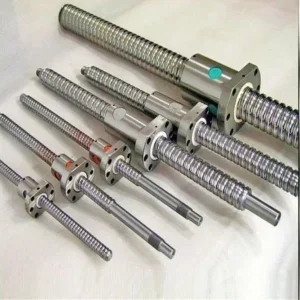
As one of the indispensable components of industrial automation systems, ball screw systems, play a critical role, especially in applications requiring high precision, repeatability, and heavy load carrying capacity. These systems form the basis of a wide variety of machines such as robotic arms, CNC machines, precision positioning tables, and material handling equipment by converting rotary motion into linear motion. The ball screw itself, along with the ball nut and the nut housing that secures this nut to the machine body, form a complete unit. The misalignment, which occurs in nut housing assembly, is a critical problem that can have devastating effects on the performance, lifespan, and reliability of the entire system, yet it is often overlooked or underestimated. This technical article and field guide will thoroughly address the causes, effects, and most importantly, the methods for preventing and eliminating misalignment in ball screw nut housing assembly for experts and technicians in the industrial automation sector. Our goal is to ensure the highest precision in assembly processes, thereby guaranteeing optimal system performance.
Misalignment refers to any deviation between the rotation axis of the ball screw and the mounting axis of the nut housing. This deviation is generally examined in two main categories: angular misalignment and parallel misalignment Angular misalignment is the condition where the axes of the shaft and the housing are at an angle to each other; parallel misalignment is when the axes are parallel to each other but located in different planes. Both situations lead to uneven load distribution, excessive friction, heat generation, and ultimately premature wear on the ball screw balls and raceways. This significantly shortens the system’s expected lifespan, reduces positioning accuracy, increases energy consumption, and can lead to unexpected failures, resulting in production losses. Therefore, eliminating even thousandths of a millimeter deviations in nut housing assembly is vital for the system’s overall reliability and efficiency. This guide will explain step-by-step how to achieve this critical precision throughout processes ranging from assembly to maintenance.
Operating Principle and Technical Data
The fundamental operating principle of ball screw systems is to convert the rotary motion of a ball screw, driven by a motor, into the linear motion of a ball nut moving along it. This conversion occurs through balls rolling in helical grooves between the nut and the screw. High efficiency and precision are achieved thanks to the balls minimizing friction. ball nut housing, is the interface element that ensures the secure and accurate mounting of the ball nut to the machine body or moving platform. The function of this housing is not only to fix the nut but also to transfer the dynamic loads of the system to the machine structure and to maintain the axial alignment of the ball screw. The mounting surfaces and internal geometry of the nut housing are critically important for the ball nut to move on the screw with minimum resistance and maximum accuracy.
Misalignment directly affects the operating principle of ball screw systems. Even the slightest misalignment in the screw or nut housing disrupts the load distribution on the ball raceways. Normally, balls operate under an even and distributed load, but in case of misalignment, some balls are overloaded while others cannot carry sufficient load. This uneven load distribution, leads to high contact stresses and premature fatigue in areas subjected to excessive load. As a result, damages such as pitting, spalling, and wear occur on the balls and raceways. Due to increased friction, system efficiency decreases, more energy is consumed, and a temperature increase is observed. High temperatures, in turn, reduce the viscosity of the lubricant, thereby decreasing its lubricating properties, and can lead to thermal expansion differences, further exacerbating the misalignment. All these factors negatively affect the system’s positioning accuracy and repeatability negatively affect, which leads to unacceptable results in automation applications.
Technically, ball screw manufacturers specify certain misalignment tolerances These tolerances are usually expressed as angular deviation per millimeter (e.g., 0.005 mm/100 mm) or in angular units (e.g., 3 arc-minutes). These values are considered critical limits to guarantee the system’s lifespan and performance. Exceeding these tolerances during assembly can shorten the system’s lifespan by up to 50%. Furthermore, the mounting surface of the nut housing’s flatness and parallelism are also vitally important. Even flatness deviations of hundredths of a millimeter on the mounting surface can cause the nut housing to bend or strain, triggering misalignment. Therefore, surfaces must be checked with precise measuring instruments before assembly and machined if necessary. Data such as the torque values of the bolts to be used, material selection (typically steel or aluminum alloys), thermal expansion coefficients, and recommended lubrication type should be considered for correct assembly and long-lasting operation of the nut housing. A precise installation not only prevents failures but also ensures that the system fully meets its design performance.
| Parameter | Value/Description |
|---|---|
| Maximum Angular Misalignment Tolerance | Typically 0.005 mm/100 mm or 3-5 arc-minutes (Should be checked according to manufacturer’s datasheet value.) |
| Maximum Parallel Misalignment Tolerance | Typically 0.01 mm/100 mm (Should be checked according to manufacturer’s datasheet value.) |
| Mounting Surface Flatness Tolerance | 0.005-0.01 mm/300 mm (Lower tolerances may be required for precision applications.) |
| Mounting Bolt Torque Value | Varies according to bolt diameter and strength class. Manufacturer’s instructions must be strictly followed. (Ex: 10-12 Nm for M6) |
| Housing Material | Hardened Steel Alloy or High-Strength Aluminum Alloy |
| Operating Temperature Range | -20°C to +80°C (Extended ranges available for special applications.) |
| Recommended Lubrication Type | Lithium soap grease or ISO VG 32-68 synthetic oil (Varies by application and manufacturer.) |
Field Considerations
- Surface Preparation and Cleaning: All surfaces to be assembled, the nut housing itself, and the ball screw must be meticulously cleaned before starting assembly. Foreign substances such as dirt, dust, chips, oil residues, or rust on the surfaces can prevent proper seating and cause axial misalignment. Surfaces should be cleaned using special industrial cleaners and lint-free cloths and allowed to dry. Additionally, the flatness and parallelism of the mounting surfaces should be checked with a precise dial indicator or laser alignment device. Even the slightest curvature or protrusion on the surface can lead to stress on the nut housing and consequently, misalignment. If necessary, surfaces should be subjected to precision machining.
- Correct Assembly Sequence and Bolt Torquing: During the assembly of the nut housing, tightening the bolts in the correct sequence and with the correct torque values is vital. As a general rule, all bolts should initially be tightened loosely by hand or with low torque, allowing the nut housing to settle into its natural position. Subsequently, they should be tightened gradually in accordance with the torque values specified by the manufacturer, in a criss-cross or star pattern. This gradual tightening process ensures that the nut housing seats evenly and prevents the formation of internal stresses. A torque wrench should be used to ensure that each bolt reaches its specified torque value. Overtightening can damage the bolts and housing material, while undertightening leads to vibration and loosening.
- Precise Alignment of Shaft and Nut: Axial alignment between the ball screw’s bearing blocks and the ball nut housing is a key factor for the system’s lifespan and performance. Special tools such as laser alignment systems or precise dial indicators should be used for this alignment. First, the ball screw bearings must be correctly aligned and secured. Then, at a point where the ball nut is mounted in its housing and moves freely on the screw, it must be ensured that the screw axis and the nut housing axis are perfectly co-aligned. Both angular and parallel misalignments should be carefully measured to ensure they remain within the manufacturer’s tolerances. If necessary, fine adjustments should be made using shim plates or adjustable mounting bases.
- Preload Adjustment and Control: In some ball screw systems, a certain preload is applied to the ball nut to eliminate backlash and increase rigidity. This preload adjustment must be carefully made according to the manufacturer’s instructions. Incorrect preload adjustment can lead to excessive friction, heat generation, and premature wear. During assembly, care must be taken to ensure that no component related to the nut housing affects the preload adjustment. After adjustment, the shaft should be rotated by hand to ensure it moves smoothly and freely, without any binding or excessive resistance.
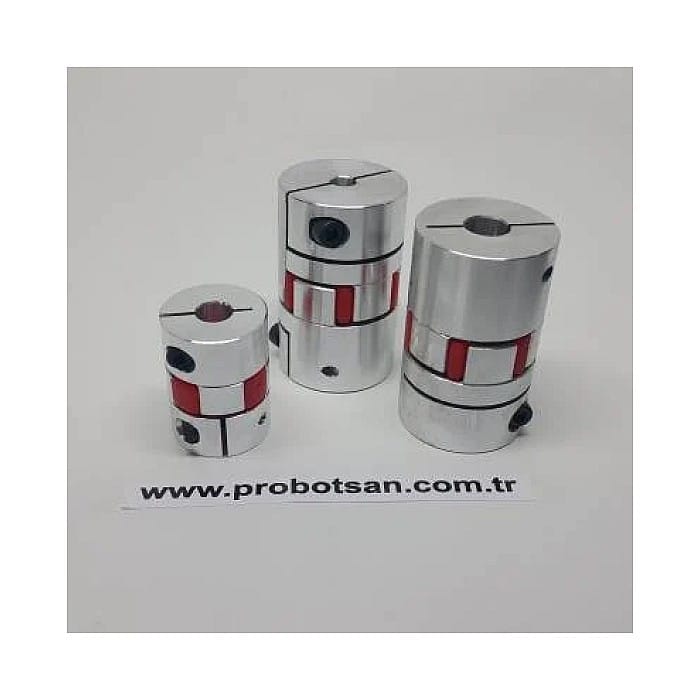
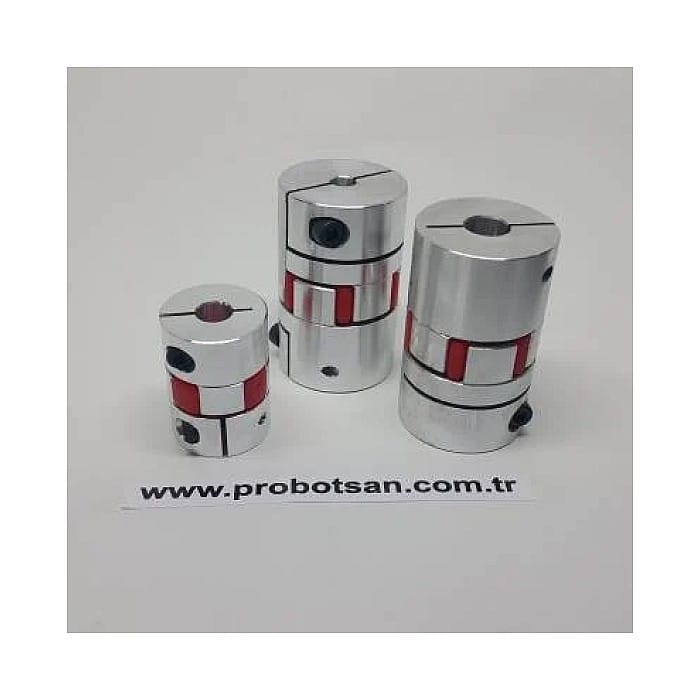
- Thermal Expansion Management: Industrial automation systems typically operate under varying temperature conditions and consist of various materials. Different thermal expansion coefficients of components such as the ball screw, nut housing, and machine body can cause misalignment during changes in operating temperature. For long ball screws, stresses caused by thermal expansion should be absorbed by using fixed-free (floating) bearing systems or flexible couplings. In the assembly of the nut housing, appropriate clearances or flexible mounting methods can also be designed, taking into account the material’s expansion at operating temperature.
- Vibration Analysis and Periodic Inspection: After assembly is complete, vibration analysis should be performed during the system’s initial startup and at regular intervals. Excessive vibration or abnormal noises can be an indication of misalignment or other assembly errors. If necessary, the system should be stopped, and the alignment rechecked and corrected. Additionally, periodic visual inspections and measurements should be performed for conditions such as bolt loosening, bearing wear, or machine body deformation, which can affect the performance and alignment of ball screw systems. Early diagnosis can prevent major failures.
Common Problems and Solutions
There are many problems encountered in the field due to misalignment in ball screw nut housing assembly. Recognizing these problems and implementing correct solution strategies is critically important for the system’s efficiency and lifespan.
Problem 1: System Overheating and Increased Energy Consumption
Reason: This is one of the most common symptoms. Misalignment causes excessive friction between the balls and raceways. This friction leads to the conversion of kinetic energy into heat, causing the system to exceed its normal operating temperature. Additionally, the motor needs to expend more power to overcome the friction force, which increases energy consumption.
Solution: First, check for angular and parallel misalignments between the ball screw and the nut housing using laser alignment devices or precision dial indicators. Ensure they are within the manufacturer’s tolerances. If necessary, correct the alignment by loosening the nut housing’s mounting bolts or using shim plates. Also, ensure that the lubricant used is of the correct type and sufficient quantity. Since excessive preload can also cause overheating, check the preload settings and adjust them according to manufacturer specifications.
Problem 2: Premature Wear and Shortened Ball Screw System Lifespan
Reason: Misalignment causes uneven load distribution on the balls, creating high contact stresses in specific areas. This leads to damage such as premature fatigue, pitting, and spalling on the surfaces of the balls and raceways. Consequently, the expected lifespan of the ball screw system is significantly shortened.
Solution: This situation typically arises from prolonged misalignment. Damaged components (ball nut, ball screw) may need to be replaced. After components are replaced, all assembly steps, such as the flatness of mounting surfaces, nut housing alignment, and bolt torquing, must be redone with the highest precision and according to manufacturer instructions. Regular maintenance and alignment checks are key to preventing premature wear.
Problem 3: Loss of Positioning Accuracy and Repeatability Issues
Reason: Axis misalignment can create additional “flex” or “bend” in the system, depending on the flexibility of the ball screw or nut housing. This causes the ball nut to deviate from its expected position, leading to a loss of positioning accuracy, especially when operating under load. Furthermore, increased friction and wear increase the system’s backlash, negatively affecting repeatability.
Solution: The primary cause of accuracy loss is typically misalignment. The system must be stopped, and a comprehensive alignment check performed. If misalignment cannot be corrected or if significant wear is present, replacement of the ball nut and/or ball screw may be necessary. The selection of a more rigid nut housing or the use of flexible couplings that can increase misalignment tolerance may also be considered. Additionally, periodic calibration of the system and checking the accuracy of feedback systems (encoders) are important.
Problem 4: Abnormal Noise and Vibration
Reason: Axis misalignment leads to irregular friction and impacts due to uneven load distribution on the balls. This causes the system to produce abnormal noises (rattling, rubbing sounds) and vibrations during operation. Vibrations can also propagate to other machine components, shortening their lifespan.
Solution: Identify the source of noise and vibration using vibration analyzers. This often indicates an alignment issue. Correct the misalignment by applying the alignment check procedures mentioned above. Ensure that the mounting bolts are tightened to the correct torque values and are not loose. If necessary, vibration-damping mounting elements or a more rigid structural reinforcement can be used. Checking the condition of the bearings is also important to rule out a possible bearing failure.
Problem 5: Loosening of Mounting Bolts
Reason: Continuous stresses and vibrations caused by misalignment can lead to the bolts securing the nut housing loosening over time. Insufficient torqueing or incorrect bolt selection can also trigger this problem.
Solution: To prevent bolts from loosening, ensure they are tightened to the correct torque values and check them periodically. Anti-loosening lock nuts, spring washers, or chemical threadlockers (e.g., Loctite) can be used. Furthermore, correcting the misalignment in the system to reduce vibration and stresses will minimize the risk of bolts loosening.
Expert Advice
Misalignment in ball screw nut housing assembly is a critical factor with direct and often destructive effects on the performance, reliability, and lifespan of industrial automation systems. As we have covered throughout this detailed field guide, applying correct assembly procedures, using precise measurement and alignment techniques, and meticulously adhering to manufacturer specifications are vital to prevent such problems. As an automation expert, based on my field experience, I can clearly state: “Preventive maintenance and correct assembly are always a more cost-effective and efficient approach than reactive intervention.” A small oversight or haste made at the beginning can lead to much larger failures, production downtimes, and high repair costs in the long run.
Therefore, in every ball screw system assembly, every step from surface preparation to bolt torqueing, shaft alignment to preload adjustments, must be carried out with great care and expertise. The use of correct tools such as advanced laser alignment devices, precise dial indicators, and calibrated torque wrenches guarantees the accuracy achieved in this process. Regular training of personnel is indispensable to ensure these techniques are applied correctly. Furthermore, continuously monitoring the system’s health status using diagnostic methods such as vibration analysis, thermal imaging, and visual inspections during initial startup after assembly and during periodic maintenance checks allows us to detect potential problems early and provide solutions before they escalate into major failures.
It should be remembered that a ball screw system is not just a single component, but a combination of a series of precise parts that must work in harmony with each other. Eliminating axial misalignment in the nut housing is a critical step in preserving this integrity. The future of industrial automation is built upon the reliability and efficiency of systems. In this context, increasing our expertise in eliminating axial misalignment in ball screw nut housing assembly and adopting best practices will not only extend the lifespan of our machines but also increase the continuity of our production processes and our competitiveness. I hope this guide will be a guide for our valuable colleagues in the field and make a significant contribution to the journey of achieving excellence in industrial automation applications.
On-Site Misalignment Check
When troubleshooting unexpected wear or vibration in a ball screw system, always start by manually rotating the ball screw through its full travel range with the nut housing mounted but not fully loaded. Feel for any binding, tight spots, or inconsistent resistance. This can often indicate subtle angular or parallel misalignment that might not be visible to the naked eye. A slight 'wobble' or 'catch' is a strong indicator.
Technical Summary Table
| Control point | Recommendation | Risk if ignored |
|---|---|---|
| Angular Misalignment | Utilize self-aligning bearing supports or spherical washers where applicable. Ensure mounting surfaces are perfectly perpendicular to the ball screw axis. | Uneven load distribution on ball bearings, localized wear, increased friction, and premature failure of the ball nut or bearings. |
| Parallel Misalignment | Employ precision shims and a dial indicator or laser alignment tool to ensure the nut housing's mounting surface is perfectly parallel to the ball screw's travel path. | Side loading on the ball nut, excessive heat generation, increased driving torque requirements, and reduced positioning accuracy. |
| Mounting Surface Imperfections | Always ensure the machine frame or mounting block surface is perfectly flat, clean, and free of burrs. Use a surface plate or precision straightedge to verify. | Induced stress on the nut housing, distortion of the assembly, and creation of secondary misalignment issues even if initial alignment seems correct. |
| Improper Fastener Torque | Follow manufacturer's specified torque values for all mounting bolts. Tighten fasteners incrementally in a cross-pattern to ensure even clamping force. | Uneven clamping can distort the housing, leading to misalignment. Overtightening can strip threads or damage the housing; undertightening can lead to loosening and vibration. |
Short Checklist
- Verify flatness and cleanliness of all mounting surfaces before assembly.
- Use a dial indicator or laser alignment tool to check for both angular and parallel misalignment during initial setup.
- Ensure all fasteners are torqued to manufacturer specifications, tightening in stages and a cross-pattern.
- Manually cycle the ball screw assembly through its full travel range to check for smooth, consistent movement before power-up.
- Monitor the system for unusual noise, vibration, or excessive heat during the first operational hours.
FAQ
What are the primary types of misalignment in ball screw nut housing assembly?
The two main types are angular misalignment, where the axes of the ball screw and housing are at an angle to each other, and parallel misalignment, where the axes are parallel but offset from each other.
How does misalignment impact the lifespan of a ball screw system?
Misalignment causes uneven load distribution on the ball bearings, leading to excessive friction, heat generation, and premature wear. This significantly shortens the operational lifespan of the ball screw, nut, and associated bearings.
Can I detect misalignment without specialized tools?
While severe misalignment might be visible, subtle issues often require precision tools like dial indicators, feeler gauges, or laser alignment systems for accurate detection. Manual rotation and feeling for binding can provide initial clues, but precise measurement is crucial for correction.