


































































































Why Do CNC Control Cards Burn Out? Protection Against Voltage Fluctuations
📑 Table of contents (Click to open)
Introduction and Technical Analysis
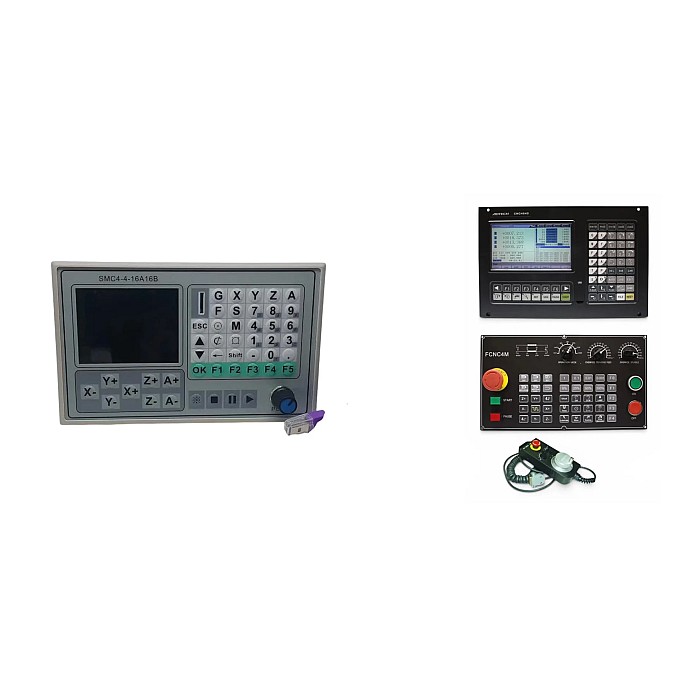
Considered the heart of industrial automation, CNC (Computer Numerical Control) machines are indispensable components of modern manufacturing. The brain of these machines, CNC control cards, are critical electronic components that manage precise operations, process G-codes, and synchronize machine axes. However, this sensitive electronic structure is extremely vulnerable to voltage fluctuations, an inevitable challenge in industrial environments. Voltage fluctuations can lead not only to momentary malfunctions but also to permanent burnout or shortened lifespan of control cards, causing serious disruptions in production processes, costly repairs, and significant production losses. This detailed field guide and technical article will deeply analyze why CNC control cards are affected by voltage fluctuations, identify these risk factors, and present practical, applicable protection methods from an expert perspective for industrial automation professionals. Our goal is to extend the lifespan of these critical pieces of equipment, increase operational reliability, and minimize unexpected breakdown costs.
Operating Principle and Technical Data
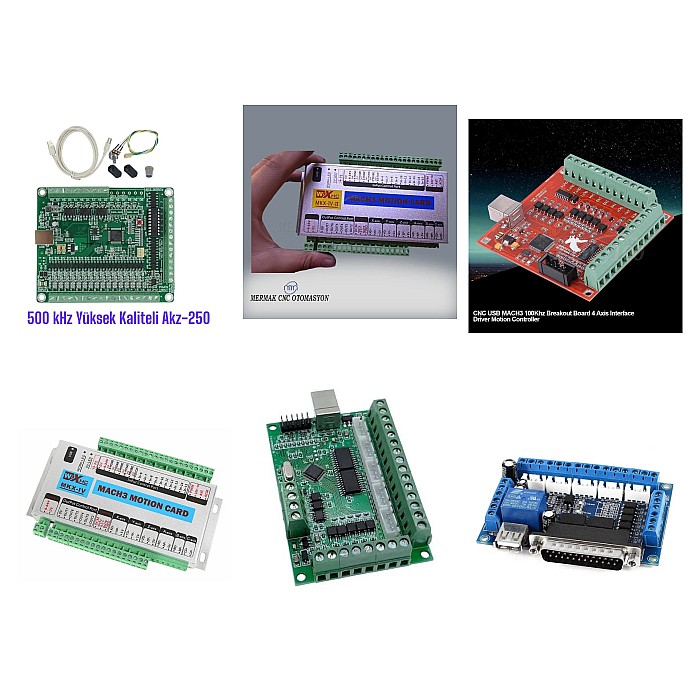
A CNC control card is fundamentally a complex electronic circuit built around a microprocessor or digital signal processor (DSP). It interprets G-codes, controls servo or stepper motor drives, receives feedback from sensors, manages safety circuits, and communicates with the operator interface. For these operations, the card contains a series of sensitive components: power supplies (SMPS), microcontrollers, memory chips (RAM, ROM), input/output (I/O) drivers, communication integrated circuits, and analog/digital converters. Each of these components is designed to operate within a specific voltage and current range. The supply voltage from the grid is typically converted to the low DC voltages required by the card (e.g., 5V, 3.3V, 12V) via an internal or external power supply unit (PSU). However, even these power supplies offer limited protection against fluctuations beyond a certain tolerance range.
Voltage fluctuations can occur in various forms in industrial environments:
- Voltage Surges and Spikes: These are sudden and short-duration high voltage peaks on the grid. They can occur as a result of lightning strikes, the switching on and off of large inductive loads (motors, transformers, contactors), or fuse blowing. These peaks cause permanent damage by puncturing the insulation of semiconductor components (transistors, integrated circuits) on the control card or by causing them to draw excessive current. Especially MOSFET and IGBT based power circuits are sensitive to such surges.
- Voltage Sags and Brownouts: This is a situation where the grid voltage drops below its nominal level. It can be caused by the sudden activation of large motors or other heavy loads, weak grid infrastructure, or general problems in the electrical grid. Voltage sags can cause the card’s power supplies to fail to produce sufficient output voltage, leading to card resets, memory corruption, or unstable operation. Prolonged low voltages (brownouts) can cause components to overheat and fail due to excessive current draw.
- Transients: These are high-frequency, short-duration voltage and current changes that occur in microsecond ranges. They arise from events such as electrical switching, arc formation, or static discharges. These transient fluctuations can cause logic errors, data corruption, and communication interruptions in digital circuits.
- Harmonics: This is a deviation of the grid voltage and current waveform from its sinusoidal structure. They are primarily generated by frequency converters (VFD), switched-mode power supplies (SMPS), and other non-linear loads. Harmonics can cause overheating in transformers and motors, shorten the lifespan of capacitors, and lead to unexpected failures in electronic devices. They can stress the control card’s power supply and filtering circuits, disrupting its stability.
- Frequency Variations: This is a deviation of the grid frequency (50 Hz in Turkey) from its nominal value. It can be caused by generators coming online or major problems in grid stability. It can affect the timing and synchronization of electronic circuits, leading to erroneous operation.
Each of these fluctuations creates thermal stress, electrical stress, or logical stress on the sensitive components of the CNC control card, paving the way for failures. Modern, high-performance CNC cards, in particular, have become even more sensitive to such electrical anomalies due to smaller transistor sizes and lower operating voltages.
| Parameter | Value/Description |
|---|---|
| Nominal Supply Voltage | 24V DC or 110/220V AC (Varies by CNC card model) |
| Maximum Instantaneous Voltage Tolerance | Must be checked according to manufacturer datasheet (Typically 15-25% above nominal) |
| Minimum Voltage Tolerance | Must be checked according to manufacturer datasheet (Typically 10-15% below nominal) |
| Operating Temperature Range | 0°C – 50°C (Industrial standard, extreme temperatures shorten lifespan) |
| Relative Humidity | 5% – 95% (For non-condensing environments, condensation can cause short circuits) |
| EMI/RFI Protection | Compliance with IEC 61000 series standards (Electromagnetic compatibility) |
| Typical Power Consumption | 10W – 100W (Depends on card complexity, I/O, and processor power) |
Field Considerations
- Effective Grounding System and Grounding Resistance: In industrial automation systems, grounding is vital not only for personnel safety but also for the protection of electronic equipment. Good grounding ensures that lightning strikes or grid-induced overvoltages are safely discharged. Ensure that the CNC machine and control panel are connected to a separate, low-resistance grounding line. Grounding resistance should be measured periodically and kept within industrial standards (typically between 1-5 Ohms). Voltage differences between grounding points at different potentials (ground loops) can cause serious problems in the control card’s communication lines. Therefore, it is preferable for all equipment to be grounded at a single star point.
- Surge Protective Devices (SPD): Surge protectors absorb or divert sudden high voltage peaks from the grid or internal sources, protecting sensitive equipment. SPDs can be installed in the main electrical panel (Type 1), sub-distribution panels (Type 2), and directly at the input of sensitive equipment (Type 3). For CNC machines, providing protection at all these levels is the most ideal approach. It is critical that SPDs have the correct current capacity and voltage protection level, as well as a fast response time. The status indicators of SPDs should be checked periodically, and those that have reached the end of their lifespan should be replaced.
- Uninterruptible Power Supplies (UPS) and Automatic Voltage Regulators (AVR): UPS systems provide excellent protection, especially against voltage sags, short-duration interruptions, and frequency fluctuations. Online (Double Conversion) UPSs continuously convert grid voltage to DC, charge batteries, and then regenerate clean sine wave AC voltage. In this way, they filter out all fluctuations from the grid, providing a stable and clean power supply to the CNC card at all times. Automatic Voltage Regulators (AVR), on the other hand, detect slow and continuous changes in grid voltage and keep the output voltage constant within a certain tolerance. The use of AVRs is critically important, especially in regions experiencing voltage sags or continuously high/low voltages. When selecting a UPS and AVR, the total power consumption and instantaneous peak current requirements of the CNC machine should be considered.
- Isolation Transformers and Line Filters: Isolation transformers create an electrical barrier between the grid and the CNC machine, significantly reducing common-mode noise and transient voltages from the grid. They can also prevent ground loop problems by isolating the machine’s grounding system from the grid. Line filters (EMI/RFI filters), on the other hand, suppress high-frequency electromagnetic interference (EMI) and radio frequency interference (RFI), ensuring that the control card’s internal circuits are supplied with clean power. These filters are highly effective in preventing noise caused by motor drives, switched-mode power supplies, or inductive loads. Properly positioned and sized filters contribute greatly to the stable operation of the card.
- Cable Management and Shielding: Proper routing and shielding of power and signal cables are vital for electromagnetic compatibility (EMC). Power cables and sensitive signal cables should be routed through separate conduits. The use of shielded cables and their proper grounding at a single point prevents external electromagnetic noise (e.g., radiated from motor drives) from reaching the control card. Incorrect cabling or shielding can lead to data corruption or false triggers in the card’s communication lines.
- Periodic Maintenance and Inspection: All protective equipment (UPS, AVR, SPD, filters) and electrical installations should be regularly inspected and maintained. Checking for loose connections, the condition of cable insulation, the integrity of fuses, and grounding resistance measurements should be included in the routine maintenance program. Even without visible damage, electronic components can age over time, and their protection capabilities may decrease. Therefore, critical protective equipment should be tested or replaced at regular intervals.
Common Problems and Solutions
In the industrial automation field, many problems related to CNC control cards can arise from voltage fluctuations. Below are frequently encountered scenarios and expert solution recommendations:
Failure Scenario 1: Complete Failure of the Card Due to Sudden Voltage Surge
A CNC machine suddenly stopping while in operation and the control card showing no response is typically seen after an overvoltage (surge) event. It is likely that the fuses on the card have blown or components in the power supply layer (diodes, capacitors, switching transistors) have burned out. In this case, the fuses at the card’s power input should be checked; if blown, they should be replaced. However, if the fuse blows again, it indicates a serious short circuit or component failure within the card. Additionally, the status indicators of the SPDs (Surge Protective Devices) in the panel or at the machine input should be checked; if the SPD is faulty or has reached the end of its lifespan, it has failed to perform its duty, and the overvoltage has affected the card. As a solution, first, the grid voltage should be measured with a multimeter to confirm it is at the nominal value. Then, a visual inspection should be performed starting from the card’s power input; look for burned, swollen, or exploded components. If the card is beyond repair, when replacing it with a new one, additional protection must be provided with more powerful or correctly positioned SPDs.
Failure Scenario 2: Irregular Operation, Erroneous Operations, or Random Resets
Irregular behavior such as the card freezing at intervals, random resets, axis jitters, or unexpected deviations in the program usually results from voltage sags, transients, or harmonic distortions. This indicates that the card’s power supply cannot provide sufficient and stable voltage, or that control signals are affected by noise. As a solution, the first step is to monitor the grid voltage for an extended period with a power quality analyzer to detect voltage sags, surges, and harmonic levels. If voltage sags occur frequently, an online type UPS or a precise Automatic Voltage Regulator (AVR) should be integrated into the machine. For transients, especially to prevent noise from motor drives and contactors, EMI/RFI filters and transient voltage surge suppressors (TVSS) should be used. Additionally, the shielding and grounding of communication cables should be checked, and if necessary, the system should be isolated with an isolation transformer.
Failure Scenario 3: Communication Interruptions or Data Corruption
Communication interruptions or data corruption between the CNC control card and other modules (drives, HMI panel, PLC) typically result from ground loops, electromagnetic interference (EMI), or transient voltages on communication lines. Such problems can lead to incorrect part processing in production or the complete shutdown of the machine. As a solution, the grounding scheme of the entire system should be reviewed, and if possible, the single star-point grounding principle should be applied. For communication lines, especially over long distances, optical isolation or isolated RS-485 converters should be used. Communication cables must be shielded, and their shields must be properly grounded. Furthermore, it should be confirmed that there is sufficient distance between power cables and signal cables and that they do not run parallel. If necessary, specific SPDs or filters can be integrated into the communication lines.
Failure Scenario 4: Recurring Card Failures at Specific Intervals
If the control card repeatedly exhibits the same fault at specific intervals (e.g., every few months), it usually points to an overlooked or underestimated power quality issue. This indicates that the card is constantly operating under stress beyond its design limits. As a solution, a comprehensive power quality analysis is essential. This analysis should record not only instantaneous values but also long-term (several days or weeks) voltage, current, frequency, harmonic, and transient voltage profiles. Based on this data, the capacity and effectiveness of existing protective equipment (UPS, AVR, SPD) should be reviewed, and insufficient models should be replaced with more suitable ones. Additionally, the general electrical infrastructure of the industrial facility and the switching times of other large loads (furnaces, large motors) should be examined to minimize their impact on the CNC. For example, solutions like reactive power compensation or active harmonic filters can improve overall grid quality.
Expert Advice
Failures of CNC control cards due to voltage fluctuations pose serious operational and costly problems for industrial automation facilities. As seen in this detailed guide, the underlying causes of these failures are quite diverse and generally stem from grid quality disturbances, environmental factors, and inadequate protection measures. A CNC control card burning out does not just mean replacing a component; it also brings about domino-effect consequences such as production downtime, labor loss, time loss, and delivery delays. Therefore, taking proactive protective measures is much more economical and critically important for sustainability than reacting to a failure after it occurs.
As industrial automation experts, we strongly recommend adopting an integrated protection strategy to extend the lifespan and increase the operational reliability of CNC machines in facilities. This strategy requires establishing a layered defense mechanism rather than relying on a single protective device. A protection chain should be established, starting from the grid input, extending through the main panel, sub-distribution panels, and finally to the machine itself. An effective grounding system, correctly sized and positioned Surge Protective Devices (SPDs), Online UPS systems providing continuous clean and stable power, Voltage Regulators (AVRs), Isolation Transformers, and EMI/RFI filters are indispensable links in this chain. Furthermore, compliance with cabling standards, the use of shielded cables, and regular periodic maintenance will ensure the continuous effectiveness of these protection systems.
It should be remembered that the power quality needs of every facility and every machine can differ. Therefore, conducting a professional power quality analysis before making an investment is the smartest step to correctly identify existing risks and determine the most suitable protection solutions. These analyses will uncover hidden or unnoticed voltage fluctuations, helping to prevent future failures. In the era of Industry 4.0 and smart manufacturing, our machines are becoming even more complex and sensitive, making the importance of power quality more critical than ever. To reduce costs in the long run, increase efficiency, and continue uninterrupted production, the protection of CNC control cards against voltage fluctuations should be seen not just as a cost item but as a strategic investment.
FAQ
What types of voltage fluctuations typically damage CNC control cards?
CNC control cards are highly sensitive electronic components that can be damaged by various voltage fluctuations, including surges (sudden high voltage peaks), sags (drops below nominal voltage), transients (short, high-frequency changes), and harmonics (distortions in the waveform). These issues can cause component burnout, unstable operation, data corruption, and system resets.
What are the most effective ways to protect CNC control cards from voltage fluctuations?
To protect CNC control cards, implement a multi-layered defense strategy. This includes robust grounding systems, Surge Protective Devices (SPDs) at various points, Online Uninterruptible Power Supplies (UPS) for stable power, Automatic Voltage Regulators (AVR) for consistent voltage, isolation transformers, and EMI/RFI line filters. Proper cable management and shielding are also crucial.
How can I diagnose the specific voltage problems affecting my CNC control card?
A power quality analyzer is essential to monitor grid voltage, current, frequency, harmonics, and transients over an extended period. This data helps identify the root causes of recurring issues and allows for the selection and implementation of appropriate protection solutions tailored to the specific needs of the industrial facility.
What kind of maintenance is required for voltage protection systems for CNC machines?
Regular maintenance involves checking all protection equipment (UPS, AVR, SPD, filters), inspecting electrical installations for loose connections or damaged insulation, and periodic measurement of grounding resistance. Even without visible damage, electronic components age, so critical protection equipment should be tested or replaced at recommended intervals.
What are the common consequences of voltage fluctuations on CNC machine operation?
Voltage fluctuations can lead to immediate card burnout, causing complete machine shutdown. They can also result in irregular operation, such as freezing, random resets, axis jitters, and communication errors, leading to faulty part processing, production delays, and significant repair costs. Long-term, they shorten the lifespan of components.