No products in the cart.
Why Does a Ball Screw Nut Seize? Lubrication and Cleaning Recommendations

Contents
- Ball Screw Nut Seizing: Lubrication and Cleaning Recommendations – Introduction and Technical Analysis
- Ball Screw Nut Seizing: Operating Principle and Technical Data
- Why Does a Ball Screw Nut Seize? Core Reasons and Mechanisms
- Ball Screw Nut Seizing: Field Recommendations for Lubrication and Cleaning
- Ball Screw Nut Seizing: Common Problems and Solutions
- Problem 1: Increased Operating Torque and Overheating
- Problem 2: Squeaking, Friction Noises, or Vibration
- Problem 3: Complete Seizing or Locking
- Ball Screw Nut Seizing: Conclusion and Expert Advice on Lubrication and Cleaning
- FAQ
Ball Screw Nut Seizing: Lubrication and Cleaning Recommendations – Introduction and Technical Analysis
At the heart of industrial automation systems, motion control components are vital for the efficiency and continuity of production processes. Among these critical components, ball screw nut systems precisely convert rotary motion into linear motion, finding widespread use in applications ranging from robotic arms to CNC machines, linear actuators, and assembly lines. However, the performance of these crucial parts can be severely impacted by the occasional problem of “seizing.” A ball screw nut seizing not only leads to system downtime but also results in costly repairs, production losses, and even damage to other system components. This detailed field guide and technical article will deeply analyze why ball screw nuts seize, explain the underlying engineering principles, and provide comprehensive lubrication and cleaning recommendations for industrial automation professionals. Our goal is to enhance system reliability, reduce maintenance costs, and maximize operational efficiency. Understanding this issue goes beyond merely fixing a malfunction; it enables the development of proactive maintenance strategies and more informed choices in system design. In this context, the interaction between key factors such as friction, wear, contamination, and inadequate lubrication will be examined in detail.
Ball Screw Nut Seizing: Operating Principle and Technical Data
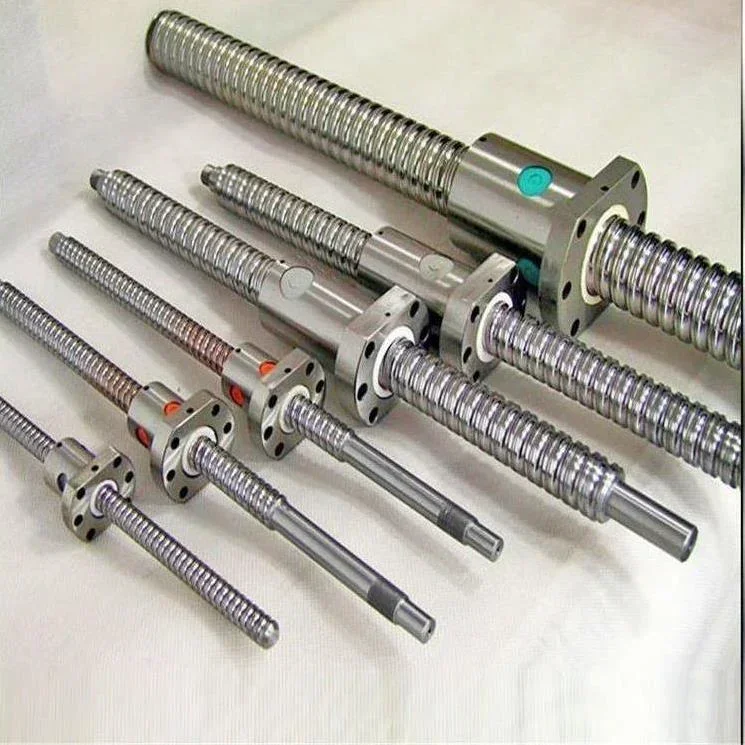
Ball screw nut systems operate on the principle of achieving linear motion by rotating either the screw or the nut. These systems are generally divided into two main categories: ball screws and sliding friction screws (Acme or trapezoidal screws). While both types have different friction mechanisms, their seizing risks and causes can stem from similar origins. Ball screws offer high efficiency and low friction by utilizing rolling friction through balls between the screw and the nut. Sliding friction screws, on the other hand, rely on direct sliding friction between the screw and nut threads, thus requiring more lubrication and exhibiting a greater tendency for wear.
Why Does a Ball Screw Nut Seize? Core Reasons and Mechanisms
Understanding the fundamental reasons and mechanisms behind ball screw nut seizing is critical for developing effective preventive measures:
- Inadequate or Incorrect Lubrication: This is the most common cause of seizing. Lubrication forms a film between contacting surfaces, reducing friction and wear. Insufficient lubrication increases metal-to-metal contact, leading to heat buildup, microscopic welding on thread surfaces (fretting corrosion), and ultimately the nut locking onto the screw. Incorrect lubricant selection (viscosity, additives, temperature range), using a lubricant unsuitable for operating conditions, or mixing incompatible lubricants can also cause the lubrication film to break down. Especially under high load, high speed, or high-temperature conditions, standard lubricants may be insufficient.
- Contamination: Industrial environments can be rich in dust, dirt, metal chips, abrasive particles, and chemical substances. These particles can get between the screw and nut threads, causing third-body wear. Abrasive particles create deep scratches and grooves on thread surfaces, increasing surface roughness and exponentially increasing friction. This situation becomes more pronounced, especially when the surface hardness of the screw is lower than that of the nut. Accumulated dirt over time can degrade the lubrication film and hinder heat dissipation, setting the stage for seizing.
- Overloading: Ball screw nut systems are designed for a specific axial and radial load capacity. Exceeding this capacity excessively increases contact pressure. High pressure can compress and rupture the lubrication film, promoting metal-to-metal contact. Overloading can also lead to plastic deformation of the material, which distorts the thread geometry and increases friction. It should be noted that dynamic loads and shock loads accelerate this effect.
- Misalignment: Deviations in parallelism or concentricity between the screw and the nut cause uneven load distribution on the nut. This leads to excessive stresses concentrated only in specific regions of the threads. Consequently, local wear accelerates in these regions, friction increases, and overheating occurs. Misalignment issues can result from assembly errors, structural deflections, or differences in thermal expansion.
- Thermal Expansion and Contraction: Materials react differently to temperature changes. If the screw and nut are made of different materials or exposed to different temperatures, their expansion and contraction rates may vary. This can lead to a reduction or complete elimination of the clearance between the screw and nut, causing seizing. Especially in high-speed or high-load applications, friction-induced heat can exacerbate this effect.
- Material Fatigue and Wear: Continuous operation and repetitive loads can cause material fatigue in the screw and nut threads. Micro-cracks on the thread surfaces grow over time, leading to material loss. The natural wear process also alters the thread profile, which increases the contact area and friction. Worn threads cannot retain the lubrication film properly and become more susceptible to contamination.
- Corrosion: Ball screw nut systems operating in humid or chemically aggressive environments can be exposed to corrosion. Corrosion causes the formation of rust or other oxide layers on metal surfaces. These layers increase surface roughness, reduce the effectiveness of the lubrication film, and act as abrasive particles, increasing friction.
Each of these reasons, individually or in combination, can lead to the nut seizing. In industrial automation applications, continuous monitoring and management of these factors are essential.
| Parameter | Value/Description |
|---|---|
| Screw Diameter (d) | Typically ranges from 6 mm to 120 mm. Selected based on the application’s load and rigidity requirements. |
| Lead (P) | The linear distance the nut travels in one full rotation of the screw. Critical for precision and speed. E.g., 1 mm, 5 mm, 10 mm. |
| Nut Material | Typically bronze (for sliding friction), steel (for ball screw nut body), or special polymers (low friction). |
| Lubricant Type | Grease (Li-complex, synthetic), Oil (mineral, synthetic), Solid Lubricants (PTFE, MoS2). Selected according to application conditions. |
| Operating Temperature Range | Typical range is -30°C to +120°C, wider ranges for special applications. Critical for lubricant selection. |
| Maximum Axial Load | The highest load the nut and screw can bear without permanent deformation. Expressed in kN or N. |
| Recommended Maintenance Interval | Can vary from 100 hours to 5000 hours, depending on application conditions (load, speed, contamination) and lubricant type. |
| Accuracy Class | According to ISO or DIN standards (e.g., IT3, IT5, IT7). Determines positioning accuracy. |

Ball Screw Nut Seizing: Field Recommendations for Lubrication and Cleaning
-
Correct Lubricant Selection and Application: Each ball screw nut system requires a specific lubricant suitable for its operating conditions (load, speed, temperature, environmental contamination). Manufacturer recommendations should always be prioritized.
- Grease: Ideal for heavy load and low-speed applications. Offers better sealing and longer lubrication intervals. However, excessive greasing can increase frictional resistance and cause heat buildup. The amount and frequency of application are critical.
- Oil: Suitable for high-speed and low-load applications. Provides better heat dissipation. Typically used with automatic lubrication systems. Viscosity should be adjusted according to the operating temperature.
- Solid Lubricants: Can be used for harsh environments such as extreme temperatures or vacuum (e.g., MoS2, graphite). Usually applied as a dry film.
Ensure that lubricants fully penetrate the thread gaps of the nut and the ball return paths for ball screws. In manual applications, moving the nut back and forth along the entire length of the screw ensures homogeneous distribution of the lubricant.
-
Periodic Cleaning and Contamination Control: Contamination is the number one enemy of ball screw nut systems. Regular cleaning extends system life and reduces the risk of seizing.
- Surface Cleaning: Dust, dirt, metal chips, and old lubricant residues on the screw surface should be cleaned using a non-abrasive, volatile solvent (e.g., isopropyl alcohol, specialized industrial cleaners) and lint-free cloths. Care should be taken not to scratch the screw during cleaning.
- Protective Bellows/Wipers: Protective bellows or wipers should be installed on the screw to prevent contamination from entering the system. Regular inspection and replacement of damaged components are vital.
- Environment Control: If possible, keeping the operating environment clean and controlled reduces airborne particulate matter. Filtration systems and positive pressure enclosures can help in this regard.
-
Alignment and Mounting Accuracy: Correct alignment of ball screw nut systems is essential for balanced load distribution and low friction.
- Shaft Parallelism and Concentricity: Perfect parallelism and concentricity must be ensured between the screw’s bearing points and the nut’s mounting points. Laser alignment tools or precision measuring devices can be used.
- Mounting Torques: Manufacturer-specified torque values must be adhered to when mounting the nut and bearings. Overtightening can lead to stresses and deformations in the components.
- Bearing Inspection: The condition of the bearings supporting the screw is also important. Worn or damaged bearings can cause shaft vibration or misalignment.
-
Load Management and Overload Protection: Ball screw nut systems must operate within their design load limits.
- Load Calculation: The static and dynamic loads of the application should be accurately calculated, and the system capacity selected accordingly.
- Overload Sensors: In critical applications, torque sensors or current monitoring systems can be used to detect overload conditions and protect the system.
- Avoid Shock Loads: Sudden accelerations, stops, or shock loads caused by external factors should be minimized. Soft start/stop ramps can help in this regard.
-
Temperature Monitoring: Excessive heat can lead to lubricant degradation and material expansion.
- Thermal Monitoring: Operating temperatures should be regularly monitored with temperature sensors or thermal cameras placed at critical points.
- Cooling Systems: In high-speed or high-load applications, active cooling systems (air or liquid-based) can be considered to prevent the screw or nut from overheating.

Ball Screw Nut Seizing: Common Problems and Solutions
Seizing problems encountered in ball screw nut systems usually manifest with specific symptoms. Correctly diagnosing these symptoms and implementing appropriate solutions is vital to minimize production downtime.
Problem 1: Increased Operating Torque and Overheating
Symptom: The system draws more power than normal, the motor feels strained, and a noticeable temperature increase is observed in the nut area. Abnormal heat is detected by hand or with a thermal camera.
Possible Causes: Inadequate or degraded lubrication, contamination, slight misalignment, wear in the initial stages.
Solution:
- Lubrication Check and Renewal: The first step is to check the condition of the existing lubricant. If there are signs of discoloration, solidification, or contamination, the old lubricant should be completely cleaned, and fresh lubricant recommended by the manufacturer should be reapplied. The amount and frequency of lubrication should be reviewed.
- Cleaning: The screw surface and the area around the nut should be thoroughly cleaned. If necessary, the nut should be disassembled, and its internal threads and ball paths cleaned with special solvents. Abrasive brushes or materials should not be used during this process.
- Alignment Check: The mounting alignment of the screw and nut should be checked with precision tools. Even small deviations can lead to major problems over time. Adjustments should be made if necessary.
- Load Analysis: The instantaneous and peak loads of the system should be re-evaluated to ensure they are within design limits. Overloading can be a primary cause of increased torque.
Problem 2: Squeaking, Friction Noises, or Vibration
Symptom: Abnormal noises (squeaking, rubbing, clicking) are heard during operation, and vibrations are felt in the system. These noises usually come from the areas where the nut moves.
Possible Causes: Insufficient lubrication, contamination (especially metal chips), worn threads or balls, loose mounting components.
Solution:
- Detailed Cleaning and Lubrication: The nut should be disassembled, and the screw and nut threads/ball paths thoroughly cleaned. Special attention should be paid to removing trapped particles. After cleaning, re-lubrication with an appropriate lubricant should be performed.
- Wear Inspection: Check for visible wear, pitting, or deformation on the thread surfaces or balls (for ball screws). In cases of severe wear, the nut or both the screw and nut may need to be replaced.
- Mounting Tightness Check: Check if the mounting bolts of the nut and bearings are loose, and tighten them according to manufacturer’s torque values if necessary. Loose components can cause vibration.
- Protective Element Inspection: Check if bellows or wipers are damaged and replace them. Damaged protectors allow contamination to enter the system.
Problem 3: Complete Seizing or Locking
Symptom: The nut cannot move on the screw; it is completely locked. The torque applied to the system is insufficient to move the nut.
Possible Causes: Metal-to-metal fusion due to prolonged insufficient lubrication and overheating, severe contamination, permanent deformation of threads due to overloading, seizing due to incorrect assembly.
Solution:
- System Shutdown and Safety Precautions: First, immediately shut down the system and disconnect the power. Take all necessary safety precautions.
- Attempt to Separate the Nut: Gentle heating (controlled heat application to the screw or nut, never overdo it) and light tapping (with a plastic or rubber mallet) methods can be attempted. However, these methods carry the risk of further damage to components and should be applied cautiously.
- Disassembly and Replacement: In most cases, it is impossible or very difficult to salvage a completely seized nut. In this situation, the nut or both the screw and nut will need to be replaced. Care should be taken not to damage other components during disassembly.
- Root Cause Analysis (RCA): A comprehensive root cause analysis should be performed to prevent recurrence of such a serious failure. Lubrication schedules, cleaning protocols, loading conditions, and assembly procedures should be thoroughly examined.
These problems and solutions emphasize the importance of a proactive approach to ball screw nut system maintenance. Early diagnosis and intervention can prevent major failures and costly production downtimes.
Ball Screw Nut Seizing: Conclusion and Expert Advice on Lubrication and Cleaning
Given the critical role of ball screw nut systems in industrial automation applications, preventing these components from seizing is indispensable for system reliability and operational efficiency. This detailed analysis has clearly shown that the primary causes of seizing often stem from a combination of factors such as inadequate lubrication, contamination, overloading, misalignment, and thermal interactions. Each factor disrupts the delicate balance of the system, increasing friction, accelerating wear, and ultimately leading to the nut locking.
From an expert field perspective, the key to maximizing the life and performance of ball screw nut systems is a proactive and holistic maintenance strategy. A single solution or a one-time intervention is not sufficient. Instead, an integrated approach should be adopted:
- Correct Design and Selection: The first and most important step is the correct selection of the screw and nut type and material suitable for the application’s requirements (load, speed, precision, environmental conditions). Choosing a system above capacity leads to unnecessary cost, while choosing one below capacity guarantees failure.
- Quality Assembly: Although it may seem like a minor detail, precise alignment and assembly according to manufacturer instructions directly affect the system’s lifespan. A small initial alignment error can turn into a major seizing problem over time.
- Periodic and Correct Lubrication: Lubrication is the lifeblood of these systems. Applying the correct lubricant in the right amount and at the correct intervals minimizes friction and postpones wear. Automatic lubrication systems, especially in harsh or continuously operating systems, eliminate human error and provide consistent lubrication. The type, viscosity, and additives of the lubricant should be carefully selected according to the operating temperature and load profile.
- Effective Contamination Control: Protecting the screw and nut from external factors such as dust, dirt, chips, and moisture is essential. Bellows, wipers, and enclosed systems play a critical role in this regard. Regular inspection and maintenance of these protective elements should never be neglected. The general cleanliness of the operating environment also directly impacts system life.
- Continuous Monitoring and Early Diagnosis: Predictive maintenance techniques such as vibration analysis, thermal imaging, torque measurement, and regular visual inspections enable early detection of potential problems. Symptoms such as abnormal noises, increased temperature, or power consumption should never be ignored. Early intervention prevents a small problem from turning into a major failure.
- Training and Awareness: Well-trained maintenance personnel and operators on the operating principles, maintenance requirements, and potential failure symptoms of ball screw nut systems form the foundation of a proactive maintenance culture.
It should be remembered that the failure of a component in industrial automation costs much more than just the component itself. Indirect costs such as production downtime, lost time, labor costs, and customer dissatisfaction can exponentially increase the total damage caused by a seized ball screw nut. Therefore, the lubrication and cleaning of ball screw nuts are not just a maintenance task but a strategic investment in operational excellence and sustainable production. By applying the principles in this guide, you can significantly increase the reliability and longevity of these critical components at the heart of your automation systems.
FAQ
What are the primary reasons a ball screw nut seizes?
A ball screw nut typically seizes due to insufficient or incorrect lubrication, contamination (dust, chips), overloading the system beyond its design capacity, misalignment during installation, or thermal expansion differences between the screw and nut materials. These factors increase friction and wear, leading to metal-to-metal contact and eventual seizing.
How can ball screw nut seizing be prevented?
To prevent seizing, ensure regular and correct lubrication with the manufacturer-recommended lubricant. Implement strict contamination control using protective bellows or wipers and maintain a clean operating environment. Verify precise alignment during installation and periodically check for misalignment. Monitor system loads to avoid overloading, and consider thermal management in high-speed or high-load applications.
What steps should be taken if a ball screw nut shows early signs of seizing?
If a ball screw nut shows signs of increased operating torque, overheating, or unusual noises, first check and renew the lubrication. Thoroughly clean the screw and nut, and inspect for contamination. Verify the alignment of the screw and nut, and check for any loose mounting components. If wear is significant, replacement of the affected parts may be necessary.
What should be done if a ball screw nut is completely seized?
If a ball screw nut is completely seized, immediately shut down the system and disconnect power. You can attempt gentle heating and light tapping, but this carries a risk of further damage. In most cases, a completely seized nut or the entire screw-nut assembly will need to be replaced. A root cause analysis should then be performed to prevent future occurrences.
What type of lubricant is best for ball screw nuts?
The correct lubricant type (grease, oil, or solid lubricant) depends on the application's specific conditions, including load, speed, temperature, and environmental factors. Always refer to the ball screw manufacturer's recommendations for the most suitable lubricant. Using the wrong type or viscosity can lead to inadequate lubrication and increased wear.