No products in the cart.
Where to Download Wood CNC Relief Models? A Field Guide for Industrial Professionals
Contents
- Where to Download Wood CNC Relief Models? A Field Guide and Technical Article In the industrial automation sector, particularly in furniture manufacturing, decoration, architectural applications, and personalized product production, Wood CNC relief carving techniques are gaining increasing importance. These techniques are used to add three-dimensional depth and aesthetic value to a standard wood surface. The ability of a CNC router machine to process such complex details with precision depends on accurate and high-quality 3D model files. This detailed field guide and technical article comprehensively addresses where industrial automation professionals can obtain wood CNC relief models, what to consider when selecting these models, and technical challenges that may arise in the workflow. The objective is to provide effective model sourcing strategies that will enhance efficiency and quality in your production processes. Working Principle and Technical Data
- Commercial 3D Model Platforms and Software Libraries
- Free and Open-Source Model Resources
- Custom Design and Model Creation
- Field Considerations
- Common Problems and Solutions
- Expert Advice
- FAQ
Where to Download Wood CNC Relief Models? A Field Guide and Technical Article
In the industrial automation sector, particularly in furniture manufacturing, decoration, architectural applications, and personalized product production, Wood CNC relief carving techniques are gaining increasing importance. These techniques are used to add three-dimensional depth and aesthetic value to a standard wood surface. The ability of a CNC router machine to process such complex details with precision depends on accurate and high-quality 3D model files. This detailed field guide and technical article comprehensively addresses where industrial automation professionals can obtain wood CNC relief models, what to consider when selecting these models, and technical challenges that may arise in the workflow. The objective is to provide effective model sourcing strategies that will enhance efficiency and quality in your production processes.
Working Principle and Technical Data
Wood CNC relief carving primarily operates on the principle of converting a 3D model, created or obtained from computer-aided design (CAD) software, into machining codes (G-code) via computer-aided manufacturing (CAM) software. These codes are then interpreted by a CNC router machine and applied to a physical material (wood). In this process, the industrial CNC router, typically with 3-axis (X, Y, Z) or for more advanced applications 4-5 axis motion capabilities, removes material by following specific toolpaths to create the 3D form.
3D models used for relief carving are generally in mesh-based file formats such as STL (Stereolithography), OBJ (Object), or proprietary software formats (e.g., RLF for ArtCAM, V3M for Vectric software). The quality of the model, specifically its mesh density (polygon count) and surface smoothness, directly impacts the level of detail in the final product and the machining time. High-resolution models offer more detail but can extend processing times and require more powerful hardware. Conversely, low-resolution models process quickly but may lead to loss of detail and rough surfaces.
Model selection and acquisition are among the first and most critical steps for successful relief application. Various sources are available in the industry for obtaining these models:
Commercial 3D Model Platforms and Software Libraries
For industrial-grade models without copyright issues, commercial platforms are generally the most reliable sources. These platforms offer a wide range of professionally designed and optimized models:
- ArtCAM and Vectric (Aspire, VCarve Pro) Software Libraries: These software packages are industry-standard CAM solutions for wood CNC relief carving. They offer extensive model libraries either built-in or through licensed add-ons. Platforms like Design & Make, in particular, provide high-quality relief models specifically optimized for Vectric software. These models are typically in .v3m or .art format and can be used directly within the software.
- General 3D Model Marketplaces: Platforms such as TurboSquid, Sketchfab, CGTrader, and MyMiniFactory offer a vast archive not only for CNC but also for general 3D modeling needs. You can find suitable models by searching with keywords like “CNC relief,” “wood carving,” or “bas-relief.” Models are usually in STL or OBJ format, and it is crucial to carefully review licensing terms and the model’s suitability for CNC machining (e.g., closed surfaces, absence of mesh errors) before purchase.
- Specialized CNC Model Stores: Some websites focus exclusively on selling CNC relief and carving models. These sites often offer more niche and unique designs. For instance, it’s possible to find rich content tailored to specific themes such as architectural details, religious motifs, animal figures, or intricate patterns.
- Machine Manufacturers and Distributors: Some CNC machine manufacturers or distributors may offer model libraries as part of starter packages or additional services to their customers. These models are typically optimized according to the machine’s and software’s specifications.
Free and Open-Source Model Resources
For budget-constrained projects or experimental uses, free resources are also available. However, greater caution is required regarding the quality and copyright of models obtained from these sources:
- Thingiverse and GrabCAD: While these platforms are generally popular for 3D printing models, some users also share relief models suitable for CNC machining. Most models are in STL format. Quality and detail levels largely depend on the modeler’s skill and may not be as high as those from commercial platforms. Additionally, license types (Creative Commons, etc.) should be carefully checked.
- Forums and Communities: Forums (e.g., CNCZone, Woodworking Forums) or social media groups where CNC machining enthusiasts and professionals gather can sometimes host free model sharing or model exchanges. The reliability and quality of models obtained from these sources can vary.
- Educational and Hobby Sites: Some educational websites or resources for hobby projects may offer free sample models. These can be suitable for beginner-level or simple projects.
Custom Design and Model Creation
When ready-made models on the market do not meet your project’s specific requirements or if you are looking for an original design, you may need to create models yourself or have them designed by an expert:
- 3D Modeling Software: Software such as ZBrush, Blender, Fusion 360, Rhino, and SolidWorks can be used to create complex 3D relief models. Digital sculpting software like ZBrush, in particular, offers powerful tools for creating organic and detailed surfaces. This method provides a high degree of customization and control but requires software knowledge and time.
- 3D Scanning: 3D scanning technologies can be used to create a 3D model of an existing physical object. Surface data of the object is collected with laser or structured light scanners and converted into a digital model. This method is ideal for digitizing an existing object to replicate or modify it with a CNC router.
- Professional 3D Design Services: Working with a 3D designer or studio is a guaranteed way to obtain custom and high-quality relief models. This can be a cost-effective solution, especially for large and complex projects.
| Parameter | Value/Description |
|---|---|
| Model File Formats | STL, OBJ, RLF, V3M, DXF (for 2.5D), IGES, STEP |
| Recommended Resolution (Mesh Density) | 500,000 – 5,000,000 polygons (varies by detail level) |
| CNC Axis Count (Minimum) | 3 Axis (X, Y, Z) |
| Material Removal Strategies | Roughing, Finishing, Detailing |
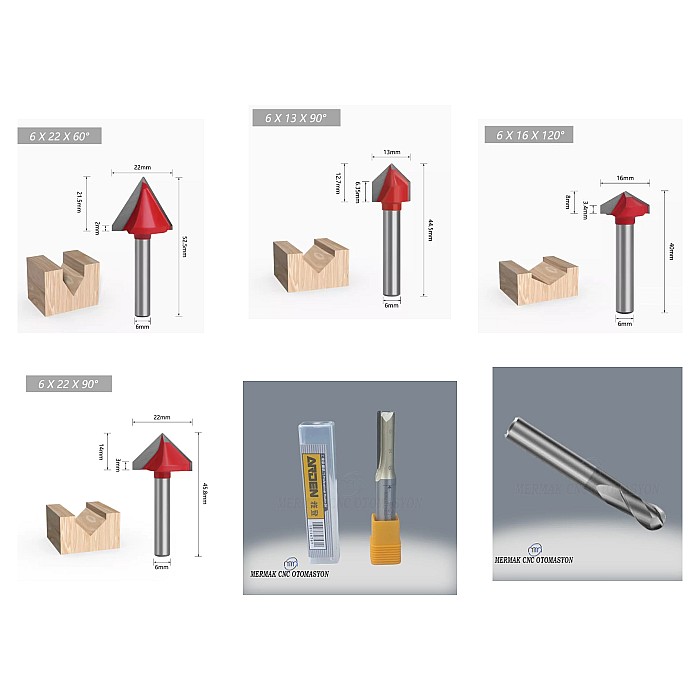
| Tool Type (Example) | Ball Nose End Mill, Tapered Ball Nose End Mill, V-Bit (depending on details) |
| Machining Precision | ±0.05 mm – ±0.2 mm (machine, tool, and material dependent) |
| Surface Quality Factor | Toolpath Stepover, Spindle Motor RPM, Feed Rate |
| License Types (Example) | Royalty-Free, Commercial License, Creative Commons (CC BY, CC BY-NC) |
Field Considerations
- Model Compatibility and Optimization: Ensure that the downloaded model is compatible with your CAM software (ArtCAM, Aspire, Fusion 360 CAM, etc.). Some models can be processed directly, while others may require mesh corrections, resizing, or surface optimization. Optimizing the model’s file size and polygon count according to your machine’s and computer’s processing capacity directly affects machining time and software performance.
- Mesh Errors and Correction: Especially in STL or OBJ models downloaded from free or less professional sources, mesh errors such as open edges, self-intersections, or gaps may be present. These errors can prevent the CAM software from generating correct toolpaths and lead to faulty machining results. For such errors, MeshMixer, Netfabb, or repair tools in CAD software should be used.
- Copyright and Licensing: Carefully review the licensing terms for models to be used in commercial projects. Some models may be free only for personal use, while commercial use may require specific licenses. Copyright infringements can lead to legal issues. Generally, models labeled “Royalty-Free” or “Commercial License” are suitable for commercial use.
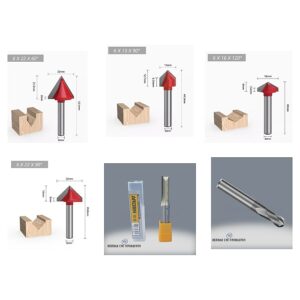
- Tool Selection and Machining Strategy: The level of detail in the relief model, the type of wood to be machined, and the desired surface quality determine the diameter, type, and machining strategy of the CNC tools to be used (e.g., ball nose end mills, tapered end mills, V-bits). Larger tools should be preferred for roughing, while smaller diameter and precise tools should be chosen for fine details. Parameters such as toolpath stepover and stepdown are critical for balancing surface quality and machining time.
- Material Properties: The hardness, grain structure, and density of the wood type to be machined (oak, pine, walnut, etc.) affect machining parameters (spindle motor RPM, feed rate) and tool life. Hardwoods may require slower feed rates and higher spindle speeds.
- Safety Precautions: When working with CNC router machines, it is vital to use personal protective equipment (safety glasses, ear protection), regularly inspect the machine, and know emergency stop procedures. Appropriate dust collection systems should be used for the dust generated during material removal.
Common Problems and Solutions
Problem 1: Model Appears Corrupted or Is Machined Incorrectly
- Cause: Mesh errors in the model (open edges, self-intersecting surfaces), incorrect toolpath calculations, or insufficient resolution.
- Solution: Before loading the model into CAM software, check it with a 3D model repair software (Netfabb, MeshMixer) and fix any errors. Simulate toolpaths in CAM software to detect potential errors beforehand. Increase the model’s resolution or use a more detailed model.
Problem 2: CNC Machine Cannot Read the Model or Gives an Error
- Cause: File format incompatibility, syntax errors in G-code, outdated machine control software, or a corrupted file.
- Solution: Convert the model to the correct format supported by your machine. Ensure that the CAM software uses the correct machine post-processor. Keep machine control software and firmware updated. Re-download the file or obtain it from another source.
Problem 3: Low Processed Surface Quality or Rough Appearance
- Cause: Insufficient toolpath stepover, incorrect tool selection, worn tool, insufficient spindle motor RPM, or excessively high feed rate, material properties.
- Solution: Reduce toolpath stepover to achieve a smoother surface. Use smaller diameter and sharper ball nose end mills for detailed machining. Regularly inspect tools and replace worn ones. Optimize spindle motor RPM and feed rate according to the material and tool type.
Problem 4: Machining Time Is Too Long
- Cause: High model resolution, very small toolpath stepover, unnecessarily detailed toolpaths, inadequate roughing strategy, low feed rates.
- Solution: Use the largest possible tool and aggressive parameters for roughing. Optimize toolpath stepover in the finishing pass (reduce to the necessary minimum). Optimize unnecessary details of the model (polygon reduction). Adjust feed rates to the maximum level allowed by the material and tool.
Problem 5: Tool Breakage or Excessive Wear
- Cause: Incorrect tool selection (not suitable for the material), excessively high feed rate, too deep material removal, vibration, tool not clamped securely.
- Solution: Select the appropriate tool for the material and machining depth. Gradually increase feed rates and material removal depths. Clamp the tool correctly and securely. Check for play in machine beds or the linear guide rail system.
Expert Advice
The acquisition of wood CNC relief models plays a critical role in terms of efficiency and product quality in industrial automation processes. Commercial platforms and software libraries are generally the most reliable sources for high-quality, copyright-free professional models. Free resources offer an alternative for experimental or small-scale projects but require more attention to quality and licensing. For the most unique and niche projects, custom modeling or 3D scanning methods come into play. As field professionals, when selecting models, we must consider not only aesthetics but also technical suitability (file format, mesh quality, optimization potential) and licensing terms. In case of technical issues, seeking solutions across a wide range, from the model itself to fine-tuning CAM parameters and machine settings, will minimize disruptions in production processes. Continuous learning, experimenting with different model sources, and striving to build your own model library will enhance your competitive advantage in the industry and enable you to achieve superior results in your wood CNC relief applications. It should be remembered that no matter how perfect the digital model, the quality of the final product is achieved with the right tool, optimized machining parameters, and a well-maintained industrial CNC router machine. Request a quote on WhatsApp for your industrial CNC router needs.
FAQ
Where can I find reliable sources for industrial-grade wood CNC relief models?
You can find high-quality wood CNC relief models on commercial platforms like TurboSquid, Sketchfab, CGTrader, and MyMiniFactory. Specialized CNC model stores and libraries integrated with CAM software like ArtCAM and Vectric (Aspire, VCarve Pro) are also excellent sources for industrial-grade designs.
What technical factors should I consider when choosing a wood CNC relief model?
When selecting a model, consider its compatibility with your CAM software (e.g., STL, OBJ, RLF, V3M formats), mesh quality (polygon count and smoothness), and licensing terms for commercial use. Ensure the model is optimized for CNC machining to avoid errors and achieve desired detail.
What are the common problems encountered with wood CNC relief models and how can they be resolved?
Common issues include mesh errors (open edges, self-intersections), machine incompatibility with G-code, poor surface quality, excessively long machining times, and tool breakage. Solutions involve using 3D model repair software, ensuring correct post-processors, optimizing toolpaths, and adjusting machining parameters like spindle motor RPM and feed rate.
How can I obtain custom or unique wood CNC relief models for specialized projects?
For unique or highly specific designs, you can create models using 3D modeling software like ZBrush, Blender, or Fusion 360. Alternatively, 3D scanning existing physical objects can generate digital models, or you can hire professional 3D design services for custom work.
What parameters are critical for achieving high surface quality in wood CNC relief carving?
For optimal surface quality, ensure a small toolpath stepover, use sharp and appropriate tools (e.g., ball nose end mills for details), and optimize spindle motor RPM and feed rates for the specific wood type. Regular tool inspection and maintenance are also crucial.