No products in the cart.
What is a Water Cooling Motor (Chiller)? Why is it Essential for Spindles?
Contents
- What is a Water Cooling Motor (Chiller)? Why is it Essential for Spindles? Introduction and Technical Analysis
- What is a Water Cooling Motor (Chiller)? Why is it Essential for Spindles? Operating Principle and Technical Data
- What is a Water Cooling Motor (Chiller)? Why is it Essential for Spindles? Field Considerations
- FAQ
What is a Water Cooling Motor (Chiller)? Why is it Essential for Spindles? Introduction and Technical Analysis
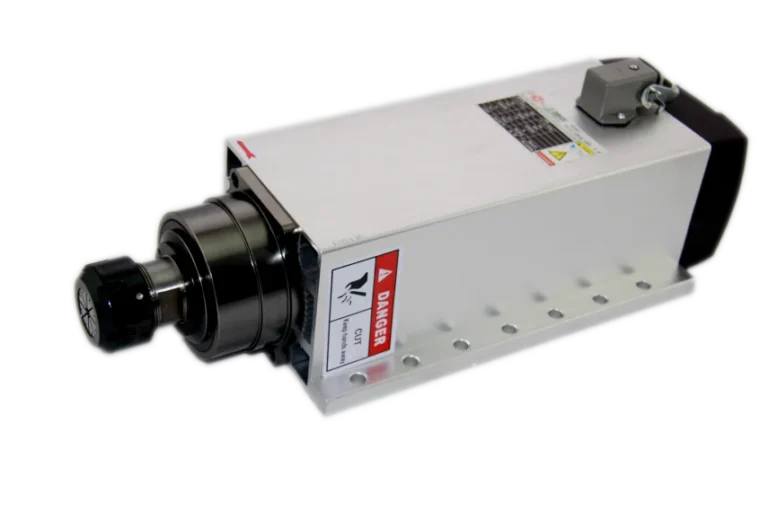
Spindles, considered the heart of industrial automation and especially CNC machining centers, generate significant heat when operating at high speeds and under heavy loads. This heat poses a serious threat to the spindle’s mechanical and electrical components. This is precisely where water cooling motors, or industrial chillers, come into play, providing precise temperature control. A chiller is essentially a device that removes heat from a liquid (typically water or a water/glycol mixture) using a refrigeration cycle and transfers it to the environment. In spindle applications, the primary role of the chiller is to maintain the spindle’s operating temperature at an optimal level, thereby maximizing its performance, extending its lifespan, and ensuring machining accuracy. This technical article and field guide will thoroughly examine why chillers are indispensable for spindles, their operating principles, selection criteria, field applications, and maintenance tips.
What is a Water Cooling Motor (Chiller)? Why is it Essential for Spindles? Operating Principle and Technical Data
An industrial chiller primarily operates on the principle of a vapor-compression refrigeration cycle. This cycle consists of four main components: the evaporator, compressor, condenser, and expansion valve. Hot water from the spindle enters the evaporator, where it transfers heat to a low-pressure, low-temperature refrigerant. The refrigerant absorbs this heat, vaporizes, and cools the water. The cooled water is then sent back to the spindle. The vaporized refrigerant exiting the evaporator enters the compressor. The compressor compresses the vapor to a high pressure and high temperature. This high-pressure, high-temperature vapor is then directed to the condenser. In the condenser, the refrigerant transfers heat to the surrounding air (air-cooled chiller) or another water loop (water-cooled chiller), condenses, and returns to a liquid state. The condensed high-pressure liquid refrigerant passes through the expansion valve, where its pressure and temperature are reduced, and it returns to the evaporator, completing the cycle. This continuous cycle effectively removes heat from the spindle, maintaining a stable temperature.
Spindles are used in many fields such as metalworking, woodworking, glass processing, mold making, and dental applications. These high-speed rotating motors continuously generate heat due to friction, bearing losses, and electrical resistance in the motor windings. If this heat is not controlled, a series of negative consequences arise:
- Thermal Expansion: Metal parts inside the spindle (shaft, bearing housings, motor body) expand when heated. This expansion leads to reduced bearing clearances, increased friction, and consequently, premature bearing failures. Furthermore, in applications requiring micron-level precision on the workpiece, temperature changes in the spindle cause linear expansion, directly affecting machining accuracy and potentially leading to dimensional errors.
- Overheating of Motor Windings: When the windings of the electric motor inside the spindle overheat, insulation materials are damaged, motor efficiency decreases, and ultimately, the motor can burn out. This means costly repair or complete spindle replacement.
- Performance Degradation: High temperatures can reduce the spindle’s torque and speed capacity, negatively impacting production efficiency.
- Tool Life: Excessive spindle heating can also affect the temperature of the tool holder and the tool, shortening tool life and reducing machining quality.
For these reasons, using a chiller for spindles is not just a preference but a necessity in modern industrial production. Chillers are often equipped with PID controllers capable of very high-temperature control accuracy, such as ±0.1°C. This precision is critically important, especially for high-accuracy machining applications. The main technical parameters to consider when selecting a chiller are:
- Cooling Capacity (kW or BTU/hour): The correct capacity must be selected according to the amount of heat generated by the spindle. This depends on factors such as spindle power, operating speed, and duty cycle. Generally, 20-30% of the spindle power can be taken as a starting point for cooling capacity, but the manufacturer’s specifications should always be prioritized.
- Temperature Control Range and Accuracy: The required temperature range (typically 5°C – 30°C) and stability (e.g., ±0.5°C, ±0.1°C) for the application must be determined.
- Pump Flow Rate and Pressure: Selecting a pump that can overcome the resistance of the cooling channels inside the spindle and provide sufficient flow is important. Insufficient flow reduces cooling efficiency.
- Refrigerant Type: A refrigerant that complies with environmental regulations (e.g., R410A, R134a) and has high energy efficiency should be preferred.
- Power Supply: Voltage and phase requirements suitable for the facility where the chiller will operate (e.g., 230V single phase, 400V three phase).
- Dimensions and Weight: Physical dimensions suitable for the installation area.
- Additional Features: Low water level alarm, over-temperature alarm, flow sensor, communication interfaces such as RS485/Modbus, automatic filling systems.
A correctly selected and regularly maintained chiller extends the life of your spindle, improves machining quality, and reduces your production costs. Especially for high-performance and expensive spindles, the investment in a chiller is a necessity that quickly pays for itself.
| Parameter | Value/Description |
|---|---|
| Cooling Capacity | 1.5 kW – 10 kW (Varies by application) |
| Temperature Stability | ±0.1°C – ±0.5°C (Better in high-precision models) |
| Operating Temperature Range | 5°C – 35°C (Depending on ambient temperature) |
| Pump Flow Rate | 8 – 25 L/min (According to spindle cooling channel resistance) |
| Pump Pressure | 0.1 – 0.5 MPa (1 – 5 Bar) |
| Refrigerant | R410A, R134a (Compliant with environmental standards) |
| Tank Capacity | 8 – 20 Liters (For stability and buffering) |
| Power Supply | 220V/50Hz or 380V/50Hz (Single or Three Phase) |
What is a Water Cooling Motor (Chiller)? Why is it Essential for Spindles? Field Considerations
- Correct Capacity Selection and Overload Prevention: The chiller’s cooling capacity must be correctly determined to meet the heat load generated by the spindle. An undersized chiller will not be able to cool the spindle sufficiently, leading to overheating and alarm conditions. An oversized chiller, on the other hand, can lead to unnecessary energy consumption and higher initial investment costs. When calculating capacity, factors such as the spindle’s maximum power, duty cycle, and ambient temperature should be considered. Spindle manufacturer recommendations should always be the primary reference. Forcing the chiller to operate continuously at its maximum capacity can lead to premature wear and reduced efficiency.
- Water Quality and Maintenance: The quality of the cooling water is paramount. Using distilled or deionized water is recommended to prevent scale buildup, corrosion, and biological growth within the cooling system and spindle channels. Regular inspection and cleaning of the water filter are essential. The water should be changed periodically, and anti-corrosion or anti-algae additives may be used if recommended by the chiller manufacturer. Poor water quality can significantly reduce cooling efficiency and damage both the chiller and the spindle.
- Ambient Conditions: The chiller should be installed in a well-ventilated area, away from direct sunlight and heat sources. High ambient temperatures can reduce the chiller’s efficiency and increase its power consumption. Adequate clearance around the chiller for proper airflow is crucial, especially for air-cooled models, to ensure efficient heat rejection from the condenser.
- Regular Maintenance: Like any industrial equipment, chillers require regular maintenance to ensure optimal performance and longevity. This includes checking refrigerant levels, cleaning condenser coils, inspecting electrical connections, and verifying pump operation. A preventive maintenance schedule should be established and strictly followed.
- Alarm and Safety Systems: Modern industrial chillers are equipped with various alarm and safety features such as low water level alarms, over-temperature alarms, and flow sensors. Operators should be trained to understand these alarms and respond appropriately to prevent damage to the spindle or chiller. Integration with the CNC machine’s control system can provide real-time monitoring and automatic shutdown in critical situations.
- System Integration: Ensure proper integration of the chiller with the CNC router machine. This includes correct plumbing connections, electrical wiring, and communication protocols (if applicable). The chiller’s control system should be compatible with the CNC machine to allow for seamless operation and monitoring.
By paying close attention to these field considerations, industrial users can ensure that their water cooling motors (chillers) operate efficiently, protect their valuable spindles, and contribute to consistent, high-quality production. Investing in a reliable chiller and adhering to best practices for installation and maintenance will yield significant returns in terms of equipment longevity and operational stability.
For more information on selecting the right industrial CNC router and its essential components, including spindle motors and cooling systems, please do not hesitate to request a quote on WhatsApp. Our experts at Mermak CNC are ready to assist you with tailored solutions for your specific industrial needs.

FAQ
What is a water cooling motor (chiller) in the context of CNC machines?
A water cooling motor, commonly known as an industrial chiller, is a refrigeration system designed to remove heat from a liquid (usually water or a water/glycol mixture) and dissipate it into the environment. For CNC router machine spindles, it circulates cooled liquid through the spindle's internal channels to maintain an optimal operating temperature.
Why is a chiller absolutely necessary for a CNC spindle?
Chillers are essential for spindles because high-speed operation generates significant heat. Uncontrolled heat leads to thermal expansion, causing bearing damage, reduced machining accuracy, and premature motor winding failure. A chiller maintains a stable temperature, extending spindle life, ensuring precision, and preventing costly downtime.
What are the main technical parameters to consider when selecting a chiller for a spindle?
Key factors include the spindle's cooling capacity requirements (kW or BTU/hr), desired temperature stability (±0.1°C to ±0.5°C), pump flow rate and pressure, and the type of refrigerant. It's crucial to match the chiller's capacity to the spindle's heat load and consider ambient operating conditions.
What maintenance is required for an industrial chiller used with a CNC spindle?
Proper maintenance involves using distilled or deionized water, regularly cleaning water filters and condenser coils, checking refrigerant levels, and ensuring adequate ventilation around the unit. Following a preventive maintenance schedule helps ensure efficient operation and prolongs the life of both the chiller and the spindle.
What are the risks if a CNC spindle operates without adequate cooling?
Overheating can lead to several issues: reduced bearing life due to thermal expansion, decreased motor efficiency and potential burnout of windings, lower torque and speed capacity, and compromised machining accuracy, resulting in dimensional errors and poor surface finish.