


























































































What is Preload in Linear Guides and Why is it Applied?
📑 Table of contents (Click to open)
- What is Preload in Linear Guides and Why is it Applied? Introduction and Technical Analysis
- What is Preload in Linear Guides and Why is it Applied? Operating Principle and Technical Data
- What is Preload in Linear Guides and Why is it Applied? Field Considerations
- What is Preload in Linear Guides and Why is it Applied? Common Problems and Solutions
- What is Preload in Linear Guides and Why is it Applied? Conclusion and Expert Advice
- FAQ
What is Preload in Linear Guides and Why is it Applied? Introduction and Technical Analysis
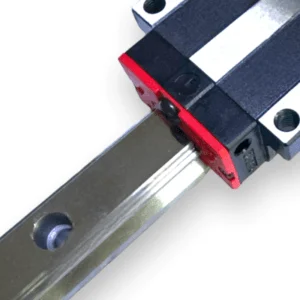
As cornerstones of industrial automation and precision machine engineering, linear guides are indispensable components for controlling and ensuring motion accuracy. In these systems, the quality of contact between moving parts directly impacts the overall machine’s performance, precision, and lifespan. This is precisely where the concept of preload comes into play. Preload in linear guide systems is the deliberate application of a certain amount of compression or tension on the contact surfaces between the moving block and the rail. This process typically aims to eliminate natural clearances in the system by ensuring that the balls or rollers sit in the rail channels with a specific force. Eliminating clearances is critically important in machine applications, as it increases rigidity, reduces vibration, and significantly improves motion accuracy.
The primary purpose of preload is to optimize the behavior of linear motion systems under dynamic and static conditions. When a linear guide system operates with clearance, micro-movements can occur between the block and the rail during changes in direction or under external loads. These micro-movements can lead to positioning errors, vibrations, noise, and even accelerated wear. Preload minimizes these undesirable effects, ensuring the machine operates more stably, precisely, and with a longer lifespan. Especially in applications such as CNC machines, robotic arms, precision measuring devices, medical equipment, and high-speed assembly lines, preload is a critical engineering requirement for the system to achieve expected performance levels. This technical article and field guide will delve into what preload is in linear guides, why it is applied, its operating principles, application methods, and key considerations in the field.
What is Preload in Linear Guides and Why is it Applied? Operating Principle and Technical Data
Preload in linear guides is an engineering principle that directly affects the dynamic and static performance of the system. Essentially, it involves applying a force between the rolling elements (balls or rollers) of the guide block and the rail in a way that eliminates any clearances that would normally occur during operation, and even applies a slight compression. This force ensures continuous contact between the rolling elements and the rail channels. A clearance-free system eliminates the “backlash” problem that can occur at the start of motion or during direction changes, thereby increasing positioning accuracy and repeatability.
Preload is typically achieved through several different methods:
- Oversized Rolling Elements: This is one of the most common methods. Balls or rollers with a slightly larger diameter than the nominal size are placed inside the guide block. These “oversized” elements naturally create a compression force when seated in the rail channels, eliminating clearance.
- Offset Rail Grooves: The geometry of the rail or block’s rolling element grooves is designed to ensure the elements are slightly compressed. This can be seen particularly in roller guides.
- Compression Plates or Springs: In some special designs, preload is achieved by applying an external force to the rolling elements via compression plates or springs placed inside the block.
- Eccentric Adjustment: Especially in miniature or special applications, eccentric shafts or bushings can be used to adjust the contact pressure of the rolling elements with the rail.
The main reasons for preload and the technical advantages it provides are:
- Increased Rigidity and Stiffness: Preload significantly increases the system’s resistance to deformation (rigidity) against external loads. In a clearance-free system, when a load is applied, force is transmitted instantly and directly between the rolling elements and the rail. This is vital for maintaining tool position under cutting forces, especially in precision CNC milling machines and CNC lathe machines. High rigidity means better surface quality and the production of parts within tighter tolerances.
- Positioning Accuracy and Repeatability: Eliminating clearances removes the “backlash” effect that occurs during changes in motion direction. This minimizes the difference between the position commanded by the control system and the actual position, providing high positioning accuracy and repeatability, which are critical in automation systems and robotic applications.
- Vibration Damping and Noise Reduction: In systems with clearance, vibrations and shock loads can cause the rolling elements to impact within the rail channels. Preload prevents these impacts, damping vibration and ensuring quieter system operation. This is particularly important in high-speed or dynamic load applications.
- Extended System Lifespan: Clearances can create irregular contact and localized high stresses between the rolling elements and the rail, accelerating fatigue wear. Preload ensures the load is distributed over a wider contact area, reducing stress concentration and extending the fatigue life of the guide system.
- Reduced Friction Fluctuation: In some cases, light preload provides smoother and more controlled motion by reducing static friction (stick-slip effect) at the start of movement. However, excessive preload can increase friction, which increases power consumption and heat generation.
Preload levels are typically categorized into different classes by manufacturers:
- Light Preload (C0, P0, Z0): Generally suitable for applications requiring low rigidity, high speed, low friction, or light loads. Friction and heat generation are low.
- Medium Preload (C1, P1, Z1): A standard choice for most general-purpose machines and applications requiring moderate rigidity and precision. It offers a good balance.
- Heavy Preload (C2, P2, Z2): Designed for applications requiring high rigidity, maximum precision, and vibration damping, such as CNC machining centers, grinding machines, and measuring machines. At this level, friction and heat generation may increase, which can affect motor size and cooling requirements.
Choosing the correct preload level requires balancing the application’s requirements (load capacity, speed, precision, rigidity, lifespan) with factors such as friction, heat generation, and cost. An incorrectly chosen preload level can negatively affect system performance or unnecessarily increase costs.
| Parameter | Value/Description |
|---|---|
| Preload Class (e.g., HIWIN) | Z0 (Clearance-free), ZA (Light), ZB (Medium), ZC (Heavy) |
| Rigidity Increase | Can vary from 100% (compared to Z0) to 400% (compared to ZC). |
| Friction Resistance Increase | 10% (ZA) – 50% (ZC) or more, depending on class and size. |
| Lifespan Effect (L10) | Correct preload increases lifespan, while excessive preload can reduce it by 10-20%. |
| Position Repeatability | Potential for improvement to micron levels (±1µm) with preload. |
| Vibration Damping | 20-50% improvement, especially in high-frequency vibrations. |
| Application Areas | Light: Automation, transfer. Medium: General machinery. Heavy: CNC, precision measurement. |
What is Preload in Linear Guides and Why is it Applied? Field Considerations
- Selection of the Correct Preload Level: The application’s requirements (loads, speed, precision, rigidity, noise tolerance) must be carefully analyzed. Heavy preload is not always the best option; it can increase friction, heat generation, and thus energy consumption, and even shorten system life. Manufacturer’s catalog data and application engineering guides should be the basis for this selection. If necessary, verification should be done through simulation or prototyping.
- Mounting and Alignment Precision: The performance of preloaded linear guides is highly dependent on mounting precision. The mounting surfaces of the rails and blocks must be perfectly flat and parallel. Even the slightest misalignment can lead to uneven load distribution on the rolling elements, excessive localized stresses, and consequently, premature wear. Using torque wrenches and precision alignment tools during mounting is critically important.
- Lubrication and Maintenance Schedule: In preloaded systems, friction and heat generation can increase due to continuous contact between the rolling elements and the rail channels. This makes regular and correct lubrication even more important. The type and amount of lubricant recommended by the manufacturer should be used, and lubrication intervals must be strictly adhered to. Insufficient lubrication leads to overheating, increased friction, and shortened lifespan.
- Environmental Conditions: Factors such as ambient temperature, humidity, dust, and dirt levels affect the performance of preloaded guides. High temperatures can cause material expansion, altering the preload level. Abrasive or dirty environments can reduce the effectiveness of sealing elements (wipers), allowing foreign matter to enter the system and cause wear. In aggressive environments, specially coated or stainless steel guides should be preferred.
- System Rigidity and Vibration Analysis: Especially in applications requiring high precision or dynamic loads, the rigidity of the entire machine structure must be considered. The rigidity achieved through preload in the guides may not provide the expected contribution to overall system performance if the machine chassis or other structural elements are not sufficiently rigid. Vibration analysis can help identify potential resonance frequencies, allowing for preventive measures in design.
What is Preload in Linear Guides and Why is it Applied? Common Problems and Solutions
Despite correct design and application, some problems can be encountered in preloaded linear guide systems. Most of these problems arise from incorrect selection, faulty mounting, or inadequate maintenance.
- Excessive Friction and Overheating:
- Problem: Increased force required to move the system, overloading of motors, abnormal heating of guide blocks.
- Possible Causes: Selection of an excessively high preload level, insufficient or incorrect lubrication, misalignment (parallelism or flatness of rails), deformation of mounting surfaces.
- Solutions: Re-evaluate the preload level according to application requirements. Perform regular lubrication using the type and amount of lubricant recommended by the manufacturer. Check the flatness of mounting surfaces and the parallelism of rails with laser alignment devices and correct if necessary. Check the mounting torques of guide blocks; overtightening can lead to deformation.
- Reduced Lifespan and Premature Wear:
- Problem: Guides failing sooner than expected, increased noise, reduced smoothness of motion.
- Possible Causes: Excessive preload, insufficient lubrication, contamination ingress, misalignment, overloading (exceeding the carrying capacity of the guides).
- Solutions: Review the preload level. Strictly adhere to the lubrication schedule and check the integrity of sealing elements. Correct mounting errors. Ensure application loads are within the dynamic and static load capacity of the guides. If necessary, consider higher capacity guides or a lower preload level.
- Insufficient Rigidity or Precision:
- Problem: Inability to achieve expected positioning accuracy, vibrations during machining, surface quality issues.
- Possible Causes: Insufficient preload level, weak machine structure (even if guides are rigid, other elements may not be), loose mounting, clearance formation between block and rail.
- Solutions: Consider a higher preload level (but be careful not to cause other problems). Increase the rigidity of the machine chassis and mounting surfaces. Ensure all mounting bolts are tightened to the correct torque. Check that guide blocks are securely seated on the rail and there is no clearance.
- Noise and Vibration:
- Problem: Abnormal sounds (clicking, rubbing) heard during operation, vibrations felt in the machine structure.
- Possible Causes: Insufficient preload (impacts due to clearance), excessive preload (high friction), contamination, damaged rolling elements, misalignment.
- Solutions: Optimize the preload level. Check lubrication status. Clean the guides and check seals. Replace damaged guide blocks or rails. Correct alignment errors.
Early diagnosis and correct resolution of these issues are vital for the uninterrupted and efficient operation of automation systems. Regular inspections and maintenance in accordance with manufacturer instructions prevent potential problems from escalating.
What is Preload in Linear Guides and Why is it Applied? Conclusion and Expert Advice
Preload in linear guides is one of the fundamental pillars of modern industrial automation and high-precision machine design. As we have covered throughout this detailed field guide, preload is more than just a design detail; it is a critical engineering decision that directly affects a machine’s rigidity, positioning accuracy, repeatability, vibration damping capacity, and ultimately, its operational lifespan. Eliminating clearances is key to meeting today’s demanding manufacturing tolerances, ensuring stable and controlled motion even under dynamic loads.
Based on my experience in the field as an expert, I can confidently state that the selection of preload should never be taken lightly. An incorrectly chosen preload level can lead to the system performing below expectations, unnecessary energy consumption, increased wear, and even premature failures. The misconception that “the highest preload is always the best” should be avoided. Every application has its specific requirements, and the most suitable preload level must be carefully determined in line with these requirements. For example, in high-speed, low-load applications, light preload can increase energy efficiency by minimizing friction, while in heavy-duty CNC router machines, heavy preload is indispensable for high rigidity.
Mounting quality is the second most critical factor determining the performance of preloaded guides. Perfect alignment, smooth mounting surfaces, and correct torque values are essential to fully benefit from all the advantages of preload. Errors in these steps can lead to uneven loading and premature failure of the guides. Furthermore, regular and correct lubrication is vital for the long-lasting and trouble-free operation of preloaded systems; friction and heat management must be an integral part of the maintenance routine.
In conclusion, preload in linear guides is a powerful tool that enhances a machine’s precision, reliability, and efficiency. However, to fully utilize the potential of this power, selection in accordance with engineering principles, meticulous mounting, and regular maintenance are essential. When these elements are considered, you can achieve the expected performance and return on investment from your automation systems. Remember, correct preload is not just a component selection, but a strategic engineering decision that ensures the harmonious operation of the entire system. Request a quote on WhatsApp today to learn more about our industrial CNC router machines and linear guide solutions.
FAQ
What is preload in linear guides?
Preload in linear guides is the deliberate application of a compressive force between the moving block and the rail's rolling elements. This force eliminates internal clearances, ensuring continuous contact and improving system performance by increasing rigidity, accuracy, and damping.
Why is preload necessary in linear guide systems?
Preload is applied to enhance rigidity, improve positioning accuracy and repeatability, reduce vibration and noise, and extend the lifespan of the linear guide system. It prevents backlash and ensures stable motion under dynamic loads.
How is preload achieved in linear guides?
Preload is commonly achieved using oversized rolling elements (balls or rollers), offset rail grooves, compression plates or springs, and eccentric adjustment mechanisms. These methods create the necessary compressive force to eliminate clearances.
What are the different levels of preload and their applications?
Common preload levels include light, medium, and heavy. Light preload is for high-speed, low-friction applications. Medium preload is a balanced choice for general-purpose machines. Heavy preload is for high-rigidity, high-precision applications like CNC machining centers.
What are the critical factors to consider when working with preloaded linear guides?
Key considerations include selecting the correct preload level based on application requirements, ensuring high precision in mounting and alignment, adhering to a strict lubrication and maintenance schedule, and accounting for environmental factors like temperature and contamination.