What is a PLC? Differences Between PLC and CNC Control Units
📑 Table of contents (Click to open)
- Introduction and Technical Analysis: What is a PLC? Differences Between PLC and CNC Control Units
- Working Principles and Technical Data: What is a PLC? Differences Between PLC and CNC Control Units
- Field Considerations: What is a PLC? Differences Between PLC and CNC Control Units
- Common Problems and Solutions: What is a PLC? Differences Between PLC and CNC Control Units
- Conclusion and Expert Advice: What is a PLC? Differences Between PLC and CNC Control Units
- FAQ
Introduction and Technical Analysis: What is a PLC? Differences Between PLC and CNC Control Units
Programmable Logic Controllers (PLCs) and Computer Numerical Control (CNC) units are foundational elements of industrial automation, indispensable components of modern manufacturing processes. While both provide automatic control of machines and processes, they have distinct differences in their core functions, architectures, and application areas. This technical article and field guide offers an in-depth analysis of PLC and CNC control units for industrial automation professionals, engineers, and technicians, detailing their differences, operating principles, application areas, and critical field considerations. Our goal is to ensure a correct understanding of these two critical technologies and to provide the necessary technical knowledge for developing optimal automation solutions. In complex automation scenarios encountered in the industry, selecting or integrating the right control unit is vital for project success, efficiency, and cost-effectiveness. In this context, both technologies have their unique advantages and limitations.
Working Principles and Technical Data: What is a PLC? Differences Between PLC and CNC Control Units
A Programmable Logic Controller (PLC) is a type of digital computer designed to control machines and processes in industrial automation systems. It replaces traditional relay-based control systems, offering a more flexible, reliable, and programmable control solution. The core components of a PLC consist of a Central Processing Unit (CPU), Input/Output (I/O) modules, a power supply, and a programming port. The CPU is the brain that executes the program and makes logical decisions. I/O modules allow the PLC to receive information from field devices (sensors, switches) as inputs and control actuators (motors, valves, lamps) as outputs. PLCs are typically programmed using languages defined by the IEC 61131-3 standard, such as Ladder Diagram (Ladder Logic), Function Block Diagram (FBD), Structured Text (ST), Instruction List (IL), and Sequential Function Chart (SFC). Its operating principle relies on a scan cycle: first, all input states are read, then the program (logic) is executed, and finally, all output states are updated. This cycle repeats continuously, enabling the PLC to respond quickly and deterministically. PLCs are used in a wide range of applications, including assembly lines, packaging machines, conveyor systems, process control (chemical, food & beverage), and building automation. They excel particularly in sequential control, state-based logic, and basic motion control applications. Their modular structure allows for easy expansion and adaptation to different I/O requirements.On the other hand, Computer Numerical Control (CNC) units are specifically designed to automate machines requiring complex motion control, such as machine tools and robots. CNC replaces traditional manual machine tools, offering high precision, repeatability, and the ability to process complex geometries. The core components of a CNC control unit include a powerful CPU, specialized motion control cards, servo drives, servo motors, feedback systems (encoders), and an operator panel. CNC machines are typically programmed using a standard programming language known as G-codes and M-codes. G-codes define the tool’s motion path (linear, circular interpolation), speed, and position, while M-codes control auxiliary functions (tool changes, coolant on/off). The CNC control unit interprets these codes, sending precise commands to the servo motors to ensure the tool moves along the specified path at the correct speed and position. Feedback systems (encoders) continuously monitor the actual position of the motors and axes, providing feedback to the control unit to enable closed-loop control. This ensures positioning and motion accuracy down to thousandths of a millimeter. CNC machines are widely used in precision manufacturing processes such as milling, turning, grinding, laser cutting, plasma cutting, 3D printing, and robotic applications. The fundamental difference lies in CNC’s ability for simultaneous multi-axis interpolation and high-precision path tracking.
| Parameter | PLC (Programmable Logic Controller) | CNC (Computer Numerical Control) |
|---|---|---|
| Primary Function | Sequential control, process control, state-based logic, basic motion control. | Precise multi-axis motion control, machine tool automation, complex path tracking. |
| Programming Language | Ladder Logic, FBD, ST, IL, SFC (IEC 61131-3 standard). | G-codes (geometric motion), M-codes (machine functions). |
| Motion Control Capability | Point-to-point, basic speed and position control, basic interpolation in some advanced PLCs. | High-precision simultaneous multi-axis interpolation (linear, circular, helical), speed and acceleration control. |
| Typical Precision | Generally millimeter or centimeter level (sufficient for process control). | Micron or sub-micron level (critical for precision machining). |
| Application Areas | Assembly lines, packaging, conveyors, pumps, valves, building automation, process industries. | Milling, turning, grinding machines, laser/plasma cutters, 3D printers, robotic manipulators. |
| Main Hardware Components | CPU, I/O modules, power supply, communication modules. | CPU, motion control cards, servo drives, servo motors, encoders, operator panel. |
| Communication Protocols | Profinet, EtherNet/IP, Modbus TCP/RTU, DeviceNet, Profibus, AS-i. | EtherCAT, PROFINET IRT, SERCOS III (typically high-speed and synchronized protocols). |
Field Considerations: What is a PLC? Differences Between PLC and CNC Control Units
- Integration and Communication Protocols: In modern industrial facilities, PLC and CNC units often need to work together. For example, a conveyor system feeding a CNC machine or a workpiece loading/unloading robot might be controlled by a PLC. The key to this integration is the selection of compatible communication protocols. Industrial Ethernet-based protocols like Profinet, EtherNet/IP, or EtherCAT should be preferred for high-speed and reliable data exchange. Protocol incompatibilities or incorrect configurations can degrade overall system performance or bring it to a complete halt.
- Accurate Determination of Motion Control Requirements: When starting an automation project, clearly defining the application’s motion control requirements is critical. If the application only requires simple point-to-point movements, sequential operations, or timing-based control, a PLC with associated basic motion control modules may suffice. However, if high-precision, simultaneous multi-axis interpolation, complex geometric machining, or dynamic path tracking is involved, a CNC control unit is indispensable. An incorrect choice can lead to unnecessary costs (selecting CNC) or performance inadequacy (selecting PLC).
- Programming and Maintenance Expertise: Programming and maintenance processes for PLC and CNC systems require different areas of expertise. PLC programming generally requires knowledge of electrical logic and automation processes, while CNC programming demands in-depth knowledge of G-codes, machine geometry, cutting tool information, and metalworking principles. It is essential for field teams to be proficient in both technologies or for different teams with relevant expertise to be coordinated for troubleshooting and system optimization. In maintenance, PLCs typically involve I/O module replacement or software updates, whereas CNCs may require more detailed and precise operations such as servo motor adjustments, encoder calibration, and mechanical alignment.
- Environmental Conditions and Protection Classes: Industrial environments often present challenging conditions with dust, humidity, vibrations, or temperature fluctuations. Selecting hardware with appropriate IP protection ratings for both PLC and CNC units and ensuring proper climate control for electrical cabinets is vital. Precision CNC units, in particular, can be more sensitive to temperature variations, which can affect machining accuracy. Vibration isolation and electromagnetic compatibility (EMC) issues should also not be overlooked, as these factors can cause interference in control signals and disrupt system stability.
- Safety Integration: Compliance with industrial safety standards (ISO 13849, IEC 62061) is mandatory for modern machinery. Both PLCs (safety PLCs) and CNC units (integrated safety functions) can play a role in designing safety circuits. It must be ensured that safety components such as emergency stops, door interlocks, and light curtains are correctly integrated into the control system and that the relevant safety levels (PL, SIL) are achieved. Independent verification and regular testing of safety systems are critical steps to minimize operational risks.
Common Problems and Solutions: What is a PLC? Differences Between PLC and CNC Control Units
Common Problems and Solutions in PLC Systems:
- I/O Module Failures: Failures in input or output modules can lead to inability to receive data from sensors or actuators not operating.
- Solution: Check the LED indicators on the module. Replace the module suspected of being faulty. Test wiring connections and sensor/actuator supply voltages.
- Communication Errors: Interruptions in communication between the PLC and HMI, SCADA, or other devices.
- Solution: Check network cables (Ethernet, Profibus, etc.). Ensure IP addresses, subnet masks, and communication protocol settings are correct. Check the status of network devices (switch, router).
- Program Logic Errors: Errors in the PLC program lead to undesirable operating behavior or machine downtime.
- Solution: Monitor the program online to follow the steps. Use debugging tools to check the logic flow. Rewrite or optimize the relevant section of the program if necessary.
- Power Supply Problems: Fluctuations or interruptions in the power supply to the PLC or its modules.
- Solution: Measure the input and output voltages of the power supply. Check fuses and circuit breakers in the supply line. Replace the power supply if necessary. Consider using a regulator or UPS to mitigate voltage fluctuations in industrial environments.
Common Problems and Solutions in CNC Systems:
- Axis Motion Errors (Servo Alarm): Axes failing to reach the desired position, vibration, or servo motor failures.
- Solution: Read the alarm codes on the CNC control unit and refer to the manufacturer’s manual. Check servo motor, drive, and encoder cables. Check servo drive parameters and gain settings. Check for mechanical backlash or jamming. Replace the servo motor or encoder if necessary.
- Tool Breakage or Wear: Tool breakage or rapid wear during machining.
- Solution: Check tool offsets, cutting parameters (speed, feed), and tool life settings. Ensure the correct tool is selected for the hardness of the material to be machined. Check that the coolant is applied correctly. Examine the G-codes in the machining program for geometric errors.
- G-Code or M-Code Syntax Errors: CNC’s inability to interpret the program due to syntax or logic errors.
- Solution: Carefully read the error message on the CNC screen. Check the relevant line in the program and verify its compliance with G-code/M-code standards. Test the program in simulation software to detect potential errors beforehand.
- Loss of Positioning Accuracy: Inconsistencies in the dimensions or geometries of machined parts.
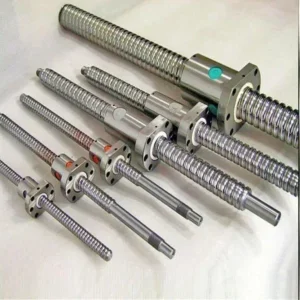
- Solution: Check encoder feedback signals. Check for mechanical backlash, wear in ball screws, or loose motor couplings. Perform calibration tests to check machine alignment and geometric accuracy. Consider thermal expansion effects and ensure the machine operates at a stable temperature.
Conclusion and Expert Advice: What is a PLC? Differences Between PLC and CNC Control Units
In the complex world of industrial automation, PLC (Programmable Logic Controller) and CNC (Computer Numerical Control) units are two fundamental control technologies that play distinct yet often complementary roles. PLCs offer flexible, modular, and cost-effective solutions for general process and machine control, sequential logic execution, and basic motion control. In contrast, CNC units are indispensable for complex machining and manufacturing applications requiring high-precision, simultaneous multi-axis motion control. The fundamental difference lies in PLCs focusing more on logical decisions that determine “when” and “how” a task is performed, while CNCs control “where,” “at what speed,” and “along what path” motion occurs with micron-level precision.Our field experience shows that selecting the right control unit is a critical step for the success of an automation project. The required precision of the application, complexity of motion, number of axes, environmental conditions, integration needs, and of course, budget are the main factors influencing this decision. In modern automation systems, a PLC is often used to control auxiliary systems around a CNC machine (workpiece loading/unloading robots, conveyors, safety gates), while the CNC unit manages only the main machining functions of the machine tool. This integration increases the overall efficiency and flexibility of the system.As expert advice, before starting any automation project, analyze the technical requirements of the application in great detail and determine the most suitable solution by considering the strengths and weaknesses of both technologies. If necessary, seek support from an experienced automation engineer regarding the integration of different control systems. Remember that selecting the right technology and effective integration will not only increase current efficiency but also lay a solid foundation for future expansions and optimizations. Trained personnel and regular maintenance are key to the long-term and trouble-free operation of these systems.
FAQ
What is a PLC and what is its primary function?
A PLC (Programmable Logic Controller) is a digital industrial computer used for automating electromechanical processes, such as controlling machinery on assembly lines, conveyor systems, or robotic devices. It uses programmable memory to store instructions and execute functions like logic, sequencing, timing, counting, and arithmetic to control industrial processes.
What are the core differences between a PLC and a CNC control unit?
The main difference lies in their primary function and precision. PLCs are designed for sequential control, process automation, and basic motion control, often using Ladder Logic. CNC units, on the other hand, are specialized for high-precision, multi-axis motion control and complex path tracking in machine tools, primarily programmed with G-codes and M-codes.
In which industrial applications are PLCs and CNCs typically used?
PLCs are typically used in applications requiring sequential control, process automation, and basic point-to-point motion, such as packaging lines, material handling, and building automation. CNC units are essential for precision manufacturing tasks like milling, turning, laser cutting, and 3D printing, where complex geometric paths and high accuracy are critical.
Can a PLC perform the same motion control tasks as a CNC?
While both can perform some motion control, CNCs are superior for complex, multi-axis, and high-precision motion. PLCs can handle basic point-to-point movements and simple speed control, but they lack the advanced interpolation capabilities and micron-level accuracy inherent in CNC systems required for intricate machining.
Can PLCs and CNCs be integrated into a single automation system?
Yes, in modern industrial setups, PLCs and CNCs often work together. For instance, a PLC might manage the loading and unloading of workpieces onto a CNC router machine, control a conveyor system, or handle safety interlocks, while the CNC unit focuses solely on the precise machining operations.