




































































What Happens If Too Much Current Is Applied to a Stepper Motor Driver?
📑 Table of contents (Click to open)
Introduction and Technical Analysis
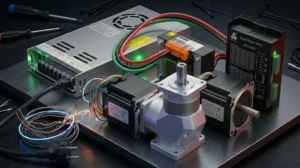
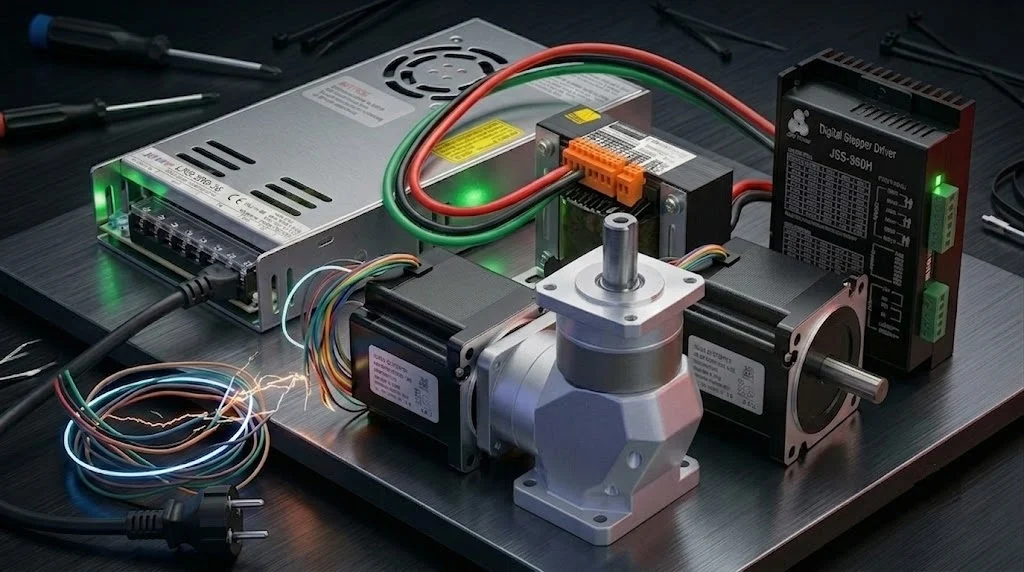
Stepper motors, indispensable components in industrial automation, are preferred in numerous applications requiring precise positioning and speed control. One of the most critical factors directly affecting the performance, efficiency, and lifespan of these motors is the current level supplied by the motor driver. While applying excessive current to the motor driver might initially promise higher torque or speed potential, it actually brings a series of negative effects that can lead to severe and irreversible damage throughout the entire system. This technical article and field guide aims to meticulously examine the causes, mechanisms, and destructive consequences of applying excessive current to stepper motors in industrial automation systems. Simultaneously, it will provide comprehensive guidance to experts and implementers by offering preventive measures and solutions for typical fault scenarios encountered in the field. Proper current management is vital not only for the motor’s reliability but also for the sustainability of the entire system.
Operating Principle and Technical Data
Stepper motors are brushless DC motors that convert electrical energy into precise mechanical motion. They provide position control by rotating at specific angles (steps) due to pulsed current signals applied to their windings. The fundamental operating principle of these motors is based on the magnetic field generated in the stator windings attracting and repelling the permanent magnet or soft iron core on the rotor. By applying current sequentially to each winding set (phase), the rotor is made to advance step by step. The torque produced by the motor is directly proportional to the intensity of the applied current. However, this proportionality is valid only up to the motor’s magnetic saturation point and thermal limits.
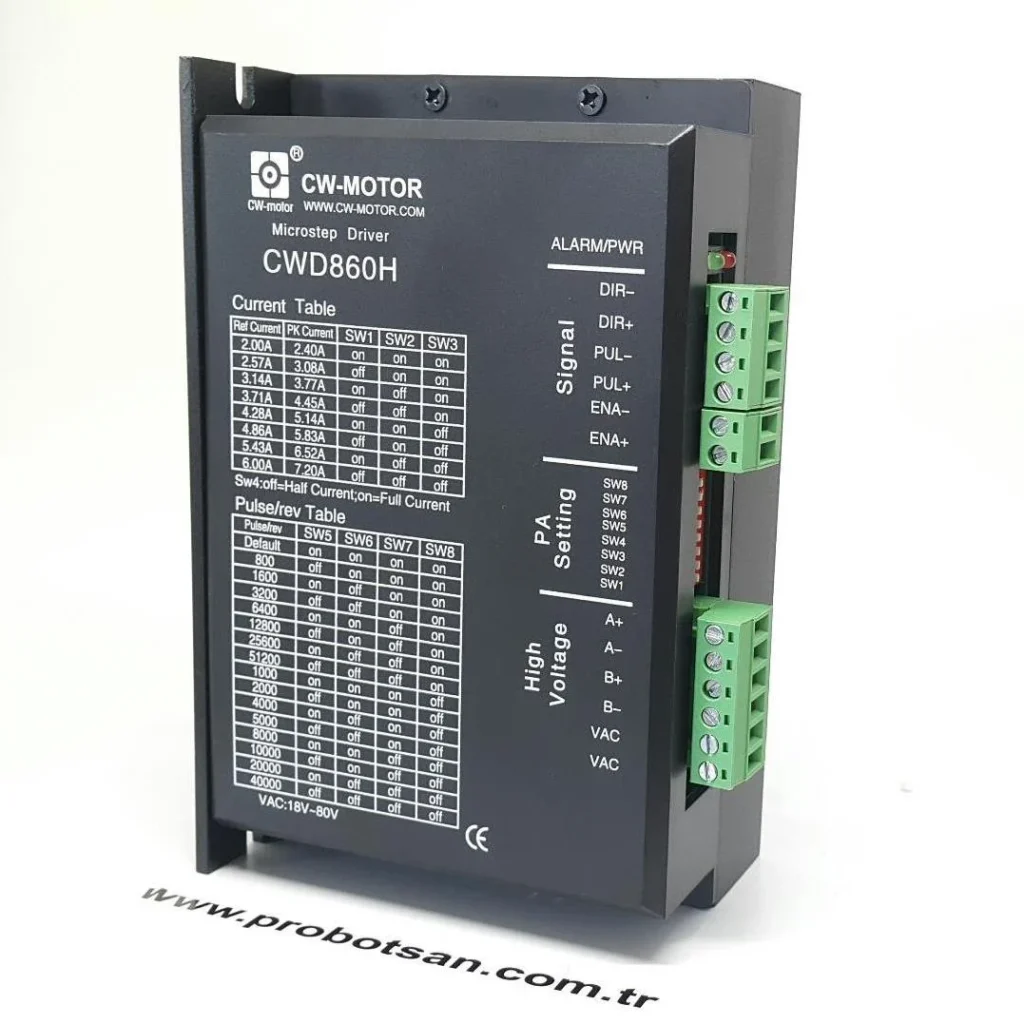
Stepper motor drivers are electronic circuits that receive step and direction signals from a controller (PLC, microcontroller, etc.) and provide appropriate current pulses to the motor windings. Modern drivers typically use current chopping technology. This technology allows a voltage higher than the nominal voltage to be applied to the motor windings, causing the current to rise rapidly. Then, when the current reaches the set target value, switching elements (MOSFETs) are rapidly turned on and off to maintain the current at this target value. This method ensures that the motor produces sufficient torque even at high speeds and also enables smoother and more precise movements with microstepping capability.
Applying excessive current means that the driver’s set current limit exceeds the motor’s nominal current value or the motor’s thermal capacity. Since the resistance (R) of the motor windings is constant, as the applied current (I) increases, the amount of heat generated in the windings (P = I²R) increases quadratically. This poses a serious challenge for the thermal management systems of both the motor and the driver. The winding insulation materials and magnets inside the motor are durable up to a certain temperature limit. When this limit is exceeded, the insulation can be damaged, the magnetic field can weaken, and the motor can suffer permanent damage.
Similar thermal problems occur on the driver side. The power transistors (MOSFETs) and other semiconductor components within the driver generate significant heat during high current flow. Even if the driver’s internal thermal protection mechanisms are activated, continuous operation under excessive current shortens the lifespan of these components and can lead to their failure. Furthermore, excessive current can cause the motor to reach magnetic saturation. Magnetic saturation is a point where the motor’s core material can no longer store more magnetic field. In this case, increasing the current does not increase torque; instead, it reduces efficiency, increases heat generation, and can cause the motor to lose steps.
In industrial automation applications, stepper motors are commonly used in systems requiring precise positioning and repeatability, such as CNC router machines, 3D printers, robotic arms, labeling, and packaging machines. The accurate and continuous operation of the system is critically important in these applications. Failures due to excessive current can lead to production downtime, costly repairs, and even safety risks. Therefore, the selection of stepper motor and driver and the adjustment of current settings in accordance with engineering principles are fundamental requirements for the long-term and reliable operation of the system.
| Parameter | Value/Description |
|---|---|
| Nominal Motor Current (Per Phase) | Should be checked according to the manufacturer’s datasheet. (e.g., 2.0 A – 6.0 A) |
| Driver Maximum Output Current | Should be checked according to the manufacturer’s datasheet. (e.g., 5.0 A RMS / 7.0 A Peak) |
| Motor Winding Resistance (Rs) | Should be checked according to the manufacturer’s datasheet. (e.g., 0.3 Ω – 2.0 Ω) |
| Motor Insulation Class | Class F, H, or B (indicates maximum operating temperature). |
| Thermal Resistance (Motor) | Should be checked according to the manufacturer’s datasheet. (°C/W) |
| Thermal Resistance (Driver) | Should be checked according to the manufacturer’s datasheet. (°C/W) |
| Overcurrent Protection Threshold (Driver) | Internal protection level of the driver (usually 150-200% of nominal current). |
| Recommended Operating Current | 70-90% of motor nominal current (depends on application and cooling conditions). |
Field Considerations
- Correct Motor and Driver Matching: Each stepper motor has specific nominal current and voltage values. When selecting a driver, it is important to choose one whose maximum output current meets and preferably slightly exceeds the motor’s nominal current. However, the adjustable current range of the driver should not exceed the motor’s nominal current, or if it does, it must be adjusted correctly. If a driver with a current capacity significantly higher than the motor’s nominal current is used, precise current adjustment is vital.
- Current Adjustment Procedure and Control: Drivers typically allow current adjustment via DIP switches, potentiometers, or software interfaces. It is recommended to set the current to a level that does not exceed the motor’s nominal current value, often between 70-90% of the nominal current. This extends the motor’s lifespan, prevents overheating, and ensures sufficient torque. After adjustment, confirming the current flowing through the motor windings with a clamp meter will prevent potential incorrect settings.
- Effective Cooling Solutions: Both stepper motors and drivers generate heat during operation. Excessive current multiplies this heat generation. Therefore, appropriate sized heatsinks or forced air circulation (fan) may be required for the motor. For drivers, passive cooling (mounting on large metal surfaces) or active cooling (fan) systems should be integrated. Ambient temperature also directly affects cooling performance, so the operating environment temperature should be kept at an optimum level.
- Cabling and Connection Quality: The cabling between the motor and the driver must have an adequate cross-section and low resistance. Thin or low-quality cables create additional resistance, leading to voltage drop and heat loss. Furthermore, loose or corroded connection points increase resistance, again causing heat generation and unstable system operation. All connections must be tight, clean, and insulated.
- Environmental Conditions Assessment: Factors such as temperature, humidity, and dust levels in the environment where stepper motors and drivers will operate affect the system’s thermal performance and overall lifespan. High ambient temperatures reduce the natural cooling capacity of components and increase the risk of overheating. Dust and humidity can cause short circuits or corrosion in electrical connections, leading to failures. Therefore, components with appropriate IP protection ratings should be selected, and environmental conditions optimized.
- Periodic Inspections and Maintenance: Regular inspection of systems is critical for early detection of potential problems. Motor and driver surface temperatures should be periodically measured with a thermal camera or IR thermometer, and abnormal heating should be monitored. Motor noise, vibration levels, and movement precision should also be observed. To prevent potential failures, the tightness of connections, the condition of cable insulation, and the operational status of cooling fans should be checked.
- Load Analysis and Optimization: Continuous operation of the motor near or above its nominal torque limits increases the risk of overcurrent. The torque and speed requirements of the application should be accurately analyzed, and the motor should be selected with sufficient capacity to meet these requirements. Friction, inertia, and external loads in the mechanical system should be minimized to reduce the load on the motor, thereby enabling efficient operation at lower current levels.

Common Problems and Solutions
Applying excessive current to a stepper motor driver leads to various problems in industrial automation systems. These problems can often escalate into a series of interconnected failures.
Problem 1: Motor Overheating and Burnout
Cause: When the current flowing through the motor windings increases, according to Joule’s law (P = I²R), the amount of heat generated in the windings increases quadratically with the current. This causes the motor to exceed its designed thermal limits. Excessive temperature leads to the degradation of the insulation material on the motor windings and ultimately to short circuits. Additionally, in permanent magnet motors, high temperatures can cause the magnets to lose their magnetic properties (demagnetization), leading to a permanent reduction in the motor’s torque production capacity.
Solution: First, the driver’s current settings should be checked and adjusted below the motor’s nominal current value, typically to 70-90%. To increase the motor’s thermal capacity, a larger heatsink or a fan should be added. The ambient temperature should be lowered, and airflow around the motor should not be obstructed. If the motor is already damaged, it may need to be replaced. Re-evaluating the application’s torque requirements and selecting a motor with higher torque capacity can also be a solution.
Problem 2: Driver Overheating and Failure
Cause: The power switching elements (MOSFETs) within the driver generate significant power loss and thus heat when controlling high currents. Excessive current raises the operating temperature of these elements to critical levels. While the driver’s internal thermal protection mechanisms may activate to shut down the driver or limit the current, continuous operation under excessive load leads to wear and tear on these protection mechanisms and shortens the lifespan of semiconductor components. Consequently, the driver can suffer permanent failure.
Solution: The driver’s current setting should be reduced to or below the motor’s nominal value. An appropriately sized heatsink should be installed on the driver, or a fan should be added to the existing heatsink to provide active cooling. The temperature inside the panel where the driver is mounted should be checked, and if necessary, cabinet cooling solutions (air conditioning, filtered fans) should be used. If the driver has suffered thermal failure, replacement is inevitable. When selecting a driver, a model that can be adjusted to the motor’s nominal current, but with a capacity above the motor’s required current, should be preferred.
Problem 3: Torque Loss and Step Skipping (Stall)
Cause: Overheating of the motor due to excessive current causes both an increase in winding resistance and a weakening of the magnetic field of the permanent magnets. This reduces the maximum torque the motor can produce. Furthermore, when the driver’s thermal protection activates or the motor reaches magnetic saturation, the risk of the motor skipping steps (step loss or stall) increases. This becomes particularly evident at high speeds or during sudden load changes, completely disrupting positioning accuracy.
Solution: Motor current should be optimized to prevent overheating, but kept at the minimum level required for the motor to produce the necessary torque. Adequate cooling should be provided for both the motor and the driver. The mechanical load of the application should be analyzed and reduced if possible. Factors such as mechanical friction or inertia should be controlled and minimized. If necessary, a motor with higher torque capacity or a geared system can be chosen to lighten the load on the motor. Optimizing microstepping settings can also reduce torque fluctuations at low speeds.
Problem 4: Increased Noise and Vibration
Cause: Excessive current can create stronger and more irregular magnetic fields in the motor windings. This can lead to mechanical stresses and magnetostrictive effects in the motor’s core laminations, causing increased noise and vibration. Additionally, the driver’s current chopping frequency and harmonics generated by overcurrent can trigger the motor’s resonant frequencies, leading to undesirable mechanical oscillations.
Solution: The driver current should be adjusted to match the motor’s nominal values to prevent magnetic saturation and excessive forces. The driver’s microstepping settings should be checked, and higher microstep values (e.g., 1/16, 1/32) can be used to achieve smoother motion. The robustness of the mechanical mounting should be checked, ensuring that the motor and mounting surface are rigid. If necessary, vibration damping elements can be used. Ensuring that motor cabling is shielded and properly grounded can also reduce EMI/RFI-induced noise.
Problem 5: System Instability and Safety Risk
Cause: The problems mentioned above (overheating, step skipping, driver failure) disrupt the overall stability of the system. Uncontrolled movements or stoppages of the motor can lead to product damage or operational errors in the production line. In the worst-case scenario, an overheated motor or driver can pose a fire risk if it comes into contact with flammable materials in the vicinity. Furthermore, sudden failure of the driver or motor can also damage other connected electronic components.
Solution: Correct motor and driver selection, appropriate current adjustment, and effective cooling systems should be integrated from the initial design and installation phase of the system. Safety hardware such as thermal sensors and overcurrent protection relays should be used. Periodic maintenance and monitoring routines should be established in the system to detect potential failures in advance. Operators and maintenance personnel should be trained on signs of overheating (smell, smoke, abnormal noise) and know emergency shutdown procedures to safely power off the system. All electrical connections must comply with relevant standards and be secure.
Expert Advice
Applying excessive current to a stepper motor driver, while seemingly a simple adjustment error in industrial automation systems, is a complex and destructive problem that reduces operational efficiency and leads to significant costs. This situation causes the motor and driver to overheat, insulation damage, magnet demagnetization, torque loss, step skipping, increased noise and vibration, and ultimately system failures and safety risks. In the long term, such faulty configurations shorten equipment life and cause unexpected production downtime, resulting in significant economic losses for businesses.
As experts in the industrial automation sector, our recommendation is to exercise maximum care during the design and installation phase of stepper motor systems. First, parameters such as torque, speed, and inertia required by the application must be meticulously analyzed, and an appropriate motor and driver combination that meets these requirements should be selected. The driver’s current setting should never exceed the nominal current values specified by the motor manufacturer; in fact, it should generally be optimized to a value between 70% and 90% of the nominal current. This will ensure the motor runs cooler, extending its lifespan and increasing efficiency. Active or passive cooling solutions should be correctly designed and implemented for both the motor and the driver, taking into account the system’s operating environment and expected load conditions. Details such as cabling quality, tightness of connections, and control of environmental conditions should never be overlooked.
Our field experience shows that periodic maintenance and monitoring routines are vital for early detection and prevention of potential problems. Regular temperature checks with thermal cameras or IR thermometers are highly effective in identifying abnormal heating. Additionally, it will be beneficial to review current settings and cooling performance at regular intervals to ensure the system adapts to changing load conditions over time. It should be remembered that in automation systems, “applying too much power” generally means “faster failure,” not “better performance.” Precise adjustments made with correct engineering principles form the foundation of long-lasting, reliable, and efficient industrial systems. Request a quote on WhatsApp today for expert guidance on your stepper motor and driver needs.
FAQ
What are the immediate consequences of applying excessive current to a stepper motor driver?
Applying too much current to a stepper motor driver can lead to severe overheating of both the motor and the driver, causing insulation damage, demagnetization of magnets, permanent motor damage, and driver failure. It can also result in torque loss, step skipping, increased noise, vibration, and overall system instability, leading to costly downtime and safety risks.
How can I prevent overcurrent damage to my stepper motor and driver?
To prevent overcurrent issues, always match the driver's current capacity to the motor's nominal current. Adjust the driver's current setting to 70-90% of the motor's nominal current, never exceeding it. Ensure adequate cooling for both the motor and driver with heatsinks or fans. Use proper cabling, maintain tight connections, and monitor environmental conditions. Regular inspections and load analysis are also crucial.
What are the warning signs that too much current is being supplied to a stepper motor driver?
Signs of overcurrent include the motor or driver becoming excessively hot to the touch, emitting a burning smell, unusual noises or vibrations from the motor, inconsistent or lost steps during operation, and the driver shutting down intermittently due to thermal protection. Using a thermal camera or IR thermometer for periodic temperature checks can help identify overheating early.
What steps should I take if I suspect my stepper motor driver is receiving too much current?
If you suspect overcurrent, immediately reduce the driver's current setting to the recommended range (70-90% of nominal motor current). Check and improve cooling solutions for both components. Inspect wiring for proper gauge and secure connections. If damage has occurred, replace the affected motor or driver. For complex issues, consult with Mermak CNC experts for diagnosis and resolution.
Does applying more current always result in higher torque and better performance for a stepper motor?
While increasing current might seem to offer more torque, exceeding the motor's nominal current or thermal limits is counterproductive. It leads to magnetic saturation, where additional current no longer increases torque but instead generates excessive heat, reduces efficiency, and causes damage. Optimal performance is achieved within the motor's specified operating parameters.