



















































































What Happens If a CNC Router Machine Isn’t Level During Installation?

📑 Table of contents (Click to open)
Practical notes for CNC router, automation and industrial motion systems.
The Critical Impact of an Unlevel CNC Router Machine
During the installation of a CNC router machine, failing to properly level the unit can lead to significant drops in machining accuracy, resulting in dimensional deviations and poor surface quality on processed parts. This issue also shortens tool life, causes premature wear on mechanical components such as linear guide rails and ball screws, increases vibrations, and ultimately impacts production efficiency with higher long-term maintenance costs. The fundamental geometric accuracy of the machine is compromised.
Understanding the Consequences of an Unlevel CNC Router
When a industrial CNC router is not precisely leveled during installation, it creates a critical error that profoundly affects operational performance and the quality of manufactured parts. Even a seemingly minor tilt can create a domino effect across the machine’s entire mechanical and kinematic structure. An unlevel machine leads to an uneven distribution of its own weight across the frame. This imbalance can induce bending, warping, or twisting in the machine’s structure, even if these deformations are not visible to the naked eye. Such distortions disrupt the critical geometric accuracies, like axial parallelism and perpendicularity, at a microscopic level. The consequences are particularly pronounced in machines with long travel distances and in applications demanding high precision. For instance, a slight inclination of one axis relative to another prevents the moving table or gantry from maintaining a consistent plane throughout its entire range of motion. This results in continuous variations in the distance and angle between the cutting tool and the workpiece. Consequently, machined parts exhibit dimensional inconsistencies, increased surface roughness, and deviations in perpendicularity or parallelism. This fundamental problem directly undermines the machine’s core function: precise and repeatable machining. In industrial automation and manufacturing, where accuracies in the thousandths of a millimeter are often expected, leveling errors are unacceptable defects.
Operational Principles and Technical Data Affected by Leveling
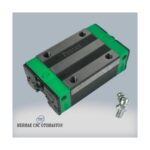
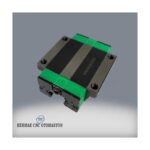
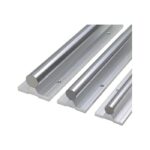
The operational principle of a CNC router relies on the cutting tool precisely removing material from a workpiece through coordinated movements in a three-dimensional space. These movements are driven by high-precision mechanical components like linear guides, ball screws, and servo drives. An unlevel installation creates a fundamental physical problem that hinders the proper functioning of these critical components. When the machine frame is not perfectly horizontal, unbalanced loads are imposed on the linear guide rails. Normally, the carriage blocks moving along the rails distribute the load evenly. However, on an inclined surface, gravity and the machine’s weight concentrate pressure on one side of the rails. This leads to accelerated wear on both the rails and the carriages, increased friction, and variations in motion resistance. Consequently, the servo motors must exert more force, reducing energy efficiency and shortening motor lifespan. Similarly, ball screws are adversely affected by leveling errors. Ball screws convert rotational motion into linear motion with high precision. In an unlevel installation, the loads on the ball screw bearings and the nut become uneven. This imbalance can cause the screw to bend (sag), induce vibrations, and lead to irregular wear of the ball bearings. The result is increased backlash (axial play), reduced positioning accuracy, and loss of repeatability. These mechanical stresses also cause uneven distribution of cutting forces applied by the tool to the workpiece. For example, as a cutting tool moves along an inclined axis, the cutting depth or angle can change continuously. This leads to accelerated wear on one side of the tool, increased risk of tool breakage, and undesirable marks on the machined surface. For parts requiring micron-level tolerances, such errors can halt production entirely or lead to high scrap rates.
Technically, the geometric accuracy of a CNC router is defined by standards such as ISO 230-1, encompassing parameters like axis parallelism, perpendicularity, and flatness. A leveling error causes the machine to deviate from these standards. For instance, if the X and Y axes are not perfectly perpendicular (90 degrees) due to an unlevel installation, it can cause corners of square or rectangular parts to be other than 90 degrees, misalign holes, or disrupt edge parallelism. The process of leveling a machine typically involves high-precision measuring instruments such as precision spirit levels, optical leveling devices, or laser interferometers. By adjusting each leveling foot, all surfaces of the machine frame are aligned within a specified tolerance relative to a reference plane. This ensures that all moving components operate with minimal friction and maximum accuracy, as intended by design. The stability of the machine’s foundation and its ability to absorb vibrations are also integral to proper leveling, as even minor ground movement or vibration can disrupt the level setting and trigger the aforementioned issues.
| Parameter | Value/Description |
|---|---|
| Machining Accuracy Loss | Dimensional deviations at the micron level, increased surface roughness, compromised geometric accuracy (parallelism, perpendicularity). |
| Wear on Mechanical Components | Premature wear and reduced lifespan of linear guides, ball screws, and bearings due to uneven load distribution. |
| Reduced Tool Life | Uneven cutting forces, localized tool wear, risk of breakage, and increased tooling costs. |
| High Vibration and Noise | Resonance, increased vibration levels, and operational noise due to unbalanced motion and loads. |
| Increased Energy Consumption | Higher operational energy costs due to increased friction and inefficient motor operation. |
| Positioning and Repeatability Issues | Increased backlash, deviations in reaching target positions, and inconsistent results in repetitive operations. |
| Increased Maintenance Costs | Higher maintenance and repair expenses due to frequent replacement of worn parts, troubleshooting, and unplanned downtime. |
| Reduced Production Efficiency | Increased scrap rates, need for rework, longer cycle times, and overall decrease in production capacity. |

Key Considerations During Installation
- Foundation Preparation and Structure: The process of leveling a CNC router begins with the quality of the installation floor. The floor must be robust enough to support the machine’s weight, flat, and capable of dampening vibrations. Typically, specially prepared, reinforced concrete foundations with minimal risk of settling are preferred. Even the slightest inclination or unevenness in the floor makes leveling difficult and can cause the level setting to drift over time. Therefore, a floor survey should be conducted before installation, and any necessary floor leveling or reinforcement should be completed. Additionally, isolating environmental vibrations (from nearby forklift traffic, other machinery, etc.) by installing specialized vibration damping pads or creating an independent foundation is crucial.
- Precise Leveling Procedure and Tool Selection: Leveling a machine is not a simple task that can be done with a basic spirit level. Industrial CNC machines require leveling with micron-level precision. This process typically involves using high-accuracy instruments such as precision spirit levels, optical leveling devices, or laser interferometers. By adjusting each leveling foot, all surfaces of the machine frame are aligned within a specified tolerance relative to a reference plane. This ensures that all moving components operate with minimal friction and maximum accuracy, as intended by design. The stability of the machine’s foundation and its ability to absorb vibrations are also integral to proper leveling, as even minor ground movement or vibration can disrupt the level setting and trigger the aforementioned issues.
Ensuring your CNC router machine is perfectly level during installation is not merely a procedural step; it is a fundamental requirement for achieving optimal performance, accuracy, and longevity. Investing the time and resources into a precise leveling process will pay dividends through higher quality parts, reduced wear and tear, and increased overall production efficiency. Do not overlook this critical aspect of your CNC router setup.
For expert advice on CNC router installation and to ensure your machine operates at peak performance, request a quote on WhatsApp today!
Related product categories: Linear Guides, Bearings, and Housings · Mechanical Components · Sigma Profiles