No products in the cart.
Why Do Couplings Break? Understanding Industrial Coupling Failure

Contents
Mermak CNC Technical Guide
Practical notes for CNC router, automation and industrial motion systems.
Understanding Industrial Coupling Failure: Causes and Prevention
Coupling failure can lead to significant production downtime and costly repairs in industrial settings. Understanding the root causes of coupling breakage is crucial for implementing effective preventive maintenance strategies and ensuring the reliability of your machinery. This article delves into the primary reasons why couplings fail, their working principles, and practical steps to avoid such issues.
What is a Coupling and How Does It Work?
In industrial automation and mechanical engineering, couplings are vital mechanical components that connect two rotating shafts, facilitating power and torque transmission. They are indispensable in numerous applications, including motors, pumps, gearboxes, compressors, and conveyor systems. Beyond transmitting torque, couplings are designed to accommodate shaft misalignment, dampen shock loads, and reduce vibration. The failure of these critical components can result in production stoppages, high maintenance costs, and potentially cascade damage to other machine parts. Couplings can be classified as flexible, rigid, or fluid types, each with distinct failure modes and sensitivities. Understanding the underlying reasons for coupling failure is essential for developing preventive maintenance strategies and enhancing system reliability.
Working Principles and Technical Data
Couplings transmit rotational motion and torque from one shaft to another while managing dynamic loads within the system. Their working principle involves mechanically connecting two shafts to transfer torque. The specific mechanisms vary depending on the coupling type:
- Rigid Couplings: Used in high-precision applications where near-perfect shaft alignment is expected. Misalignment can lead to excessive stress and breakage. They transmit torque directly without flexibility.
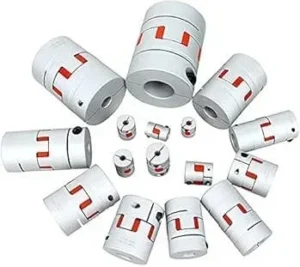
- Flexible Couplings: Designed to compensate for radial, axial, and angular misalignment. They incorporate flexible elements like elastomers (rubber, polyurethane), gears, chains, or grids. This flexibility absorbs shock loads and dampens vibration, reducing stress on the system. However, exceeding these flexibility limits increases the risk of failure.
- Fluid Couplings (Hydraulic Couplings): Transmit power via the kinetic energy of a fluid (typically oil). They excel at absorbing shock loads and enabling smooth motor starts. They can slip under overload conditions, protecting the system, but internal wear or leaks can cause failures.
Key technical data and factors influencing coupling failure include:
- Torque Capacity: The maximum torque a coupling can safely transmit. Exceeding this limit, either instantaneously or continuously, can cause permanent deformation or sudden breakage. Selecting a coupling that meets the system’s maximum torque requirements, considering the service factor, is critical.
- Alignment Tolerances: Each coupling type has specific radial, axial, and angular misalignment tolerances. Exceeding these tolerances imposes excessive stress on coupling elements (e.g., tearing of elastomeric elements, wear on gear teeth) and shaft bearings. Misalignment is a common cause of increased heat, vibration, and eventual coupling fatigue and failure.
- Material Properties: The tensile strength, fatigue resistance, impact strength, and chemical resistance of the coupling material (steel, cast iron, aluminum, polyurethane, etc.) directly impact its lifespan and resistance to breakage. Proper material selection is vital for aggressive environments (moisture, chemicals, high temperatures).
- Dynamic Loads and Vibration: Sudden accelerations, decelerations, impacts, and resonant vibrations create dynamic stresses on the coupling. High-frequency or high-amplitude vibrations can lead to material fatigue, shortening the coupling’s life and increasing breakage risk.
- Operating Temperature: The material properties of the coupling, especially its elastomeric components, are temperature-dependent. Extreme temperatures can cause hardening, embrittlement, or softening, degrading performance and leading to failure.
- Assembly Quality: Correct mounting of the coupling to the shaft, proper tightening torque of fasteners, and correct functioning of locking mechanisms are essential for safe and long-lasting operation. Improper assembly can lead to premature wear and breakage.
| Parameter | Value/Description |
|---|---|
| Torque Capacity | Determined by the application’s continuous and peak torque needs, multiplied by the service factor. |
| Max Speed (RPM) | The highest rotational speed at which the coupling can operate safely. Critical speed and balancing are important. |
| Max Radial Misalignment | Maximum parallel offset between shaft centers (typically 0.05 – 0.5 mm). |
| Max Angular Misalignment | Maximum angular deviation between shafts (typically 0.5 – 2.0 degrees). |
| Max Axial Misalignment | Tolerance for axial displacement between shafts (typically 0.1 – 1.0 mm). |
| Material Type | Steel, cast iron, aluminum, polyurethane, nitrile rubber, etc. Selected based on application and environmental conditions. |
| Operating Temperature Range | The temperature range within which the coupling maintains performance (e.g., -30°C to +80°C). |
| Service Factor | A multiplier used to increase torque capacity based on the application’s nature (e.g., shock loads, frequent starts/stops) (1.0 – 3.0+). |
Field Considerations for Preventing Coupling Failure
- Correct Coupling Selection and Sizing:
The first step in preventing coupling failure is selecting the correct type and size for the application. This involves considering not only the torque to be transmitted but also the system’s maximum speed, potential shock loads, operating temperature, chemical exposure, and expected misalignment. The service factor is a critical multiplier that accounts for the dynamic nature of the application (e.g., shock loads, frequent starts/stops) to increase the coupling’s nominal torque capacity. An undersized coupling risks premature fatigue and breakage even under nominal loads.
- Precise Shaft Alignment:
Misalignment is one of the most common causes of coupling failure. Radial, angular, or axial misalignment imposes excessive stress on coupling elements, leads to premature wear in bearings and seals, and increases vibration and energy loss. In modern industrial automation, using laser alignment systems to achieve micron-level precision is essential. Manual alignment methods are often insufficient and significantly shorten coupling life.
- Regular Maintenance and Inspections:
Regular visual inspections for signs of wear, cracks, deformation, or loose connections are vital. For elastomeric couplings, check for material hardening, cracking, or tearing. For geared or chain couplings, inspect lubrication levels and wear. Including checks of fastener torque values in periodic maintenance schedules can prevent failures caused by loose connections.
- Vibration Analysis and Monitoring:
Couplings can be early indicators of dynamic imbalances and misalignment issues within a system. Continuous or periodic vibration analysis can detect potential problems in the coupling or connected equipment, allowing for proactive intervention before a catastrophic failure occurs. Monitoring vibration levels helps identify developing issues such as imbalance, looseness, or bearing defects that could lead to coupling stress and failure.
- Environmental Considerations:
Operating conditions such as extreme temperatures, humidity, corrosive chemicals, or abrasive dust can significantly impact coupling material integrity and lifespan. Ensure the selected coupling material is resistant to the specific environmental factors present. For example, in chemically aggressive environments, stainless steel or specialized polymer couplings might be necessary. In high-temperature applications, ensure the coupling’s material and lubrication can withstand the heat without degradation.
- Proper Installation Torque:
Following manufacturer specifications for fastener tightening torque is critical during installation. Over-tightening can distort coupling components or damage threads, while under-tightening can lead to movement and fretting wear. Using a calibrated torque wrench ensures that the coupling is securely fastened without inducing undue stress.
Common Failure Modes
Understanding how couplings typically fail can help in diagnosing issues:
- Fatigue Failure: Caused by repeated stress cycles exceeding the material’s endurance limit, often due to vibration, misalignment, or shock loads. This typically manifests as cracks that propagate over time, leading to sudden breakage.
- Overload Failure: Occurs when the torque applied exceeds the coupling’s rated capacity, leading to yielding, deformation, or immediate fracture. This can happen during startup, emergency stops, or due to mechanical jams.
- Wear: In geared, chain, or grid couplings, inadequate lubrication or contamination can lead to excessive wear on teeth, chains, or grids, eventually compromising torque transmission and potentially leading to failure. Elastomeric elements can also wear down over time, especially if subjected to excessive flexing or heat.
- Environmental Degradation: Exposure to chemicals, extreme temperatures, or UV radiation can degrade coupling materials, particularly elastomers, making them brittle or soft and prone to cracking or tearing.
- Assembly Errors: Incorrect installation, such as forcing components, improper keyway fit, or incorrect fastener torque, can create stress concentrations and lead to premature failure.
Conclusion
Coupling failure is a complex issue with multiple potential causes, ranging from improper selection and installation to environmental factors and operational stresses. By adhering to best practices in selection, precise alignment, regular maintenance, and condition monitoring, industrial facilities can significantly mitigate the risk of coupling failure. Investing in quality components and diligent maintenance ensures the continuous, reliable operation of critical machinery, preventing costly downtime and protecting valuable equipment. For robust and reliable power transmission solutions, consult with experts who understand the demands of industrial applications.
If you are experiencing issues with your current coupling systems or need assistance selecting the right components for your CNC machinery or other industrial applications, our experts are ready to help. Request a quote on WhatsApp to discuss your specific needs and find the optimal solution.
Related product categories: Genel · Zincir · 40 mm Kaplin GS19