





































































How to Detect Ball Screw Backlash: A Comprehensive Guide

📑 Table of contents (Click to open)
Ball screw backlash is the unwanted axial play between the screw and nut, negatively impacting positioning accuracy, repeatability, and overall machine performance. Understanding how to detect and address this issue is crucial for maintaining high-precision industrial machinery. This guide covers manual checks, dial indicator measurements, and system behavior analysis.
Practical notes for CNC router, automation and industrial motion systems.
Understanding Ball Screw Backlash: Causes and Impact
In industrial automation and precision machinery, particularly CNC machines, robotic arms, linear actuators, and automated assembly lines, ball screws are vital components ensuring motion accuracy and repeatability. A critical parameter affecting their performance is “ball screw backlash,” technically known as “backlash.” This refers to the delay or free movement between the rotation of the screw and the initiation of axial movement in the nut. Essentially, it’s the amount the screw can turn before the nut starts to move in response, and vice versa when the rotation direction changes. This play, often originating from manufacturing tolerances, wear over time, or improper installation, can cause significant issues in high-precision applications, even at the micron level.
Operating Principle and Technical Data
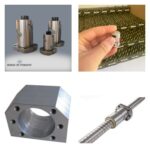
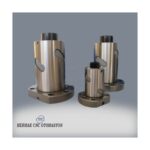
Ball screws consist of a threaded shaft and a nut with recirculating ball bearings that fit into the helical grooves of the shaft. When the screw rotates, the balls roll within the nut, converting rotational motion into linear motion with high efficiency and precision. Backlash arises from microscopic clearances within the ball bearing system or between the balls and the screw/nut surfaces. This “dead zone” is the period of rotation before the nut responds to a change in direction.
Key causes of backlash include:
- Manufacturing Tolerances: Perfect fit between screw and nut is challenging; some clearance is inherent.
- Wear: Continuous operation, high loads, and inadequate lubrication lead to wear on balls and raceways, increasing clearance over time.
- Installation Errors: Misalignment during mounting can introduce unwanted play.
- Thermal Expansion: Differential expansion of materials due to temperature changes can affect clearances.
Solutions to minimize or eliminate backlash involve engineering approaches like preloading. Preloading applies a specific compression force to the balls or the nut itself, effectively removing the play. This is often achieved using dual nuts (compressed against each other) or larger diameter balls that fill the nut’s channels more completely. Preloading enhances rigidity but can increase friction and heat generation.
| Parameter | Value/Description |
|---|---|
| Clearance Type | Axial (Backlash), Radial (Looseness) |
| Measurement Unit | Micron (µm), Millimeter (mm) |
| Acceptable Limit | Varies by application (e.g., <10µm for precision CNC, <50µm for general industrial) |
| Backlash Elimination Methods | Preloading (Dual Nut, Large Balls), Adjustable Nuts, Flexible Nut Designs |
| Affected Performance | Positioning Accuracy, Repeatability, Surface Finish, Vibration, Noise |
| Measurement Instruments | Dial Indicator, Laser Interferometer, Rotary Encoder, LVDT |
| Primary Causes | Manufacturing Tolerance, Wear, Installation Errors, High Loads, Insufficient Lubrication |
Field Detection Methods
- Visual and Manual Inspection:
Start by visually inspecting the ball screw system for abnormal wear, cracks, or deformations on the screw or nut. With one end of the screw held stationary, try to move the nut axially. Significant free movement before the screw engages indicates high backlash. This quick check is useful for gross errors but insufficient for micron-level precision.
- Dial Indicator Measurement:
This is a common and reliable method. Mount a dial indicator to measure axial movement on the nut or an attached component. Secure the screw shaft (prevent rotation). Push the nut in one direction, zero the indicator, then push it in the opposite direction (without rotating the screw). The indicator’s reading shows the axial backlash. Repeat at different points to check for uniformity. Consistent force application is key.
- Precision Measurement with Rotary Encoder or Laser Interferometer:
For high-precision applications, rotary encoders (measuring screw rotation) and linear encoders or laser interferometers (measuring nut’s linear travel) can be used. The difference between commanded and actual movement reveals backlash. These methods offer high resolution and accuracy, suitable for dynamic measurements, but require more sophisticated equipment and expertise.
- Machine Control System Data Analysis:
Modern CNCs and automation systems monitor axis positions and motor commands. Discrepancies between commanded and feedback positions, especially during direction changes, can indicate backlash. High backlash compensation values in the machine’s settings also suggest increased play.

Common Problems and Solutions
Ball screw backlash can lead to several issues in industrial automation systems:
- Problem: Reduced Positioning Accuracy and Repeatability Loss
The machine may fail to reach the target position accurately, or return to the same point with varying results, especially when changing axis direction. This results in inconsistent part dimensions on CNC machines or incorrect object placement in robotics.
Solution: Measure backlash accurately. If it exceeds acceptable limits, inspect the ball screw nut. For preloaded nuts, check preload levels or adjust if possible. If the nut is worn or the preload mechanism is faulty, replacement may be necessary. In some cases, the screw itself might be worn.
- Problem: Poor Surface Finish on Machined Parts
Backlash can cause tool chatter and vibration during cutting operations, leading to rough surface finishes on machined components. This is particularly noticeable on CNC milling and turning operations.
Solution: Ensure proper preload and consider using higher precision ball screws if the application demands it. Regular maintenance, including lubrication and inspection for wear, is crucial. Sometimes, adjusting cutting parameters (feed rate, spindle speed) can help mitigate the effects of minor backlash.
- Problem: Increased Noise and Vibration
Excessive backlash can cause components to impact each other during operation, leading to increased noise and vibration levels. This can be detrimental to machine longevity and operator comfort.
Solution: Address the root cause by restoring proper preload or replacing worn components. Ensure the ball screw is correctly aligned and supported by appropriate bearing blocks. Using damping materials or redesigning mounting points might offer supplementary benefits.
- Problem: Premature Wear of Related Components
The shock and impact associated with backlash can accelerate wear not only on the ball screw itself but also on linear guides, bearings, and motor couplings.
Solution: Implementing backlash reduction strategies (like preloading) is the primary solution. Regular maintenance, including cleaning and proper lubrication of the entire motion system, is essential to prevent accelerated wear across all components. Using higher quality, more durable components can also extend service life.
Maintaining the precision and reliability of your CNC router machine or any automated system relies heavily on managing ball screw backlash. Regular inspection, accurate measurement using tools like dial indicators, and timely implementation of solutions such as preloading or component replacement are key to ensuring optimal performance and longevity. For critical applications, consulting with experts or upgrading to higher-precision components may be necessary.
Need to ensure your machinery operates with peak precision? Request a quote on WhatsApp today and let Mermak CNC help you optimize your industrial automation.
Related product categories: Vidalı Mil · Genel · 20 mm Vidalı Mil Ve Somun Çeşitleri
