



































































The Real Difference Between Cheap and Expensive CNC Machines
📑 Table of contents (Click to open)
- Operational Principles and Technical Specifications
- Mechanical Structure and Rigidity
- Spindle Motor Quality
- Control System and Motion Control
- Software and Integration
- Tolerance, Accuracy, and Repeatability
- Durability and Longevity
- After-Sales Support and Service
- Conclusion: Investing Wisely in Your Production Future
Discover the critical differences between budget-friendly and premium CNC machines. Understand how factors like precision, build quality, control systems, and after-sales support impact your production efficiency and final product quality. Make the right choice for your industrial operations.
Practical notes for CNC router, automation and industrial motion systems.
In the industrial automation sector, one of the most fundamental dilemmas when investing in a CNC (Computer Numerical Control) machine is the choice between budget-friendly “cheap” models and those with a high price tag. At first glance, both promise to perform the same task: processing materials using computer commands. However, the differences between these two categories extend far beyond just price, profoundly impacting operational efficiency, production quality, and long-term costs.
The true distinction lies in factors such as the machine’s overall performance spectrum, structural integrity, control system sophistication, software integration, and the quality of after-sales service. While cheap CNC machines might suffice for hobbyist use, prototyping, or low-volume jobs with wide tolerances, expensive industrial CNC machines are designed for mass production, manufacturing high-precision parts, and machining demanding materials. These machines do not compromise on critical production aspects like repeatability, machining speed, and durability.
The differences begin with the quality of components used and extend to the overall design philosophy of the machine. For instance, expensive machines often feature cast iron or granite composite frames for high rigidity, whereas cheaper machines are more commonly constructed from aluminum extrusions or welded steel profiles. These structural variations directly affect the machine’s vibration damping capabilities, consequently influencing its machining accuracy and surface finish. In terms of control systems, expensive machines are typically equipped with advanced servo drives, high-resolution encoders, and industrial-grade CNC controllers, while cheaper machines use simpler stepper motors and open-source or entry-level control boards.
Operational Principles and Technical Specifications
The working principle of CNC machines relies on precisely moving a cutting tool or workpiece according to a sequence of commands known as G-code, generated by a computer. These movements are typically performed along the X, Y, and Z axes, involving linear and circular interpolations. The fundamental technical differences between cheap and expensive machines become apparent in how accurately, quickly, and reliably these movements are executed.
Mechanical Structure and Rigidity
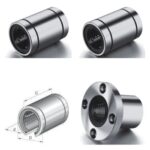
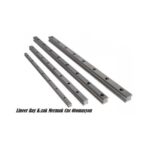
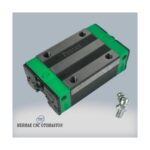
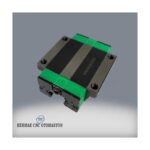
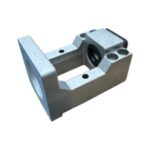
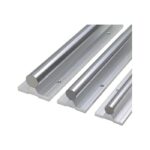
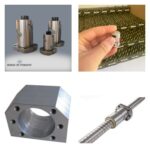
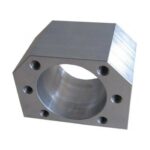
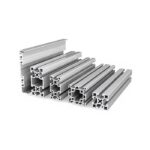
Cheap machines are generally built from lighter materials (e.g., aluminum extrusions, thin sheet metal). This reduces their vibration damping capability, leading to precision loss during high-speed operations or when machining hard materials. They often use simple V-wheels or relatively low-quality linear guide rails. Expensive machines, conversely, feature frames made from heavy cast iron, steel, or composite materials. This rigid structure ensures minimal vibration and deflection even under high cutting forces, resulting in superior surface quality and dimensional accuracy. They are equipped with high-precision linear guide rails and ball screws.

Spindle Motor Quality
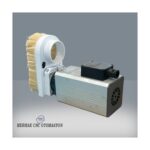
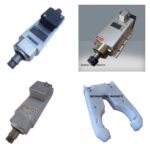
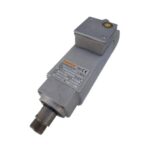
The spindle motor is a critical component where the cutting tool rotates to perform the cutting operation. Cheap CNC machines typically use lower-power, air-cooled, or brushed spindle motors. These motors are prone to overheating during prolonged operation, offer low torque, and can exhibit runout at high speeds, degrading machining quality, especially with hard materials or fine details. Expensive CNC machines are equipped with high-power, water-cooled, brushless industrial spindles, often featuring ceramic bearings. These spindles provide minimal runout even at very high RPMs, consistent torque, and excellent thermal stability, enabling faster machining, longer tool life, and superior surface finishes.
Control System and Motion Control
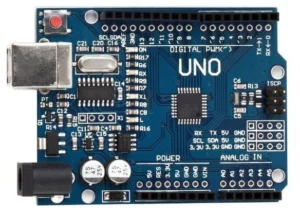
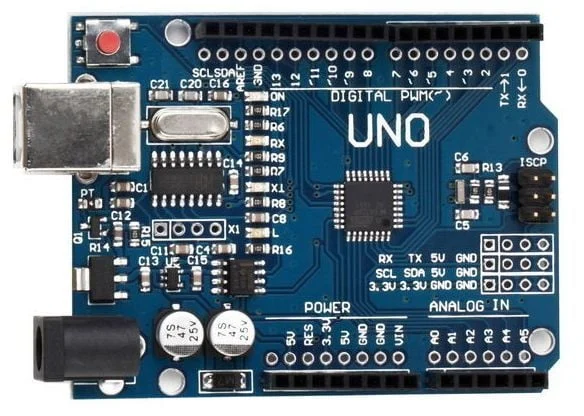
Cheap machines often utilize open-source controllers (e.g., GRBL-based Arduino boards) or basic industrial control cards. These systems can manage simple 3-axis movements but have limitations in handling complex interpolations, high-speed G-code processing, and advanced feedback loops. Stepper motors are commonly used, increasing the risk of lost steps during high-speed movements. Expensive machines are equipped with industrial-grade, closed-loop CNC controllers (like Siemens Sinumerik, Fanuc, Heidenhain). These controllers feature high-speed processors, advanced algorithmic capabilities, and work with precise servo drives. Servo motors create a feedback loop via encoders that continuously monitor their position, eliminating the risk of lost steps. This allows the machine to process complex 3D geometries at much higher speeds and with greater accuracy.
Software and Integration
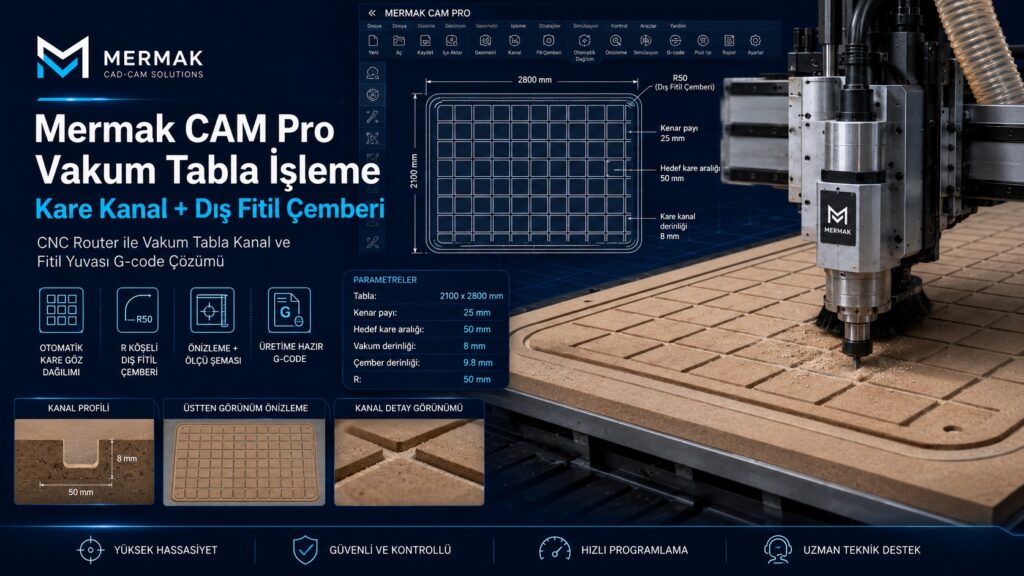
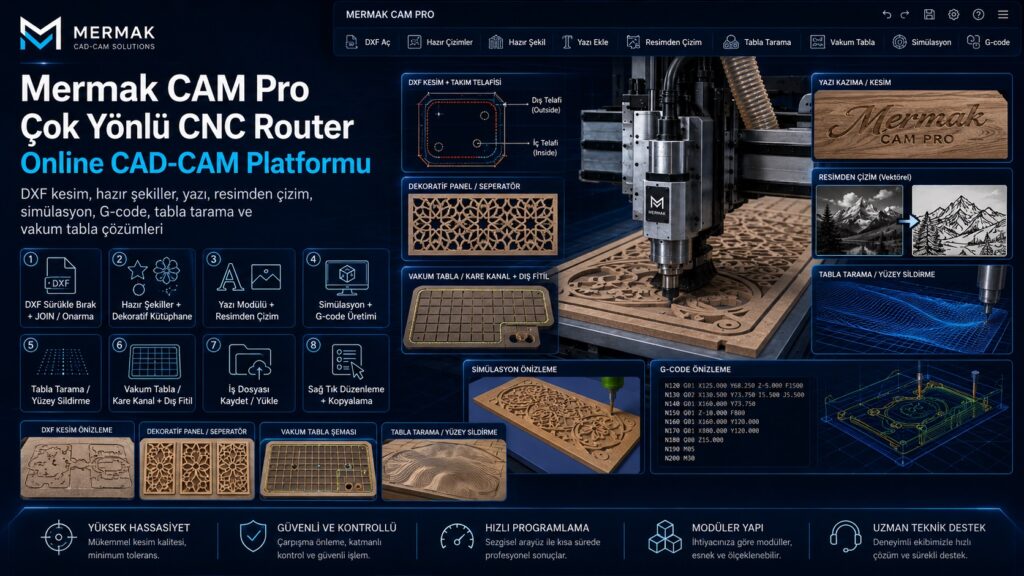
Cheap CNC machines are typically compatible with basic CAM software or open-source solutions. Post-processor support may be limited, complicating data transfer between different software packages. Expensive machines are fully compatible with a wide range of industry-standard CAD/CAM software. They offer advanced post-processors and seamless integration with simulation software and factory automation systems, which is critical for optimizing production processes, reducing error margins, and increasing efficiency.
Tolerance, Accuracy, and Repeatability
These three parameters are the most crucial indicators of a CNC machine’s quality. Cheap machines often operate with tolerances of ±0.1 mm or larger, and their repeatability is low. This means that producing the same part multiple times can result in significant dimensional or geometric variations. Expensive machines can operate with micron-level accuracy (±0.001 mm – ±0.005 mm) and offer high repeatability. This is particularly vital for industries like aerospace and medical manufacturing where extremely tight tolerances are mandatory. The use of high-quality components, robust construction, and advanced control systems in premium machines ensures consistent results across thousands of production cycles.
Durability and Longevity
The lifespan and reliability of a CNC machine are directly tied to its build quality and the components used. Cheap machines, often made with less robust materials and simpler mechanisms, may require more frequent maintenance and repairs, leading to unplanned downtime and increased operational costs. Their service life is generally shorter. Expensive industrial CNC routers are built for continuous, heavy-duty operation. They utilize high-grade materials, industrial-rated components, and superior engineering, ensuring a longer operational life, reduced maintenance needs, and higher overall equipment effectiveness (OEE).
After-Sales Support and Service
A significant, often overlooked, difference lies in the after-sales support. Manufacturers of expensive CNC machines typically provide comprehensive support, including installation, training, maintenance services, readily available spare parts, and expert technical assistance. This ensures that your investment is protected and that any issues are resolved quickly, minimizing production disruptions. For cheap machines, support can be limited, fragmented, or non-existent, leaving users to troubleshoot problems independently.
Conclusion: Investing Wisely in Your Production Future
Choosing between a cheap and an expensive CNC machine is a strategic decision that hinges on your specific production requirements, quality standards, and long-term business goals. While a lower initial cost might seem appealing, the hidden costs associated with lower precision, reduced durability, potential downtime, and limited support can quickly outweigh the savings. For industrial applications demanding high precision, reliability, and efficiency, investing in a quality, albeit more expensive, industrial CNC router is often the most cost-effective and productive choice in the long run. It ensures consistent quality, maximizes throughput, and supports your business’s growth and competitiveness.
Ready to find the right CNC solution for your demanding industrial needs? Request a quote on WhatsApp today and let our experts guide you to the best machine for your application.
Related product categories: Genel · Tekerlek · Step Motor