



































































What is a DSP Control Unit? Computerless CNC Operation

📑 Table of contents (Click to open)
- What is a DSP Control Unit? Introduction and Technical Analysis of Computerless CNC Operation
- How DSP Control Units Work: Operating Principles and Technical Data for Computerless CNC Operation
- What is a DSP Control Unit? Field Considerations for Computerless CNC Operation
- What is a DSP Control Unit? Common Problems and Solutions in Computerless CNC Operation
- What is a DSP Control Unit? Conclusion and Expert Advice for Computerless CNC Operation
- FAQ
What is a DSP Control Unit? Introduction and Technical Analysis of Computerless CNC Operation
At the heart of industrial automation, CNC (Computer Numerical Control) systems are an indispensable part of modern manufacturing. Traditionally, CNC machines have often relied on an industrial PC to execute complex calculations and control algorithms. However, in recent years, the concept of computerless CNC operation with DSP (Digital Signal Processor) Control Units has gained significant interest, especially for small and medium-sized enterprises (SMEs) and specialized applications. This approach not only offers cost-effectiveness and ease of use but also brings specific operational advantages. This field guide and technical article will delve into what DSP control units are, how they function in computerless CNC systems, their place in the industrial automation sector, their technical details, and critical considerations for field implementation.
As its name suggests, a DSP Control Unit is a specialized microprocessor-based controller set with digital signal processing capabilities. Unlike general-purpose microprocessors, DSPs are specifically designed to perform repetitive mathematical operations (such as filtering, transformations, multiply-accumulate operations) at high speeds and with high efficiency. These characteristics make them ideal for real-time control systems. In CNC applications, this ensures that critical tasks such as precise motor control, axis interpolation, tool path calculations, and instantaneous processing of sensor feedback are performed reliably and without delay.
The term computerless CNC operation refers to a system where all control, program loading, and operator interface functions are integrated directly into the control unit, without the need for an external desktop or laptop computer to operate the machine. Such systems are typically equipped with an internal screen, keypad or touch panel, and interfaces like USB or SD card slots. Operators can load and edit G-codes via these interfaces and operate the machine directly from the control unit. This integrated approach reduces system complexity, lowers the potential for failures, and offers a more robust solution in industrial environments. Avoiding the sensitivity of an external computer is a significant advantage, especially in harsh production environments such as dusty, humid, or vibrating conditions. These systems are preferred in many different applications, including woodworking, stone processing, plasma cutting, laser engraving, and small-scale metal machining.
This article aims to provide comprehensive guidance to industry professionals and engineers by offering a wide range of information, from the basic architecture of DSP control units and their integration with CNC systems, to typical field problems and proposed solutions. Our goal is to fully understand the opportunities and potential offered by this technology and help in making informed decisions in industrial automation processes.
How DSP Control Units Work: Operating Principles and Technical Data for Computerless CNC Operation
The fundamental strength of DSP control units in computerless CNC operation comes from their real-time performance and specialized architectures. A DSP’s operating principle is optimized to execute digital signal processing algorithms (such as filtering, Fourier transforms, PID control loops) at extraordinary speeds and in a deterministic manner. This eliminates the latency that arises when a general-purpose CPU has to divide resources between an operating system and various applications. In the CNC context, this feature ensures that commands sent to motor drives are processed instantly, sensor feedback is evaluated within milliseconds, and complex axis interpolations are performed flawlessly.
The main components of a DSP-based CNC control unit typically include:
- DSP Core: The main processor that performs high-speed mathematical operations. It usually supports fixed-point or floating-point arithmetic.
- Memory: RAM and Flash memory that store program code (firmware), G-code files, and temporary data. Flash memory ensures that programs are permanently saved when the system is powered off.
- Input/Output (I/O) Ports: Used to send signals to motor drives (step/direction, PWM) and receive feedback from external devices such as limit switches, emergency stop buttons, and tool sensors.
- Communication Interfaces: Ports such as USB, SD card, Ethernet (in some models), RS232/485 are used for program loading, firmware updates, and communication with peripherals.
- User Interface: An integrated LCD screen, keypad, or touch panel used by the operator to monitor the machine, select programs, perform manual movements, and change settings.
- Power Management: Units that provide stable power to the control unit and connected components.
In a computerless operation scenario, G-codes are typically generated on an external computer using CAD/CAM software and then transferred to the DSP control unit via a USB drive or SD card. The control unit loads these G-codes into its internal memory, which are then interpreted by the DSP core to control the machine’s movements. The operator can start, pause, adjust speed, or perform manual movements via the integrated interface. This eliminates the complexity, software conflicts, virus risks, and interruptions caused by operating system updates associated with a PC, thereby providing higher reliability and uptime on the production line.
DSP-based control units excel particularly in multi-axis interpolation. For example, in applications requiring 3D carving or complex surface machining, the simultaneous and coordinated movement of multiple axes (X, Y, Z, A, B, etc.) is critical. DSPs calculate these complex motion profiles within milliseconds and send precise pulse sequences to motor drives, ensuring excellent surface quality and dimensional accuracy. Furthermore, in closed-loop control systems, they can instantly process encoder feedback to correct motor position errors, which translates to higher precision and repeatability.
Application areas are quite broad:
- Wood and MDF Processing: Furniture manufacturing, door panels, decorative carving.
- Stone and Marble Processing: Monuments, countertops, sculptures.
- Advertising and Signage Industry: Letter cutting, logo engraving, 3D sign production.
- Plasma and Laser Cutting: Metal sheet cutting, textile cutting.
- PCB Prototyping: Small-scale circuit board milling.
- Education and Hobby: Learning platforms due to ease of use and cost-effectiveness.
Technically, factors determining the performance of a DSP control unit include processor speed (MHz/GHz), memory capacity (MB), maximum number of axes, pulse output frequency (kHz) (affecting maximum motor speed and precision), number of input/output pins, and supported G-code standards. In industrial automation environments, environmental durability features such as electromagnetic compatibility (EMC), vibration resistance, and a wide operating temperature range are also of great importance.
| Parameter | Value/Description |
|---|---|
| Processor Architecture | High-Performance 32-bit/64-bit DSP Core (e.g., Texas Instruments C2000, Analog Devices Blackfin) |
| Number of Control Axes | 3, 4, 5, or 6-axis simultaneous control (interpolation capability) |
| Pulse Output Frequency | 300 KHz – 1.5 MHz (Determines maximum motor speed and resolution per axis) |
| Memory (RAM/Flash) | 256 MB RAM / 1 GB Flash (Sufficient space for G-code storage, firmware) |
| Input/Output Ports | Opto-isolated 16 inputs / 8 outputs (Generally expandable) |
| User Interface | 3.5″ – 7″ TFT LCD Screen, Integrated Keypad or Touch Panel |
| Communication Protocols | USB, SD Card, RS232/485 (Ethernet/Modbus TCP in some models) |
| Supported Codes | Standard G-code (ISO), M-code, PLT, DXF (With internal converter) |
| Operating Voltage | 24V DC (Industrial standard) |
What is a DSP Control Unit? Field Considerations for Computerless CNC Operation
- Correct Control Unit Selection and Compatibility: Not every DSP control unit is suitable for every machine or application. Your machine’s axis count, motor type (stepper or servo), motor power, maximum speed requirements, and precision expectations must match the control unit’s specifications. For example, for high-speed and precise servo motors, a unit with a higher pulse output frequency and closed-loop control capability should be chosen. Furthermore, the G-code formats supported by the control unit and its compatibility with your CAM software are critically important. The interface and signal level compatibility between the control unit, motor drives, limit switches, and other sensors must be verified in advance.
- Installation, Wiring, and Grounding Standards: Electromagnetic noise (EMI/RFI) is a common problem in industrial environments. Proper grounding of DSP control units and connected components, the use of shielded cables, and routing power and signal cables through separate conduits minimize interference-induced errors. High-current motor cables, in particular, should be kept away from sensitive sensor and control signal cables. Ensure all connections are secure and vibration-resistant. Incorrect wiring can lead to unstable operation, position shifts, and even hardware failures.
- Environmental Conditions and Protection: DSP control units are generally designed to operate in industrial environments but still have certain environmental limitations. Dust, humidity, extreme temperatures, and vibration can shorten the lifespan of electronic components or cause instantaneous failures. It is important to mount the control unit inside an enclosure, ensure adequate ventilation (with a fan or air conditioner if necessary), protect it from moisture, and provide vibration isolation. Especially in environments with metal dust or chips, the enclosure’s IP protection class must be sufficient.
- Firmware Updates and Software Management: Manufacturers may release regular firmware updates to improve the performance of control units, add new features, or fix bugs. Following these updates and applying them when necessary ensures the system operates at optimum performance. However, backing up existing configurations and parameters before each update is vital. Incorrect or incomplete firmware updates can render the system unusable. Additionally, regularly backing up G-code programs and performing version control prevents data loss.
- Operator Training and Usage Awareness: While computerless CNC operation offers convenience, it also requires the operator to fully understand the control unit’s interface and functionality. Comprehensive training should be provided on machine parameters, G-code interpretation, manual movements, offset settings, and emergency procedures. Operators understanding error messages and knowing basic troubleshooting steps reduces production downtime. Continuous awareness should be maintained regarding safe operating procedures and the use of personal protective equipment.
- Periodic Maintenance and Calibration: The DSP control unit and all connected mechanical and electrical components require regular maintenance. The tightness of electrical connections, the condition of cables for wear, the cleanliness of cooling fans, and the general physical condition of the control unit should be checked periodically. Furthermore, regularly checking and adjusting elements affecting precision, such as backlash in the machine’s mechanical components, axis parallelism, and tool length calibrations, is essential for sustainable production quality.

What is a DSP Control Unit? Common Problems and Solutions in Computerless CNC Operation
It is natural to encounter various problems when working with DSP-based computerless CNC control units in industrial automation environments. Most of these issues can be resolved with correct diagnosis and a systematic approach. Here are some common scenarios and proposed solutions:
- Problem: Motor Synchronization Issues or Step Loss:Symptom: The machine does not reach the expected position, axes experience slippage, or machined parts have dimensional errors or distortions. This becomes particularly noticeable during fast movements or under heavy loads.
Solution:
- Motor Driver Settings: Current settings, micro-stepping settings, and speed ramps of the motor drivers must be compatible with the control unit’s requirements and the motor’s specifications.
- Wiring Check: Ensure that motor and encoder (if closed-loop) cables are secure, shielded, and kept away from sources of interference.
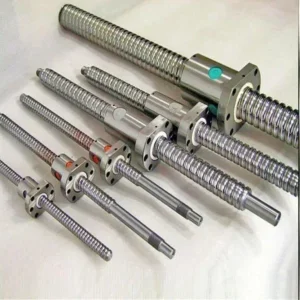
- Mechanical Check: Mechanical backlash in the axes, loose couplings, dirty or worn ball screws/linear guide rails can cause step loss. The mechanical components should be checked and adjusted or replaced if necessary.
- Speed and Acceleration Parameters: Ensure that the control unit’s maximum speed and acceleration/deceleration parameters are within the limits that the motors and mechanical structure can handle. Excessive speeds can lead to step loss.
- Power Supply: Ensure that sufficient and stable power is supplied to the motor drivers. Power fluctuations can affect motor performance.
- Problem: Control Unit Interface Freezes or Becomes Unresponsive:Symptom: The screen freezes, the keypad or touch panel does not respond to commands, or the system locks up.
Solution:
- Power Supply Check: Ensure that the supply voltage to the control unit is stable and at the correct value. Voltage drops or fluctuations can cause freezing.
- Overheating: Check the ambient temperature where the control unit is located. Insufficient ventilation or fan failure can lead to overheating and unstable system operation. Take measures to reduce the temperature inside the enclosure (fan, air conditioning).
- Firmware Check: An old or faulty firmware version can cause instability. Check the manufacturer’s website for the latest stable firmware and update if necessary (remember to back up).
- External Devices: External storage devices like USB drives or SD cards might be corrupted or infected with viruses. Try the system again after removing these devices.
- Problem: Program Loading Errors or G-code Reading Issues:Symptom: Programs cannot be loaded from USB/SD card, the G-code file gives an error when read, or the machine does not perform the expected movements.
Solution:
- File Format and Name: Ensure that the G-code file is in a format supported by the control unit (e.g., .nc, .txt) and that the file name does not contain special characters or spaces.
- USB/SD Card Check: Ensure that the USB drive or SD card is correctly formatted (usually FAT32), does not contain bad sectors, and its capacity is supported by the control unit. Try another USB/SD card.
- G-code Content: Ensure that the G-code file is syntactically correct and does not contain commands not supported by the control unit. Check that the correct post-processor for your CAM software is selected.
- Insufficient Memory: Ensure that the program you are trying to load fits into the control unit’s internal memory. Check the system limits for very large files.
- Problem: Emergency Stops (E-Stop) or Limit Switch Errors:Symptom: The machine stops unexpectedly and displays an “E-Stop” or “Limit Switch Error” message.
Solution:
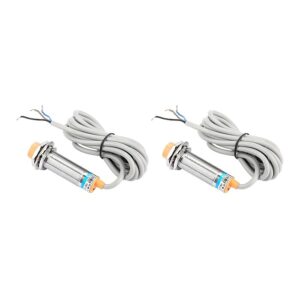
- Limit Switches: Ensure that all limit switches are physically sound, their cables are not loose or broken. Check that the switches are not mechanically stuck.
- Emergency Stop Button: Ensure that the emergency stop button is not stuck or has an internal fault. Check the safety circuit.
- Wiring: In cases where E-stop and limit switch cables are affected by interference, false triggers can occur. Keep these cables away from power lines and use shielded cables if necessary.
- Control Unit Settings: Ensure that the control unit’s input pins are correctly configured for limit switches (normally open/closed).
What is a DSP Control Unit? Conclusion and Expert Advice for Computerless CNC Operation
Computerless CNC operation with DSP control units offers a revolutionary level of convenience and efficiency in the industrial automation sector, particularly for specific niche applications and SMEs. These systems reduce the complexity, cost, and maintenance burden of traditional PC-based CNC solutions, while providing high precision and repeatability thanks to the real-time performance and stability offered by digital signal processors. The specialized architecture of a DSP allows it to perform critical CNC tasks such as motor control, axis interpolation, and rapid processing of sensor feedback without compromise. Integrated user interfaces simplify program loading and machine operation, enabling operators to work directly from the control unit and eliminating interruptions caused by software conflicts, virus risks, and operating system issues associated with an external computer. This translates to higher reliability and uptime in demanding industrial environments.
As an expert field engineer, my advice is this: the selection and integration of a DSP-based computerless CNC control unit requires in-depth analysis rather than a superficial approach. Fully understanding the specific needs of your machine and production process is the first step in choosing the right control unit. Instead of focusing solely on initial cost, you should consider factors such as long-term operating costs, ease of maintenance, spare parts availability, and technical support. A quality control unit, combined with proper installation and wiring, will provide years of trouble-free and efficient operation. Furthermore, comprehensive operator training is critical to fully unlock the system’s potential and minimize possible errors. Regular maintenance, monitoring firmware updates, and proactive troubleshooting approaches will ensure continuous operation of your production line and maximize your return on investment. In the future, we anticipate that such control units will become even smarter with greater integration of IoT capabilities, offering features like remote monitoring and data analysis. Businesses that adopt this technology will gain a competitive advantage and achieve significant improvements in their production processes.
FAQ
What exactly is a DSP Control Unit in the context of CNC machines?
A DSP (Digital Signal Processor) control unit is a specialized microprocessor-based controller designed to perform high-speed, real-time mathematical operations for precise machine control. In CNC, it enables computerless operation by integrating all control, program loading, and operator interface functions directly into the unit, eliminating the need for an external PC.
What are the primary benefits of using a DSP control unit for computerless CNC operation?
Computerless CNC operation streamlines the manufacturing process by removing the need for an external industrial PC. This reduces system complexity, lowers maintenance costs, minimizes software conflicts and virus risks, and enhances reliability and uptime, especially in harsh industrial environments. Operators can load G-codes and control the machine directly from the integrated unit.
Which industrial applications are best suited for DSP-based computerless CNC systems?
DSP control units are versatile and commonly used in woodworking, stone and marble processing, advertising and signage (e.g., 3D signs), plasma and laser cutting of metals and textiles, and even small-scale PCB prototyping. Their robustness and ease of use make them suitable for a wide range of industrial applications.
What technical specifications should I consider when selecting a DSP control unit for my CNC router machine?
Key technical specifications include processor speed, memory capacity, maximum number of control axes (e.g., 3, 4, 5, or 6-axis interpolation), pulse output frequency (which affects motor speed and precision), number of input/output ports, and supported G-code standards. Environmental durability, such as EMC compliance and vibration resistance, is also crucial for industrial settings.
What are some common problems encountered with DSP control units in computerless CNC operation, and how can they be resolved?
Common issues include motor synchronization problems or step loss, control unit interface freezing, program loading errors, and false emergency stops or limit switch triggers. These can often be resolved by checking motor driver settings, wiring, mechanical components, power supply stability, firmware updates, and ensuring correct G-code formatting.