No products in the cart.
What is a Ball Screw? Working Principle and Advantages for Industrial Applications
Contents
Ball Screw: Introduction and Technical Analysis
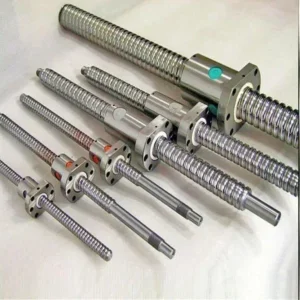
At the heart of industrial automation, **Ball Screw** systems are crucial for precise and efficient linear motion, making them indispensable components in modern manufacturing processes. This comprehensive field guide and technical article will delve into ball screw technology for industrial automation professionals, detailing its working principles, advantages, and critical considerations for field applications. A ball screw is a mechanical device that converts rotary motion into linear motion with high efficiency and precision. Compared to traditional **lead screws**, its ball-based design significantly reduces friction, allowing for higher speeds, longer lifespan, and superior positioning accuracy. These characteristics have made it the preferred choice for critical applications such as **CNC router machines**, **robotic systems**, **precision measuring devices**, and **automated assembly lines**. In today’s competitive industrial environment, a thorough understanding and correct application of ball screw technology are vital for any business aiming to enhance production efficiency, product quality, and operational reliability.
Ball Screw: Working Principle and Technical Data
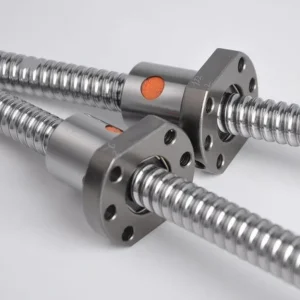
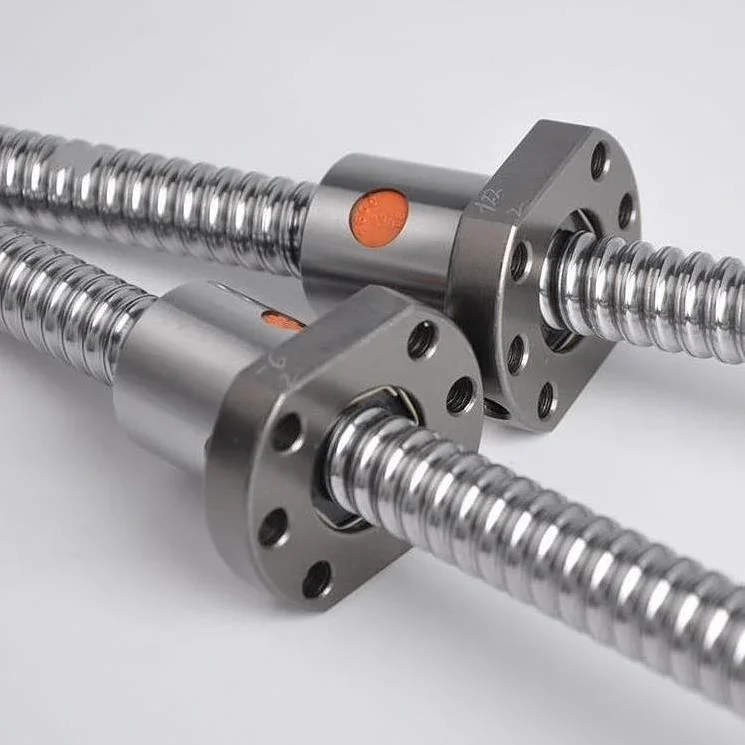
The fundamental working principle of a ball screw relies on converting rotary motion into linear motion through **balls** that roll between helical grooves on a screw shaft and corresponding helical grooves inside a ball nut wrapped around the shaft. As the shaft rotates, the balls roll within the grooves of both the shaft and the nut, causing the nut to move linearly along the shaft. These balls continuously circulate within the nut via a special **recirculation mechanism**, returning to their starting point. This design completely eliminates **sliding friction**, replacing it with **rolling friction**. This change is a key advantage of ball screws, leading to **high mechanical efficiency** (typically over 90%). High efficiency translates to less energy loss, lower heat generation, and reduced wear, which extends the system’s lifespan and lowers operating costs.
Another critical feature of ball screw systems is the minimization or complete elimination of **backlash**. Backlash is the small clearance between the shaft and the nut, causing a delay in linear motion during direction changes. In applications requiring precise positioning, this backlash is unacceptable. To address this, a technique called **preloading** is used in ball screws. Preloading applies a force to the balls within the nut or between two separate nuts, ensuring the balls are always in contact with the shaft and nut grooves, thereby eliminating backlash. This increases the system’s **rigidity** and significantly improves **positioning accuracy** and **repeatability**. Preloading is typically achieved using double-nut systems or oversized balls.
Regarding technical specifications, several parameters must be considered when selecting a ball screw:
- Pitch and Lead: Pitch refers to the linear distance the nut travels for one complete rotation of the shaft. Lead has the same meaning and is usually determined by the shaft’s diameter. A higher pitch allows for higher speeds, while a lower pitch provides greater thrust force.
- Diameter: The shaft’s diameter directly impacts the system’s load capacity and rigidity. Larger diameter shafts are suitable for higher loads.
- Accuracy Grades: Ball screws are classified into different accuracy grades according to JIS (Japanese Industrial Standards) or ISO standards. Examples include C0, C1, C3, C5, C7, and C10. C0 and C1 denote the highest accuracy, while C7 and C10 are used for general applications requiring less precision. These grades specify the permissible deviation in the shaft’s linear motion.
- Load Capacity: There are two main types of load capacity:
- Dynamic Load Capacity (Ca): Refers to the average axial load a ball screw can safely carry for a specified lifespan (typically 1 million revolutions or 500 km of travel).
- Static Load Capacity (Co): Refers to the maximum axial load a ball screw can withstand without permanent deformation while stationary.
- Critical Speed: The maximum rotational speed at which the shaft can operate safely without excessive vibration (whirling) or buckling. It depends on the shaft’s diameter, length, and end support method. Exceeding this value can lead to severe damage.
- Lifespan: The expected lifespan of a ball screw is calculated based on the L10 life principle (the life at which 90% of a group of identical ball screws will complete or exceed) and depends on the applied load, speed, and operating conditions.
- Material: Typically manufactured from high-carbon alloy steel. Surface hardening treatments enhance wear resistance and lifespan.
- Lubrication: Proper lubrication is critical for the performance and lifespan of ball screw systems. Grease or specialized ball screw oils are used.
With these technical specifications, ball screws have a wide range of applications:
- CNC Machines: Precise positioning of cutting tools or workpieces in milling machines, lathes, and machining centers.
- Robotics: Axis movements of industrial robots, manipulators, and linear actuators.
- Semiconductor Industry: Wafer handling, sub-micron precision positioning systems.
- Medical Devices: Imaging systems (MRI, CT), surgical robots, laboratory automation.
- Packaging Machines: Product placement, labeling, sealing operations.
- Laser Cutting and Welding Machines: Precise movement and positioning over materials.
- Injection Molding Machines: Mold opening/closing and ejection movements.
- Aerospace Industry: Actuators for control surfaces, test equipment.
This broad application spectrum demonstrates that the ball screw is an indispensable part of industrial automation and will continue to be important in the future.
| Parameter | Value/Description |
|---|---|
| Working Principle | Converts rotary motion into linear motion with high efficiency via balls. |
| Mechanical Efficiency | 90% – 98% (High energy efficiency due to low friction). |
| Accuracy Grades | C0, C1, C3, C5, C7 (JIS/ISO standards; C0 is the highest accuracy). |
| Backlash | Can be eliminated with preloading techniques, ensuring high rigidity. |
| Maximum Speed | Up to 100 m/min (depends on shaft diameter, length, and critical speed limits). |
| Load Capacity | High dynamic (Ca) and static (Co) axial load carrying capacity. |
| Expected Lifespan | Determined in millions of revolutions or kilometers using L10 life calculation. |
| Application Areas | CNC machines, robotics, automation, medical, aerospace, semiconductor industries. |
Ball Screw: Field Considerations and Best Practices
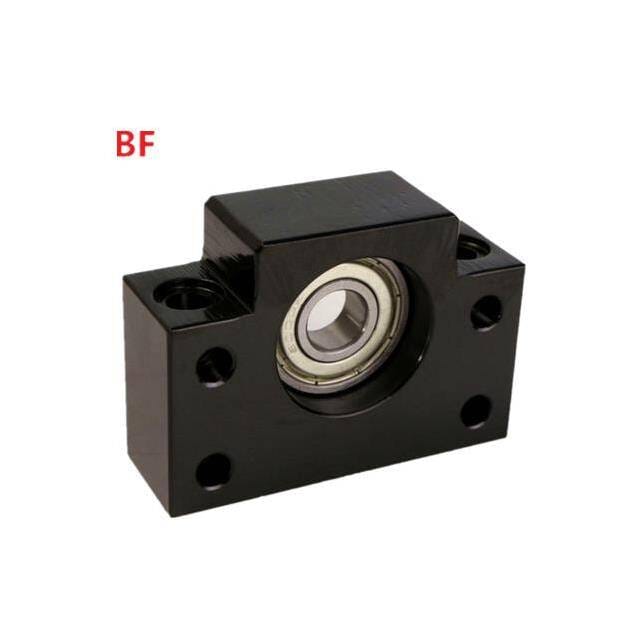
- Precise Installation and Alignment: The performance and lifespan of ball screw systems are directly related to the accuracy of their installation. Minimizing axial and radial runout, and ensuring parallelism and concentricity during the mounting of the shaft and nut bearings, are critically important. Misalignment leads to uneven load distribution on the balls, excessive friction, noise, vibration, and premature wear. During assembly, torque wrenches and precision measuring tools must be used, strictly adhering to manufacturer instructions. Correct selection and mounting of end bearings are also crucial for the shaft’s critical speed limits and rigidity.
- Optimal Lubrication Regime: Although the ball-based structure of a ball screw provides low friction, it cannot operate without continuous and correct lubrication. Lubrication further reduces friction, dissipates heat, prevents corrosion, and prevents foreign matter from entering the system.
- Lubricant Selection: The appropriate type of grease or oil must be chosen based on the application’s speed, load, temperature, and environmental conditions. Incorrect viscosity or chemical composition can negatively impact performance.
- Lubrication Frequency: The periodic lubrication schedule specified by the manufacturer must be strictly followed. Over-lubrication can damage seals and attract contaminants, while insufficient lubrication accelerates wear and shortens lifespan. Automatic lubrication systems can provide consistency in this regard.
- Cleanliness: Keeping lubrication points and their surroundings clean prevents contaminants from entering the system.
- Environmental Protection and Control: Ball screws are sensitive to dust, chips, moisture, aggressive chemicals, or extreme temperature fluctuations. Appropriate protective measures must be taken for systems operating in such environmental conditions.
- Bellows and Seals: Bellows or special sealing gaskets should be used to protect the moving parts of the shaft from external factors.
- Temperature Management: Overheating can cause the shaft to expand, leading to losses in positioning accuracy. If necessary, cooling systems or designs that compensate for thermal expansion should be considered.
- Contamination Control: Barriers or air purification systems should be installed to prevent particles and liquids in the operating environment from reaching the ball screw system.
- Periodic Inspection and Maintenance: Visual and auditory inspections should be performed at regular intervals.
- Wear and Backlash Control: Signs of wear on the nut and shaft surfaces, increased backlash, or abnormal noises (squeaking, rattling) should be carefully monitored.
- Vibration and Noise Analysis: Abnormal vibration levels or noises can be early indicators of a potential problem.
- Fasteners: The torque values of the connection bolts for the ball screw and end bearings should be checked periodically and tightened if loose.
- Bearing Condition: The condition, lubrication, and clearance of the end bearings should be checked.
- Adherence to Load and Speed Limits: The dynamic and static load capacities, as well as critical speed limits determined in the ball screw’s design, must not be exceeded. Excessive load and speed can lead to premature fatigue, deformation, and failure of the shaft. The load and speed profile required by the application must be accurately analyzed during ball screw selection.
Ball Screw: Common Problems and Solutions in Industrial Settings
Below are some common issues encountered with ball screws in industrial automation systems and their potential solutions:
1. Excessive Noise and Vibration:
- Problem: Abnormal sounds (squeaking, rubbing, rattling) and increased vibration levels during operation.
- Causes:
- Insufficient or incorrect lubrication.
- Accumulation of foreign matter (dirt, chips) inside the shaft or nut.
- Damage to balls (cracks, dents).
- Shaft runout or bending.
- Misalignment or installation errors (parallelism, concentricity).
- Wear or failure in end bearings.
- Excessive preloading or loss of preloading.
- Approaching or exceeding the system’s critical speed.
- Solutions:
- Check the lubrication schedule and apply the correct lubricant.
- Clean the system, disassemble the nut, and inspect the ball raceways (may require professional service).
- Check and correct alignment settings if necessary.
- Inspect end bearings and replace if faulty.
- Check preloading and adjust according to manufacturer recommendations.
- Monitor operating speeds and stay below critical speed limits.
- Check the shaft for physical deformation.
2. Loss of Positioning Accuracy and Repeatability Issues:
- Problem: Deviations in reaching the target position, inconsistencies in repeated movements.
- Causes:
- Increased backlash due to loss of preloading or wear.
- Clearance or wear in end bearings.
- Thermal expansion of the shaft (especially for long shafts).
- Torsional flexibility of the shaft (especially in high-torque applications).
- Control issues originating from the motor or drive system.
- Problems with encoders or feedback sensors.
- Solutions:
- Check the ball screw’s backlash and adjust preloading if necessary, or replace the nut.
- Inspect end bearings and replace if necessary.
- Optimize operating temperatures or use thermal compensation systems to manage thermal expansion.
- Check motor and drive systems, encoders, and feedback sensors.
- Evaluate solutions to increase system rigidity (e.g., larger diameter shaft, more rigid bearing support).
3. Loss of Smooth Motion or Sticking:
- Problem: Uneven, jerky, or suddenly stopping motion.
- Causes:
- Accumulation of dirt, rust, or foreign matter in ball raceways or inside the nut.
- Damage to balls or ball recirculation elements.
- Insufficient or dried-out lubrication.
- Damage or deformation on the shaft surface.
- Excessive radial or axial load.
- Misalignment.
- Solutions:
- Clean the system and check lubrication, re-lubricate if necessary.
- Visually inspect the ball screw and nut combination, identify damaged parts, and replace them.
- Check and correct alignment.
- Verify that applied loads are within design limits.
4. Overheating:
- Problem: The ball screw operating above its normal working temperature.
- Causes:
- Insufficient lubrication or incorrect lubricant type.
- Excessive preloading.
- Excessive speed or continuous high-speed operation.
- Misalignment.
- External friction or contamination.
- Excessive load.
- Solutions:
- Check lubrication status and type, correct if necessary.
- Check and reduce preloading (if excessive).
- Optimize operating speeds and cycle times.
- Check and correct alignment.
- Clean any contamination around the shaft.
- Review applied loads.
5. Short Lifespan or Premature Failure:
- Problem: The ball screw failing much earlier than its expected lifespan.
- Causes:
- Consistently exceeding design load and speed limits.
- Insufficient or incorrect lubrication.
- Contamination and lack of protective measures.
- Incorrect installation and alignment.
- Excessive vibration or shock loads.
- Material or manufacturing defect (rare).
- Solutions:
- Carefully analyze the application’s load and speed profile and re-evaluate ball screw selection.
- Implement a comprehensive lubrication program and use correct lubricants.
- Reinforce environmental protection measures (bellows, seals).
- Review installation and alignment procedures and ensure correct application.
- Identify and eliminate sources of vibration in the system.
- Contact the manufacturer for technical support if necessary.
Most of these problems can be prevented with regular maintenance, correct installation, and adherence to operating parameters. Early diagnosis and rapid intervention are vital to prevent larger failures and production downtime.
Ball Screw: Conclusion and Expert Advice
In summary, **Ball Screw** systems represent the modern face of industrial automation. These high-precision mechanical components are essential for converting rotary motion into linear motion with exceptional efficiency and accuracy. Their ability to minimize friction, eliminate backlash through preloading, and operate reliably under various industrial conditions makes them indispensable in applications ranging from advanced CNC router machines and robotic systems to medical devices and semiconductor manufacturing. Understanding the technical specifications, proper installation, and diligent maintenance practices is crucial for maximizing their performance and lifespan. By adhering to recommended lubrication schedules, protecting against environmental contaminants, and regularly inspecting for signs of wear or misalignment, industrial B2B buyers can ensure their ball screw systems deliver consistent, high-precision motion, thereby enhancing overall operational efficiency and product quality. For expert advice on selecting the right ball screw for your specific industrial application or to inquire about our range of high-quality motion control components, please request a quote on WhatsApp. Our team at Mermak CNC is ready to provide tailored solutions to meet your precise engineering requirements.
FAQ
What is a ball screw and how does it differ from a lead screw?
A ball screw is a mechanical linear actuator that translates rotational motion into linear motion with high efficiency and minimal friction. It uses recirculating balls between a screw shaft and a nut to achieve smooth, precise movement, making it superior to traditional lead screws for high-precision industrial applications.
Where are ball screws commonly used in industrial automation?
Ball screws are critical in applications requiring high precision, speed, and rigidity. Common uses include CNC router machines, industrial robots, precision measuring equipment, automated assembly lines, medical devices, and semiconductor manufacturing equipment. They are essential for accurate positioning and controlled linear movement.
What are the most important technical parameters to consider when selecting a ball screw?
Key technical parameters include pitch/lead (linear travel per rotation), diameter (load capacity, rigidity), accuracy grades (e.g., C0, C1, C3 for precision), dynamic and static load capacities (Ca and Co), critical speed (maximum safe operating speed), and expected lifespan (L10 life). These factors determine the ball screw's suitability for specific industrial tasks.
What are the critical maintenance practices for ball screw systems?
Proper installation and alignment, optimal lubrication, environmental protection (bellows, seals), and periodic inspection are crucial. Misalignment can cause uneven wear, while insufficient lubrication leads to increased friction and heat. Regular checks for wear, backlash, and abnormal noises help prevent premature failure.
What are common problems encountered with ball screws and how can they be resolved?
Common issues include excessive noise/vibration (due to poor lubrication, misalignment, or damage), loss of positioning accuracy (backlash, worn bearings, thermal expansion), sticking motion (contamination, damaged balls), and overheating (insufficient lubrication, excessive preloading/speed). Solutions often involve re-lubrication, alignment correction, component replacement, and optimizing operating parameters.