






































































Welded vs. Bolted CNC Router Gantry: Which is Stronger?

📑 Table of contents (Click to open)
Choosing between a welded or bolted gantry for your CNC router machine is crucial for performance. While bolted designs offer modularity, welded structures generally provide superior strength, rigidity, and vibration damping, essential for high-precision industrial CNC router operations. This article delves into the technical aspects of each construction method to help you make an informed decision.
Practical notes for CNC router, automation and industrial motion systems.
The gantry, or bridge, of a CNC router is the critical structural component that carries the spindle motor and dictates the machine’s overall precision and performance. Its strength, rigidity (resistance to deflection), and vibration damping capabilities directly impact cutting accuracy, surface finish, and tool life. In industrial automation, two primary construction methods for CNC router gantries are prevalent: welded construction and bolted construction. While both have their merits, the definition of “stronger” often depends on specific application requirements. However, welded structures are generally recognized for their superior performance in high-precision and high-performance machines. This article provides a technical guide to help you choose the right gantry construction for your industrial CNC router.
Operational Principles and Technical Data
During operation, a CNC router gantry is subjected to dynamic and static forces from the spindle’s cutting actions, acceleration/deceleration of the motion control system, and general vibrations. For optimal performance, the gantry must exhibit minimal deformation under these stresses, meaning it must possess high rigidity. Furthermore, effective damping of vibrations generated during material cutting is essential for achieving superior surface quality and reducing tool wear. The design and construction of the gantry play a pivotal role in its ability to manage these forces and vibrations.
Welded CNC Router Gantries
Welded gantries are constructed by fusing metal components at high temperatures, creating a monolithic structure. This method results in a continuous, unified connection between parts, allowing the gantry to behave as a single, solid unit. Consequently, welded structures inherently offer exceptional rigidity and structural integrity. When executed properly, weld seams can be as strong as, or even stronger than, the base material. For metals like steel or aluminum, welding produces a highly robust and deflection-resistant frame. This structural unity enables welded gantries to effectively dampen external vibrations and operational resonance. By minimizing paths for vibration propagation, micro-vibrations from the cutting process are less likely to transfer to the workpiece, leading to smoother finishes and more accurate dimensions. However, the heat involved in welding can induce thermal deformations and internal stresses in the material, potentially affecting the gantry’s geometric accuracy. Post-weld treatments, such as stress-relieving annealing or vibration stress relief, may be necessary. Precise machining (milling, planing) of critical surfaces after welding is also mandatory. The monolithic nature of welded gantries also makes them more challenging to transport and assemble, often requiring larger lifting equipment. Repair or modification of a damaged welded structure is typically more complex than with bolted designs.
Bolted CNC Router Gantries
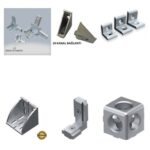
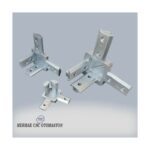
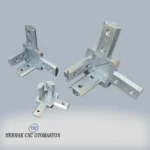
Bolted gantries are assembled by joining separate metal components using fasteners such as bolts, nuts, and washers. This approach allows for a modular design, facilitating easier manufacturing, transportation, and assembly. For very large CNC routers or installations in remote locations, bolted structures offer significant logistical advantages. Furthermore, replacing a damaged component or modifying the gantry’s geometry is more straightforward with bolted connections. However, the rigidity and vibration damping capabilities of bolted gantries are highly dependent on the design of the connection points and the precision of the machining. Surfaces must be machined to extremely high tolerances to ensure a gap-free fit. Even minor gaps can lead to micro-movements under dynamic loads, reducing rigidity and increasing vibration. The use of high-strength bolts (e.g., grade 8.8, 10.9, or 12.9) tightened to the correct torque specifications is essential, along with measures to prevent loosening, such as spring washers, lock nuts, or chemical thread lockers. Guide pins or specialized keys may also be required to ensure proper alignment and prevent slippage at connection points. Bolted connections can be prone to loosening over time due to vibrations and thermal cycling, necessitating periodic inspections and re-tightening. Neglecting this maintenance can compromise the machine’s accuracy and longevity.
| Parameter | Description/Value |
|---|---|
| Structural Integrity | Welded: High, monolithic, single-piece integrity. Bolted: Medium-High, modular, dependent on connection points. |
| Rigidity (Deflection Resistance) | Welded: Very High, continuous material flow. Bolted: Good-High, but connection surface and bolt tension are critical. |
| Vibration Damping | Welded: Excellent, uninterrupted vibration path. Bolted: Good, but potential weaknesses at connection points. |
| Assembly & Disassembly | Welded: Very Difficult/Impossible. Bolted: Easy, in modular sections. |
| Transportability | Welded: Difficult, single large unit. Bolted: Easy, can be disassembled. |
| Manufacturing Precision | Welded: Requires post-weld stress relief and precision machining. Bolted: Machining precision of connection surfaces is critical. |
| Maintenance Needs | Welded: Low, structural integrity maintained long-term. Bolted: Requires periodic bolt inspection and re-torquing. |
| Overall Cost | Welded: Can be high due to skilled labor and post-processing. Bolted: Can be high due to precision machining of connection surfaces. |
Key Considerations in Practice
- Weld Quality and Stress Relief: For welded gantries, the quality and integrity of weld seams are paramount. Welds performed by certified professionals using appropriate procedures (e.g., controlled heat input, multi-pass welding) are essential. Internal stresses from welding can lead to gantry deformation or cracking over time. Therefore, post-weld treatments like stress-relieving annealing or vibration stress relief are crucial for ensuring geometric stability and long-term durability. These processes improve the material’s microstructure and release internal stresses, enhancing the gantry’s performance.
- Material Selection and Preparation: The mechanical properties of the chosen metal (e.g., ST52 steel or 6061/7075 aluminum alloy) for the gantry are critical. Proper material selection ensures the gantry can withstand the operational loads. Surface preparation before welding is also vital for achieving strong, defect-free welds. For bolted designs, the flatness and surface finish of mating components directly influence the joint’s performance.
- Precision Machining: Regardless of the construction method, precision machining is indispensable. For welded gantries, critical mounting surfaces for linear guide rail systems, ball screws, and servo drive components must be machined to tight tolerances after welding and stress relief. For bolted gantries, the precision of the mating surfaces is even more critical to ensure a rigid connection.
- Fastener Selection and Torque: In bolted designs, using high-grade, appropriately sized fasteners is essential. The correct torque must be applied to ensure adequate clamping force without over-stressing the components or fasteners. Regular checks and re-torquing are necessary to maintain joint integrity.
- Dynamic Load Management: Industrial CNC router machines, especially those with high-speed motion control systems and powerful spindle motors, impose significant dynamic loads. A welded gantry’s inherent rigidity and damping are generally better suited to manage these loads consistently over time compared to a bolted structure, which may require more frequent maintenance to ensure its connections remain tight and precise.
Conclusion: Choosing the Right Gantry for Your Industrial CNC Router
For applications demanding the highest levels of precision, speed, and long-term reliability, such as in demanding industrial manufacturing environments, welded CNC router gantries typically offer superior performance due to their inherent rigidity and vibration damping characteristics. They provide a more stable platform for the spindle motor and motion control system, leading to better part quality and extended tool life. However, the complexity and cost associated with their production and potential repairs are higher.
Bolted CNC router gantries present a viable alternative, especially when modularity, ease of transport, and simpler assembly are primary concerns. They can achieve good performance levels if designed and manufactured with meticulous attention to detail, particularly regarding the precision of mating surfaces and the integrity of the bolted connections. Regular maintenance is key to sustaining their performance.
Ultimately, the choice between a welded and bolted gantry depends on a careful evaluation of your specific operational requirements, budget, and maintenance capabilities. For mission-critical, high-throughput industrial CNC router applications, the robustness and stability of a welded gantry often make it the preferred choice.
Ready to enhance your production capabilities with a high-performance industrial CNC router? Request a quote on WhatsApp today!
Related product categories: Linear Guides, Bearings, and Housings · Mechanical Components · Sigma Profiles