No products in the cart.
Water Circulation and Filtration Systems in Marble CNC Machines
Contents
Discover the critical role of water circulation and filtration systems in marble CNC machining. Learn how these systems enhance performance, extend tool life, and ensure superior finish quality.
Introduction and Technical Analysis
CNC machines used in the marble processing industry are indispensable elements of modern manufacturing due to their ability to machine complex geometries with high precision and efficiency. However, for these machines to operate at optimum performance and with longevity, a critical auxiliary system is required: the water circulation and filtration system. This system not only reduces the high friction heat generated during the cutting process, preventing overheating of the cutting tool and the material being processed, but also keeps the work area clean by removing the marble dust and slurry generated. From an industrial automation perspective, this system is more than just a cooling and cleaning unit; it is an integrated process control component that directly impacts production efficiency, tool life, and final product quality. An inadequately or incorrectly designed water management system can lead to a host of operational issues, from pump failures and filter blockages to poor surface quality and machine downtime. This technical article aims to provide a comprehensive guide for industrial automation specialists by deeply examining the operating principles, technical requirements, field applications, and automation integrations of water circulation and filtration systems in marble CNC applications.
Operating Principle and Technical Data
Water circulation and filtration systems used in marble CNC machines operate on a fundamentally closed-loop principle. The main components of this system consist of a water reservoir (tank), one or more circulation pumps, distribution piping, nozzles that supply water to the cutting point, waste water collection channels, a multi-stage filtration unit, and sometimes temperature control equipment (chiller or heat exchanger). During the operation, the pump draws clean water from the reservoir and directs it under high pressure to the tip of the cutting tool and the workpiece. This water absorbs friction heat, slowing down tool wear and preventing marble dust from becoming airborne. The water returning from the cutting area, mixed with marble particles, is directed via collection channels, by gravity or additional pumps, to the filtration unit.
The filtration process is typically multi-stage and relies on the principle of gradual separation based on particle size. The first stage usually involves a sedimentation tank or settling pool. Here, the water flow is slowed down, allowing the largest and heaviest marble particles to settle to the bottom by gravity. These tanks are usually cleaned periodically by manual or automatic scrapers. The second stage involves mechanical filtration, which captures finer particles. These filters can be in the form of bag filters, cartridge filters, or disc filters. Bag filters typically capture particles in the range of 50-200 microns, while cartridge filters can capture particles in the range of 1-50 microns. Automatic backwash filter systems can automatically initiate a cleaning cycle by detecting filter blockage via sensors, reducing human intervention and ensuring continuous system operation. For highly sensitive applications, additional systems such as ultrafiltration or centrifugal separators may be used to remove very fine particles (e.g., below 1 micron).
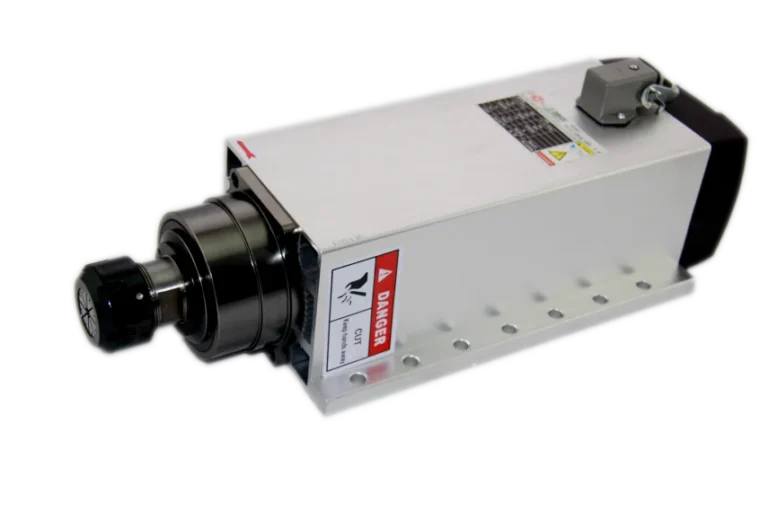
Temperature control of the water is critical, especially for long-duration and high-precision operations. Overheated water reduces cooling efficiency and negatively affects tool life. In such cases, a chiller unit or an air/water heat exchanger is integrated into the system to maintain the water temperature within a specific range. From an industrial automation standpoint, parameters such as pump flow rate, filter differential pressure, water level, water temperature, and even water pH are continuously monitored via sensors. This data is transferred to PLC (Programmable Logic Controller) or SCADA (Supervisory Control and Data Acquisition) systems for automatic system management, fault alerts, and the implementation of predictive maintenance strategies. A correctly selected pump, adequate reservoir capacity, and an effective filtration system are fundamental engineering decisions that directly impact the quality and sustainability of marble CNC processing. The servo drive and motion control systems ensure precise movements, while the vacuum table holds the material securely, and the spindle motor provides the necessary power for cutting.
| Parameter | Value/Description |
|---|---|
| Pump Type | Centrifugal pump suitable for abrasive media (e.g., cast iron or stainless steel body) |
| Flow Rate Range | 200-1000 liters/minute (Varies based on machine size and cutting speed) |
| Pressure | 2-5 bar (Depends on nozzle type and cooling requirement) |
| Filtration Stage 1 (Coarse) | Sedimentation tank (Settling), 100-200 micron bag/screen filter |
| Filtration Stage 2 (Fine) | 1-50 micron cartridge filter or auto-backwash disc filter |
| Tank Volume | 500-5000 liters (Based on processing volume and slurry accumulation rate) |
| Water Quality Monitoring | Turbidity, pH, Conductivity sensors (For automation integration) |
| Temperature Control | Optional chiller or heat exchanger (Must be controlled according to manufacturer datasheet values.) |
Field Considerations
- Pump Selection and Placement: The pump’s flow rate and pressure must meet the CNC machine’s cooling requirements. Since marble dust is abrasive, it is critical that the pump’s internal components (e.g., impeller, seal) are made of wear-resistant materials (e.g., special alloys, ceramics). Furthermore, positioning the pump to avoid slurry impact or providing adequate pre-filtration on the suction line will extend its life. Suction lift and pipe diameters must be correctly calculated to minimize cavitation risk.
- Correct Design of Filtration Stages: The filtration system should be staged from coarse to fine particles. Ensuring the sedimentation tank has sufficient volume and the slurry scraping mechanism operates effectively extends the life of subsequent fine filters and reduces the frequency of clogging. Differential pressure sensors should be used for each filtration stage to monitor filter saturation levels and send signals to the automation system for auto-backwashing or replacement.
- Slurry Management and Disposal: Marble slurry is one of the biggest challenges for the system. Automatic slurry scrapers, conveyors, or slurry pools should be designed to prevent slurry accumulation. Filter presses or centrifuge dewatering systems can be considered for the disposal of accumulated slurry. These systems separate water from the slurry, enabling water recovery and reducing solid waste volume, which facilitates compliance with environmental regulations.
- Water Quality and Chemical Additives: Particle filtration alone is not sufficient. Biological growth such as algae and bacteria, or chemical imbalances causing corrosion, can occur in the water. The pH value should be monitored regularly, and pH adjusters should be used if necessary. UV sterilizers or biocides can be used to prevent biological growth. Corrosion inhibitors extend the life of the metal components of the system. The dosage of these additives can be integrated into the automation system.
- Temperature Control: Especially during summer or intensive production, water temperature can rise to critical levels. High water temperatures reduce cooling efficiency and can lead to thermal expansion issues in the machine components, affecting precision. Therefore, maintaining a stable operating temperature using chillers or heat exchangers is crucial for consistent performance and extended machine life.
Effective management of the water circulation and filtration system is not merely a maintenance task but a core aspect of operational excellence in marble CNC machining. By understanding the principles, selecting appropriate components, and integrating intelligent control systems, manufacturers can significantly enhance productivity, reduce operational costs, and ensure the highest quality output from their industrial CNC router machines.