No products in the cart.
Vacuum Table vs. Mechanical Clamping: Which is Right for Your CNC Operations?
Contents
- Vacuum Table vs. Mechanical Clamping: Making the Right Choice for Your CNC Router Machine
- Operational Principles and Technical Data
- Vacuum Tables: Principles and Technical Specifications
- Mechanical Clamping Systems: Principles and Technical Specifications
- Practical Considerations in the Field
- Conclusion: Optimizing Your Workholding Strategy
Selecting the right workholding solution is crucial for efficient and precise CNC machining. This article compares vacuum tables and mechanical clamping systems, detailing their operational principles, technical specifications, and ideal applications for industrial buyers.
Mermak CNC Technical Guide
Practical notes for CNC router, automation and industrial motion systems.
Vacuum Table vs. Mechanical Clamping: Making the Right Choice for Your CNC Router Machine
In industrial manufacturing and automation, securely holding workpieces during machining is paramount for ensuring processing quality, safety, and overall efficiency. Among the most common and effective workholding methods are vacuum tables and mechanical clamping systems. Both are used to fix parts to a machining bed or robot, but they operate on distinct principles, catering to different applications, and offering unique advantages and disadvantages. For industry professionals, selecting the correct method is a fundamental step towards project success. Vacuum tables utilize atmospheric pressure differences to draw parts onto the surface, while mechanical clamping systems employ physical force (clamping, gripping) to secure them. This article provides an in-depth analysis of both systems, aiming to guide you in choosing the most suitable method for your specific needs.
Operational Principles and Technical Data
Both workholding methods are based on different engineering principles, resulting in distinct technical characteristics that can be advantageous or disadvantageous depending on the application scenario.
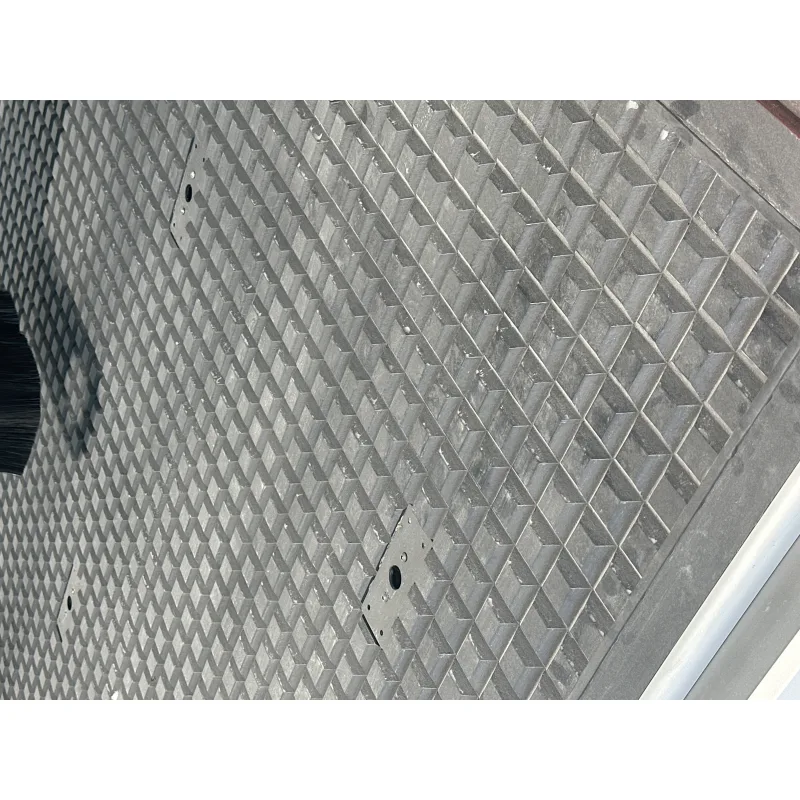
Vacuum Tables: Principles and Technical Specifications
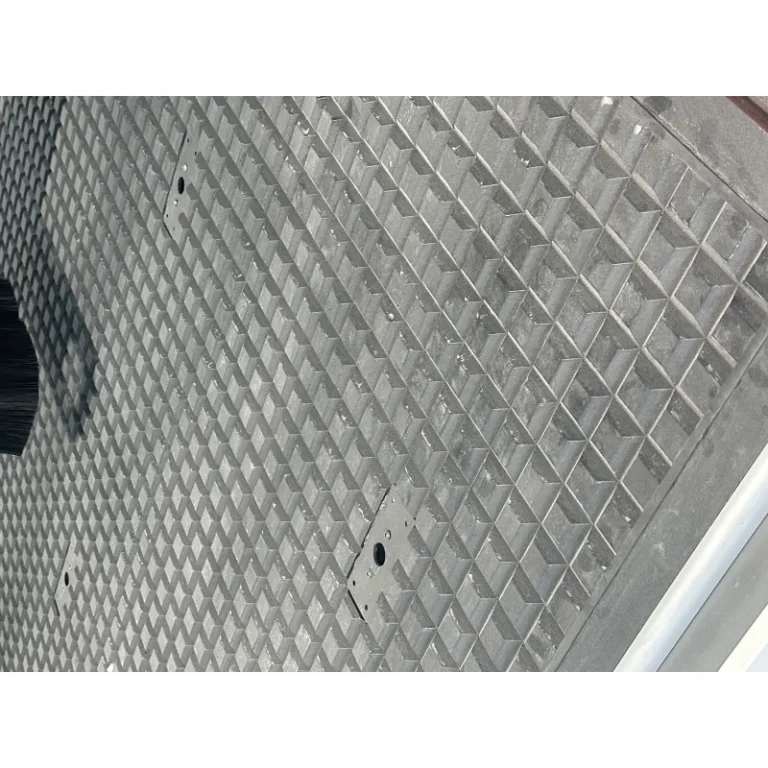
Vacuum tables operate on the principle of creating a pressure differential. A vacuum pump evacuates air from the table surface, allowing atmospheric pressure to push the workpiece firmly against it. This ensures an even distribution of holding force across the part’s surface. Vacuum tables come in various types, including porous vacuum tables, grid or channeled vacuum tables, and multi-zone vacuum tables. Porous tables are ideal for flat, large-surface workpieces, providing uniform suction over the entire area. Channeled tables are used to vacuum specific areas by placing seals around smaller or irregularly shaped parts. Multi-zone tables offer flexibility for processing different-sized parts simultaneously or applying varying vacuum levels in different zones. The holding force of a vacuum table is directly proportional to the vacuum level (typically -0.8 to -0.9 bar) and the contact surface area of the workpiece. For instance, a workpiece with a 100 cm² contact area at -0.8 bar vacuum can generate approximately 800 kg of holding force (1 bar ≈ 1 kg/cm²). This method is preferred for applications requiring precision machining, surface quality preservation, and prevention of part distortion. They are widely used in CNC machining centers for processing materials like aluminum, plastics, wood, composites, and glass. They are excellent for high-speed milling and light grinding operations. However, the workpiece surface must be non-porous and as flat as possible; otherwise, vacuum leaks will occur, reducing holding force. Additionally, very high cutting forces can pose a risk of workpiece slippage.

Mechanical Clamping Systems: Principles and Technical Specifications
Mechanical clamping systems secure workpieces through direct physical contact, using compression or gripping forces. These systems include manual vises and clamps, hydraulic clamping systems, pneumatic clamping systems, and cam or toggle clamps. Manual systems are cost-effective and flexible, often used in prototyping or low-volume production. Hydraulic and pneumatic systems offer high levels of automation and rapid clamping/unclamping cycles. They are commonly employed in CNC machining centers, lathes, and robotic welding or assembly lines. The primary advantage of mechanical clamping is its ability to provide very high holding forces. Regardless of workpiece geometry, secure fastening can be achieved by selecting appropriate clamping points. Clamping forces can range from a few hundred kilograms to many tons, depending on the system type and size. For example, a hydraulic vise can provide over 5 tons of clamping force. This makes it ideal for heavy-duty material removal, deep drilling, and high-vibration operations. A disadvantage is the risk of workpiece distortion or marking at the clamping points. Furthermore, clamping elements can obstruct the machining area and may require manual adjustments or complex automation for each part change. Workpiece surface quality or porosity does not directly affect the clamping force, which is an advantage for porous or rough materials.
| Parameter | Vacuum Table | Mechanical Clamping |
|---|---|---|
| Holding Force | Medium-high, dependent on surface area and vacuum level. Typically 50-1000 kg per part. | Very high, dependent on mechanical design. Can range from 100 kg to 10 tons per part. |
| Risk of Part Damage | Very low; leaves no marks, minimal distortion risk. Ideal for delicate parts. | Higher risk of distortion, crushing, or marking at clamping points. |
| Setup & Changeover Speed | Very fast; one-touch clamping/unclamping. Highly suitable for automation. | Medium-slow; may require adjustment of clamping points or manual tightening for each part. Can be sped up with automation. |
| Flexibility (Part Geometry) | Ideal for flat, non-porous, large-surface parts. Limited for irregular shapes. | Very flexible; can clamp complex, irregular, and small parts. Clamping points are critical. |
| Surface Access | Provides full access to all surfaces for machining. Allows multi-operation in a single setup. | Clamping elements can obstruct the machining area. May require multiple clamping positions. |
| Material Compatibility | Non-porous materials (metal, plastic, glass, ceramic, wood). Surface roughness is important. | Suitable for most materials (metal, plastic, composite). Porosity or surface roughness is not an issue. |
| Environmental Sensitivity | Chips, dust, and liquid leaks can negatively impact vacuum performance. | More robust; less affected by chips and liquids, though cleanliness is still important. |

Practical Considerations in the Field
- Material Type and Surface Properties:
The effectiveness of vacuum tables depends on the workpiece material being non-porous and having a smooth surface. Porous materials (e.g., some composites, castings, raw wood) can cause vacuum leaks, significantly reducing or eliminating holding force. For such materials, mechanical clamping is indispensable. Additionally, residues like oil, dirt, or chips on the workpiece surface can compromise vacuum seal integrity; therefore, cleanliness is critical for vacuum tables. Mechanical clamping is more tolerant of surface roughness or light contamination, although cleanliness is still recommended for optimal contact and friction.
- Applied Machining Forces and Operation Type:
The forces acting on the workpiece during machining (cutting, drilling, grinding, milling forces) are a decisive factor in selecting the workholding method. High material removal rates, deep cuts, or high-vibration operations typically require much higher holding forces. In such scenarios, mechanical clamping systems, especially hydraulic or pneumatic variants, are often the preferred choice due to their superior force capabilities. Vacuum tables are generally better suited for lighter cuts, finishing operations, or when preserving the workpiece’s integrity is the top priority. For instance, machining large aluminum sheets for aerospace components might benefit from the uniform holding of a vacuum table, while heavy-duty steel milling would necessitate robust mechanical clamps.
- Automation and Cycle Time Requirements:
For high-volume production lines and automated manufacturing cells, the speed and reliability of the workholding system are critical. Vacuum tables offer extremely fast clamping and unclamping cycles, often activated by a simple button press or PLC command, making them highly compatible with automated CNC router machines and robotic systems. Mechanical clamping systems, particularly automated hydraulic or pneumatic ones, can also achieve rapid cycle times, but they may involve more complex integration. Manual clamping systems inherently slow down production cycles due to the need for manual intervention for each part.
- Part Geometry and Machining Access:
The shape and complexity of the workpiece influence the choice. Vacuum tables excel with flat, large-surface parts where uniform contact is possible. For irregularly shaped, complex, or small parts, mechanical clamping might be necessary to ensure secure grip at specific points. However, clamping elements can obstruct access to certain areas of the workpiece, potentially requiring multiple setups or specialized tooling. Vacuum tables, by covering the entire surface, typically allow for full machining access in a single setup, enabling operations like multi-sided machining or complex contouring without repositioning.
- Cost and Maintenance:
Generally, vacuum table systems, including the vacuum pump, filtration, and table itself, can represent a higher initial investment compared to basic manual mechanical clamping solutions. However, their speed, ease of use, and reduced risk of part damage can lead to lower operational costs and higher throughput over time. Mechanical clamping systems have a wide cost spectrum, from inexpensive manual vises to sophisticated automated hydraulic systems. Maintenance for vacuum systems primarily involves filter cleaning/replacement and checking for leaks. Mechanical systems require lubrication, seal replacement (for hydraulic/pneumatic), and checking for wear and tear on clamping jaws and mechanisms.
Conclusion: Optimizing Your Workholding Strategy
The decision between a vacuum table and mechanical clamping for your industrial CNC router machine hinges on a careful evaluation of your specific production requirements. For operations involving flat, non-porous materials where surface integrity is key, such as in the woodworking, plastics, or sheet metal industries, a vacuum table offers unparalleled speed, ease of use, and precision. It is ideal for tasks like engraving, routing, and finishing where high clamping forces are not the primary concern. Conversely, when dealing with complex geometries, porous materials, or requiring extremely high holding forces for heavy-duty cutting and milling, mechanical clamping systems provide the necessary robustness and reliability. Understanding these distinctions allows manufacturers to select the most appropriate workholding solution, thereby optimizing their CNC operations for efficiency, quality, and cost-effectiveness. For complex applications requiring both high force and precise positioning, hybrid solutions or advanced fixturing might be considered.
Ready to enhance your CNC machining capabilities? Explore Mermak’s range of industrial CNC router machines and workholding solutions. Request a quote on WhatsApp to discuss your specific project needs with our experts.
Mechanical Components | Sigma Profiles | CNC Routers
Related product categories: Mechanical Components · Sigma Profiles · CNC Routers