No products in the cart.
Using Sigma Profiles in Conveyor Belt Systems: Technical Analysis and Best Practices
Contents
- Introduction and Technical Analysis of Sigma Profile Usage in Conveyor Belt Systems
- Operating Principle and Technical Data of Sigma Profile Usage in Conveyor Belt Systems
- On-Site Considerations for Using Sigma Profiles in Conveyor Belt Systems
- Common Problems and Solutions for Sigma Profile Usage in Conveyor Belt Systems
- Conclusion and Expert Advice on Using Sigma Profiles in Conveyor Belt Systems
- FAQ
Introduction and Technical Analysis of Sigma Profile Usage in Conveyor Belt Systems
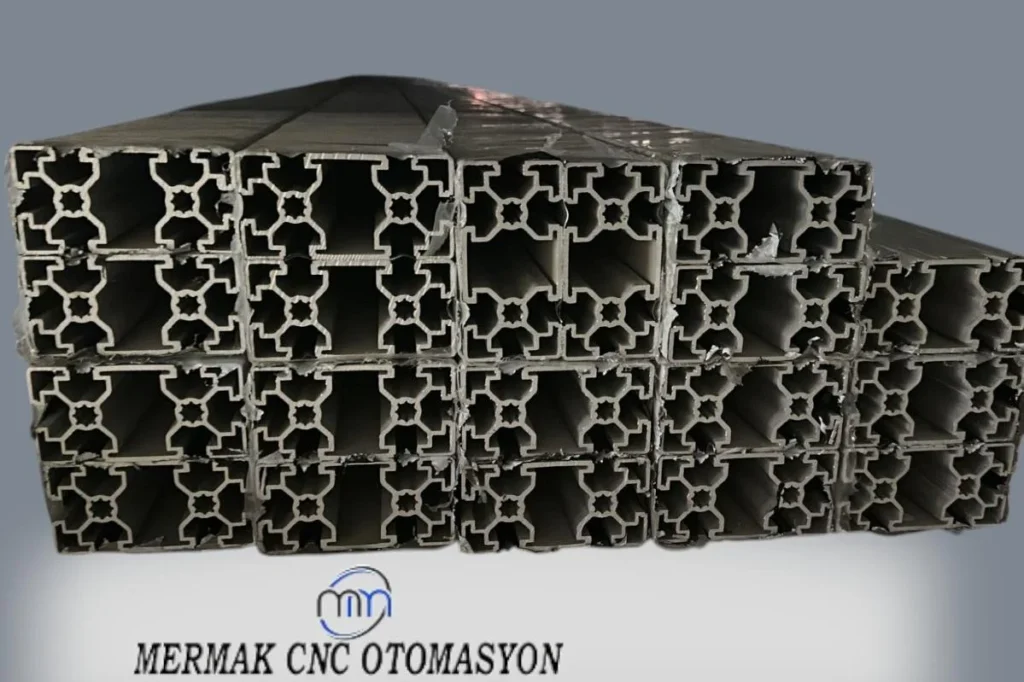
Conveyor belt systems are at the heart of industrial automation, serving as indispensable components in manufacturing and logistics processes. Playing a critical role in various applications such as material handling, assembly lines, packaging, and warehousing, the efficiency, durability, and flexibility of these systems directly impact a business’s competitive edge. Traditionally, conveyor systems built with steel constructions or welded profiles can fall short in terms of flexibility, rapid installation, and cost-effectiveness in today’s rapidly evolving production environments. This is precisely where sigma profiles, also known as aluminum profile systems, offer revolutionary advantages in the design, production, and operational processes of conveyor belt systems.Sigma profiles have found widespread use in industrial automation applications, primarily due to their modular structures, high strength-to-weight ratios, and ease of processing. The preference for these profiles in conveyor systems has brought about a significant shift in engineering approaches. These systems, which do not require welding and can be assembled with bolts and nuts, shorten assembly times while facilitating the adaptation of systems to future changes or expansions. This technical article and field guide will provide an expert examination of the in-depth use of sigma profiles in conveyor belt systems, their operating principles, technical details, on-site considerations, and solutions for common problems.Aluminum extrusion profiles, commonly referred to as sigma profiles, are typically manufactured from 6063-T5 or similar high-strength aluminum alloys. These alloys offer excellent corrosion resistance and are further enhanced against wear through anodized surface treatments. Their T-slot geometries allow for the quick and secure integration of various connection elements (T-nuts, corner brackets, internal connectors). This feature enables the highly flexible design and construction of conveyor frames, support legs, side guards, sensor and motor mounting elements, and even safety barriers. For industrial automation engineers, sigma profiles have become a strategic tool, offering possibilities for rapid prototyping, on-site modifications, and the creation of long-lasting, easy-to-maintain systems.
Operating Principle and Technical Data of Sigma Profile Usage in Conveyor Belt Systems
The operating principle of sigma profiles in conveyor belt systems is fundamentally based on modular assembly and a T-slot connection system. These profiles are manufactured in standardized dimensions and cross-sections (e.g., 20x20mm, 30x30mm, 40x40mm, 45x45mm, 60x60mm, 80x80mm) and feature integrated T-slots on each surface. These channels allow specially designed T-nuts and other connection elements to be easily inserted and secured into the profiles. This enables the creation of a robust and rigid structure simply by cutting, drilling, and bolting, without the need for welding or complex machining processes.Sigma profiles form the skeleton of conveyor systems, used to create the main frame supporting the belt bed, mounting platforms for drive elements like motors and gearboxes, side guides, sensor and actuator mounting points, adjustable feet, and even operator workstations. The internal cavities within the profiles allow for neat and protected routing of cable installations, enhancing the system’s aesthetic and functional integrity. This integrated cable management feature provides significant advantages in terms of safety and organization in industrial environments.Technical Data and Engineering Approach: The most crucial factors to consider when selecting and designing sigma profiles are the load to be carried, conveyor length, speed, environmental conditions, and vibration expectations. For example, for light-load and short-distance conveyors, smaller cross-section profiles like 20x20mm or 30x30mm may suffice, while for heavy loads, long spans, or high-vibration applications, larger and stronger profiles such as 45x45mm, 60x60mm, or 80x80mm should be preferred. Profiles with multiple T-slots and thicker walls increase torsional and bending resistance, creating more stable structures.Connection Elements: The strength of sigma profiles is reinforced by the variety and quality of the connection elements used. T-nuts (hammer head nuts, spring nuts, swivel nuts), corner connection elements (angle brackets, internal corner connectors), in-profile connections (hidden connectors), and hinges are designed to meet every need of conveyor systems. These elements offer quick assembly-disassembly, adjustment, and repositioning capabilities. Especially adjustable feet and casters allow the conveyor to be leveled with the floor or made mobile.Surface Treatments: Generally, anodized aluminum profiles are used. Anodization creates a protective, hard, and corrosion-resistant oxide layer on the aluminum surface. This process increases the profiles’ resistance to chemicals, moisture, and scratches in industrial environments. In areas where hygiene is critical, such as the food and pharmaceutical industries, they can be used with special surface treatments or stainless steel connection elements.Application Areas: Sigma profiles are used as the main support structure in a wide variety of conveyor systems, including flat belt conveyors, modular belt conveyors, roller conveyors, chain conveyors, and even transfer units. They are also widely preferred for constructing auxiliary equipment around conveyors, such as safety cages, operator panels, lighting poles, and product guiding systems. This versatility allows businesses to build their entire automation infrastructure with a single material system.
| Parameter | Value/Description |
|---|---|
| Material Standard | Aluminum Alloy 6063-T5 (or similar) |
| Surface Treatment | Anodized Coating, 10-15 micron thickness |
| Typical Profile Cross-Sections | 20x20mm, 30x30mm, 40x40mm, 45x45mm, 60x60mm, 80x80mm |
| Connection System | T-Slot Modular Connection |
| Connection Elements | T-Nuts (hammer head, spring, swivel), Corner Brackets, Internal Connectors |
| Load Capacity | Varies by profile and connection type; from 50 kg/m to 500 kg/m |
| Ease of Assembly | Fast, weld-free assembly with cutting, drilling, and bolting |
| Corrosion Resistance | High (Enhanced by anodized surface) |
On-Site Considerations for Using Sigma Profiles in Conveyor Belt Systems
- Design and Sizing: During the design phase of a conveyor system, factors such as the weight of the product to be transported, the total length of the conveyor, belt speed, and environmental conditions (humidity, temperature, chemicals) must be meticulously analyzed. Based on this data, the appropriate profile cross-section (e.g., 40×40 for light loads, 45×90 or 80×80 for heavy loads and long spans) and wall thickness should be selected. Insufficient sizing can lead to sagging, vibration, and structural fatigue over time. Furthermore, dynamic loads and potential impact effects should be considered, and profiles should be selected with appropriate safety factors. Vibration analysis and rigidity calculations are critically important, especially for high-speed or sensitive product conveyors.
- Correct Selection and Assembly of Connection Elements: The greatest strength of the modular structure of sigma profiles comes from the variety of connection elements. However, the correct selection and assembly of these elements are vital. For connection points carrying high loads or subjected to continuous vibration, anti-loosening elements such as spring T-nuts or self-locking nuts should be used. For corner connections, appropriate angle brackets or hidden internal profile connections should be preferred for both aesthetics and strength. All bolts and nuts should be tightened to torque values recommended by the manufacturer and checked periodically. Overtightening can damage the profiles, while insufficient tightening can cause connections to loosen and the system to lose stability.
- Alignment and Flatness: Accurate alignment in conveyor belt systems is a critical factor for smooth belt operation, minimized wear, and proper product transport. When assembling sigma profile frames, ensure that all support points are on the same plane and level. Laser alignment tools or spirit levels should be used to check the squareness and flatness of each profile and the overall structure. Even small deviations in floor level can cause the belt to slip or rub against the sides, especially in long conveyor lines. Adjustable feet offer an excellent solution for such fine adjustments.
- Cable Management and Safety Integration: The internal channels of sigma profiles are ideal for routing power and signal cables aesthetically and protectively. Appropriate cable channels and clamps should be used to prevent cable wear or pinching. Additionally, automation and safety elements such as sensors, emergency stop buttons, and safety barriers can be easily integrated onto sigma profiles. In accordance with machine safety directives, protective cages and access barriers should be quickly assembled around moving parts using sigma profiles. This is essential for ensuring operator safety.
- Maintenance and Periodic Inspections: Although sigma profile-based conveyor systems require low maintenance, periodic inspections are essential to extend system life and prevent failures. The tightness of all connection points, any deformation or cracks in the profiles, signs of corrosion on the surface, and the wear condition of connection elements should be checked regularly. These checks should be performed more frequently, especially in high-vibration or heavy-load systems. Loose connections should be tightened immediately, and damaged parts should be replaced with original spare parts.
- Evaluation of Environmental Factors: The characteristics of the environment where the conveyor system will be installed should be decisive in the selection of profiles and connection elements. In environments with high humidity or chemical vapors (e.g., food processing plants, chemical factories), special coated profiles or stainless steel connection elements should be preferred instead of standard anodized profiles. High temperature fluctuations can affect the expansion-contraction properties of aluminum, which is a factor to consider in long lines. For outdoor applications, specially coated profiles providing UV resistance and stronger corrosion protection should be evaluated.
Common Problems and Solutions for Sigma Profile Usage in Conveyor Belt Systems
While sigma profile-based conveyor systems offer many advantages, some issues can arise due to incorrect design, assembly, or maintenance practices. Here are common problems and expert solutions for them:
- Problem: Excessive Vibration and Oscillation in the ConveyorDescription: Observing more vibration or oscillation than expected throughout the system, especially in high-speed or heavy-load conveyors. This can lead to belt slippage, product falls, or incorrect sensor triggering.Solution:
- Rigidity Check: First, ensure that all connection points (bolts, nuts, corner brackets) are tightened to the appropriate torque values. Loose connections are a primary cause of vibration.
- Additional Support Points: Increase the rigidity of the system by adding extra support legs or cross-bracing to the conveyor’s substructure. Mid-supports are essential to prevent profile sagging in long spans.
- Larger Cross-Section Profiles: If existing profiles are insufficient, reinforcement or replacement with larger cross-section or thicker-walled sigma profiles may be necessary.
- Vibration Isolators: Place rubber pads or special vibration isolators under the conveyor feet to absorb vibrations coming from the ground or spreading through the system.
- Problem: Insufficient Load-Bearing Capacity and SaggingDescription: Visible sagging or deformation of the conveyor belt or frame under the weight of transported products. This can lead to structural damage and shortened belt life in the long run.Solution:
- Load Analysis and Resizing: Ensure that load calculations were performed correctly during the initial design phase. In the current situation, reinforce or replace with stronger (wider or higher moment of inertia) sigma profiles.
- Reduce Support Spacing: Shorten the distance between support legs to distribute the load carried by each profile and reduce sagging.
- Cross Supports: Especially for wide conveyors, add cross supports between the side profiles to increase torsional resistance.
- Problem: Assembly Errors and Alignment IssuesDescription: Alignment problems such as the conveyor belt drifting to one side, rubbing against edges, or improper product transport. This usually results from incorrectly cut profiles or faulty assembly.Solution:
- Precise Cutting and Measurement: Ensure that profiles are cut to the exact correct length and at right angles. Use precise measuring tools even for on-site cutting.
- Laser Alignment: Use laser alignment or precise spirit levels to check the squareness and flatness of the conveyor frame. Ensure all support points are at the same level.
- Adjustable Feet: Perform final alignment using adjustable feet that allow for fine-tuning of the conveyor relative to the floor level.
- Correct Orientation of Connection Elements: Ensure that corner brackets and other elements are correctly oriented and fully seated.
- Problem: Corrosion and Surface DamageDescription: Rusting (white rust), oxidation, or coating peeling on the surface of profiles, especially in humid, chemical-laden, or outdoor environments.Solution:
- Appropriate Surface Treatment Selection: For aggressive environments, choose profiles with thicker anodized coatings, powder coating, or special epoxy coatings instead of standard anodization.
- Stainless Steel Connection Elements: In areas with corrosion risk, use stainless steel (304 or 316) connection elements instead of galvanized or zinc-plated steel ones.
- Regular Cleaning and Maintenance: Regularly clean the surface of the profiles and check the integrity of protective coatings. Repair damaged coatings or replace the profile if necessary.
- Problem: Loosening of Connection ElementsDescription: Bolts and nuts loosening over time or due to vibration, which reduces system stability and can cause noise.Solution:
- Torque Control: Tighten all connections to the manufacturer’s recommended torque values and periodically check this tightness using a torque wrench.
- Locking Elements: Prevent connections from loosening using spring washers, self-locking nuts, or thread-locking fluids (like Loctite).
- Periodic Inspection: Check all connection points, especially within the first few weeks after initial installation and then at regular intervals, and retighten if necessary.
Conclusion and Expert Advice on Using Sigma Profiles in Conveyor Belt Systems
In today’s rapidly evolving world of industrial automation, it is critical for fundamental infrastructures like conveyor belt systems to offer flexibility, efficiency, and cost-effectiveness. Sigma profiles meet these expectations and have become an indispensable structural solution for modern manufacturing facilities. Their modular design offers designers limitless freedom, while quick assembly and disassembly capabilities enhance the adaptability of production lines. These weld-free systems not only reduce installation costs but also make on-site modifications extremely practical. From an expert perspective, it can be confidently stated that sigma profiles are more than just structural elements; they are a strategic investment supporting the agility and sustainability of production processes.
However, to maximize the benefits from these systems, meticulous attention is required at every step, from the design phase through installation and maintenance. The correct selection of profile cross-sections, the precision of load calculations, the use of appropriate connection elements, and careful assembly form the foundation for the system’s long-lasting, stable, and trouble-free operation. Problems encountered on-site, such as vibration, sagging, or alignment issues, typically stem from a failure to adhere to these fundamental principles and can be easily resolved with the right engineering approaches. Details such as cable management and safety integration are also crucial elements that directly impact the system’s overall performance and operator safety.
In the future, with the widespread adoption of Industry 4.0 and smart factory concepts, the importance of sigma profile systems will only increase. Modular structures offer unique advantages for the rapid integration of robotic cells, easy mounting of sensors, and even forming the physical infrastructure for AI-powered systems. Therefore, a deep understanding and application of sigma profile technologies are vital skills for every engineer and technical expert in the industrial automation sector to remain competitive. It should be remembered that a well-designed and correctly assembled sigma profile conveyor system is not just a product carrier, but a powerful automation tool that enhances production efficiency and operational profitability. 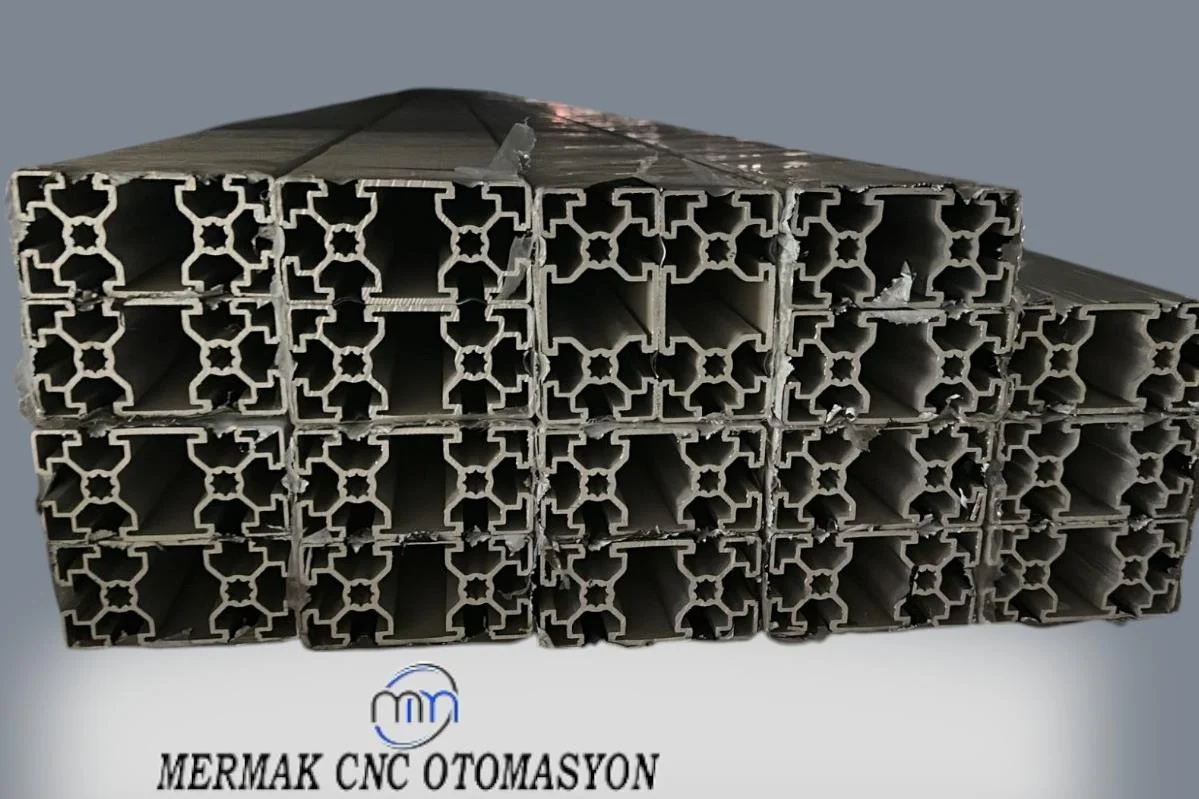
FAQ
What are sigma profiles and how do they work in conveyor systems?
Sigma profiles are aluminum extrusion profiles, typically made from 6063-T5 alloy, featuring T-slots on their surfaces. These slots allow for modular assembly using specialized connection elements like T-nuts, enabling the quick and flexible construction of industrial structures such as conveyor frames without welding.
What are the main advantages of using sigma profiles for industrial conveyor belts?
Key benefits include modularity for flexible design, rapid assembly without welding, high strength-to-weight ratio, excellent corrosion resistance (especially when anodized), integrated cable management, and ease of modification or expansion. These features contribute to cost-effectiveness and operational efficiency.
What critical factors should be considered when designing and installing a sigma profile conveyor system?
When selecting sigma profiles, consider the load capacity required, conveyor length and speed, and environmental conditions. Choose appropriate profile cross-sections (e.g., 40x40mm for light loads, 80x80mm for heavy loads) and ensure correct connection elements are used and tightened to recommended torque values. Proper alignment and periodic maintenance are also crucial.
What are common problems encountered with sigma profile conveyor systems and how can they be resolved?
Common issues include excessive vibration, insufficient load capacity leading to sagging, alignment problems, corrosion, and loosening connections. Solutions involve ensuring proper tightening, adding support points, using larger profiles, precise cutting and alignment tools, selecting appropriate surface treatments, and using locking elements for connections.
Can sigma profiles be used for different types of conveyor systems and auxiliary structures?
Yes, sigma profiles are highly versatile. Their modular nature makes them suitable for various conveyor types, including flat belt, modular belt, roller, and chain conveyors. They are also ideal for building auxiliary structures like safety cages, operator panels, and sensor mounts, providing a unified structural system for automation infrastructure.