No products in the cart.
Critical Mistakes in Stepper Motor Installation and How to Avoid Them

Contents
Stepper motors are crucial for precise motion control in industrial automation. However, improper installation can lead to significant performance issues and premature failure. This article highlights the most critical errors in stepper motor mounting, including mechanical misalignment, incorrect electrical connections, inadequate thermal management, and improper driver settings. Understanding and avoiding these pitfalls is essential for ensuring the reliability and efficiency of your CNC machinery.
Mermak CNC Technical Guide
Practical notes for CNC router, automation and industrial motion systems.
Understanding Stepper Motor Installation Challenges
Stepper motors are indispensable components in industrial automation, prized for their ability to provide precise positioning and speed control in demanding applications. However, realizing their full potential hinges on a meticulous and correct installation process. Errors made during mounting can result in immediate performance degradation, and over time, lead to serious malfunctions and costly production downtime. The most critical mistakes typically occur in fundamental areas such as mechanical integrity, electrical connection accuracy, effective thermal management, and optimal driver parameter configuration. These errors can cascade, negatively impacting not only the motor itself but also the entire interconnected mechanical and electronic systems.
Stepper Motor Principles and Technical Data
Stepper motors are a type of brushless DC motor that convert electrical signals into discrete mechanical rotational movements. Each electrical pulse (step) rotates the motor’s rotor by a fixed angle, defining its precision. For applications requiring extremely high accuracy, micro-stepping techniques can subdivide these steps further. Key parameters include holding torque, which is the motor’s ability to maintain its position when energized without moving, and dynamic torque, its capacity to drive a load during motion. Installation errors directly compromise these principles and technical specifications, preventing the motor from achieving its expected performance. For instance, poor alignment or insufficient cooling can reduce a motor’s nominal torque, leading to step loss. The following table summarizes essential stepper motor parameters and the potential impact of installation errors:
| Parameter | Value/Description |
|---|---|
| Step Angle | Typically 1.8° or 0.9°. Installation errors (e.g., mechanical play) can reduce effective accuracy. |
| Holding Torque | Maximum torque the motor can exert to maintain position when energized. Incorrect current settings or overloading can make this insufficient. |
| Phase Current | Nominal current applied to each phase. Incorrect driver settings or inadequate cable gauge can cause overheating or insufficient torque. |
| Phase Inductance | Inductive value of motor windings. High inductance leads to torque reduction at high speeds and is related to driver selection. |
| Rotor Inertia | The rotor’s resistance to rotational acceleration. Incorrect ramp settings with high-inertia loads can cause step loss. |
| Operating Temperature Range | Limits for safe and efficient motor operation. Insufficient cooling or excessive current can exceed these limits. |
| Mounting Type and Dimensions | Physical form factor (e.g., NEMA standards). Incorrect mounting interfaces or adapters can induce mechanical stress. |
Key Considerations for Field Installation
- Mechanical Connection Errors:
The accuracy of the mechanical connection is paramount for stepper motor performance. Proper shaft alignment, correct couplings, and a flat, rigid mounting surface are critical. Angular, parallel, or axial misalignments impose undue stress on the motor shaft bearings, shortening their lifespan, increasing vibration, and causing torque loss. This is particularly problematic in high-speed or precision positioning applications, leading to step loss. Selecting the appropriate type (e.g., flexible) and size of coupling can compensate for minor alignment errors, but perfect alignment is always ideal. A stable mounting surface minimizes motor vibrations and optimizes load transfer. Furthermore, ensuring fasteners are tightened to the correct torque is essential; overtightening can deform the motor housing, while under-tightening leads to loose connections and vibration. Any backlash in connected systems like gearboxes or lead screws directly impacts positioning accuracy and must be minimized during installation.
- Electrical Connection Errors:
Precise control of stepper motors relies on accurate and secure electrical connections. A common mistake is incorrect phase wiring order, which can prevent the motor from rotating, cause it to vibrate, or move in the wrong direction. Always verify the correct sequence when connecting motor phases to the driver terminals. The cable gauge and length are also critical. Undersized or excessively long cables can cause voltage drops and current loss, reducing motor torque and potentially leading to overheating. Additionally, inadequate grounding and shielding can allow electromagnetic interference (EMI/RFI) to disrupt control signals, resulting in unstable motor operation. The quality and tightness of connectors are also important; loose or oxidized connections can impede current flow and reliability.
- Thermal Management Deficiencies:
Stepper motors generate heat during operation, primarily due to resistive losses in the windings and core losses. Insufficient heat dissipation can lead to overheating, reducing motor efficiency, degrading insulation, and shortening its lifespan. Common errors include mounting the motor in an enclosed, poorly ventilated space, or failing to use appropriate heat sinks or cooling fans when specified. The motor’s rated operating temperature must not be exceeded. Overheating can also be a symptom of other issues, such as excessive current draw due to incorrect driver settings or mechanical binding.
- Incorrect Driver Parameter Settings:
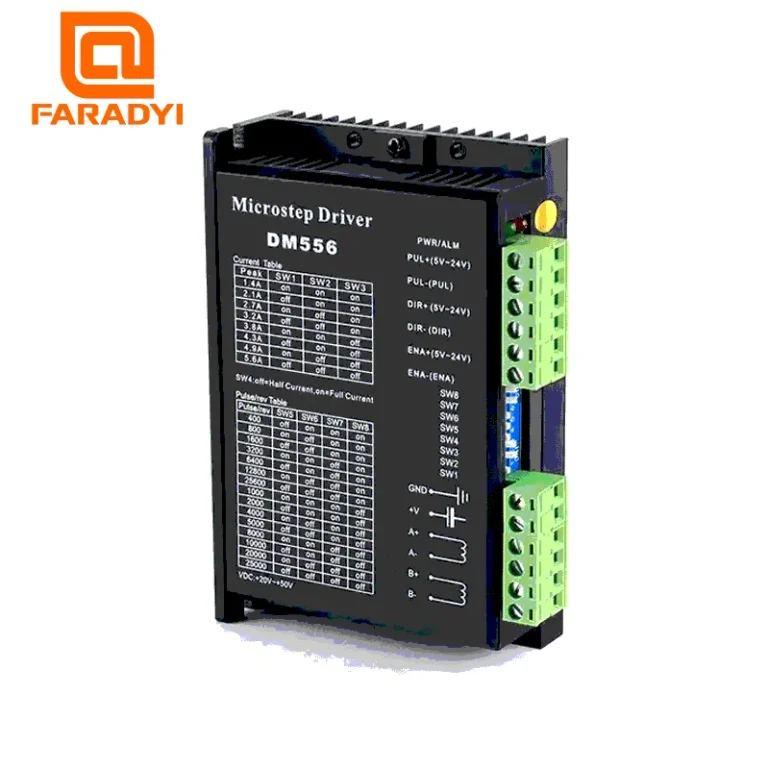
Stepper motor drivers are responsible for controlling the motor’s current, voltage, and stepping sequence. Incorrect configuration of driver parameters, such as phase current, micro-stepping resolution, or current decay mode, can severely impact performance. Setting the current too high can cause overheating, while setting it too low results in insufficient torque and potential step loss. Incorrect micro-stepping settings can lead to resonance or reduced smoothness. The driver’s current decay mode (fast or slow) affects torque at higher speeds and must be matched to the motor and application requirements. Always consult the driver and motor datasheets for recommended settings.
Conclusion
Proper stepper motor installation is fundamental to achieving reliable and precise motion control in industrial machinery. By meticulously addressing mechanical alignment, ensuring correct electrical connections, implementing effective thermal management, and configuring driver parameters accurately, you can prevent common errors. Avoiding these critical mistakes will enhance the longevity and performance of your stepper motors, contributing to the overall efficiency and productivity of your CNC operations. For expert advice and high-quality stepper motor solutions tailored to your industrial needs, contact us.