No products in the cart.
Why Relying Solely on Nm for Step Motor Selection is a Mistake

Contents
Selecting a step motor based solely on its Nm (Newton meter) holding torque is a common but flawed approach. This overlooks crucial performance factors like the motor’s speed-torque curve, step angle, inertia, and driver compatibility. Such a narrow focus can lead to undersized motors, system instability, reduced efficiency, and premature failures. For industrial applications, a comprehensive evaluation considering dynamic performance is essential.
Mermak CNC Technical Guide
Practical notes for CNC router, automation and industrial motion systems.
Understanding Step Motor Selection: Beyond Just Torque (Nm)
In industrial automation, the precise selection of a step motor is paramount for the overall performance and reliability of your CNC machinery. Many users and engineers tend to concentrate solely on the motor’s static holding torque, typically measured in Newton meters (Nm). However, this singular focus is a significant oversight. Step motors operate under dynamic conditions, and their performance is influenced by a multitude of factors beyond static torque. Relying only on the Nm rating is akin to judging a book by its cover – it fails to capture the full picture of the motor’s capabilities and limitations in real-world applications. A proper motor selection requires a much broader technical assessment.
The Importance of the Speed-Torque Curve
Step motors convert electrical pulses into precise mechanical rotational movements. Each pulse commands a specific angular rotation, known as the step angle. While this precision is valuable for positioning tasks, it’s not solely determined by holding torque. The motor’s speed-torque curve is a far more critical indicator of its performance. This graph illustrates how much torque a motor can produce at various speeds. Generally, as the speed of a step motor increases, its torque output decreases. The Nm value listed on a datasheet represents the torque at 0 RPM (zero speed). As the motor reaches operational speeds, say 500 RPM, its usable torque might drop significantly, perhaps to less than 1 Nm. If your application requires 1.5 Nm at 500 RPM, a motor with a 2 Nm holding torque will be insufficient, leading to missed steps or complete motor stall.
Key Technical Parameters for Accurate Selection
Beyond holding torque and speed-torque characteristics, several other technical parameters are vital for selecting the right step motor:
- Step Angle: Defines the motor’s rotational resolution per pulse (e.g., 1.8°, 0.9°). Smaller step angles offer higher precision but may limit maximum speed or torque.
- Rotor Inertia: The resistance of the rotor to changes in its rotational speed. High inertia loads require motors with appropriate inertia ratios to prevent instability and resonance.
- Winding Resistance & Inductance: These electrical properties affect the motor’s current response and torque production, especially at higher speeds. Motors with lower inductance are often better suited for high-speed applications.
- Rated Current & Voltage: The electrical specifications for optimal motor operation. Using an incompatible driver or power supply can lead to underperformance or overheating.
- Thermal Resistance: Indicates the motor’s tendency to heat up. Excessive heat reduces lifespan and performance. Cooling solutions may be necessary for demanding applications.
- Microstepping: A feature of the motor driver that subdivides steps for smoother motion and reduced vibration. However, microstepping can also reduce the motor’s effective torque output.
| Parameter | Description |
|---|---|
| Holding Torque | Maximum torque produced by the motor when energized and stationary (Nm). Valid only at 0 RPM. |
| Speed-Torque Curve | Graph showing dynamic torque output at different speeds. Crucial for selection. |
| Step Angle | Motor’s rotation per pulse (e.g., 1.8°). Determines positioning accuracy. |
| Rotor Inertia | Resistance to rotational speed change (kg·m²). Must be balanced with load inertia. |
| Rated Current | Maximum current for optimal performance (A). Influences driver selection. |
| Winding Inductance | Magnetic field generation capacity (mH). Affects high-speed torque. |
| Maximum Speed | Theoretical maximum speed without losing steps (RPM or PPS). |
Practical Considerations for Industrial Applications
- Application Load Profile: Accurately determine the torque required not just for holding, but also during acceleration, deceleration, and constant speed operation. For applications with high inertia loads, matching the motor’s inertia to the load’s inertia is critical to avoid instability.
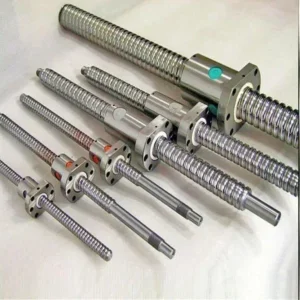
- System Dynamics: Consider the entire system, including the linear guide rail, ball screw, and any gearbox. These components add inertia and friction, affecting the overall torque requirements.
- Driver Compatibility: Ensure the selected step motor driver can provide the necessary current and voltage, and supports features like microstepping if required for your application’s smoothness needs.
- Environmental Factors: Operating temperature, dust, and vibration levels can impact motor performance and longevity. Proper enclosure and cooling might be necessary.
By moving beyond a simple Nm value and considering the complete performance profile, you can select a step motor that ensures optimal efficiency, reliability, and precision for your industrial CNC router machine or other automated systems. This holistic approach prevents costly downtime and ensures your machinery operates at its peak potential.
Ready to optimize your automation system? Request a quote on WhatsApp for expert consultation and component selection.