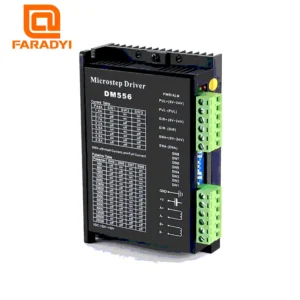





































































What to Do When Your Stepper Motor Driver Issues an Alarm
📑 Table of contents (Click to open)
- Introduction: The Importance of Stepper Motor Driver Alarms in Industrial Automation
- Stepper Motor Driver Alarm Mechanisms and Principles
- Overcurrent and Short Circuit Protection
- Overvoltage and Undervoltage Protection
- Overtemperature Protection
- Common Causes of Stepper Motor Driver Alarms and Detailed Analysis
- Troubleshooting Steps for Stepper Motor Driver Alarms
- Conclusion: Ensuring Reliable Operation with Stepper Motor Drivers
Stepper motor drivers are crucial for precise motion control in industrial automation. When a driver issues an alarm, it signals a potential problem that can halt production. Understanding these alarms is key to maintaining efficiency and preventing costly downtime. This article explores the common reasons behind stepper motor driver alarms and provides practical solutions for industrial environments.
Practical notes for CNC router, automation and industrial motion systems.
Introduction: The Importance of Stepper Motor Driver Alarms in Industrial Automation
Stepper motors are indispensable actuators in industrial automation, enabling precise positioning and speed control for applications ranging from CNC machines and robotics to packaging equipment and medical devices. The reliable operation of these motors is critical for production efficiency and system integrity. Stepper motor drivers, the electronic controllers that manage motor movement and provide protection, are equipped with alarm mechanisms. An alarm signal from a driver indicates a potential issue or a fault within the system, necessitating prompt attention to prevent production disruptions, material waste, and significant financial losses. This article delves into the fundamental causes of stepper motor driver alarms, diagnostic methods, and effective resolution strategies essential for the continuous and efficient operation of industrial facilities.
Stepper Motor Driver Alarm Mechanisms and Principles
Stepper motor drivers incorporate various protective features to ensure the safety of both the motor and the driver itself. These mechanisms detect abnormal operating conditions, generate alarms, and typically cut off power to the motor to prevent further damage. The primary goal is to extend the lifespan of the motor and protect the driver and connected systems. These protective functions are continuously monitored by internal electronic circuits.
Alarm mechanisms commonly monitor parameters such as current, voltage, temperature, and sometimes motor step loss. When any of these parameters deviate from their specified thresholds, the driver identifies an error state and communicates it to the user through visual indicators (LEDs), electrical outputs (alarm signals), or communication interfaces (error codes). These notifications provide the initial clues for diagnosing the fault.
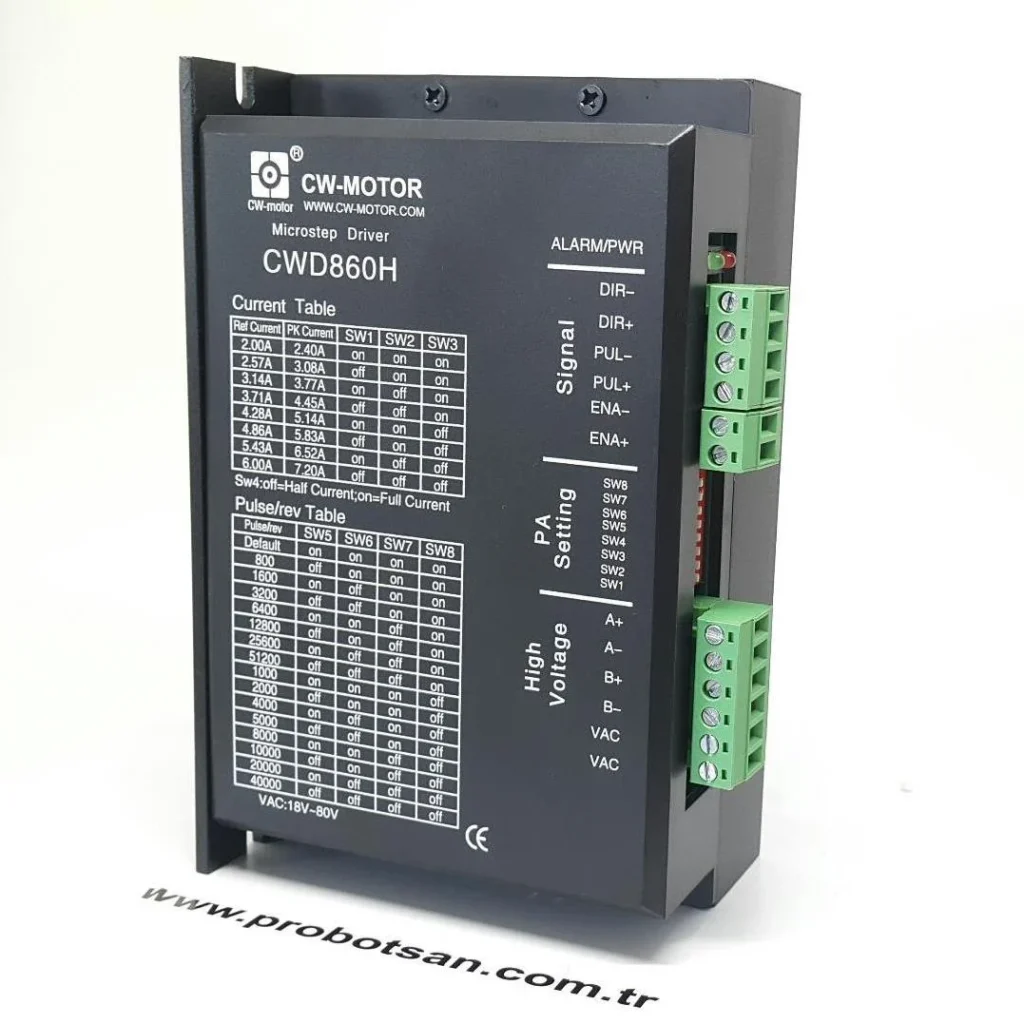
Overcurrent and Short Circuit Protection
Overcurrent and short circuit protection are among the most vital safety features in stepper motor drivers. A short circuit in the motor windings or on the driver’s output can cause excessive current to flow through the output transistors (MOSFETs or IGBTs), potentially damaging the driver’s power circuitry or burning the motor windings.
Drivers typically use internal current sensors to continuously monitor the motor phase currents. If a current level exceeds the set limit or the driver’s maximum capacity, the driver immediately cuts off the output and issues an overcurrent or short circuit alarm, often accompanied by an error code (e.g., “OC – Overcurrent”). This protection may require manual or automatic reset after the fault is resolved.

Overvoltage and Undervoltage Protection
Deviations in the supply voltage from the nominal range can directly impact system stability and safety. Overvoltage conditions can arise from power grid fluctuations, power supply malfunctions, or back-EMF generated when the motor’s inductive load is rapidly de-energized. These high voltages can damage the driver’s internal electronic components, particularly capacitors and power transistors.
Undervoltage, on the other hand, can prevent the driver from supplying sufficient torque to the motor or cause control circuits to malfunction. Voltage drops in the supply line, inadequate power supply capacity, or wiring losses can trigger undervoltage alarms. In both scenarios, the driver issues an alarm when voltage thresholds are breached, typically indicated by error codes like “OV – Overvoltage” or “UV – Undervoltage.”

Overtemperature Protection
Stepper motor drivers generate significant heat during operation, especially at high currents or switching frequencies. The internal electronic components, particularly power transistors and integrated circuits, have specific operating temperature ranges. Exceeding these limits can shorten their lifespan and lead to permanent failure.
Overtemperature protection relies on internal thermal sensors that continuously monitor ambient and component temperatures. When the driver’s or its environment’s temperature exceeds a critical threshold, the driver issues an overtemperature alarm (e.g., “OT – Overtemperature”) and typically cuts off motor power to allow for cooling. This is often associated with inadequate cooling, high ambient temperatures, or overloading the driver beyond its capacity.
Common Causes of Stepper Motor Driver Alarms and Detailed Analysis
A stepper motor driver alarm can stem from various potential causes. Accurate diagnosis is crucial not only for resolving the immediate issue but also for preventing future occurrences. Common causes include:
- Wiring Issues: Incorrect wiring, loose connections, or damaged cables between the driver and the motor can lead to phase imbalances, short circuits, or open circuits, triggering alarms. Ensure all connections are secure and according to the manufacturer’s specifications.
- Motor Compatibility: Using a motor with electrical characteristics (voltage, current, impedance) that do not match the driver’s specifications can cause the driver to operate outside its safe limits, leading to alarms. Always verify compatibility before connecting.
- Power Supply Problems: An unstable or inadequate power supply can cause overvoltage or undervoltage conditions. Fluctuations in the mains power or a failing power supply unit can trigger protective shutdowns.
- Mechanical Binding: If the motor shaft or the connected mechanical system is binding or experiencing excessive friction, the motor may draw more current than the driver can safely provide, resulting in an overcurrent alarm. Check for obstructions or misalignment in the mechanical load.
- Environmental Factors: Excessive ambient temperature or poor ventilation around the driver can lead to overheating. Ensure the driver is installed in a well-ventilated area and that its heatsink is clean and unobstructed.
- Driver Fault: In some cases, the driver itself may have an internal fault. If all external factors are ruled out, the driver may need to be tested or replaced.
Troubleshooting Steps for Stepper Motor Driver Alarms
When a stepper motor driver alarm occurs, follow these systematic troubleshooting steps:
- Identify the Alarm Code: Consult the driver’s manual to understand the specific error code or indicator displayed. This is the first step in pinpointing the problem.
- Check Power Supply: Verify that the input voltage to the driver is within the specified range and stable.
- Inspect Wiring: Carefully examine all wiring connections between the driver and the motor for looseness, damage, or incorrect phasing.
- Test the Motor: Disconnect the motor from the driver and test its windings for continuity and resistance. Check for short circuits to ground.
- Assess Mechanical Load: Manually rotate the motor shaft (with power off) to check for any binding or excessive resistance.
- Monitor Temperature: Ensure the driver is operating within its recommended temperature range and that cooling is adequate.
- Consult Documentation: Refer to the driver and motor datasheets for compatibility and operational guidelines.
Conclusion: Ensuring Reliable Operation with Stepper Motor Drivers
Stepper motor driver alarms are critical safety features designed to protect valuable equipment and prevent costly downtime. By understanding the common causes of these alarms—ranging from electrical issues like overcurrent and overvoltage to environmental factors like overheating—and by implementing a systematic troubleshooting approach, industrial users can quickly diagnose and resolve problems. Regular maintenance, proper installation, and ensuring component compatibility are key to maximizing the reliability and performance of stepper motor systems in demanding industrial applications. For assistance with selecting the right stepper motor drivers or for expert advice on troubleshooting, Mermak CNC is your trusted partner.
If your stepper motor driver is consistently alarming or you suspect a complex issue, don’t hesitate to reach out. Request a quote on WhatsApp for expert solutions and reliable components.