No products in the cart.
Step Motor Stalling: Mechanical or Electrical Issue? A Comprehensive Fault Analysis

Contents
- Step Motor Stalling: Mechanical or Electrical? A Comprehensive Fault Analysis
- Understanding Step Motor Operation and Precision
- Stalling Symptoms: Initial Observations for Mechanical vs. Electrical Diagnosis
- Auditory Symptoms and Interpretation
- Visual Symptoms and Positional Errors
- Mechanical Causes of Step Motor Stalling
- Load and Friction Issues
- Component Wear and Damage
- Electrical Causes of Step Motor Stalling
- Driver and Power Supply Issues
- Wiring and Connection Problems
- Diagnostic Steps: Isolating the Problem
- 1. Mechanical Checks
- 2. Electrical Checks
- Common Scenarios and Solutions
- Conclusion
Step motors are crucial for precise positioning in industrial automation. However, they can sometimes stall, leading to operational disruptions. This article guides you through diagnosing whether a step motor’s stalling issue is mechanical or electrical, providing practical insights for CNC applications.
Mermak CNC Technical Guide
Practical notes for CNC router, automation and industrial motion systems.
Step Motor Stalling: Mechanical or Electrical? A Comprehensive Fault Analysis
Step motors are indispensable actuators in industrial automation, widely used in applications requiring precise positioning and speed control. However, issues like stalling at a specific point, failing to complete movement, or exhibiting erratic operation can occur. Accurately identifying whether the root cause of such a fault is mechanical or electrical is critical for swift and effective resolution. This technical article delves into the potential causes of step motor stalling, methods for distinguishing between mechanical and electrical faults, and practical solutions backed by field experience.
A step motor system comprises several components: the motor itself, its driver, the control unit (PLC/CNC), the power supply, and mechanical transmission elements. Incompatibility, malfunction, or incorrect settings in any single component can negatively impact the entire system’s performance. Stalling, specifically, manifests as the motor failing to advance the required steps, losing position, or stopping entirely. A systematic approach is essential to diagnose these issues, evaluating both potential fault categories diligently.
Understanding Step Motor Operation and Precision
Step motors rotate in discrete increments (steps) by energizing their coils sequentially. Each pulse causes the motor to move to its next stable magnetic position. This principle allows for precise positioning even in open-loop control systems. However, for the motor to advance reliably without losing steps, its torque must exceed the load torque, the driver must supply adequate current, and control signals must be clean. Microstepping can enhance precision and smoothness, but it can also reduce dynamic torque, potentially leading to step loss in high-torque applications. Proper system sizing and configuration are fundamental to preventing stalling.
Stalling Symptoms: Initial Observations for Mechanical vs. Electrical Diagnosis
Stalling typically presents with distinct symptoms that offer crucial clues for initial diagnosis. These can be auditory, visual, or thermal.
Auditory Symptoms and Interpretation
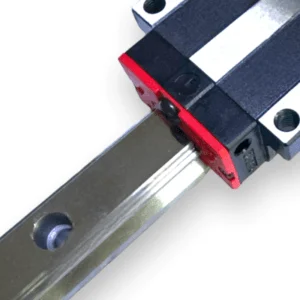
Unusual noises during stalling can indicate the fault’s nature. A high-pitched whine might suggest the motor is receiving current but is mechanically obstructed or lacks sufficient torque. Clicking or rattling sounds often point to a loose coupling, worn bearing, or backlash in mechanical transmission components like gears or belts. A continuous grinding or rubbing noise typically signifies a mechanical impediment, such as dry linear guide rails, debris, or excessive friction. Careful listening can help determine if the issue is mechanical.
Visual Symptoms and Positional Errors
Visual cues clearly reveal performance deficiencies. The most common is the inability of an axis to reach its target position or a noticeable positional error. While closed-loop systems with encoders can detect this directly, open-loop systems may only reveal it through product quality issues or manual checks. Significant motor vibration without movement can indicate insufficient torque or incorrect phase sequencing. Irregular, jerky, or hesitant motion might stem from fluctuating current from the driver or mechanical friction variations. Inspecting mechanical transmission components like belts and couplings for wear or damage is a vital part of the initial visual inspection.
Mechanical Causes of Step Motor Stalling
Mechanical issues are frequent culprits for step motor stalling. These relate to physical obstructions, excessive friction, or component wear within the machine’s motion system.
Load and Friction Issues
Excessive load torque is a primary mechanical cause. This can arise from the weight of the workpiece, the cutting forces during machining, or improperly balanced axes. High friction in the motion system, often due to inadequate lubrication of linear guide rails, ball screws, or bearings, significantly increases the required motor torque. Misalignment between the motor shaft and the driven component (e.g., via a coupling or belt) can also introduce binding and increase friction.
Component Wear and Damage
Wear and tear on mechanical components like bearings, gears, or lead screw nuts can create excessive play (backlash) or binding. Damaged components, such as a bent shaft or a chipped gear tooth, can cause intermittent obstructions. A seized bearing in the motor itself or in an attached component (like a pulley or ball screw support) will prevent rotation entirely.

Electrical Causes of Step Motor Stalling
Electrical problems, often related to the motor driver, power supply, or wiring, can also lead to step motor stalling.
Driver and Power Supply Issues
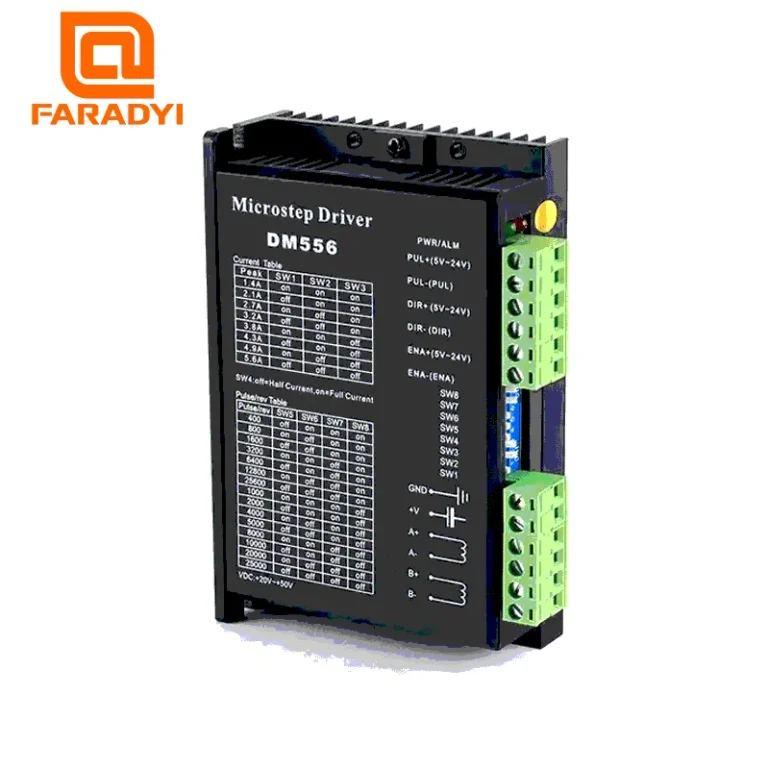
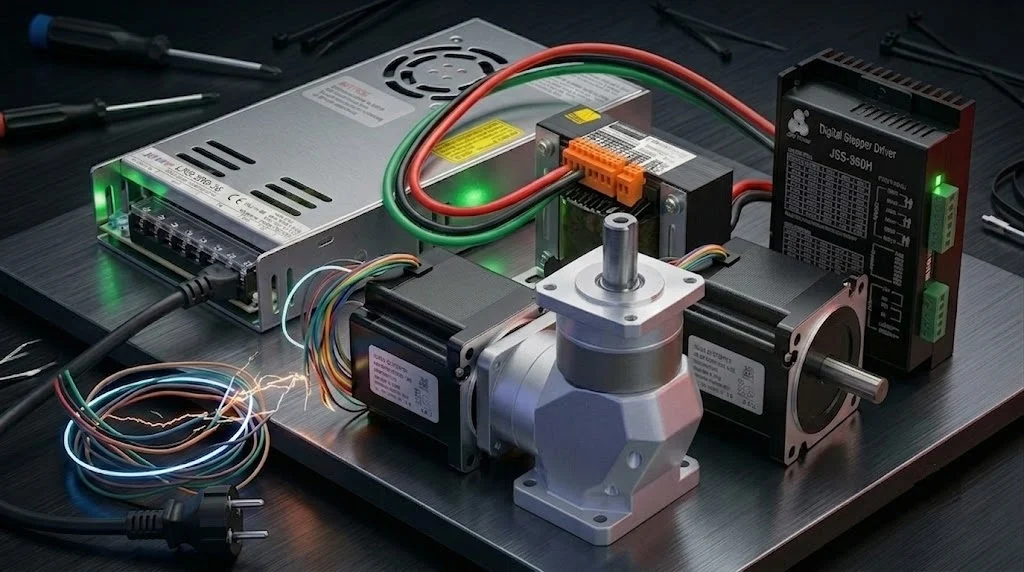
An incorrectly configured step motor driver is a common electrical fault. If the driver’s current setting is too low for the motor and load, it won’t provide sufficient torque. Conversely, excessively high current can cause overheating and potential damage. A failing driver, or one that is incompatible with the motor, may deliver erratic or insufficient power. The power supply unit (PSU) must provide stable voltage and sufficient current. Voltage drops or insufficient current from the PSU can lead to motor performance degradation and stalling.
Wiring and Connection Problems
Loose or damaged wiring between the driver and the motor can cause intermittent power loss to motor phases, resulting in erratic movement or stalling. Incorrect wiring, such as crossed phase connections, will prevent the motor from running correctly or at all. Short circuits within the motor windings or cables can trigger protective shutdowns in the driver or cause immediate motor failure.

Diagnostic Steps: Isolating the Problem
A methodical diagnostic process is key to pinpointing the cause of step motor stalling.
1. Mechanical Checks
Start by manually rotating the motor shaft (with power off). It should turn smoothly without excessive resistance or binding. Check all mechanical linkages, couplings, belts, and guide rails for obstructions, damage, or excessive friction. Ensure proper lubrication of linear guides and bearings. Verify that the load is not excessive for the motor’s rated torque. For instance, check if the couplings are secure and aligned.
2. Electrical Checks
Inspect the wiring for loose connections or damage. Verify the motor and driver compatibility and ensure the driver’s current settings are appropriate for the motor. Check the power supply voltage and current output. If possible, test the motor with a known good driver and vice versa to isolate the faulty component. Measure winding resistance to check for short circuits or open circuits within the motor.

Common Scenarios and Solutions
Scenario 1: Motor vibrates but doesn’t move.
- Possible Cause: Incorrect wiring (phase swapped), driver fault, or severe mechanical binding.
- Solution: Verify wiring, check driver settings, and perform manual mechanical checks.
Scenario 2: Motor moves erratically or loses steps.
- Possible Cause: Insufficient torque (low driver current, high load, acceleration too high), electrical noise, or mechanical backlash.
- Solution: Increase driver current (within limits), reduce acceleration/velocity, check for mechanical play, and ensure clean power/signal lines. Consider a motor with higher torque or a gearbox for high-inertia loads.
Scenario 3: Motor stops suddenly and may overheat.
- Possible Cause: Overload, short circuit, driver fault, or thermal protection activation.
- Solution: Reduce load, check for shorts in wiring/motor, verify driver functionality, and ensure adequate cooling.
Conclusion
Diagnosing step motor stalling requires a systematic approach, carefully differentiating between mechanical and electrical causes. By observing symptoms, performing thorough mechanical and electrical checks, and understanding common failure scenarios, you can effectively identify and resolve issues, ensuring the reliable operation of your industrial CNC router machines. For persistent problems or when selecting new components, consulting with experts or exploring high-quality step motor drivers and motors is recommended.
If your CNC machinery is experiencing step motor issues or you need reliable components, contact us for expert advice and solutions.