





































































































Spindle Selection for Marble and Natural Stone Processing CNC Machines
📑 Table of contents (Click to open)
- Introduction and Technical Analysis of Spindle Selection for Marble and Natural Stone Processing CNC Machines
- Operating Principles and Technical Data for Spindle Selection in Marble and Natural Stone Processing CNC Ma...
- Field Considerations for Spindle Selection in Marble and Natural Stone Processing CNC Machines
- Common Problems and Solutions for Spindle Selection in Marble and Natural Stone Processing CNC Machines
- Conclusion and Expert Advice on Spindle Selection for Marble and Natural Stone Processing CNC Machines
- FAQ
Introduction and Technical Analysis of Spindle Selection for Marble and Natural Stone Processing CNC Machines
The marble and natural stone processing industry demands high precision and efficiency in its production processes, yielding products that combine aesthetics with durability. At the heart of these processes are CNC machines, and specifically, the processing heads known as spindles. These are among the most critical components, directly influencing the final product quality and production speed. Spindle selection is a strategic decision that determines not only machine performance but also operational costs, tool life, and maintenance requirements. Incorrect spindle selection can lead to a wide range of negative consequences, from low efficiency and frequent breakdowns to high tool wear and poor surface finishes. This guide aims to provide professionals, engineers, and technical personnel in the marble and natural stone processing sector with critical information, technical parameters, operating principles, and field applications from an expert perspective to assist in making the right spindle choice. Given the challenging conditions of the industry, factors such as abrasive dust, contact with water and coolant, high cutting forces, and long operating hours necessitate a special emphasis on the structural properties and durability of the spindle, unlike standard metal processing applications. Therefore, this article will focus not only on basic technical specifications but also on how spindles should be optimized to overcome the environmental and operational challenges posed by this specialized industry.
Operating Principles and Technical Data for Spindle Selection in Marble and Natural Stone Processing CNC Machines
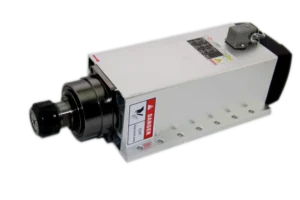
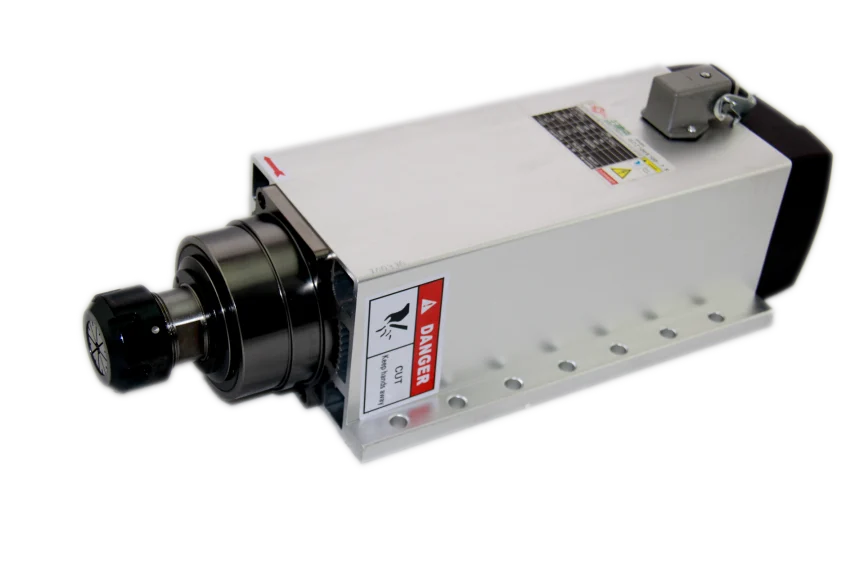
Spindles used in marble and natural stone processing CNC machines fundamentally consist of an electric motor, high-precision bearings, a shaft, and a tool holder system. These components enable the processing of material by rotating the cutting tool at high speeds. However, the unique challenges of natural stone processing require specific criteria in spindle design and selection.
Power (kW): The spindle’s power is directly related to the hardness of the material to be processed, the cutting depth, and the tool diameter. Processing hard materials like marble and granite requires high cutting forces and, consequently, more power. Generally, spindles with power ranging from 7 kW to 20 kW are preferred for natural stone processing. Insufficient power can lead to tool strain, vibration, reduced surface quality, and even spindle failures. Excessive power, on the other hand, can result in unnecessary energy consumption and higher initial investment costs.
RPM (Revolutions Per Minute): RPM refers to the number of rotations the cutting tool makes in one minute. Since natural stone processing tools typically feature diamond segments, they offer optimal cutting performance within a specific RPM range rather than at very high speeds. While excessively high RPMs can cause overheating and rapid wear of diamond segments, very low RPMs lead to inefficient cutting and reduced surface quality. Generally, speeds between 6,000 RPM and 12,000 RPM are considered suitable for natural stone processing. However, higher RPMs (15,000-24,000 RPM) may be required for precise operations such as profiling and polishing.
Torque (Nm): Torque is the rotational force of the spindle and is critically important, especially when performing heavy cuts with large-diameter tools. Spindles capable of delivering high torque at low RPMs offer an advantage in processing thick materials and deep cuts. Asynchronous motor spindles typically produce higher torque, while high-frequency spindles (HFS) are more focused on high speed and precision. For natural stone processing, sufficient torque, especially at the initial cutting moment and when the material is under stress, prevents tool jamming and machine overload.
Bearing Type and Life: Bearings, the heart of the spindle, must withstand high speeds and loads. The presence of abrasive dust and moisture in the natural stone processing environment necessitates special protection for the bearings. Ceramic ball bearings may be preferred over steel bearings due to their longer life, lower heat generation, and higher speed capabilities. The sealing properties of the bearings are vital for protection against external factors. High-quality, pre-loaded angular contact bearings enhance the spindle’s rigidity and precision by accommodating both radial and axial loads.
Cooling System: High heat generated during natural stone processing can adversely affect spindle performance and lifespan. Therefore, an effective cooling system is essential.
- Water-Cooled Spindles: This is the most common and effective cooling method for marble and natural stone processing. Water or a special coolant circulates in a closed loop, passing through channels in the spindle body to dissipate heat. These systems are ideal for high power and long operating hours and generally run quieter. Furthermore, given that natural stone processing machines already use water-based cooling systems, integration is easier.
- Air-Cooled Spindles: Generally used for lower-power spindles or less intensive applications. Air drawn from outside by a fan passes over the spindle to provide cooling. Due to the risk of fan clogging in dusty environments and lower cooling efficiency compared to water, they are less preferred for natural stone processing.
Tool Holder System: The tool holder ensures a secure and precise connection of the cutting tool to the spindle. ISO taper holders (ISO30, ISO40) or HSK (Hohlschaftkegel) holders are commonly used. HSK systems offer higher rigidity, better repeatability, and shorter tool change times, providing an advantage particularly in high-speed and precision applications. Considering the high vibration and cutting forces that can occur during natural stone processing, the robustness and precision of the tool holder directly impact tool life and machining quality.
Protection Class (IP Rating): This standard indicates the spindle’s resistance to external factors (dust, water, moisture). Since the natural stone processing environment constantly contains water and abrasive dust, spindles with a high IP rating (e.g., IP65 or IP67) should be preferred. This ensures the protection of internal components from corrosion and contamination, extending the spindle’s life and reducing the risk of failure.
Vibration and Runout: Low vibration and minimal tool runout are critical for high surface quality and long tool life. High-quality bearings, precise assembly, and dynamic balancing reduce spindle vibration levels. Excessive vibration can lead to premature tool wear, degradation of machining quality, and structural fatigue of the spindle.
Proper evaluation of these technical data will enable investors and operators in the marble and natural stone processing sector to select the most suitable spindle for CNC machines that will operate efficiently and trouble-free in the long term.
| Parameter | Value/Description |
|---|---|
| Power Range | 7 kW – 20 kW (Varies by application) |
| Maximum RPM | 6,000 – 24,000 RPM (Higher for grinding and polishing) |
| Torque Characteristic | High torque capacity at low RPMs is preferred |
| Bearing Type | High-precision, angular contact ceramic ball bearings (pre-loaded) |
| Cooling System | Water-cooled (closed-loop), air-cooled (for low-power applications) |
| Protection Class (IP) | Minimum IP65, preferably IP67 (full protection against dust and water) |
| Tool Holder | ISO30/ISO40 (Taper), HSK63F (For high rigidity and precision) |
| Vibration Level | G6.3 or better (According to ISO 1940-1 standard) |
Field Considerations for Spindle Selection in Marble and Natural Stone Processing CNC Machines
- Protection Against Environmental Factors: Marble and natural stone processing environments contain high levels of abrasive dust and water/coolant. The spindle must be protected to the maximum extent against these factors. Spindles with high IP ratings (such as IP65, IP67) should be selected, and connection points, cable entries, and air/water seals should be regularly checked. Ingress of dust and water into the spindle can rapidly wear out bearings and motor windings, leading to premature failure. The effectiveness of the machine’s general dust extraction and water collection systems directly impacts spindle life.
- Correct Tool Selection and Usage: Spindle performance is integral to the cutting tools used. High-quality diamond tools specifically designed for natural stone processing should be utilized. The balance between tool diameter, cutting depth, feed rate, and RPM must be correctly established. Excessive force puts unnecessary strain on the spindle and shortens tool life. Regular sharpening or replacement of tools improves machining quality and prevents spindle overload. Unbalanced or damaged tools can cause vibration and bearing damage in the spindle.
- Cooling System Maintenance and Control: For water-cooled spindles, the quality and circulation of the coolant are critical. Algae formation, sediment accumulation, or contaminants in the coolant can clog cooling channels, causing the spindle to overheat. Coolant level, flow rate, and temperature should be regularly checked, filters cleaned, and the fluid replaced periodically. Insufficient cooling can cause permanent damage to motor windings and bearings.
- Vibration and Noise Level Monitoring: Abnormal noises (humming, friction) or increased vibration levels from the spindle can be early signs of bearing wear or imbalance. Periodic vibration analysis or simply careful observation by the operator can help detect potential failures early. Early diagnosis can prevent larger and more costly breakdowns. Unbalanced tools or incorrect mounting can also cause vibration.
- Lubrication and Maintenance Programs: While most spindles are lubricated for life, some high-performance models or specific bearing types may have external lubrication systems. Manufacturer’s lubrication instructions and maintenance intervals must be strictly followed. Periodic preventive maintenance extends spindle life and minimizes the risk of failure. Critical maintenance steps, such as bearing lubrication or seal inspection, should not be skipped.
- Mounting and Alignment Precision: Correct and precise mounting of the spindle to the CNC machine is fundamental for its performance. Incorrect mounting or alignment can lead to excessive vibration, uneven loading on bearings, and premature failures. Manufacturer’s instructions must be strictly followed during mounting, and necessary precision measurements should be performed.
Common Problems and Solutions for Spindle Selection in Marble and Natural Stone Processing CNC Machines
Spindles in marble and natural stone processing machines can encounter various problems due to demanding operating conditions. Correct diagnosis and resolution of these issues are vital for uninterrupted machine operation.
1. Overheating:
- Scenario: Spindle body is too hot to touch, machine alarms, or performance drops.
- Causes: Insufficient coolant flow, clogged cooling channels, cooling pump failure, poor coolant quality (limescale, algae), overloading (high cutting depth/speed), friction in bearings (worn or improperly lubricated bearings), short circuit in motor windings.
- Solutions: Check and top up coolant level. Clean cooling filter and channels. Ensure cooling pump is operating and providing sufficient flow. Replace coolant regularly and use an appropriate antifreeze/corrosion inhibitor. Optimize machining parameters (cutting speed, feed rate) to reduce load on the spindle. Have bearings checked and replaced if necessary. Have electrical connections and motor windings inspected by a specialist.
2. Abnormal Noise and Vibration:
- Scenario: Humming, friction, or knocking sounds from the spindle, vibration felt in the machine body, marks appearing on the machined surface.
- Causes: Worn or damaged bearings, unbalanced cutting tool, loose or damaged tool holder, bent spindle shaft, incorrect spindle mounting to the machine, motor balancing issues.
- Solutions: Check the cutting tool, replace if unbalanced or damaged. Ensure the tool holder is securely attached and undamaged. Have bearings checked and replaced immediately if worn. Measure spindle shaft runout; if outside acceptable limits, send the spindle for service. Ensure the spindle is correctly mounted and aligned with the machine.
3. Tool Runout and Low Machining Quality:
- Scenario: Undulations on the machined surface, significant reduction in tool life, holes or profiles out of tolerance.
- Causes: Spindle shaft runout, worn bearings, dirty or damaged tool holder taper surface, unbalanced or low-quality cutting tool, tool not seating properly in the spindle.
- Solutions: Measure spindle shaft runout with a precision dial indicator. If outside manufacturer tolerances, spindle overhaul may be required. Clean the tool holder and the spindle’s inner taper; replace if damaged. Use high-quality and balanced tools. Ensure the tool is fully seated in the spindle and securely fastened.
4. Spindle Not Rotating or Rotating Slowly:
- Scenario: Spindle does not rotate at all or fails to reach desired speed.
- Causes: Electrical connection issues (broken cable, missing phase), inverter (VFD) failure, motor winding fault, seized bearings, mechanical jamming.
- Solutions: Check power connections and cables. Read inverter error codes and troubleshoot according to the manufacturer’s manual. Have motor winding resistance and insulation measured. Check if bearings are seized. Inspect for any mechanical obstruction. Such failures typically require intervention from a qualified electrician or service technician.
5. Water or Dust Ingress:
- Scenario: Traces of moisture or dust inside the spindle, signs of corrosion, electrical failures.
- Causes: Damaged sealing gaskets, cracked spindle body, insufficient IP protection class, intensity of water splashes or dust around the machine.
- Solutions: Ensure the spindle’s IP rating is suitable for the operating environment. Regularly inspect sealing gaskets and replace damaged ones. Use protective barriers or a better dust extraction system to control splashes and dust around the machine. If there is a crack in the spindle body, contact service immediately.
Most of these problems can be prevented with regular maintenance, correct usage, and appropriate protection against environmental factors. However, when a problem arises, quick and accurate intervention will prevent larger failures and production losses.
Conclusion and Expert Advice on Spindle Selection for Marble and Natural Stone Processing CNC Machines
The spindle, the heart of CNC machines in the marble and natural stone processing sector, is much more than just a motor and shaft combination; it is the key to production quality, efficiency, and operational sustainability. In this demanding and abrasive environment, correct spindle selection forms the foundation for maximizing your machine’s performance and realizing the return on your long-term investment. From an expert perspective, the most critical factors that should never be overlooked in the spindle selection process, in addition to basic motor characteristics like power, RPM, and torque, are durability against industry-specific environmental conditions, namely a high IP protection class, an effective water cooling system, and a durable bearing structure. While many different spindle models are available on the market, the abrasive nature of marble and natural stone, and the intense water and dust generated during processing, can significantly shorten the life of standard metal processing spindles. Therefore, it is essential that the chosen spindle is specifically designed for these harsh conditions, featuring reinforced sealing elements and corrosion-resistant materials.
Spindle selection should not be evaluated solely based on initial investment cost. A cheaper spindle that has a short lifespan, frequently breaks down, shortens tool life, and delivers poor machining quality will lead to much higher operational costs in the long run. Instead, when calculating the return on investment (ROI), it is necessary to comprehensively evaluate the spindle’s potential life, maintenance requirements, energy efficiency, and impact on production. For example, a high-quality water-cooled spindle, despite its higher initial cost, can quickly offset this difference through fewer breakdowns, longer tool life, and higher production capacity.
Finally, the spindle must be managed correctly not only at the time of purchase but throughout its operational life. Strict adherence to periodic maintenance programs, consistent cooling system checks, and ensuring correct tool selection and balance guarantee the spindle’s maximum efficiency and extended lifespan. It is also crucial for businesses to train their operators on the correct use of the spindle, detection of abnormalities, and basic maintenance procedures. It should be remembered that in marble and natural stone processing CNC machines, the spindle is not just a component but the driving force of the entire production process. Therefore, mastering technical details, making the right choice, and optimizing the life and performance of this critical component through regular maintenance will enhance your competitive advantage in the industry. In light of the information presented in this guide, businesses finding the most suitable, durable, and efficient spindle solutions for their specific needs will be taking one of the most solid steps towards long-term success. Request a quote on WhatsApp today to discuss your specific industrial CNC router needs.
FAQ
What power spindle is ideal for processing marble and natural stone?
For marble and natural stone, a spindle with a power range of 7 kW to 20 kW is generally recommended, depending on the material hardness, cutting depth, and tool diameter. Higher power is needed for harder materials like granite and deeper cuts.
Should I choose a water-cooled or air-cooled spindle for my natural stone CNC machine?
Water-cooled spindles are highly recommended for marble and natural stone processing due to the high heat generated and the presence of water/coolant in the environment. They offer superior cooling efficiency and are more durable in such conditions compared to air-cooled options.
Why is the IP rating important for a spindle in a natural stone processing environment?
A high IP rating, such as IP65 or IP67, is crucial for spindles in natural stone processing. This ensures maximum protection against abrasive dust, water, and coolants, which are prevalent in these environments, thereby extending the spindle's lifespan and reducing failure risks.
What maintenance practices are critical for extending the life of a CNC spindle in stone processing?
Regular maintenance, including checking coolant levels and quality, cleaning filters, inspecting seals, and monitoring for abnormal noises or vibrations, is essential. Adhering to manufacturer's lubrication schedules and ensuring proper tool balance also significantly extends spindle life.
What are the most common problems encountered with spindles in marble and natural stone CNC machines?
Common issues include overheating (due to poor cooling), abnormal noise/vibration (from worn bearings or unbalanced tools), tool runout (affecting machining quality), and spindle not rotating (electrical or mechanical faults). Prompt diagnosis and professional intervention are key to resolving these.