























































































Understanding Spindle Runout and Its Impact on CNC Machining

📑 Table of contents (Click to open)
Spindle runout significantly degrades cutting performance, reducing tool life, surface quality, and dimensional accuracy while increasing vibration. This is a critical issue in precision manufacturing.
Practical notes for CNC router, automation and industrial motion systems.
What is Spindle Runout and How Does it Affect Cutting?
In industrial automation and machining, the spindle of a CNC machine is a core component, rotating cutting tools at high speeds to remove material. A critical factor influencing spindle performance and cutting quality is spindle runout. Spindle runout refers to the deviation of a rotating spindle or its tool holder from its ideal axis of rotation, either radially or axially. Even deviations measured in microns can fundamentally alter the interaction between the tool and the workpiece at the cutting point.
Runout typically comprises two main components: radial runout and axial runout. Radial runout is the movement perpendicular to the axis of rotation, causing uneven contact along the cutting edges. Axial runout is the movement along the axis of rotation, disrupting machining accuracy, especially in operations like milling where depth of cut is critical. These deviations prevent all cutting edges from engaging the material equally and simultaneously, disrupting cutting dynamics and leading to a cascade of negative effects.
Common causes of spindle runout include worn or damaged spindle bearings, manufacturing tolerances in the spindle itself, incompatibility or contamination between the tool holder and the cutting tool, or improper tool holder mounting and balancing. In high-speed and high-precision machining applications, this problem becomes intolerable, increasing production costs and reducing product quality.
Working Principle and Technical Data
Spindle runout creates a series of mechanical and thermal effects during the cutting process, directly impacting machining performance and outcomes. Understanding these effects is vital for optimizing efficiency and quality in industrial automation systems.
Tool Life and Wear
One of the most significant impacts of spindle runout is the detrimental effect on cutting tool life. In a multi-flute cutter, radial runout causes uneven contact, with some cutting edges bearing a disproportionately higher load. This leads to unbalanced chip load distribution. The overloaded edges wear rapidly, chip, or break, while others remain underutilized. Consequently, the tool’s overall lifespan is reduced, necessitating frequent tool changes, which increases downtime and costs.

Surface Quality
The surface quality of machined parts is heavily influenced by spindle runout. Unbalanced chip loads and tool oscillation create visible chatter marks, burrs, and irregular surface textures on the workpiece. This results in undesirable Ra (average roughness) values and may require additional finishing operations. For applications demanding high aesthetic or functional surface precision, such as in mold making or medical components, spindle runout leads to unacceptable results.

Dimensional Accuracy and Tolerances
Spindle runout directly affects the dimensional accuracy and tolerances of machined parts. Radial runout can cause holes or outer diameters to be oversized or eccentric. Axial runout complicates depth control, leading to stepped or angled surfaces. This results in assembly issues, functional defects, and increased scrap rates. In sectors like aerospace, defense, and automotive, where tight tolerances are paramount, even micron-level runout is unacceptable.

Vibration and Noise
Spindle runout significantly increases vibration levels during machining. These vibrations stress not only the workpiece and tool but also the machine structure and other components. Increased vibration can shorten the mechanical lifespan of the CNC router machine, compromise the stability of sensors and control systems, and degrade the working environment through elevated noise levels, potentially affecting operator health. Vibration analysis is a key diagnostic tool for identifying spindle runout issues.

Limitation of Machining Parameters
High spindle runout values force operators to use lower cutting speeds, feed rates, and depths of cut. This extends production cycle times and reduces overall efficiency. Attempting more aggressive cutting parameters increases the risk of tool breakage or workpiece damage. Thus, spindle runout becomes a limiting factor preventing the machine from operating at its full potential.
| Parameter | Value/Description |
|---|---|
| Spindle Runout Definition | Radial or axial deviation of the rotating spindle from its ideal axis. |
| Unit of Measure | Micrometers (µm) or inches (mil). Typically peak-to-peak (P-P) value. |
| Acceptable Tolerance (Precision Machining) | 0 – 5 µm (0 – 0.0002 in). For high-precision molds, medical, aerospace parts. |
| Acceptable Tolerance (General Machining) | 5 – 15 µm (0.0002 – 0.0006 in). For general milling and turning applications. |
| Primary Effects | Reduced tool life, poor surface finish, dimensional errors, increased vibration, noise. |
| Measurement Methods | Dial indicator, laser interferometer, eddy current sensors. |
| Solution Methods (Examples) | Spindle bearing replacement, high-precision tool holders, tool balancing, correct mounting. |
Field Considerations
- Regular Spindle Maintenance and Inspection: Spindle bearings are critical. Worn or damaged bearings directly cause runout. Periodic bearing checks, inspection of lubrication systems, and timely bearing replacement ensure long-term, precise spindle operation. Vibration analysis and thermal imaging can detect bearing issues early.
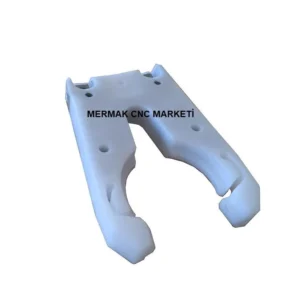
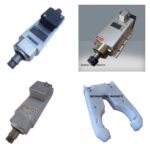
- Use of High-Precision Tool Holders: Tool holders are the interface between the cutting tool and the spindle. Standard holders may have inherent runout due to manufacturing tolerances. Shrink-fit, hydraulic, or high-precision collet chucks minimize the clearance between the tool and holder, significantly reducing runout. Proper tool balancing is also essential, especially at high RPMs, to prevent dynamic imbalance that exacerbates runout effects.
- Correct Tool Installation and Clamping: Ensure the cutting tool is correctly seated in the tool holder and that the clamping mechanism is functioning properly. Contamination (e.g., chips, coolant residue) in the tool holder taper can prevent proper seating and introduce runout. Regular cleaning of tool holders and the spindle taper is crucial.
- Spindle Balancing: For high-speed applications, the spindle and tool assembly must be dynamically balanced. Imbalance creates centrifugal forces that increase vibration and can contribute to perceived runout, even if the spindle itself is within tolerance.
- Environmental Factors: Extreme temperature fluctuations can cause thermal expansion and contraction, potentially affecting spindle accuracy. Ensure the CNC router machine is operating in a stable environment.
Addressing spindle runout is fundamental for achieving high-quality parts, extending tool life, and maximizing the efficiency of your industrial CNC router. Regular maintenance, the use of quality components like precise tool holders, and diligent operational practices are key to minimizing runout and ensuring optimal performance from your CNC router machine.
For expert advice on optimizing your CNC operations and selecting the right equipment, including high-performance spindles and motion control systems, contact us today.
Related product categories: Sigma Profiles · CNC Routers · General