No products in the cart.
Spindle Motor Bearing Replacement and Key Considerations
Contents
- Spindle Motor Bearing Replacement and Key Considerations: Introduction and Technical Analysis
- Spindle Motor Bearing Replacement and Key Considerations: Operating Principle and Technical Data
- Spindle Motor Bearing Replacement and Key Considerations: Field Practices
- Spindle Motor Bearing Replacement and Key Considerations: Common Problems and Solutions
- Spindle Motor Bearing Replacement and Key Considerations: Conclusion and Expert Advice
- FAQ
Spindle Motor Bearing Replacement and Key Considerations: A Field Guide and Technical Article
Spindle Motor Bearing Replacement and Key Considerations: Introduction and Technical Analysis
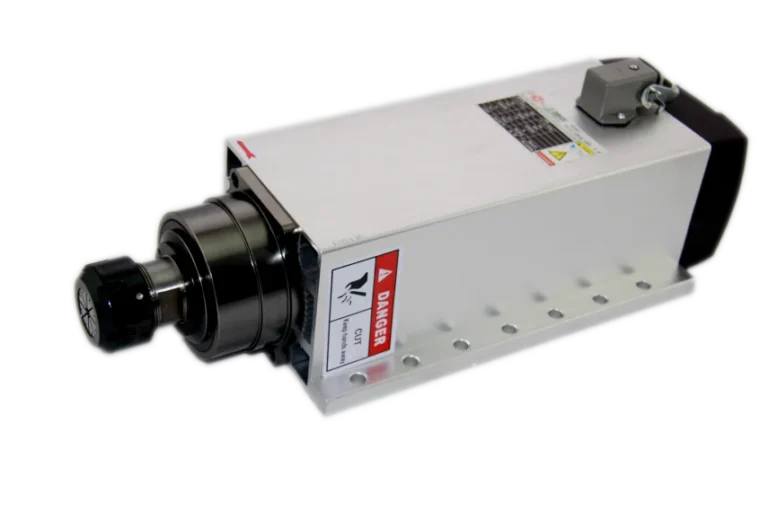
Spindle motors, considered the heart of industrial automation, play a critical role in areas such as CNC router machines, robotic applications, high-precision grinding, and machining centers. These motors are responsible for providing the high speeds and precision required in machining processes. One of the most important components directly affecting the performance of spindle motors are the bearings. Bearings support the rotational movement of the shaft, carry radial and axial loads, and ensure high rotational accuracy with minimum friction. The operating life, machining quality, and overall efficiency of spindle motors are largely related to the correct selection, installation, and maintenance of the bearings. This technical article and field guide detail the spindle motor bearing replacement processes, critical steps, and considerations for experts and technicians in the industrial automation sector. Our aim is to ensure that bearing replacement operations are carried out to the highest standards, contributing to the uninterrupted and efficient operation of systems. Bearing failures often lead to serious consequences such as production losses, costly repairs, and even complete system shutdown. Therefore, correct diagnosis, professional replacement, and preventive measures are of great importance. Spindle motor bearings have much higher precision, speed, and rigidity requirements compared to standard bearings. These special requirements differentiate the types of bearings used (typically angular contact ball bearings) and the installation techniques.
Spindle Motor Bearing Replacement and Key Considerations: Operating Principle and Technical Data
Spindle motors are electromechanical devices that convert electrical energy into mechanical rotational motion. They are specially designed to operate stably and precisely at high speeds. At the heart of a spindle motor is the shaft, which directly or indirectly rotates the machining tool. This shaft is typically supported by several sets of high-precision bearings. The primary function of the bearings is to ensure the shaft rotates around a fixed center of rotation under both radial (lateral) and axial (longitudinal) loads. These loads arise from machining forces, the motor’s own weight, and dynamic imbalances.
The most common type of bearing used in spindle motors is angular contact ball bearings. These bearings can carry both radial and axial loads at high speeds and with high precision, thanks to the balls contacting the outer and inner rings at a specific angle. They are typically used in pairs (DB, DF, DT configurations) or in multiple sets (e.g., quadruple sets). These configurations are designed to provide the desired rigidity, load-carrying capacity, and axial preload. In high-speed applications, hybrid bearings with ceramic balls may be preferred to reduce friction and heat generation. Ceramic (Si3N4) balls are lighter, harder, and have less thermal expansion than steel balls, which means less heat generation and longer life at higher speeds.
Critical technical data affecting bearing performance include:
- Maximum Rotational Speed (RPM): The highest rotational speed for which the bearings are designed. Exceeding this value increases the risk of overheating and premature failure.
- Radial and Axial Load Capacity: The maximum force values that the bearings can safely carry.
- Rigidity (Stiffness): A measure of how little the bearings deform under load. High rigidity is essential for machining precision.
- Preload: The process of increasing rigidity and keeping the rolling elements in the correct position by creating a specific compression force between the bearing elements. Preload is key to spindle performance and is usually adjusted with springs, spacers, or hydraulic systems. Incorrect preload leads to overheating, premature wear, or insufficient rigidity.
- Lubrication Type and Method: Critical for bearing life and performance. In high-speed spindles, oil-air lubrication or oil mist lubrication systems are generally used. These systems provide a regular and controlled amount of fresh oil to the bearings, while also helping to dissipate friction heat. Special greases can be used in lower-speed spindles.
- Vibration and Runout Tolerances: Parameters that directly affect machining precision. Spindle motors are expected to have runout tolerances at the micron level.
- Thermal Management: Bearings operating at high speeds generate heat. Cooling jackets, air, or liquid cooling systems are used to effectively dissipate this heat. Bearing temperature is one of the most important factors directly affecting their lifespan.
| Parameter | Value/Description |
|---|---|
| Bearing Type | Typically Angular Contact Ball Bearings (ACBB), Hybrid Bearings (Ceramic Ball) |
| Maximum RPM | 10,000 – 150,000+ RPM (Varies by application) |
| Runout Tolerance | Typically within a few microns |
| Preload Method | Constant Position (Spacer), Constant Pressure (Spring-loaded), Hydraulic |
| Lubrication Method | Oil-Air Lubrication, Oil Mist Lubrication, Special Grease Lubrication |
| Cooling System | Water-Jacket Cooling, Air Cooling, Thermoelectric Cooling |
| Expected Service Life (L10) | 20,000 – 40,000+ hours (Depends on operating conditions and maintenance) |
| Vibration Level (RMS) | Typically very low, specific to spindle model |
Spindle Motor Bearing Replacement and Key Considerations: Field Practices
- Safety Precautions and LOTO Procedures: Before performing any work on a spindle motor, ensure all energy sources (electrical, pneumatic, hydraulic) are disconnected and that LOTO (Lockout/Tagout) procedures are fully implemented. This is vital for both technician safety and preventing accidental equipment startup. Use of Personal Protective Equipment (PPE) (safety glasses, gloves, steel-toed shoes, etc.) is mandatory. Sharp edges, high temperatures, and heavy parts may be encountered during the process.
- Environmental Cleanliness and Contamination Control: Spindle motor bearing replacement requires a sterile environment. Even the smallest dust particle, metal chip, or contaminant entering the bearing can significantly shorten its life or lead to immediate failure. Ensure the area where the replacement will be performed is completely clean, dust-free, and that airflow is controlled. All tools, hands, and work surfaces must be clean. If possible, a special cleanroom or portable clean cabinet should be used. Bearings should only be removed from their original packaging at the time of installation and never placed on the floor or allowed to contact dirty surfaces.
- Use of Correct Tools and Equipment: Standard workshop tools are not sufficient for spindle motor bearing replacement. Special tools such as bearing heaters (induction or controlled oven), hydraulic pullers, precision presses, torque wrenches, micrometers, dial indicators, and runout measurement devices are required. Hitting bearings with a hammer or forcing them with inappropriate tools can cause irreversible damage. The use of correct and calibrated tools at every step is key to a successful replacement.
- Pre-Disassembly Analysis and Documentation: Before starting to disassemble a faulty spindle, documenting the current condition is critically important. Vibration analysis, thermal imaging, sound listening, and shaft runout measurements should be performed. This data can help understand the root cause of the failure and provides a reference point for performance comparison after new bearings are installed. During disassembly, the order, direction, and position of each part should be photographed and noted. The correct placement of spacers, springs, and seals is especially important.
- Bearing Installation and Preload Adjustment: Controlled heating methods (induction heaters or oil baths) should be used for installing bearings onto the shaft. Heating the bearing to a specific temperature (typically 80-120°C) allows the inner ring to expand, making it easy to slide onto the shaft. Never overheat. After installation, adjusting the bearing sets to the correct preload value is the most critical step for spindle performance. Preload directly affects the spindle’s rigidity, vibration characteristics, and lifespan. The preload values and methods specified by the manufacturer (torquing, spacer thickness, hydraulic pressure) must be fully applied. Incorrect preload leads to overheating, noise, or insufficient rigidity.
- Lubrication and Cooling System Checks: After installing new bearings, ensure the correct type and amount of lubricant are applied. The lines of oil-air or oil mist lubrication systems used in spindle motors should be checked for blockages or damage. The cooling system (water-jacketed or air-cooled) lines should be confirmed clean and functional. Insufficient lubrication or cooling can cause even new bearings to fail prematurely.
- Initial Startup and Test (Run-in): It is incorrect to run the spindle motor directly at maximum speed after bearing replacement. New bearings must undergo a gradual “run-in” procedure to relieve internal stresses and ensure homogeneous lubricant distribution. This process typically starts at low speeds, gradually increasing speed and operating time at specific intervals. Bearing temperature, vibration levels, and sounds should be carefully monitored at each step. If an abnormal situation is detected, the spindle should be immediately stopped, and the problem investigated. This testing process ensures the bearings reach optimum performance and prevents early failures.
Spindle Motor Bearing Replacement and Key Considerations: Common Problems and Solutions
Various problems can be encountered during or after spindle motor bearing replacement. Correct diagnosis and resolution of these problems are vital for production continuity.
- Excessive Vibration and Noise:
Problem: Abnormal vibrations and loud noises during spindle motor operation are usually the first signs of bearing failure or incorrect installation. This reduces machining quality and shortens tool life.
Solution: Vibration analysis should be used to determine the source of the problem (bearing, imbalance, shaft runout, motor windings). If the problem originates from the bearings, possibilities such as incorrect preload, contamination, or installation error should be evaluated. The shaft balance should be checked and re-adjusted if necessary. Bearing preload should be set according to manufacturer specifications. If contamination is suspected, bearings should be inspected and reinstalled in a clean environment if necessary.
- Overheating:
Problem: Higher than normal temperatures in the spindle motor housing or bearing areas. This can lead to lubricant degradation, shortened bearing life, and even bearing seizure.
Solution: Thermal imaging should be used to examine the temperature distribution. Possible causes include excessive preload, insufficient lubrication, incorrect lubricant type, cooling system failure (clogged lines, low flow), contamination, or bearing damage. Preload should be checked, the lubrication system (oil level, pressure, flow) reviewed, and cooling system maintenance performed. If bearing damage is detected, bearings may need to be replaced again.
- Premature Bearing Failure:
Problem: New bearings failing much shorter than their expected lifespan.
Solution: This situation usually results from installation errors. Contamination, incorrect installation forces (hammering), incorrect preload, wrong bearing type selection, or insufficient lubrication are the most common causes. A detailed root cause analysis should be performed, and failed bearings inspected (wear patterns, corrosion, discoloration). Installation procedures and tools used should be reviewed. Technician training and experience play a critical role at this point.
- Shaft Runout Problems:
Problem: Deviation of the spindle shaft from its axis of rotation directly affects machining precision and degrades surface quality.
Solution: Shaft runout should be precisely measured with dial indicators or laser measurement systems. Possible causes include a bent shaft, improper seating of bearings, bearing damage, deformation in the spindle housing, or damage to the tool holder. Ensure bearings are fully seated and locked in their housings. If necessary, the shaft itself should be checked, and correction or replacement considered. Tool holder precision should also be periodically checked.
- Oil Leaks:
Problem: Oil accumulation on the outer surface of the spindle motor or at connection points.
Solution: The source of the leak must be identified. This can be caused by damaged seals, O-rings, lubrication lines, or cracks in the spindle housing. Damaged seals and O-rings should be replaced, lubrication lines checked, and connection points tightened. Excessive oil pressure can also cause leaks, so lubrication system pressure settings should be checked.
Spindle Motor Bearing Replacement and Key Considerations: Conclusion and Expert Advice
Spindle motor bearing replacement is a critical maintenance operation in the industrial automation sector that requires high precision and expertise. This process signifies much more than just replacing a faulty part; it means extending machine life, increasing production efficiency, and guaranteeing machining quality. The challenges encountered in the field demonstrate how essential attention to detail and meticulous application of correct procedures are.
As an expert technician, my advice is never to approach such operations lightly. For a successful bearing replacement, comprehensive training, correct equipment, strict hygiene rules, and full compliance with manufacturer instructions are indispensable. Especially preload settings, the correct functioning of the lubrication system, and the initial startup (run-in) procedure play a decisive role in the future performance of the spindle. It should be remembered that an incorrectly performed bearing replacement can lead to larger failures and much higher costs in the short term. Therefore, if possible, always seek support from authorized services or professional teams specialized in this field.
Predictive maintenance approaches, such as vibration monitoring, thermal analysis, and oil analysis, continuously track bearing condition, allowing for planned maintenance by detecting potential failures in advance. This minimizes unplanned downtime and ensures continuous production. With the new technologies brought by Industry 4.0, the health status of spindle motors can be monitored even more precisely through sensors and data analytics. Embracing these technologies will provide great benefits in optimizing maintenance strategies and reducing operating costs. Spindle motor bearings will continue to be the heart of high-performance machines, and this heart can only beat healthily with a conscious, careful, and expert approach. Request a quote on WhatsApp today for professional spindle motor maintenance and repair services.
FAQ
How often should spindle motor bearings be replaced?
Spindle motor bearings typically need replacement when signs of wear, excessive noise, vibration, or overheating become apparent. Regular predictive maintenance, including vibration analysis and thermal imaging, can help identify issues before they lead to catastrophic failure. Following manufacturer-recommended service intervals is also crucial.
What is the typical cost of spindle motor bearing replacement?
The cost of spindle motor bearing replacement varies significantly depending on the spindle's complexity, the type and number of bearings, and whether specialized services are required. High-precision angular contact bearings and hybrid ceramic bearings are more expensive than standard bearings. Labor costs for skilled technicians and specialized equipment also contribute to the overall expense.
Can incorrect bearing preload cause premature failure?
Yes, incorrect preload is a common cause of premature bearing failure. If the preload is too high, it generates excessive heat and friction, leading to rapid wear. If the preload is too low, it can result in insufficient rigidity, increased vibration, and reduced machining accuracy. Proper preload adjustment according to manufacturer specifications is critical for optimal bearing life and spindle performance.
What are the most critical steps for a successful spindle motor bearing replacement?
Key factors include maintaining a sterile environment during replacement to prevent contamination, using specialized tools for precise installation and removal, correctly setting bearing preload, ensuring proper lubrication and cooling system functionality, and following a gradual run-in procedure after installation. Documenting each step and adhering to manufacturer guidelines are also vital.
What are the common problems encountered after spindle motor bearing replacement?
Common issues include excessive vibration and noise, overheating, premature bearing failure, shaft runout problems, and oil leaks. These issues often stem from improper installation, contamination, incorrect lubrication, or cooling system malfunctions. Addressing these problems requires thorough diagnosis, root cause analysis, and adherence to best practices for repair and maintenance.