










































































Secrets to Extending Tool Life in MDF Cutting

📑 Table of contents (Click to open)
- Introduction and Technical Analysis: Secrets to Extending Tool Life in MDF Cutting
- Working Principle and Technical Data: Secrets to Extending Tool Life in MDF Cutting
- On-Site Considerations: Secrets to Extending Tool Life in MDF Cutting
- Common Problems and Solutions: Secrets to Extending Tool Life in MDF Cutting
- Conclusion and Expert Advice: Secrets to Extending Tool Life in MDF Cutting
- FAQ
Introduction and Technical Analysis: Secrets to Extending Tool Life in MDF Cutting
In today’s manufacturing world, where industrial automation and production efficiency are critically important, the processing of wood-based panels, especially MDF (Medium Density Fiberboard) cutting, presents unique challenges. Although MDF is widely used in the furniture, decoration, and construction sectors due to its homogeneous structure, workability, and cost-effectiveness, it possesses unique characteristics that lead to significant abrasive effects on tools during cutting. This abrasive effect results in shorter tool life, production downtime, increased tool costs, and ultimately, a decrease in production efficiency. This comprehensive field guide and technical article addresses the secrets to extending tool life in MDF cutting for industrial automation professionals, with in-depth technical analyses and practical applications. Our goal is to provide the most up-to-date information and expert advice to ensure maximum efficiency, cost-effectiveness, and sustainability in your cutting operations. Optimizing tool life not only reduces the frequency of tool changes but also improves cutting quality, lowers scrap rates, and significantly reduces overall production costs. In this context, correct tool selection, precise adjustment of cutting parameters, effective chip management, and regular maintenance strategies are the cornerstones of success. Due to its structure, MDF contains resins, binders, and sometimes inorganic fillers, which can accelerate chemical and mechanical wear on cutting edges. Therefore, unlike ordinary wood cutting applications, MDF cutting requires specially designed tools and processing strategies. Efforts to extend tool life should be seen not merely as a cost item, but as a strategic investment to achieve operational excellence.
Working Principle and Technical Data: Secrets to Extending Tool Life in MDF Cutting
Understanding tool life in MDF cutting begins with comprehending the mechanical and chemical properties of MDF itself. MDF is produced by bonding wood fibers with synthetic resins (typically urea-formaldehyde) under high temperature and pressure. This structure creates a homogeneous and dense material, while also creating a severely abrasive environment for cutting tools. During cutting, the tool must first mechanically separate the material and then remove the resulting chips. In this process, the cutting edges of the tool constantly come into contact with the material’s fibers and hard resin particles. This contact leads to effects such as friction, heat generation, and micro-wear. High friction can cause excessive heat buildup at the tool’s cutting edge. This heat can reduce the tool’s hardness, leading to faster wear and even deformation of the cutting edge. Furthermore, the abrasive nature of MDF causes mechanical wear, or abrasion, on the tool’s cutting edges. This abrasive effect causes the tool to lose its sharpness over time and reduces cutting quality. The fundamental principle of extending tool life is to minimize these wear mechanisms. This is possible through correct tool material selection, optimized tool geometry, precise cutting parameters, and effective chip management.
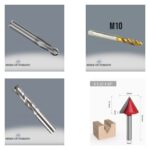
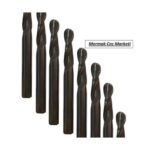
Tool Material Selection: The most commonly used tool materials for MDF cutting are carbide (HM) and polycrystalline diamond (PCD). Carbide tools have a wide range of applications due to their high toughness and relatively low cost. However, PCD tools, thanks to the superior hardness and wear resistance of diamond, are much more effective, especially in high-volume production and applications requiring long tool life. PCD tools can offer 30 to 80 times longer life than carbide tools, but their initial cost is higher. In addition to the tool material, coatings applied to the tool surface (e.g., DLC – Diamond-Like Carbon) can also contribute to tool life by reducing friction and increasing the tool’s wear resistance.
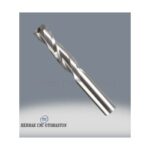
Tool Geometry: Tool geometry is critically important for chip removal efficiency and heat management. For MDF cutting, positive helix angle tools are generally preferred. A positive helix angle ensures effective upward chip evacuation, preventing the tool from clogging and overheating. Additionally, the width and number of chip evacuation flutes should ensure easy chip removal. The sharpness and micro-geometry of the cutting edge are also important; very sharp edges can wear faster, while micro-chamfered edges can be more durable.
Cutting Parameters: Spindle Speed (RPM), Feed Rate, and Depth of Cut (DOC) are the most important parameters directly affecting tool life. Finding the balance between these three parameters is essential for optimum tool life and cutting quality. High RPMs provide a smoother cut surface, but can also increase heat buildup on the tool. Feed rate determines how much material each tooth of the tool removes (chip load). A very low chip load causes the tool to “rub” the material, leading to excessive heat and wear. A very high chip load, on the other hand, can overstress the tool and cause breakage. Generally, medium to high feed rates and corresponding RPMs are preferred for MDF. Depth of cut determines how much material the tool removes in a single pass; lower DOC means more passes and requires the tool to work longer, but can also mean less stress. Very deep cuts can create excessive load on the tool.
Chip Management: The dust and fine chips generated during MDF cutting are a significant factor negatively affecting tool life. These particles accumulate in the cutting zone, increasing friction, trapping heat, and adhering to the tool’s cutting edges, accelerating wear. An effective dust extraction system ensures the cutting zone remains clean, minimizing these negative effects. High-volume and high-pressure air blowing systems can also help remove chips.
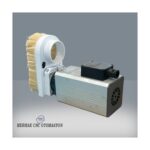
Machine Rigidity and Maintenance: The overall rigidity of the CNC router machine, spindle quality, and vibration levels also affect tool life. A machine with high rigidity minimizes vibrations generated during cutting, allowing the tool to operate more stably. An unbalanced or worn spindle can cause uneven loads on the tool and premature wear. Regular machine maintenance and calibration help prevent such problems and preserve tool life.
| Parameter | Value/Description |
|---|---|
| Tool Material | Carbide (HM) or Polycrystalline Diamond (PCD) – PCD can offer 30-80 times longer life than carbide. |
| Tool Geometry | Positive Helix Angle (25-45 degrees), Wide Chip Evacuation Flutes, Micro-Chamfered Cutting Edges. |
| Spindle Speed (RPM) | 18,000 – 24,000 RPM (Adjusted according to tool diameter and material density). |
| Feed Rate | 5 – 20 m/min (Varies according to tool diameter, number of teeth, and cutting depth). |
| Chip Load | 0.05 – 0.25 mm/tooth (Critical optimum value for tool life and cutting quality). |
| Depth of Cut (DOC) | 50% – 100% of tool diameter (Adjusted depending on machine power and rigidity). |
| Dust Extraction Efficiency | High vacuum capacity with a minimum air velocity of 20 m/s (Essential for keeping the cutting zone clean). |
| Tool Coatings | DLC (Diamond-Like Carbon), TiN, AlTiN (Reduces friction, increases wear resistance). |
On-Site Considerations: Secrets to Extending Tool Life in MDF Cutting
- Correct Tool Selection and Geometry: Given the abrasive nature of MDF, tool material selection is a critical step. For high-density and resin-rich MDFs, PCD (Polycrystalline Diamond) tools, although having a higher initial investment cost, can offer 30 to 80 times longer life compared to carbide tools, thereby reducing the total cost of ownership (TCO). If PCD tools are out of budget, high-quality, fine-grained micro-carbide tools should be preferred. In terms of tool geometry, tools with wide chip flutes and a positive helix angle (typically 25-45 degrees) that ensure effective chip evacuation should be chosen. This prevents chip clogging and reduces heat buildup. Additionally, the cutting edges of the tool being micro-chamfered can increase their resistance to impact, providing longer life. Friction-reducing and hardness-increasing coatings such as DLC (Diamond-Like Carbon) applied to the tool also make significant contributions to tool life.
- Optimization of Cutting Parameters (RPM, Feed Rate, Chip Load): To maximize tool life, finding the golden ratio between spindle speed (RPM), feed rate, and depth of cut (DOC) is essential. One of the most critical parameters is chip load. A very low chip load causes the tool to “rub” the material instead of cutting it, generating excessive heat and leading to premature wear. A very high chip load, on the other hand, stresses the tool, increases the risk of breakage, and reduces cutting quality. For MDF, a chip load between 0.05 mm/tooth and 0.25 mm/tooth is generally targeted. This ensures the tool removes a sufficient amount of material per tooth and cools effectively. Spindle speed is typically set in the range of 18,000 to 24,000 RPM, and feed rate in the range of 5 to 20 m/min. DOC can be kept between 50% and 100% of the tool diameter, but machine power and rigidity are factors influencing this value. Verifying optimum parameters with small tests for each new tool or batch of MDF panels will yield the best results.
- Effective Dust and Chip Management: Fine dust and chips generated during MDF cutting are one of the biggest enemies of tool life. These particles accumulate in the cutting zone, increasing friction on the tool’s cutting edges, trapping heat, and accelerating tool wear. Therefore, a high-capacity and efficient dust extraction system is critically important. Sufficient suction power and positioning the suction point close to the cutting zone ensure effective chip removal. Additionally, in some applications, air blast systems can be used to assist in chip removal by blowing high-pressure air into the cutting zone. A clean cutting environment ensures the tool operates more efficiently and extends its life.
- Regular Tool Maintenance and Sharpening: Regularly inspecting tools and sharpening them at the right time is key to extending tool life. Instead of waiting for tools to become completely dull, it is recommended to sharpen them at the first signs of reduced cutting quality or after a certain operating period. Working with expert and certified sharpening services ensures the tool’s original geometry and sharpness are preserved. Incorrect sharpening can shorten tool life and reduce cutting performance. Proper storage of sharpened tools is also important; tools should not collide with each other, and cutting edges must be protected. Correct management of tool inventory and planning sharpening cycles reduce production interruptions.
- Machine Maintenance and Calibration: Tool life is closely related not only to the tool itself but also to the condition of the machine it operates on. The health of the CNC router machine’s spindle motor, its rigidity, and vibration levels are critical factors. A worn or unbalanced spindle can cause uneven loads and excessive vibration on the tool, leading to premature wear. Regularly calibrating machine axes, checking for backlash, and ensuring the overall mechanical system is tight increases stability during cutting. Periodic machine maintenance, including checking and lubricating spindle bearings, directly affects tool life. Sensor-based systems for monitoring machine vibrations can help detect potential problems at an early stage.
- MDF Material Quality and Homogeneity: The quality and homogeneity of the MDF panel used can significantly affect tool life. Low-quality or inconsistent density MDFs can create irregular loads on the tool, accelerating wear. Foreign materials (metal particles, hard agglomerates, etc.) within the panel can damage the tool. Therefore, it is important to procure high-quality and homogeneous MDF panels from reliable suppliers. The moisture content of the panels is also important; very wet or very dry MDF can affect cutting properties and thus tool life. Storage conditions of the panels should also be considered in this context.

Common Problems and Solutions: Secrets to Extending Tool Life in MDF Cutting
Problems encountered with tool life in MDF cutting operations are generally interconnected and often arise from a combination of multiple factors. Correctly diagnosing these problems and implementing effective solutions is vital for increasing production efficiency.
1. Premature Tool Wear or Breakage:
- Problem: The tool dulls much faster than expected, cutting edges wear quickly, or the tool breaks.
- Possible Causes:
- Incorrect tool material or geometry (tool not suitable for MDF).
- Suboptimal cutting parameters (very low chip load increases friction, very high chip load stresses the tool).
- Insufficient chip evacuation and dust accumulation.
- Lack of machine rigidity, spindle vibrations, or imbalance.
- Foreign materials or poor quality within the MDF panel.
- Solutions:
- Use tools specifically designed for MDF, preferably PCD or high-quality micro-carbide tools. Opt for tools with a positive helix angle and wide chip flutes.
- Optimize chip load and other cutting parameters (RPM, feed rate). Start with manufacturer recommendations and fine-tune with small tests.
- Install an effective dust extraction system or optimize the existing one. Consider using air blast.
- Have the CNC router machine’s spindle motor health and overall rigidity checked. Perform maintenance or calibration if necessary.
- Review your MDF supplier, and ensure you use homogeneous and high-quality material.
2. Decrease in Cutting Quality (Rough Surface, Burn Marks, Burrs):
- Problem: Cut surfaces are rough, have burn marks, or show burrs or tearing at the edges.
- Possible Causes:
- Dull tool.
- Insufficient chip evacuation and heat buildup.
- Incorrect cutting parameters (especially friction with very low feed rate or high RPM).
- Vibration in the machine or tool.
- MDF fiber structure unsuitable for the cutting direction.
- Solutions:
- Regularly inspect the tool and sharpen or replace it in a timely manner.
- Check the dust extraction system, ensuring the cutting zone is clean.
- Increase chip load to ensure the tool cuts the material more efficiently. Adjust RPM if necessary.
- Check machine and tool balance. Do not use unbalanced tools.
- Try to optimize the cutting direction of the MDF panel; if possible, avoid cuts parallel to the fiber direction.
3. Excessive Noise and Vibration:
- Problem: Abnormally high noise and visible vibrations during cutting.
- Possible Causes:
- Unbalanced tool or tool holder.
- Dull or damaged tool.
- Spindle motor malfunction or imbalance.
- Lack of machine rigidity or loose connections.
- Incorrect cutting parameters (combinations causing resonance).
- Solutions:
- Ensure tools and tool holders are balanced. Have them balanced if necessary.
- Inspect the tool and replace or sharpen it if necessary.
- Have the spindle motor checked to determine if there is wear or malfunction in the bearings.
- Check and tighten all mechanical connections of the machine. Ensure the machine base is solid.
- Change cutting parameters (RPM, feed rate) to avoid resonance points.
4. Difficulties and Inconsistency in Tool Life Prediction:
- Problem: Tool life is inconsistent from one batch to another, or even within the same batch, leading to low predictability.
- Possible Causes:
- Inconsistencies in MDF panel quality and density.
- Parameter application differences among operators.
- Variations in tool sharpening quality.
- Changes in environmental conditions (humidity, temperature).
- Solutions:
- Standardize MDF procurement processes and increase quality control. Strive to ensure homogeneity of panels from the same batch.
- Ensure all operators adhere to standard operating procedures (SOPs). Increase consistency by saving cutting parameters to the machine.
- Have tool sharpening done by a single reliable and certified service or standardize the in-house sharpening process.
- Try to keep the temperature and humidity of the production environment under control, especially in storage areas.
- Use data collection and analysis systems to monitor tool life. This helps identify the root causes of inconsistencies.
Conclusion and Expert Advice: Secrets to Extending Tool Life in MDF Cutting
Extending tool life in MDF cutting is more than just a cost-reduction strategy for modern industrial automation facilities; it is a fundamental component of achieving operational excellence and gaining a competitive advantage. As seen in this comprehensive analysis, the factors affecting tool life cannot be reduced to a single variable; rather, it requires a multifaceted and integrated approach, ranging from tool material and geometry to cutting parameters, machine maintenance, chip management, and raw material quality. From an expert perspective, the path to success lies in attention to detail and a philosophy of continuous improvement.
Our field experience shows that merely having the most sophisticated tools or the most advanced industrial CNC router machines is not enough. The real difference is made by correctly integrating and optimizing these components. Proactive maintenance approaches, meaning intervening before a fault occurs, are among the golden rules for extending tool life. For example, the use of sensors that monitor spindle motor vibrations can detect a potential bearing fault or imbalance at an early stage, preventing greater damage to the tool and the machine. Similarly, frequency analysis of the sound generated during cutting can alert the operator that the tool is starting to dull or that a problem is occurring.
Data analysis plays a critical role in the journey to optimize tool life. Regularly recording and analyzing data such as how many meters each tool has cut, with what parameters it operated, and when it was sharpened, provides valuable insights for future decisions. This data helps us understand which tool supplier performs better, which parameter combinations provide the longest life, or which MDF batch wears tools faster. Such a data-driven approach enables the development of not only reactive but also predictive maintenance strategies.
Finally, operator training and awareness are an indispensable part of this process. Even the best plans are limited by the knowledge and skills of the people implementing them on the shop floor. Operators being well-trained in correct tool selection, parameter adjustment, tool change, and basic troubleshooting can provide immediate improvements on the production line and prevent costly mistakes. Their observations and feedback are an important part of the continuous improvement cycle.
In summary, the secret to extending tool life in MDF cutting is not in a single magic wand, but in a holistic approach. This approach must be supported by correct tool technology selection, precise optimization of cutting parameters, superior chip management, proactive machine and tool maintenance, use of quality raw materials, and continuous training. Consistent implementation of these strategies will not only reduce tool costs but also improve cutting quality, maximize production efficiency, and significantly increase your business’s competitiveness. Remember, every cut piece is a lesson and an opportunity for optimization.
FAQ
Which tool material is best for extending tool life in MDF cutting?
PCD (Polycrystalline Diamond) tools offer significantly longer life, typically 30 to 80 times more than carbide tools, due to diamond's superior hardness and wear resistance. For budget-conscious operations, high-quality, fine-grained micro-carbide tools are a good alternative.
What are the ideal cutting parameters for maximizing tool life in MDF?
Optimal cutting parameters are crucial. Aim for a chip load between 0.05 mm/tooth and 0.25 mm/tooth. Spindle speeds typically range from 18,000 to 24,000 RPM, and feed rates from 5 to 20 m/min. These should be fine-tuned based on tool diameter, material density, and machine rigidity.
How important is chip and dust management for tool longevity in MDF cutting?
Effective dust extraction is paramount. MDF produces fine, abrasive dust that increases friction and heat, accelerating tool wear. A high-capacity dust extraction system with the suction point close to the cutting zone, possibly supplemented by air blast systems, will keep the cutting area clean and prolong tool life.
Does machine maintenance affect tool life when cutting MDF?
Regular machine maintenance, including checking spindle health, rigidity, and calibration of axes, is vital. An unbalanced or worn spindle can cause vibrations and uneven loads on the tool, leading to premature wear. Proactive maintenance ensures stable tool operation.
How does MDF material quality influence tool wear?
Yes, the quality and homogeneity of the MDF panels significantly impact tool life. Inconsistent density or the presence of foreign materials can cause irregular loads and damage the tool. Sourcing high-quality, consistent MDF from reliable suppliers is recommended.