How to Prevent Cable Breakage in Energy Chains: A Comprehensive Guide for Industrial CNC Routers
📑 Table of contents (Click to open)
- How to Prevent Cable Breakage in Energy Chains: Introduction and Technical Analysis
- How to Prevent Cable Breakage in Energy Chains: Operating Principle and Technical Data
- How to Prevent Cable Breakage in Energy Chains: Field Considerations
- How to Prevent Cable Breakage in Energy Chains: Common Problems and Solutions
- How to Prevent Cable Breakage in Energy Chains: Conclusion and Expert Advice
- FAQ
How to Prevent Cable Breakage in Energy Chains: Introduction and Technical Analysis
At the heart of industrial automation, moving systems are critical for the efficiency and continuity of production processes. Energy chains (also known as cable carriers or cable tracks), a fundamental component of these systems, are responsible for safely and neatly guiding electrical, data, hydraulic, and pneumatic lines to moving machine parts. Especially in dynamic environments such as robotic applications, CNC router machines, material handling systems, and storage and retrieval units, cables are inevitably exposed to mechanical stresses like continuous bending, tension, torsion, and compression. This can lead to wear, insulation degradation, and ultimately conductor breaks in incorrectly selected or poorly installed cables, causing system failures. Cable breakage not only results in production downtime and costly repairs but can also pose safety risks. This technical article and field guide aim to provide industrial automation professionals with a comprehensive perspective on preventing cable breakage in energy chains, offering detailed information on correct product selection, installation techniques, and maintenance strategies. Our goal is to extend system life, minimize downtime, and maximize operational reliability.
How to Prevent Cable Breakage in Energy Chains: Operating Principle and Technical Data
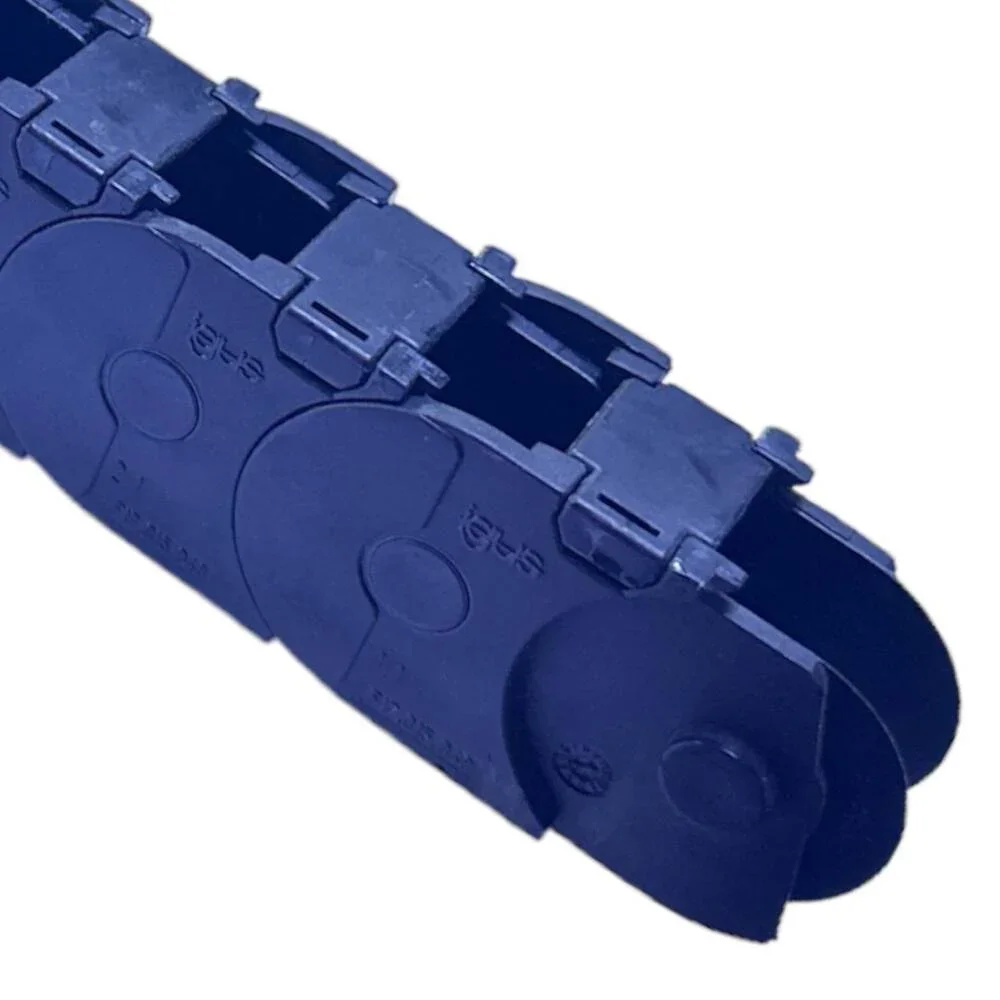
Energy chains are mechanical systems designed to protect, guide, and support cables and hoses that transmit power, data, and media between moving machine parts and a fixed point. Their fundamental operating principle is to ensure that cables remain within a specific minimum bending radius, preventing excessive tension and torsion. This extends cable life and minimizes fatigue effects caused by continuous motion. Energy chains are typically manufactured from high-performance polymers (e.g., engineering plastics) or steel. Polymer chains are common due to their lightness, corrosion resistance, and quiet operation, while steel chains are preferred for heavy loads and harsh environmental conditions.
The selection of cables for use within an energy chain is critically important. Standard cables are not suitable for dynamic applications because their internal structure, insulation materials, and outer jackets are not designed to withstand continuous bending. Energy chain cables are specifically developed for high flexibility and long service life. Key features of these cables include:
- Fine-stranded conductors: Conductors made of numerous fine wires provide greater cable flexibility and reduce internal stress during bending. Tinned copper is commonly used.
- Special insulation materials: High-mechanical strength, low-friction, and bend-resistant materials such as special PVC, TPE (Thermoplastic Elastomer), or PUR (Polyurethane) are used. These materials prevent cracking and breakage under prolonged movement.
- Torsion protection: Placing conductor cores with a special twisting geometry (e.g., short-pitch lay instead of braided or layered lay) increases the cable’s resistance to torsional stress. In some high-performance cables, a special anti-torsion element may be placed around the conductor bundles.
- Internal fillers and separators: Elements that fill voids within the cable prevent cores from rubbing against each other and shifting. This helps maintain the cable’s round form and prevents internal structural damage.
- Outer jacket material: PUR or special PVC materials with high resistance to abrasion, oil, chemicals, UV radiation, and microbes are preferred. The outer jacket is the cable’s first line of defense against external factors and, thanks to its smooth surface, minimizes friction within the energy chain.
- Shielding: For data and signal cables, braided or foil shielding is used to ensure electromagnetic compatibility (EMC) and prevent external interference. This shielding must also have a flexible structure suitable for dynamic applications.
From an engineering data perspective, key parameters for energy chain applications are:
- Bending Radius: The minimum bending radius of the cable and energy chain directly affects cable life. Manufacturer-specified values must be strictly adhered to. It typically ranges from 5 to 20 times the cable diameter.
- Travel Distance: The total distance the chain moves. Long travel distances require more durable cables and chains.
- Speed and Acceleration: The speed and acceleration of movement determine the dynamic loads on cables and chains. For high speed and acceleration, lighter and more flexible materials may be preferred.
- Cycle Life: A value indicating how many millions of cycles the cable and chain can withstand at a specific bending radius and under load. This should match the system’s expected lifespan.
- Environmental Conditions: Factors such as temperature range, humidity, chemical exposure, UV radiation, oil, and dust are decisive in cable and chain material selection.
- Filling Ratio: Indicates how much of the energy chain’s internal volume is filled by cables and hoses. A 60-70% filling ratio is generally recommended, leaving sufficient space for cables to move freely.
| Parameter | Value/Description |
|---|---|
| Minimum Bending Radius (Dynamic) | 5x to 20x cable outer diameter (Varies by cable type) |
| Maximum Travel Speed | Up to 10 m/s (Depends on application and chain type) |
| Maximum Acceleration | Up to 100 m/s² (Depends on application and chain type) |
| Operating Temperature Range | -40°C to +100°C (Depends on cable and chain material) |
| Expected Cycle Life | 1 million to 100 million (Cable quality and application) |
| Energy Chain Filling Ratio | 60% – 70% (For optimal cable placement) |
| Cable Outer Jacket Material | PUR, TPE, Special PVC (Based on abrasion, oil, chemical resistance) |
| Conductor Structure | Very fine-stranded, high flexibility (e.g., IEC 60228 Class 6) |
How to Prevent Cable Breakage in Energy Chains: Field Considerations
- Correct Cable Selection: Use highly flexible cables specifically designed for energy chain applications. Standard fixed installation cables or ordinary flexible cables cannot withstand continuous bending stress and will fail prematurely. When selecting cables, factors such as conductor bending class (e.g., IEC 60228 Class 6), insulation material (PVC, PUR, TPE), outer jacket’s abrasion, oil, and chemical resistance, torsion resistance, and minimum bending radius must be considered. For data cables, shielding type and effectiveness are critical for signal integrity. Incorrect cable selection is the most common cause of breakage.
- Correct Energy Chain Selection and Sizing: The energy chain itself must also be correctly selected. The chain’s inner height and width should be large enough to comfortably accommodate all cables and hoses, but not unnecessarily oversized. The minimum bending radius must meet the requirements of the cable with the largest bending radius to be used in the chain. Parameters such as the chain’s unsupported length, travel distance, speed, and acceleration determine the chain material (polymer or steel) and structure. Separators should be used within the chain to prevent cables from rubbing against each other and to ensure orderly placement. A filling ratio of 60-70% should be maintained to allow cables freedom of movement.
- Correct Installation Techniques:
- Strain Relief: Strain relief elements must be used at both the moving and fixed ends of the cables. These elements prevent excessive tension and bending of cables at connector points or at the entry/exit points of the chain. Strain relief elements should firmly grip the cable’s outer jacket without damaging the internal conductors.
- Cable Arrangement: It is essential to arrange cables neatly within the energy chain to prevent tangling or pinching. Heavier cables should be placed at the bottom, and lighter signal cables at the top. Power and data cables should, if possible, be placed in separate channels or with sufficient distance to prevent electromagnetic interference.
- Torsion Prevention: Ensure that cables are not twisted during installation. If a cable is installed twisted around its own axis, this twisting will increase with continuous movement, leading to severe internal damage.
- Minimize Friction: Appropriate separators should be used to minimize cables rubbing against each other or the inner surface of the chain, and the chain’s inner surfaces should be smooth. If necessary, intermediate layers to reduce friction or chains with special inner surfaces can be preferred.
- Sufficient Clearance: Sufficient clearance must be left for cables to move freely within the energy chain. Overfilling leads to cables being pinched, abraded, and failing prematurely.
- Periodic Maintenance and Observation: Energy chains and the cables within them should be regularly visually inspected.
- Wear Control: Look for signs of wear such as cracks, fraying, crushing, or discoloration on the outer jackets of cables. Check for excessive wear at chain connection points or bending areas.
- Cable Position: Check whether cables maintain their correct positions within the chain, and if there is any slipping or disarrangement.
- Contamination: Dust, chips, oil, or other contaminants accumulated inside the chain should be cleaned. These contaminants can increase friction and damage cable jackets.
- Strain Relief Points: Regularly check the tightness and effectiveness of strain relief clamps. Loose clamps can cause unnecessary tension on the cable.
- Chain Integrity: Inspect the energy chain itself for cracks, breaks, or loose connections. Damaged chain links can cause abnormal cable bending.
- Evaluation of Environmental Factors: Factors such as temperature, humidity, chemical exposure (oils, cooling fluids), UV radiation, and mechanical impacts in the operating environment must be considered when selecting cable and chain materials. Extreme temperatures or aggressive chemicals can significantly shorten the life of standard cable jackets.
How to Prevent Cable Breakage in Energy Chains: Common Problems and Solutions
Most problems encountered in energy chain applications stem from incorrect product selection, faulty installation, or inadequate maintenance. Here are common problems and recommended solutions:
- Cable Conductor Breakage (Internal Break): This usually results from the cable’s bending radius being too small or the use of standard cables in dynamic applications. The fatigue life of conductors is exhausted due to continuous excessive tension and compression.
- Solution: Use special energy chain cables with a high flexibility class (e.g., Class 6) that meet the minimum bending radius required by the application. Do not choose an energy chain with a bending radius smaller than the cable’s requirements.
- Cracking or Abrasion of Cable Outer Jacket: Cracks in the outer jacket can be caused by the cable’s exposure to chemicals, UV radiation, or extreme temperatures, or by using a jacket material with insufficient abrasion resistance. Abrasion results from cables rubbing against each other or the inner surface of the chain.
- Solution: Select cables with high-performance outer jacket materials such as PUR or special TPE, suitable for environmental conditions (resistant to oil, UV, chemicals). Prevent cable contact by using sufficient separators within the chain and ensure the chain’s inner surfaces are smooth.
- Cable Kinking, Tangling, or “Corkscrewing”: Cables tangling themselves or forming spirals within the energy chain are usually caused by insufficient internal separation, overfilling, or the cable being twisted during installation. These situations damage the cable’s internal structure.
- Solution: Provide a separate channel for each cable using appropriate separators within the energy chain. Keep the chain’s filling ratio within the 60-70% range. Absolutely ensure that cables are not twisted during installation; unreel cables correctly from the spool.
- Signal Loss or Electromagnetic Interference (EMI): These problems in data or signal cables can result from damaged shielding, incorrect grounding, or insufficient separation between power and signal cables.
- Solution: Use high-quality, shielded cables designed for dynamic applications. Ensure proper grounding of the shielding at both ends. Route power and signal cables in separate channels as much as possible, or with a metal separator between them.
- Cable Pinching or Chain Sticking: Difficulty in movement or complete stoppage of the energy chain can be caused by overfilling within the chain, entry of foreign objects, or damage to chain links.
- Solution: Check the chain’s filling ratio and optimize the number of cables or chain size if necessary. Regularly clean the inside of the chain. Immediately replace damaged chain links or elements.
- Damage at Strain Relief Points: Cable breakage or outer jacket stripping near strain relief clamps results from inadequate strain relief or incorrect adjustment of the clamps.
- Solution: Use appropriately sized and type strain relief clamps that firmly grip the cable’s outer jacket without damaging its internal structure. Ensure clamps are tightened with the correct torque and do not loosen over time.
How to Prevent Cable Breakage in Energy Chains: Conclusion and Expert Advice
Preventing cable breakage in energy chains is vital for the uninterrupted operation, efficiency, and cost-effectiveness of industrial automation systems. As detailed in this technical article, such failures typically arise not from a single cause, but from a combination of factors such as incorrect component selection, faulty installation, and inadequate maintenance. Our field experience shows that a small saving made at the outset can lead to much larger repair costs and production losses in the long run. Therefore, it is essential to adopt a proactive and holistic approach at every stage, from the design to the commissioning and operation of energy chain systems.
As expert advice, always consider all dynamic parameters of the application (travel distance, speed, acceleration, bending radius, environmental conditions) and opt for high-quality cable and chain systems specifically designed for energy chains. When comparing products from different manufacturers in the market, focus not only on price but also on tested cycle life numbers, material quality, and technical support capabilities. During the installation phase, strictly follow the manufacturer’s installation instructions, paying meticulous attention to strain relief, cable arrangement, and bending radius. Remember that the life of a cable is limited by the durability of its weakest point. Finally, never neglect periodic maintenance and visual inspections. Detecting early signs of wear in cables and chains allows you to take preventive measures before major failures occur. This holistic approach will increase the reliability of your systems while helping you minimize unexpected downtime and operating costs. Request a quote on WhatsApp for Mermak CNC solutions.
FAQ
What are energy chains and why are they important in industrial automation?
Energy chains are mechanical systems that protect, guide, and support cables and hoses transmitting power, data, and media between moving machine parts and a fixed point in industrial automation. They ensure cables remain within a specific minimum bending radius, preventing excessive tension and torsion.
What are the most critical steps to prevent cable breakage in energy chains?
Key factors include using highly flexible cables specifically designed for dynamic applications (e.g., IEC 60228 Class 6), selecting the correct energy chain size and bending radius, implementing proper strain relief at cable ends, arranging cables neatly with separators, and preventing twisting during installation.
What are the common problems encountered with cables in energy chains?
Common issues include conductor breaks due to incorrect bending radius or standard cables, outer jacket cracking/abrasion from unsuitable materials or friction, cable kinking/tangling from overfilling or twisting, signal loss due to damaged shielding, and chain sticking from overfilling or damage.
How often should energy chains and cables be inspected for maintenance?
Regular visual inspections for wear, cracks, or discoloration on cable jackets, checking cable positions, cleaning contaminants, verifying strain relief clamp tightness, and inspecting the chain itself for damage or loose connections are essential for proactive maintenance.
What should industrial buyers consider when selecting cables and energy chains?
Always choose cables and chains specifically designed for dynamic applications, considering factors like tested cycle life, material quality, and environmental resistance (oil, UV, chemicals). Prioritize quality over initial cost to avoid higher repair expenses and downtime.