







































































Does a Larger Motor Power Mean Better Machine Performance?
📑 Table of contents (Click to open)
Discover why a larger motor doesn’t always guarantee better machine performance. Learn how incorrect motor sizing can lead to energy waste, reduced efficiency, and higher costs. Understand the critical role of matching motor specifications to your machine’s load profile for optimal operation.
Practical notes for CNC router, automation and industrial motion systems.
In industrial automation and machine design, a common misconception is that installing a larger motor will inherently make a machine more efficient and reliable. However, this is often not the case and can lead to the opposite outcome. The question, “Does a larger motor power mean better machine performance?” is intricately linked to complex engineering principles and economic realities. Fundamentally, a motor’s performance is determined not just by its rated power, but by how well it aligns with the characteristics of the load it drives. An improperly sized, or oversized, motor can introduce numerous disadvantages. These include low energy efficiency, high operating costs, poor power factor, increased maintenance needs, and even control system complexities. A motor typically operates most efficiently when its load is between 75% and 100% of its rated capacity. When operating outside this range, a motor converts electrical energy into heat, increasing losses and reducing overall system performance.
Operating Principles and Technical Data
The fundamental principle of an electric motor is to convert electrical energy into mechanical energy. During this conversion, the motor’s efficiency indicates how much electrical energy is transformed into useful work. Each motor has a unique efficiency curve that illustrates its performance at various load levels. Generally, motor efficiency decreases as the load drops below its nominal rating. For instance, a 100 kW motor driving a 20 kW load will operate with significantly lower efficiency compared to a 20 kW motor handling the same load. This directly impacts energy consumption and, consequently, operating costs.
Beyond just power, torque and speed (RPM) are critical motor selection parameters. The relationship between power (P), torque (T), and speed (N) is expressed by the formula P = (T * N) / k (where k is a constant). A machine requires a specific torque at a specific speed to perform a task. If the selected motor cannot optimally provide the required torque and speed, its high power rating becomes irrelevant. For example, selecting a motor with a high nominal power but insufficient starting torque for an application demanding high initial torque will prevent the machine from operating correctly.
Another vital technical parameter is the power factor. Power factor represents the ratio of useful work-producing energy (active power) to the total energy drawn from the grid (apparent power). Oversized motors, especially when operating at low loads, tend to exhibit a low power factor. A low power factor leads to increased reactive power demand on the electrical grid, potentially resulting in penalties from utility companies, additional losses in cables and transformers, and wasted system capacity. Therefore, correct motor selection is crucial not only for machine performance but also for the overall efficiency of the electrical infrastructure.
In modern industrial automation, Variable Frequency Drives (VFDs), also known as inverters, play a key role in enhancing energy efficiency by adjusting motor speed and torque according to the load profile. However, even VFDs cannot entirely eliminate the inefficiency of a fundamentally mis-sized motor; they can only optimize it. This underscores the indispensable need for a detailed load analysis during the initial motor selection and sizing process.
| Parameter | Value/Description |
|---|---|
| Motor Power (kW/HP) | Nominal output power of the motor. Must be selected based on load requirements; oversizing leads to inefficiency. |
| Nominal Speed (RPM) | Rotational speed at nominal power. Should match the application’s speed requirements. |
| Nominal Torque (Nm) | Torque produced at nominal speed. Must meet the machine’s continuous and starting torque demands. |
| Efficiency (%) (at Full Load) | Ratio of electrical to mechanical energy conversion at nominal load. IE3/IE4 standards are preferred. |
| Power Factor (at Full Load) | Ratio of active power to apparent power drawn from the grid. A high power factor (above 0.85) is desirable. |
| Overload Capacity (%) | Motor’s ability to operate above nominal power for short periods (e.g., 150% for 60 seconds). |
| Protection Class (IP) | Motor’s resistance to solid objects and water ingress (e.g., IP55 – protected against dust and water jets). |
Key Considerations in Practice
- Accurate Load Analysis and Profiling: Before selecting a motor, the machine’s actual load profile must be thoroughly analyzed. This includes starting torque, continuous operating torque, peak torques, inertia, and speed variations. Load data from existing machines or similar applications can be collected using sensors and data acquisition systems. This enables a selection that best matches the motor’s nominal power, torque, and speed to the requirements, preventing oversizing and maximizing energy efficiency.
- Energy Efficiency and Operating Costs: An oversized motor operating at low load sits at the least efficient point on its curve, leading to unnecessary energy consumption. This can significantly increase annual electricity bills, especially for industrial facilities operating 24/7. Opt for IE3 (Premium Efficiency) or IE4 (Super Premium Efficiency) class motors, ensuring they are also correctly sized. The initial purchase cost of a motor is only a small fraction of its Total Cost of Ownership (TCO); the primary cost stems from the energy it consumes throughout its lifespan.
- System Integration and Control: A larger motor necessitates larger electrical components (contactors, thermal relays, fuses), thicker cables, and a more robust power supply, increasing overall system cost and complexity. Furthermore, controlling oversized motors can be more challenging, particularly in applications requiring precise speed and torque control. While VFDs facilitate control, factors like motor inertia and response time can affect optimal system performance. A correctly sized motor integrates better with control systems, offering more stable performance.
- Mechanical Wear and Maintenance: Oversized motors are often larger and heavier, posing installation and space challenges. Additionally, continuous operation at low loads can induce certain mechanical stresses and vibrations. While the risk of overheating is lower at low loads, inefficient operation can lead to electrical stresses that shorten the motor’s lifespan. Proper sizing ensures the motor operates longer, experiences fewer failures, and requires less frequent maintenance.
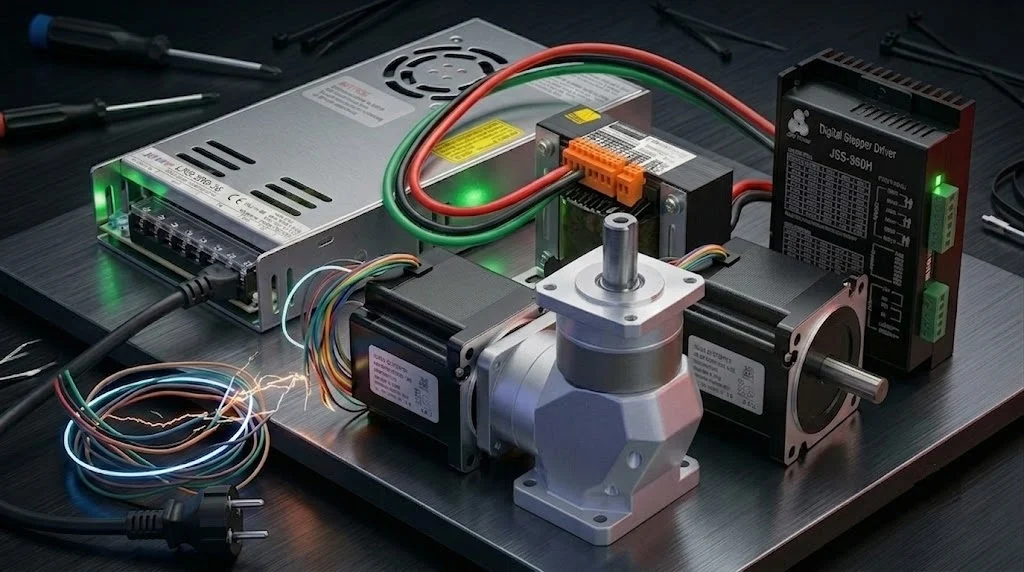
Common Issues and Solutions with Oversized Motors
The most common issues encountered with oversized motors in the field, along with their solutions, include:
- Low Efficiency and Increased Energy Bills: As discussed, oversized motors operating at low loads are highly inefficient. Solution: Conduct a thorough load analysis and replace the motor with one that is correctly sized for the application’s typical operating conditions. If immediate replacement is not feasible, consider using a VFD to optimize speed and torque, though this is a partial solution.
- Poor Power Factor: Low load operation of oversized motors leads to a low power factor, potentially incurring utility penalties. Solution: Install power factor correction capacitors. However, the most effective solution is correct motor sizing.
- Control Difficulties: Oversized motors can exhibit sluggish response or overshoot in precise motion control applications. Solution: Utilize advanced control algorithms within VFDs or dedicated motion controllers. Ensure the motor’s inertia is accounted for in the control system design.
- Increased Initial Cost and System Complexity: Larger motors, associated electrical gear, and cabling increase upfront investment. Solution: Prioritize lifecycle cost analysis over initial purchase price. Correct sizing often leads to lower overall costs when energy consumption and maintenance are considered.
In conclusion, while ample power is necessary for demanding industrial tasks, simply choosing the largest available motor is rarely the optimal strategy. A deep understanding of the machine’s load requirements, combined with careful consideration of motor efficiency, torque characteristics, and system integration, is paramount. Selecting a motor that precisely matches the application’s needs ensures not only peak performance and reliability but also significant energy savings and reduced operating costs. For expert guidance on selecting the right CNC router machine components, including the optimal spindle motor and servo drive systems, consult with Mermak CNC specialists.
Ready to optimize your industrial CNC router’s performance? Request a quote on WhatsApp today and let our experts help you find the perfect solution.
Related product categories: General · Electronics · Combination Packages