







































































Motor Bracket Selection Criteria for Industrial CNC Systems

📑 Table of contents (Click to open)
- Introduction and Technical Analysis of Motor Bracket Selection Criteria
- Motor Bracket Selection Criteria: Operating Principles and Technical Data
- Load Capacity and Mechanical Strength
- Material Selection and Environmental Resistance
- Vibration Damping Characteristics
- Dimensional Compatibility and Mounting Standards
- Rigidity and Precision
- Mounting Type and Space Constraints
- Motor Bracket Selection Criteria: Field Considerations
- Motor Bracket Selection Criteria: Common Problems and Solutions
- Motor Bracket Selection Criteria: Conclusion and Expert Advice
- FAQ
Introduction and Technical Analysis of Motor Bracket Selection Criteria
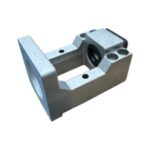
As indispensable components of industrial automation systems, motor brackets provide secure, stable, and precise mounting of a motor onto a machine chassis or another structural element. These critical mechanical parts not only bear the torque and forces generated by the motor but also directly influence the overall performance, precision, and lifespan of the system by damping vibrations that occur during motor operation. In the automation sector, from production lines and robotic applications to conveyor systems and precision positioning platforms, the correct selection of motor brackets is vital for system reliability and efficiency. An incorrectly chosen or low-quality bracket can not only shorten the motor’s lifespan but also lead to wear on machine parts, resonance in the system, noise, and even unexpected breakdowns, resulting in production losses and safety risks. This detailed technical article and field guide aims to comprehensively present the criteria, technical details, and practical applications that industrial automation experts and engineers should consider when selecting motor brackets.
Motor Bracket Selection Criteria: Operating Principles and Technical Data
The fundamental operating principle of a motor bracket is to integrate a rotating actuator, such as an electric motor or servo motor, with the rest of the system through a rigid or damped connection. This integration is essential for smoothly transmitting the rotational motion and force (torque) generated by the motor to the power transmission components (gearbox, coupling, belt-pulley system, etc.) where the load is located. The bracket must support the motor’s static weight while also resisting operational dynamic loads, shock loads, and vibrations. The main engineering data and principles to consider during the selection process are:
Load Capacity and Mechanical Strength
The maximum static load (motor weight) and dynamic load (acceleration/deceleration forces, torque reactions, external forces occurring during operation) that the bracket can bear must be carefully calculated. Generally, selection is made with a safety factor (e.g., 1.5 to 2.0 times) above the nominal load. The bracket’s material and geometry must possess sufficient tensile strength, compressive strength, and fatigue life to operate without permanent deformation or fracture under these loads. Especially, the high dynamic acceleration capabilities of servo motors can significantly increase instantaneous torque loads on the bracket.

Material Selection and Environmental Resistance
The material from which the bracket is manufactured is determined by the environmental conditions and mechanical requirements of the application:
- Aluminum Alloys: Offer lightness, good machinability, and a high strength-to-weight ratio. They are generally preferred in robotics, light automation, and high-speed applications. Corrosion resistance depends on the alloy type and surface treatment (anodizing, etc.).
- Steel (Carbon Steel): Provides high strength, rigidity, and durability. Ideal for heavier loads and high-torque applications. Surface treatments such as galvanizing, nickel plating, or painting may be required to enhance corrosion resistance.
- Stainless Steel: Used for applications requiring high corrosion resistance, such as chemically aggressive environments, food, and pharmaceutical industries where hygiene is critical. Its mechanical strength is similar to carbon steel, but its cost is higher.
- Cast Iron: Offers high vibration damping capacity and good machinability. Suitable for heavy industry, vibrating machinery, and large motors.
Environmental factors include temperature range, humidity, chemical exposure, dust, abrasive particles, and potential explosive atmospheres (ATEX directive compliance). These conditions affect the material’s fatigue life, corrosion resistance, and thermal expansion properties.

Vibration Damping Characteristics
Motors inherently produce vibrations during operation. These vibrations can lead to noise in the system, premature wear of components, and loss of accuracy in applications requiring precise positioning. Some motor brackets have the ability to absorb and damp vibrations through integrated elastomeric damping elements or special geometric designs. The sensitivity of the application and noise tolerance determine the importance of this feature. Keeping resonance frequencies away from the system’s operating frequencies is a critical engineering requirement.
Dimensional Compatibility and Mounting Standards
The motor bracket must be fully compatible with the dimensions and mounting hole patterns of the motor to be connected (e.g., NEMA or IEC standard flange dimensions) and the power transmission component (gearbox, coupling). Precise alignment between motor flange types (e.g., NEMA 56C, 143TC, IEC B5, B14), shaft diameters, and gearbox input flanges is essential for efficient system operation and long lifespan. Misalignment leads to premature wear in couplings and bearings, motor overheating, and energy loss.
Rigidity and Precision
Especially in precision positioning and high dynamic applications, the bracket’s sufficient rigidity is critical to minimize deflection of the motor and power transmission components. Flexing or bending of the bracket reduces the overall accuracy of the system and can cause instabilities in control loops. High rigidity is typically achieved with thicker cross-sections, reinforced structural designs, and appropriate material selection.
Mounting Type and Space Constraints
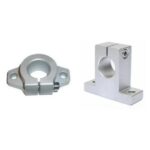
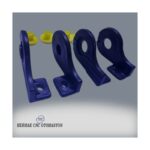
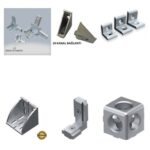
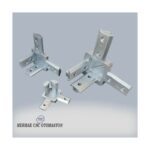
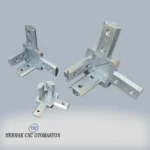
Brackets can come in different types (e.g., L-type, U-type, flange type, base-mounted) depending on the motor’s mounting position (horizontal, vertical, angled) and existing space constraints. Ease of installation, accessibility, and maintenance processes should also be considered in the design.
| Parameter | Value/Description |
|---|---|
| Material Type | Aluminum, Steel, Stainless Steel, Cast Iron |
| Load Capacity | Static (kg), Dynamic (Nm/kg), Torque Reaction (Nm) |
| Vibration Damping | Resonance Frequency, Damping Coefficient (Integrated elastomeric elements) |
| Mounting Standard | NEMA (C-Face), IEC (B5, B14), Custom Flange Designs |
| Operating Temperature | -40°C to +150°C (Varies by material and coating) |
| Corrosion Resistance | Salt Spray Test (Hours), Chemical Resistance Class |
| Precision Class | Shaft Alignment Tolerance (mm/inch), Flatness (mm) |
Motor Bracket Selection Criteria: Field Considerations
- Accurate Load Calculation and Safety Factor: In addition to the motor’s weight, accurately calculate all static and dynamic forces that will occur during operation (torque reactions, acceleration/deceleration forces, external shock loads). Based on these calculations, select a bracket with an adequate safety factor (typically between 1.5-2.0) to ensure safe operation throughout the system’s lifespan. Dynamic loads should not be overlooked, especially in systems with high inertia loads or frequent start-stop cycles.
- Material and Environmental Compatibility: Analyze in detail the environmental conditions of the application’s operating environment, such as temperature, humidity, chemical exposure (oils, acids, bases), dust, dirt, and potential explosive atmospheres (ATEX zones). Select a material with appropriate corrosion resistance, thermal stability, and mechanical strength properties for these conditions. For example, stainless steel should be preferred in the food or pharmaceutical industry, and galvanized steel or anodized aluminum in outdoor applications.
- Vibration Analysis and Damping Needs: Consider the overall vibration behavior of the machine system and the motor’s operating frequencies. If there is a risk of resonance in the system or if a precise operating environment is required, brackets with vibration damping features (e.g., containing elastomeric elements) should be preferred. Vibration-damping brackets reduce noise, extend the life of machine components, and increase the accuracy of sensitive systems.
- Mounting Precision and Alignment: Perfect alignment between the motor and power transmission components (gearbox, coupling, shaft) is critical for energy efficiency and component lifespan. The flatness of the bracket’s mounting surfaces, hole tolerances, and overall geometric accuracy must be at a level that ensures precise alignment. Using laser alignment tools during installation minimizes potential alignment errors. Misalignment causes premature wear of couplings, bearings, and shaft seals.
- Compliance with Standards and Certifications: Select brackets that comply with industrial standards for the motor (NEMA, IEC), gearbox, and other components. Especially for explosive atmospheres (ATEX), food safety (FDA), or other specific industrial requirements, prefer products with relevant certifications. This guarantees both legal compliance and system reliability.
- Ease of Installation and Maintenance Access: The bracket design should facilitate easy installation and provide sufficient access for periodic maintenance (tightening torque checks, visual inspection). Complex or inaccessible designs can increase installation costs and maintenance times.
- Integration with Gearbox and Power Transmission Components: If the motor is to be connected to a gearbox, the bracket must be fully compatible with both the motor and gearbox flanges. The alignment between the gearbox input shaft and the motor output shaft, and the correct selection and installation of the coupling, directly affect the overall system performance. The bracket must offer the necessary rigidity and precision to ensure this integration.
Motor Bracket Selection Criteria: Common Problems and Solutions
Some common problems related to motor brackets in industrial automation applications and their solutions are detailed below:
1. Excessive Vibration and Noise:
- Problem: Abnormally high vibration levels and noise in the system. This can shorten the lifespan of the motor and machine, especially in high-speed or dynamic load applications.
- Causes:
- Incorrect bracket selection: The bracket lacks sufficient rigidity or its vibration damping capability is inadequate.
- Resonance: The bracket’s natural frequency is close to the motor’s operating frequency or the system’s resonance frequency.
- Loose connections: Mounting bolts are not tightened sufficiently or have loosened over time.
- Alignment errors: Misalignment between the motor and the load causes unbalanced forces in couplings or bearings.
- Solutions:
- Perform a detailed vibration analysis to identify resonance points and re-select or modify the bracket accordingly.
- Opt for a more rigid bracket material or design.
- Use brackets with vibration-damping elastomeric elements or add external dampers to existing brackets.
- Tighten mounting bolts to the correct torque values with a torque wrench and check them periodically.
- Check and correct the alignment between the motor and load using laser alignment devices.
2. Premature Wear and Failure:
- Problem: Early failures such as cracks, deformation, fatigue fractures, or excessive wear at connection points in the motor bracket.
- Causes:
- Overloading: Operating the bracket above its nominal load capacity, especially under dynamic and shock loads.
- Incorrect material selection: Using a material unsuitable for the application conditions (corrosion, temperature, chemicals).
- Fatigue: Exceeding the material’s fatigue limit under repeated dynamic loads.
- Poor workmanship or manufacturing defect: Flaws in the manufacturing of the bracket.
- Solutions:
- Recalculate all static and dynamic loads of the motor and system accurately, and select a higher-capacity bracket with an adequate safety factor.
- Use a bracket made of a material resistant to environmental conditions (corrosion, temperature) with appropriate strength (stainless steel, special alloys) or with suitable surface treatment.
- Optimize the bracket’s design to reduce stress concentration (e.g., rounding corners).
- Purchase certified products from reliable suppliers and implement quality control processes.
3. Alignment Problems and Shaft Damage:
- Problem: Alignment-related problems such as bending of the motor shaft or gearbox input shaft, overheating in bearings, premature wear in couplings, or oil leakage from shaft seals.
- Causes:
- Non-flatness of the bracket’s mounting surfaces or insufficient hole tolerances.
- Incorrect mounting techniques: Uneven tightening of bolts or the bracket not seating properly on the mounting surface.
- Flexing or deformation of the bracket under operational loads (insufficient rigidity).
- Solutions:
- Use brackets with high-precision, machined mounting surfaces and tight tolerances.
- Strictly follow mounting procedures; tighten bolts crosswise and to specified torque values.
- After mounting, check the alignment between the motor and load with laser alignment devices and make necessary adjustments.
- Prevent deformation under operational loads by selecting a bracket with sufficient rigidity.
4. Corrosion and Chemical Damage:
- Problem: Rusting, blackening, material degradation, or loss of mechanical properties on the bracket surface.
- Causes:
- Incorrect material selection: Using a material without adequate corrosion resistance despite the application being exposed to humid, chemical, or salty environments.
- Insufficient surface protection: Absence or poor quality of protective treatments such as paint, coating, or galvanization.
- Solutions:
- Prefer stainless steel (304, 316 grade) or specially coated (nickel plating, Teflon coating) brackets suitable for chemical exposure and humidity levels.
- For steel brackets, apply effective surface protection methods such as galvanizing, electroplating, or high-quality industrial paint.
- Periodically inspect bracket surfaces and repair or renew damaged protective layers.
Motor Bracket Selection Criteria: Conclusion and Expert Advice
Motor bracket selection is a critical engineering decision in industrial automation projects, often overlooked, yet with profound impacts on the system’s overall performance, reliability, and lifespan. As detailed throughout this “Field Guide and Technical Article,” choosing the right bracket requires much more than simply finding a component that fits the motor’s physical dimensions. It necessitates a comprehensive evaluation of numerous factors, including load capacity, material properties, vibration damping capabilities, compatibility with environmental conditions, mounting precision, and cost-effectiveness. As an experienced automation engineer, my advice is never to underestimate this selection and always adopt a holistic approach. At the initial stage of your project, clearly define all parameters such as the motor type (servo, stepper, AC/DC), gearbox characteristics, torque and forces to be transmitted, dynamic requirements of the system, environmental operating conditions, and expected lifespan. Using this data, meticulously analyze potential bracket solutions and, when necessary, leverage manufacturer technical support or simulation software. Remember, a small initial investment and a detailed engineering analysis will prevent costly breakdowns, production downtimes, and maintenance expenses in the future. A high-quality motor bracket is not just a mounting element but a strategic component that enhances your system’s precision, durability, and overall efficiency. For a safe, efficient, and long-lasting automation system, correct bracket selection is one of the cornerstones of your project.
FAQ
What is a motor bracket and why is it important in industrial automation?
Motor brackets are mechanical components that securely mount an electric or servo motor to a machine chassis or structural element. They transmit torque and forces, while also damping vibrations to ensure stable and precise operation of industrial automation systems.
What are the main criteria for selecting the right motor bracket?
Key criteria include load capacity (static and dynamic), material type (aluminum, steel, stainless steel, cast iron) based on environmental conditions, vibration damping characteristics, dimensional compatibility with NEMA/IEC standards, rigidity for precision, and ease of installation and maintenance access.
What are the common problems associated with motor brackets and their causes?
Common issues include excessive vibration and noise (due to incorrect bracket, resonance, or loose connections), premature wear and failure (overloading, wrong material, fatigue), alignment problems and shaft damage (poor mounting surfaces, incorrect installation), and corrosion/chemical damage (unsuitable material or insufficient surface protection).
How can common motor bracket problems be resolved?
Solutions involve detailed vibration analysis, selecting more rigid or damping-enabled brackets, precise torque tightening, laser alignment, choosing materials resistant to environmental factors, and using certified products from reliable suppliers.
What expert advice should industrial buyers follow for motor bracket selection?
Always consider the motor type, gearbox specifications, torque, dynamic requirements, environmental conditions, and expected lifespan. A comprehensive engineering analysis and, if needed, manufacturer support or simulation software, will prevent costly failures and ensure system reliability.