No products in the cart.
Step Motor Holding Current Adjustment: A Critical Parameter in Industrial Automation

Contents
- Understanding Step Motor Operation and the Holding State
- The Concept of Holding Current and Its Significance
- Purpose and Benefits of Holding Current Adjustment
- Key Advantages of Optimal Adjustment
- Risks of Incorrect Holding Current Settings
- How to Adjust Step Motor Holding Current
- Practical Industrial Examples
- Conclusion
Step motors are fundamental to industrial automation, enabling precise motion control. Their performance, efficiency, and lifespan are significantly influenced by the holding current setting. This article explores the importance of correctly adjusting the holding current for step motors, covering its purpose, benefits, and potential risks of incorrect settings.
Mermak CNC Technical Guide
Practical notes for CNC router, automation and industrial motion systems.
Step motors are foundational components in industrial automation, widely employed in applications demanding precise positioning and motion control. Among the critical parameters that directly impact their performance, efficiency, and operational lifespan is the holding current adjustment. While step motors provide high torque and dynamic performance during movement, they require a continuous energy supply to maintain their position when stationary. Correctly setting this holding current is vital for the overall success of the system. Improper adjustments can lead to a range of issues, from overheating and step loss to energy wastage and system instability.
This article delves into what step motor holding current adjustment entails, why it is so important, the adjustment process, the benefits of optimal settings, and the potential risks associated with incorrect configurations. We will examine the profound impact of this critical parameter on system integration and performance optimization from the perspective of industrial automation experts. Furthermore, we aim to guide engineers and technicians by illustrating the concepts with practical examples and field applications.
Understanding Step Motor Operation and the Holding State
Step motors convert electrical energy into mechanical motion through a unique principle, differing from conventional DC or AC motors. They achieve highly precise angular positioning by moving in discrete steps. This capability stems from the interaction between the magnetic poles within the motor (rotor) and the electromagnetic fields generated by external coils (stator). Energizing each coil pair in a specific sequence causes the rotor to rotate by a fixed angle. The sequence and speed of these steps dictate the motor’s movement and direction.
The motor’s operation relies on electromagnetic attraction and repulsion forces. Current applied to the stator windings generates a magnetic field that pulls the rotor’s permanent magnets or soft iron poles into a specific position. With each step, current is supplied to the next set of windings, advancing the rotor. This discrete motion control is indispensable for applications requiring high precision, such as CNC machines, robotic arms, and automated production lines. Microstepping drivers further subdivide these steps, enabling smoother, more precise movements and reducing vibration and noise.
The Concept of Holding Current and Its Significance
When a step motor completes its movement and stops, it must maintain its current position against external forces. During this “holding” period, a specific level of current is continuously applied to the stator windings to keep the rotor fixed. This current is known as the holding current. The holding current determines the motor’s static torque, which is its ability to resist displacement from its current position.
Proper adjustment of the holding current is critical for both system stability and efficiency. Without sufficient holding current, the motor may lose its position due to external loads or vibrations, leading to significant errors in precision-sensitive applications. Conversely, applying excessive holding current can cause the motor to overheat, waste energy, and ultimately shorten its lifespan. Therefore, the holding current must be carefully set based on the motor and driver specifications, the required static torque for the application, and environmental conditions. The optimal setting achieves a balance between energy consumption and position-holding performance.
Purpose and Benefits of Holding Current Adjustment
The primary goal of adjusting the step motor holding current is to ensure the motor reliably maintains its position when not in motion. This is crucial for applications where the motor must counteract gravity (e.g., vertical axes) or resist external forces (e.g., cutting forces during machining). Correct adjustment prevents unwanted positional shifts or step losses, ensuring application accuracy, while also minimizing unnecessary energy consumption and heat generation.
Another significant objective is to enhance the overall energy efficiency of the system. Since step motors draw current continuously, applying a high current during the holding state can lead to substantial energy waste. Many drivers offer the option to set the holding current as a percentage of the full running current. This allows the motor to consume only the necessary energy, reducing operational costs and contributing to green automation principles. These savings can be particularly significant in large systems with numerous motors operating continuously.
Key Advantages of Optimal Adjustment
An accurately set holding current provides numerous benefits to an automation system. Firstly, it enhances energy efficiency by preventing the motor from drawing excessive current, thereby reducing electricity costs and the system’s overall energy footprint. This is a major advantage for industrial facilities operating 24/7. Secondly, it extends motor lifespan. Excessive current leads to overheating of motor windings, which can degrade insulation and cause premature failure. Lower operating temperatures ensure that the motor’s mechanical and electrical components function reliably for longer periods. Thirdly, it improves precision and repeatability. By ensuring the motor firmly holds its position, it prevents errors caused by external disturbances, leading to more consistent and accurate operation, which is vital for tasks like CNC machining or robotic assembly.
Finally, proper adjustment can reduce audible noise and vibration. While not the primary function, optimizing the holding current can contribute to smoother operation, especially when combined with appropriate microstepping settings. This leads to a more stable and quieter working environment.
Risks of Incorrect Holding Current Settings
Setting the holding current too high can lead to several detrimental effects. The most immediate is overheating. Excessive current flowing through the motor windings generates significant heat, which can damage the motor’s insulation, reduce its torque capability over time, and even cause catastrophic failure. This also translates to wasted energy, increasing operational expenses without providing any additional benefit. Furthermore, the heat generated can affect nearby electronic components, potentially leading to system instability.
Conversely, setting the holding current too low poses different risks. The primary concern is positional inaccuracy and step loss. If the holding torque is insufficient to counteract external forces, the motor shaft may rotate unintentionally, causing the system to lose its intended position. This can result in significant errors in automated processes, scrap parts in manufacturing, or failure of critical operations. For instance, on a CNC router machine, insufficient holding current on a vertical axis could lead to the tool dropping unexpectedly. In applications involving servo drives or closed-loop systems, this might trigger error alarms or require a system reset.

How to Adjust Step Motor Holding Current
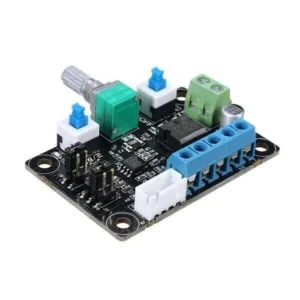
The adjustment process for step motor holding current typically involves configuring the step motor driver. Most modern drivers allow for setting the holding current, often as a percentage of the motor’s rated running current. The exact method varies by driver model, but generally involves setting DIP switches, using onboard potentiometers, or configuring parameters via software or a serial interface.
General Steps for Adjustment:
- Consult Motor and Driver Datasheets: Identify the motor’s rated current and the driver’s capabilities, including its holding current setting options.
- Determine Required Holding Torque: Assess the maximum external forces the motor will encounter while stationary.
- Set the Driver Parameter: Configure the driver’s holding current setting. A common starting point is 50-70% of the rated running current.
- Test and Verify: Apply power and check if the motor holds its position firmly under expected loads. Monitor motor temperature to ensure it does not overheat.
- Fine-tune: Adjust the setting incrementally, balancing holding torque with temperature and energy consumption. If the motor easily holds position and remains cool, the setting is likely optimal. If it struggles or overheats, adjust accordingly.
For applications requiring maximum holding torque, such as vertical axes on a CNC machine, a higher percentage might be necessary. However, always prioritize keeping the motor temperature within acceptable limits. Advanced drivers may offer features like automatic current reduction when the motor is stationary for extended periods, further enhancing efficiency.

Practical Industrial Examples
In the context of an industrial CNC router machine, precise positioning is paramount. Consider the Z-axis, which carries the spindle motor and cutting tool. When the machine is not actively cutting, the Z-axis must hold its position firmly to prevent the tool from dropping due to gravity or vibration. Incorrect holding current could lead to inaccurate depths of cut or even damage to the workpiece or tool. Setting an appropriate holding current ensures the Z-axis remains stable, maintaining the programmed depth.
Another example is in robotic automation. A robotic arm used for pick-and-place operations relies on multiple step motors for its joints. When a joint is stationary, holding its configured angle is critical for the arm’s stability and the successful manipulation of objects. Insufficient holding current could cause the arm to drift, leading to dropped parts or collisions. The holding current adjustment ensures each joint maintains its precise orientation, contributing to the robot’s overall reliability and performance.

Conclusion
The step motor holding current adjustment is a fundamental yet often overlooked aspect of industrial automation system design and maintenance. Optimizing this parameter is key to achieving reliable performance, energy efficiency, and extended component life. By understanding the principles behind holding current, its benefits, and the risks associated with improper settings, engineers and technicians can make informed decisions. Whether integrating step motors into a new CNC machine or optimizing an existing automated process, careful consideration of the holding current ensures that your motion control systems operate at their peak potential.
For robust and precise motion control solutions, Mermak CNC offers a comprehensive range of step motors, drivers, and related components. Explore our solutions to enhance your automation projects.
Ready to optimize your industrial automation? Request a quote on WhatsApp today!