No products in the cart.
Mechanical and Electrical Causes of Humming Noise in Spindle Motors: An In-depth Analysis

Contents
- Spindle Motor Humming Noise: Mechanical and Electrical Causes – Introduction and Technical Analysis Spindle motors, integral to **CNC machines**, **machining centers**, and other high-precision manufacturing equipment, are the heart of industrial automation systems. Their flawless operation is crucial for uninterrupted production quality and efficiency. However, a “humming” noise emanating from a spindle motor can signal a potential malfunction or performance degradation, drawing the attention of expert technicians and engineers. This hum is not merely an irritating sound but an outward manifestation of serious **mechanical** or **electrical anomalies** within the system. If not diagnosed early, such noises can lead to complete motor failure, costly repairs, and significant production losses. This detailed field guide and technical article aims to provide a comprehensive reference for maintenance and repair teams in the industrial automation sector by thoroughly examining the mechanical and electrical reasons behind humming noises in spindle motors. Our objective is to help accurately identify the root cause of the problem and develop quick, effective solution strategies. This will ensure operational continuity, minimize maintenance costs, and extend equipment life. Spindle Motor Humming Noise: Mechanical and Electrical Causes – Operating Principle and Technical Data
- Spindle Motor Humming Noise: Mechanical and Electrical Causes – Field Observations
- Spindle Motor Humming Noise: Mechanical and Electrical Causes – Common Problems and Solutions
- Spindle Motor Humming Noise: Mechanical and Electrical Causes – Conclusion and Expert Advice
- FAQ
Spindle Motor Humming Noise: Mechanical and Electrical Causes – Introduction and Technical Analysis
Spindle motors, integral to **CNC machines**, **machining centers**, and other high-precision manufacturing equipment, are the heart of industrial automation systems. Their flawless operation is crucial for uninterrupted production quality and efficiency. However, a “humming” noise emanating from a spindle motor can signal a potential malfunction or performance degradation, drawing the attention of expert technicians and engineers. This hum is not merely an irritating sound but an outward manifestation of serious **mechanical** or **electrical anomalies** within the system. If not diagnosed early, such noises can lead to complete motor failure, costly repairs, and significant production losses. This detailed field guide and technical article aims to provide a comprehensive reference for maintenance and repair teams in the industrial automation sector by thoroughly examining the mechanical and electrical reasons behind humming noises in spindle motors. Our objective is to help accurately identify the root cause of the problem and develop quick, effective solution strategies. This will ensure operational continuity, minimize maintenance costs, and extend equipment life.
Spindle Motor Humming Noise: Mechanical and Electrical Causes – Operating Principle and Technical Data
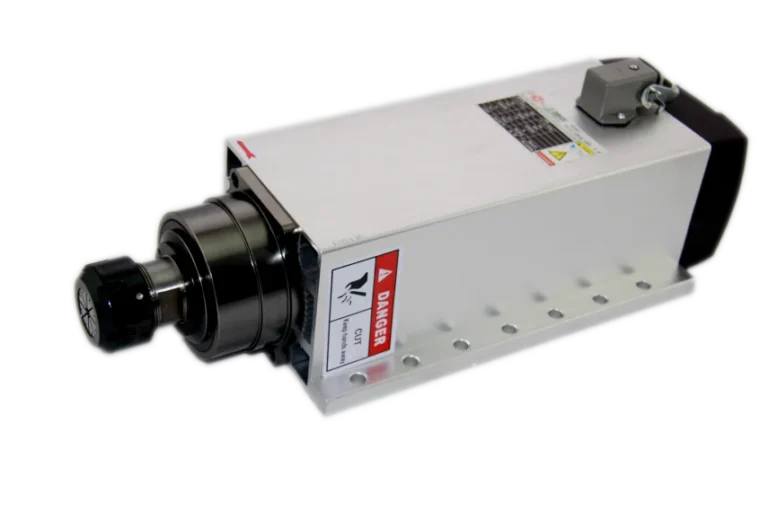
**Spindle motors** are specialized electric motors typically designed for high-speed precision machining operations, often ranging from 5,000 RPM to 80,000 RPM or more. These motors are generally **AC asynchronous motors** or **synchronous motors**, controlled by high-performance **Variable Frequency Drives (VFDs)**. VFDs provide variable frequency and voltage AC current to the motor windings using **Pulse Width Modulation (PWM)** techniques to precisely adjust the motor’s speed and torque. This complex control mechanism enables the spindle motor to operate stably and efficiently over a wide speed range.
Key components of a spindle motor include the **stator** (stationary part, containing windings), **rotor** (rotating part, typically squirrel cage or permanent magnet), high-precision **bearings** (often ceramic hybrid or angular contact ball bearings), a **cooling system** (air, liquid, or hybrid), and an **encoder** or **resolver** that feeds back the motor’s position and speed to the VFD. Each of these components directly impacts the motor’s overall performance and acoustic output. High-speed operations create significant mechanical and thermal stress on these components, which can lead to wear and failure over time. Bearings, in particular, are among the most affected components due to friction and load at high RPMs. Electrically, the **PWM waveforms** generated by the VFD and their effect on the motor windings can be a primary source of magnetic noise and vibration. Furthermore, the motor’s own **magnetic circuit** and the **quality of its windings** directly influence the level of electrical hum. Technical data such as the motor’s nominal power, maximum speed, torque capacity, and cooling type provide important clues about the system’s overall durability and potential failure modes.
| Parameter | Value/Description |
|---|---|
| Motor Type | Typically AC Asynchronous or Synchronous Servo Motor |
| Speed Range (RPM) | 5,000 – 80,000+ RPM (Varies by Application) |
| Power Range | 1 kW – 50 kW and above |
| Cooling System | Air-Cooled, Liquid-Cooled, or Hybrid |
| Bearing Type | Ceramic Hybrid, Angular Contact Ball Bearings (Typically Grease or Oil Mist Lubrication) |
| Control Method | PWM Control with VFD (Variable Frequency Drive) |
| Supply Voltage | 200-240V, 380-480V AC (3-Phase) |
| Application Areas | CNC Milling, Lathes, Grinding Machines, PCB Drilling, High-Speed Machining |

Spindle Motor Humming Noise: Mechanical and Electrical Causes – Field Observations
- **Sound Characteristics and Source:** Carefully observe the frequency, intensity, and operating conditions (idle, under load, specific RPM) under which the humming noise occurs. A high-frequency, whistle-like sound often relates to **bearing wear** or the VFD’s **PWM carrier frequency**. A low-frequency, thumping sound may indicate **imbalance**, **loose mounting**, or **magnetic asymmetry**. Pinpointing the section of the motor where the sound originates (front, rear, middle) is critical for initial diagnosis. A listening device, similar to a stethoscope, can be highly beneficial for localizing the sound.
- **Vibration Analysis and Spectral Decomposition:** One of the most objective and scientific methods for evaluating humming noise is **vibration analysis**. Data is collected from different points on the motor using vibration sensors (accelerometers). This data is then subjected to spectral analysis using **FFT (Fast Fourier Transform)** to determine at which frequencies the vibration is concentrated. Bearing damage shows peaks at specific frequencies (BPFO, BPFI, FTF, BSF), while imbalance causes peaks at the motor’s rotational frequency (1X RPM) or its multiples (2X RPM). Electrical problems typically manifest at the mains frequency (50/60 Hz) and its harmonics, or at the VFD’s switching frequency.
- **Thermal Observation and Infrared Thermography:** Overheating is a common symptom of both mechanical (bearing friction) and electrical (winding losses) problems. The surface temperatures of the motor, especially bearing housings and stator winding areas, should be regularly checked using infrared thermal cameras. Localized hot spots can indicate a potential point of failure. Excessive friction in bearings, short circuits in windings, or insulation breakdown can lead to abnormal temperature increases in specific areas of the motor.
- **Electrical Parameter Measurements and Harmonic Analysis:** Current and voltage waveforms at the VFD output and motor input should be examined with an oscilloscope. Specifically, current and voltage harmonics should be measured using **harmonic analyzers**. High levels of **Total Harmonic Distortion (THD)** can lead to additional losses in motor windings, overheating, and magnetic noise. Imbalances in current and voltage between phases should also be checked. Low or high current in one phase can indicate winding insulation problems or a fault in the VFD output stage. Additionally, the motor’s **insulation resistance** (megger test) and **winding resistance** (multimeter) values should be periodically checked.
- **Mechanical Checks and Visual Inspection:** The tightness of the motor’s mounting bolts and the condition of the base plate or flange connections should be checked. Loose mounting points can increase motor vibration and cause humming noise. Shaft runout should be checked with precision measuring instruments; high runout can indicate imbalance or shaft bending. Bearings can be checked for abnormal sounds (clicking, squeaking) by turning them by hand or listening. Additionally, the motor’s outer surface should be inspected for cracks, deformations, or damage to the cooling fan.
- **VFD Settings and Motor Parameter Control:** Ensure that the VFD’s motor parameters (nominal current, voltage, frequency, RPM, number of poles, etc.) precisely match the motor’s nameplate values. Incorrectly entered parameters can cause the motor to operate inefficiently, overheat, and produce abnormal noises. In particular, the VFD’s **PWM carrier frequency** setting can directly affect high-frequency humming noise. Changing this frequency (usually increasing it) can move the sound outside the human audible range, but this can lead to increased switching losses in the VFD, so it should be done carefully.

Spindle Motor Humming Noise: Mechanical and Electrical Causes – Common Problems and Solutions
A humming noise in spindle motors is rarely due to a single cause but often arises from a combination of factors. In this section, we will detail the most common failure scenarios and their respective solutions:
Failure Scenario 1: High-Frequency, Continuous, and Fine Hum/Whistle Sound
This type of sound typically indicates **bearing problems** or the **VFD’s switching frequency**.
- **Mechanical Cause: Bearing Wear or Damage.** Precision bearings used in high-speed spindle motors can wear out over time, their lubrication can degrade, or they can become contaminated. This increases friction and produces a high-frequency hum or whine. Even ceramic ball bearings are not entirely immune to wear.
- **Solution:** Detailed inspection and replacement of bearings are essential. During bearing replacement, it is critical to use bearings of the correct type and tolerance, ensure assembly in a clean environment, and apply the correct amount and type of grease or lubrication method (e.g., oil mist lubrication) specified by the manufacturer. Correct adjustment of bearing preload also affects life and performance.
- **Electrical Cause: VFD PWM Carrier Frequency.** VFDs use high-frequency pulses to control motor speed. The carrier frequency of these pulses (typically 2 kHz – 16 kHz) can cause magnetic noise in the motor windings, which may manifest as an audible hum.
- **Solution:** Increasing the VFD’s carrier frequency can move the sound beyond the human hearing threshold. However, this can increase the VFD’s switching losses and lead to increased VFD heating. Therefore, adjustments should be made carefully, following the VFD manufacturer’s recommendations and considering thermal loads. If necessary, output reactors or sine filters can be used to smooth the voltage waveform supplied to the motor windings.
Failure Scenario 2: Low-Frequency, Vibrating, or Thumping Hum
These types of sounds typically result from **imbalance**, **loose mechanical connections**, or **magnetic asymmetries**.
- **Mechanical Cause: Rotor Imbalance or Shaft Bending.** Imbalance in the motor rotor, mounted tool, or workpiece can cause the motor to vibrate abnormally and thump at certain speeds. Shaft bending can exhibit similar symptoms.
- **Solution:** Dynamic balancing of the rotor or tool/workpiece is required. If shaft bending is detected, the shaft may need to be replaced or straightened in a professional repair shop. These operations require specialized balancing machines and precision measuring devices.
- **Mechanical Cause: Loose Mounting or Structural Resonance.** Loosening of the motor’s mounting bolts or the machine structure on which the motor is mounted resonating at certain frequencies can lead to humming and vibration.
- **Solution:** Check the tightness of the motor and all connecting elements (base, flange, coupling, etc.) and tighten if necessary. If resonance is detected in the machine structure, vibration damping elements (rubber mounts, special mounting pads) can be used, or the rigidity of the machine structure can be increased.
- **Electrical Cause: Magnetic Imbalance or Winding Problems.** Irregularity in the air gap between the stator and rotor (eccentricity), short-circuited rotor bars (in squirrel cage motors), or phase imbalance in the windings can lead to irregular magnetic forces and consequently a vibrating hum.
- **Solution:** The motor’s magnetic circuit should be thoroughly inspected. The air gap between the stator and rotor should be measured, and eccentricity should be corrected (typically by recentering the motor or replacing bearings). Winding tests (insulation, resistance, inductance) should be performed to determine if there is phase imbalance or a short circuit, and the motor windings should be repaired or the motor replaced.
Failure Scenario 3: Intermittent, Irregular, or Clicking Hum
These types of sounds usually indicate **advanced bearing damage**, **loose windings**, or **external contact**.
- **Mechanical Cause: Advanced Bearing Damage.** Excessive wear in bearings, fragmentation of balls or cage, leads to irregular and clicking sounds. This can cause sudden motor stoppage and significant damage.
- **Solution:** The motor must be immediately stopped, and the bearings urgently replaced. A motor operating with this type of sound can become irreparable in a short time.
- **Mechanical/Electrical Cause: Loose Stator Windings or Rotor Laminations.** Over time, loose stator windings or rotor laminations inside the motor can vibrate during operation, producing a metallic clicking or irregular humming sound.
- **Solution:** The motor should be disassembled, and internal components thoroughly inspected. Loose windings can be secured with vacuum impregnation (VPI) or epoxy application. If rotor laminations are loose, the rotor may need to be replaced.
Failure Scenario 4: Humming Noise Increasing Under Load
This situation is typically associated with **overloading**, **magnetic saturation**, or a **weak power supply**.
- **Electrical Cause: Overloading or Magnetic Saturation.** Operating the motor under a load greater than its nominal torque can lead to increased winding currents, magnetic field saturation, and consequently increased magnetic noise and hum.
- **Solution:** Review machining parameters (depth of cut, feed rate) to reduce the load on the motor. Ensure the motor operates within its nominal power and torque capacity. If necessary, consider replacing it with a higher-power motor.
- **Electrical Cause: Weak Power Supply or Voltage Drop.** Grid voltage fluctuations, voltage drops, or phase imbalances can negatively affect the motor’s magnetic field, causing humming noise.
- **Solution:** Analyze power supply quality, checking voltage levels and phase imbalances. If necessary, implement grid improvements (regulators, capacitor banks) or check the VFD’s input filters and DC bus capacities.
Spindle Motor Humming Noise: Mechanical and Electrical Causes – Conclusion and Expert Advice
A “humming” noise from spindle motors is a critical warning sign that should never be ignored in an industrial automation environment. This sound can represent a wide range of issues, from a simple adjustment problem to a potentially catastrophic mechanical or electrical failure. As detailed in this article, accurately identifying the source of the hum requires a systematic and comprehensive approach that covers both **mechanical** (bearing wear, imbalance, loose mounting) and **electrical** (VFD carrier frequency, harmonics, winding problems, magnetic imbalance) factors.
As expert technicians and engineers, our field experience has shown us that **proactive maintenance** and **early diagnosis** are indispensable in preventing and resolving such failures. Regular **vibration analysis**, **thermal imaging**, **electrical parameter measurements**, and **visual inspections** allow you to detect potential problems before they become more severe. It should be remembered that a spindle motor failure is not only limited to the cost of the motor itself but can also lead to much greater costs such as production line downtime, delays in delivery times, and loss of reputation.
Therefore, it is vital for businesses to continuously train their maintenance teams in this regard, invest in the necessary test and measurement equipment, and strictly adhere to the technical recommendations of motor manufacturers or VFD suppliers. Every humming sound has its unique story, and being able to read this story correctly plays a key role in extending the life of your equipment, increasing operational efficiency, and preventing unexpected failures. A successful maintenance strategy in complex industrial systems should focus on preventing failures rather than just fixing them. When you hear a humming sound from your spindle motor, by following the steps in this guide, you can get to the root of the problem and ensure your systems continue to operate seamlessly and efficiently. Remember, a maintenance team equipped with the right knowledge and tools can overcome any challenge.
FAQ
What are the primary causes of a humming noise in a spindle motor?
A humming noise in a spindle motor can stem from mechanical issues like worn bearings, rotor imbalance, or loose mounting, or electrical problems such as VFD carrier frequency issues, harmonic distortions, or winding faults. Early diagnosis is crucial to prevent severe damage.
How can I effectively diagnose the source of a spindle motor humming noise?
To diagnose the source, observe the sound's characteristics (frequency, intensity, operating conditions). Perform vibration analysis with FFT, thermal imaging with infrared cameras, and electrical parameter measurements including harmonic analysis. Also, conduct thorough mechanical and visual inspections, and verify VFD settings against motor parameters.
What are the common solutions for different types of humming noises in spindle motors?
For high-frequency hums, check and replace worn bearings, ensuring proper lubrication and preload. For VFD-related hums, adjust the carrier frequency (with caution to avoid overheating) or consider output reactors/sine filters. For low-frequency hums, perform dynamic balancing on the rotor/tool, tighten loose mounts, and inspect for magnetic imbalances or winding issues.
What are the risks of ignoring a humming noise from a spindle motor?
Ignoring a humming noise can lead to progressive damage, resulting in complete motor failure, costly repairs, extended production downtime, and potential damage to other machine components. Proactive maintenance is essential to avoid these significant operational and financial impacts.
How can I prevent humming noises in my industrial CNC spindle motor?
Regular preventive maintenance, including routine vibration analysis, thermal inspections, electrical checks, and visual inspections, is key. Ensure proper lubrication, correct VFD parameter settings, and secure mechanical connections. Timely replacement of worn components like bearings is also vital.