















































































Machine Frame: Weight vs. Rigidity – What’s More Important?

📑 Table of contents (Click to open)
In industrial automation, the machine frame is the backbone of performance. While weight impacts cost and handling, rigidity is the key to precision, repeatability, and machine longevity. This article explores why rigidity often takes precedence over weight in demanding applications.
Practical notes for CNC router, automation and industrial motion systems.
The machine frame is the skeletal structure of any industrial automation system, supporting all fixed and moving components. Engineers designing these frames constantly balance two critical parameters: weight and rigidity. While the optimal balance depends on the machine’s specific application and performance requirements, rigidity is generally the more critical factor for industrial automation and precision manufacturing.
Rigidity (Stiffness) refers to a material’s or structure’s resistance to deformation under external forces. A highly rigid frame experiences minimal deflection when subjected to static and dynamic loads, such as cutting forces, acceleration/deceleration forces, and vibrations. This directly impacts the machine’s precision, repeatability, and overall stability. For instance, in a CNC machining center or a robotic assembly line requiring sub-micron accuracy, even the slightest frame flex can lead to unacceptable deviations in the final product.
Weight, on the other hand, is the measure of a structure’s mass. The weight of a machine frame influences factors like transportation, installation, energy consumption, and the dynamic response of the machine (especially if the frame itself is moving). A lighter frame can reduce shipping and installation costs and require less robust flooring. However, if the frame is stationary (like a fixed gantry CNC machine), excessive lightness can compromise stability and vibration damping. Conversely, in systems with moving axes, the weight of the moving components directly affects acceleration, deceleration, and cycle times.
The Importance of Rigidity and Technical Dimensions
- Precision and Repeatability: A rigid frame minimizes deformation under load, ensuring that the tool or workpiece position is maintained with high accuracy. This is vital for CNC machines, laser cutters, metrology systems, and robotic assembly cells where deviations can cause processing errors or assembly failures.
- Vibration Damping: Industrial machines generate vibrations during operation. A rigid frame effectively dampens these vibrations or shifts their resonant frequencies away from the operating range. Uncontrolled vibrations degrade surface finish, reduce tool life, cause component wear, and can lead to sensor inaccuracies. Materials like cast iron or polymer concrete are chosen for their excellent damping capabilities.
- Dynamic Performance: In high-speed, dynamic applications, rapid acceleration and deceleration of machine axes impose significant loads on the frame. A rigid frame remains stable under these loads, minimizing the risk of resonance, which can cause structural damage.
- Material Science and Geometric Design: Rigidity is influenced not only by material properties (like Young’s Modulus) but also by the frame’s geometric design. Features such as large cross-sections, closed profiles, cross-bracing, and gussets significantly enhance stiffness using the same material. Materials like steel, cast iron, aluminum alloys, granite, and composites offer varying stiffness-to-weight ratios.
The Role of Weight and Technical Dimensions
- Inertia and Dynamic Response: For moving frames or frames with moving components, weight is critical. Lighter moving masses mean lower inertia, enabling faster acceleration, deceleration, and positioning. This reduces cycle times and boosts productivity. For stationary frames, added weight (e.g., a heavy base) can enhance overall stability and resistance to external vibrations.
- Cost: Material, transportation, and installation costs are directly related to frame weight. Heavier materials often incur higher expenses and require more substantial handling equipment and foundational support.
- Floor Load: Heavy machines impose significant loads on factory floors, potentially requiring reinforced foundations. Lighter frames can reduce these infrastructure costs.
- Energy Efficiency: In systems with moving platforms or robotic arms, a lighter frame requires less energy to achieve the same performance, leading to operational cost savings.
| Parameter | Description |
|---|---|
| Young’s Modulus (E) | Measures material’s elastic stiffness. Higher E means less deflection (GPa). |
| Material Density (ρ) | Mass per unit volume. Directly affects weight (g/cm³). |
| Vibration Damping Coefficient | Material’s ability to convert vibration energy into heat. Higher values mean better damping (dimensionless). |
| Accuracy/Repeatability Impact | Rigidity directly impacts precise positioning and process repeatability. Weight indirectly affects moving systems. |
| Dynamic Load Response | Rigidity minimizes frame deformation during rapid acceleration/deceleration. Weight determines inertia. |
| Cost Impact | Increased rigidity often raises material and manufacturing costs. Weight affects transport and foundation costs. |
| Thermal Stability | Material’s dimensional stability against temperature changes. Important for precision machines alongside rigidity. |

Key Considerations in Practice
- Analyze Application Requirements: Clearly define the required precision, operating speeds, and load conditions. Rigidity is paramount for high-precision and high-speed applications like micro-machining or optical assembly.
- Material Selection and Optimization: Choose frame materials based on stiffness-to-weight ratio, cost, machinability, and damping properties. For example, a steel frame offers a good strength-to-weight ratio, while cast iron provides excellent damping.
- Geometric Design: Optimize the frame’s geometry using FEA (Finite Element Analysis) to maximize stiffness through features like thicker walls, internal ribbing, and optimized cross-sections.
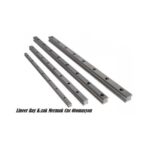
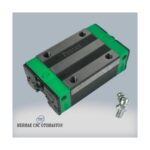
- Component Integration: Ensure that the mounting surfaces for critical components like linear guide rail systems, spindle motor mounts, and servo drive actuators are perfectly flat and rigid to maintain alignment and performance.
- Balancing Act: While rigidity is often prioritized, don’t overlook weight’s impact on dynamic performance and operational costs, especially for moving axes. A well-designed frame balances these factors effectively.
Conclusion
For most industrial CNC router machines and automation systems where precision, accuracy, and longevity are key, rigidity is the more critical design parameter for the machine frame. While weight considerations are important for factors like cost, handling, and dynamic response in moving systems, they should not compromise the fundamental structural integrity required for high-performance operation. A robust, rigid frame ensures that the machine’s motion control system can operate at its full potential, delivering consistent quality and maximizing throughput.
Ready to optimize your production with a high-performance CNC router machine?
Contact us on WhatsApp to discuss your specific needs and get a personalized quote!
Related product categories: Linear Guides, Bearings, and Housings · Mechanical Components · Sigma Profiles