





































































Is Aluminum Sigma Profile Strong Enough for Machine Frames?

📑 Table of contents (Click to open)
Aluminum sigma profiles offer a lightweight, modular, and corrosion-resistant solution for industrial machine frames. While not as rigid as steel, their strength is sufficient for many applications when properly engineered. Discover their benefits for CNC routers and automation systems.
Practical notes for CNC router, automation and industrial motion systems.
In the industrial automation sector, the design and construction of machine frames are critical for the overall performance, reliability, and lifespan of a system. While steel structures have traditionally dominated this field, aluminum sigma profiles are increasingly favored for their unique advantages. A common question arises: “Is aluminum sigma profile strong enough for machine frames?” The answer largely depends on the application’s requirements, load conditions, and design specifics.
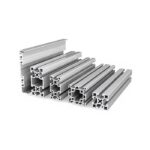
Aluminum sigma profiles are modular structural elements produced via extrusion, typically from 6063 T5 or T6 alloys. Their defining feature is the integrated T-slot system, which allows for easy and flexible connection of profiles using specialized fasteners. This modularity empowers designers and engineers to create highly adaptable, rapidly assembled, and easily modified or expanded chassis solutions. Strength, in this context, refers to a material’s or structure’s capacity to withstand specific loads, deformations, and environmental influences. For machine frames, this encompasses resistance to static loads, dynamic loads, vibration damping, torsional resistance, and durability in various operating conditions.
It’s true that aluminum has a lower modulus of elasticity (Young’s modulus) and yield strength compared to steel. This means an aluminum profile of the same cross-sectional area will flex or deform more under the same load than a steel one. However, this does not render aluminum sigma profiles unsuitable for machine frames. On the contrary, with the correct profile series selection, appropriate sizing, smart connection details, and the use of reinforcement where necessary, aluminum sigma profiles can readily meet the strength requirements of many industrial automation applications. They are widely and successfully used in light-load handling systems, safety guarding, test and assembly stations, robot bases, and conveyor systems.
Operating Principles and Technical Data
The strength of aluminum sigma profiles stems not only from the material’s inherent properties but also from sound design principles and assembly techniques. The T-slot system facilitates straightforward bolted connections, forming a robust framework without the need for welding or complex machining. This modularity enables rapid prototyping and manufacturing.
Technical Data and Engineering Approach:
- Material Properties: The commonly used 6063 T5 or T6 aluminum alloy offers an excellent strength-to-weight ratio, superior corrosion resistance, and good machinability. T5 temper is achieved through air cooling and aging after extrusion, while T6 involves quenching and artificial aging for higher strength.
- Geometric Properties: Each sigma profile has specific cross-sectional area, moment of inertia (Ix, Iy), and section modulus (Wx, Wy) values. These directly influence the profile’s resistance to bending and torsion. Engineers utilize these values to select profiles with the minimum moment of inertia required to support anticipated static and dynamic loads.
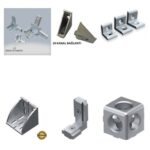
- Load-Bearing Capacity: The overall load-bearing capacity of a frame depends on the profile dimensions (e.g., 20×20, 30×30, 40×40, 45×45, 80×80 mm series), wall thickness, type and number of fasteners used, and the frame’s geometric configuration (support points, spans).
- Vibration Damping: Aluminum has a lower density and different internal damping characteristics than steel. For systems with high-speed or high-acceleration moving parts, conducting vibration analysis and potentially incorporating vibration isolators or specialized damping profiles is crucial.
- Corrosion Resistance: Aluminum naturally forms a passive oxide layer, providing excellent corrosion resistance. This makes it advantageous over steel in humid environments or where chemical fumes are present. However, direct contact with dissimilar metals should be avoided to prevent galvanic corrosion.
- Modularity and Flexibility: The T-slot system allows for easy mounting and adjustment of components such as motors, sensors, control panels, and pneumatic cylinders. This is a significant benefit for applications requiring rapid modifications during prototyping, testing, or serial production.
- Lightweight: Aluminum’s density, approximately one-third that of steel, significantly reduces the overall weight of the machine frame. This lowers shipping costs, improves ergonomics, and enhances energy efficiency, particularly for mobile platforms or robotic applications.
In summary, the strength of aluminum sigma profiles can be optimized for specific applications through careful engineering. Tools like Finite Element Analysis (FEA) can simulate frame performance under expected loads, ensuring the required level of structural integrity.
| Parameter | Value/Description |
|---|---|
| Material Alloy | 6063 T5 or T6 (Al-Mg-Si alloy) |
| Density | Approx. 2.7 g/cm³ (approx. 1/3 of steel) |
| Tensile Strength (T6) | Min. 215 MPa |
| Yield Strength (T6) | Min. 170 MPa |
| Modulus of Elasticity (E) | Approx. 69 GPa (approx. 1/3 of steel) |
| Corrosion Resistance | High (due to natural oxide layer) |
| Surface Treatment | Typically anodized (anodic oxidation) coating |
| Modularity | High (easy assembly/disassembly with T-slot system) |
| Thermal Expansion Coefficient | Approx. 23.1 µm/(m·°C) (Higher than steel, thermal design is important) |
Key Considerations in Practice
- Load Analysis and Profile Selection:
The first step in any machine frame design is accurately determining the static and dynamic loads the frame will bear (machine weight, acceleration/deceleration forces of moving parts, external impacts). Based on these loads, appropriate aluminum sigma profiles of the correct size and series (light, standard, heavy) with the required moment of inertia and section modulus must be selected. Overloading or inadequate profile selection can lead to eventual deformation, excessive vibration, or structural failure. Engineering software and calculation tools are vital at this stage.
- Fasteners and Assembly Quality:
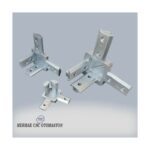
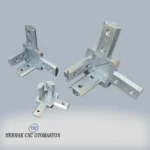
The structural integrity of aluminum sigma profile frames heavily relies on the quality of fasteners and proper assembly. High-quality T-nuts, corner brackets, bolts, and other accessories are essential. Tightening bolts to recommended torque values prevents loosening and maintains the structure’s integrity. Overtightening can damage the profiles, while under-tightening leads to connection instability.
- Dynamic Performance and Vibration:
For applications involving high-speed motion, such as CNC router machines with powerful spindle motors and servo drives, understanding the dynamic behavior of the frame is crucial. Aluminum’s lower stiffness compared to steel means that resonance frequencies might be lower. Careful design, including the use of appropriate linear guide rails and motion control systems, can mitigate vibration. If significant vibration is anticipated, consider adding damping elements or using heavier profile series.
- Environmental Factors:
While aluminum offers excellent corrosion resistance, consider the specific operating environment. In highly corrosive atmospheres, additional protective coatings or anodizing may be necessary. Ensure compatibility of all materials used, especially if dissimilar metals are in contact, to prevent galvanic corrosion.
- Cost-Effectiveness:
Aluminum sigma profiles often present a cost-effective solution when factoring in the entire lifecycle. Their ease of assembly reduces labor costs, modularity allows for quick modifications, and their lightweight nature can reduce shipping expenses. While the initial material cost might be higher than some steel options, the overall project cost and time savings can be substantial.
In conclusion, aluminum sigma profiles are indeed a robust and highly viable option for industrial machine frames, including those for CNC router machines, automation systems, and assembly lines. Their strength is sufficient when designs are based on sound engineering principles, accurate load calculations, and quality assembly. The combination of lightweight, modularity, corrosion resistance, and ease of customization makes them an excellent choice for modern industrial applications.
Are you designing a new machine frame or looking to optimize an existing one? Explore our range of Sigma Profiles and other automation components. Request a quote on WhatsApp to discuss your project requirements with our experts!
Related product categories: Electronics · Combination Packages