No products in the cart.
Which CNC Control Card is Right for You? Mach3 vs. LNC vs. DSP

Contents
- Introduction and Technical Analysis At the heart of industrial automation, CNC (Computer Numerical Control) systems are an indispensable part of modern manufacturing processes. In production lines requiring precision, speed, and repeatability, selecting the right CNC control card is critical for project success and operational efficiency. This detailed field guide and technical article offers a comprehensive analysis for industry professionals, engineers, and decision-makers to make an informed choice between widely available Mach3-based systems, LNC (Industrial Panel Type Control Cards), and DSP (Digital Signal Processor)-based control cards. Each control architecture has its unique advantages, disadvantages, technical specifications, and application areas. The selection process is not limited to initial investment cost but also requires considering the system’s ease of integration, maintenance requirements, operator-friendly interface, long-term reliability, and impact on production quality. In the complex world of industrial automation, the right control card unlocks the full potential of your machines, while the wrong choice can lead to significant efficiency losses and operational difficulties. This article aims to delve into the working principles of each control type, providing practical insights and expert advice based on real-world scenarios in the field. Working Principle and Technical Data
- Mach3 Based Systems
- LNC (Industrial Panel Type Control Cards)
- DSP (Digital Signal Processor) Based Control Cards
- Considerations in the Field
- Common Issues and Solutions
- Mach3 Based System Issues and Solutions
- LNC (Industrial Panel Type) Control Card Issues and Solutions
- DSP (Digital Signal Processor) Based Control Card Issues and Solutions
- Expert Advice
- FAQ
Introduction and Technical Analysis
At the heart of industrial automation, CNC (Computer Numerical Control) systems are an indispensable part of modern manufacturing processes. In production lines requiring precision, speed, and repeatability, selecting the right CNC control card is critical for project success and operational efficiency. This detailed field guide and technical article offers a comprehensive analysis for industry professionals, engineers, and decision-makers to make an informed choice between widely available Mach3-based systems, LNC (Industrial Panel Type Control Cards), and DSP (Digital Signal Processor)-based control cards. Each control architecture has its unique advantages, disadvantages, technical specifications, and application areas. The selection process is not limited to initial investment cost but also requires considering the system’s ease of integration, maintenance requirements, operator-friendly interface, long-term reliability, and impact on production quality. In the complex world of industrial automation, the right control card unlocks the full potential of your machines, while the wrong choice can lead to significant efficiency losses and operational difficulties. This article aims to delve into the working principles of each control type, providing practical insights and expert advice based on real-world scenarios in the field.
Working Principle and Technical Data
CNC control cards are fundamental components that convert G-code commands prepared in a computer environment into understandable electrical signals for the machine’s motors (stepper motors or servo motors) and synchronize the machine’s movement. This process is vital for the precise positioning of axes, tool path tracking, and the overall accuracy of machining operations. The three main categories—Mach3, LNC, and DSP-based systems—perform this core task with different architectures and approaches.
Mach3 Based Systems
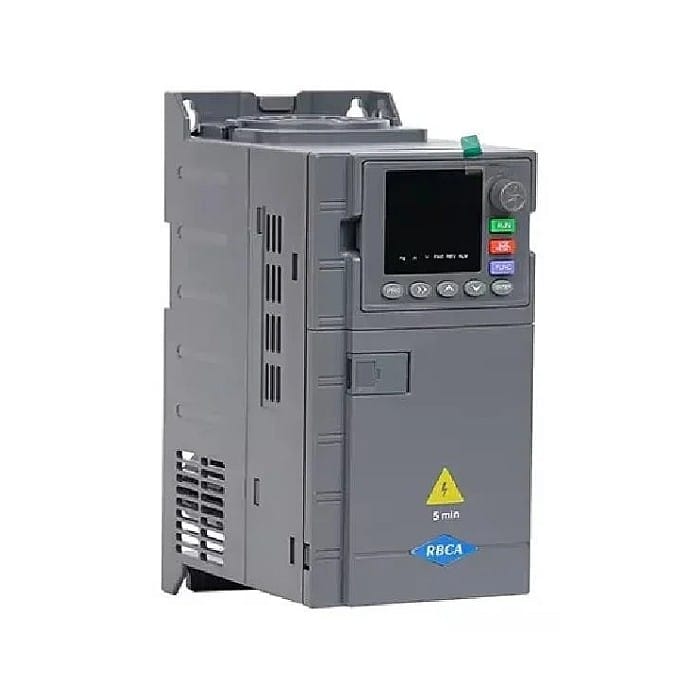
Mach3 is a PC-based software control system. Traditionally, it operates by sending pulse (step) and direction signals to motor drivers via a desktop computer’s parallel port. However, today, it is used in conjunction with Ethernet or USB-based external motion control cards (e.g., SmoothStepper, UC300, MKS Gen L) that offer more reliable and high-performance solutions. These external cards eliminate operating system-related latency, providing real-time pulse generation and higher pulse frequencies. Mach3 features a user-friendly interface and offers a wide range of customization. Its functionality can be enhanced with macro programming, automatic tool changing, and various plugins. Advantages include low initial cost, a large user community, and flexibility. Disadvantages, especially when using a parallel port, include potential issues arising from the non-real-time nature of the computer’s operating system (typically Windows), sensitivity to electrical noise, and durability problems of the PC in industrial environments. While external motion control cards address most of these drawbacks, a dependency on a computer still exists.

LNC (Industrial Panel Type Control Cards)
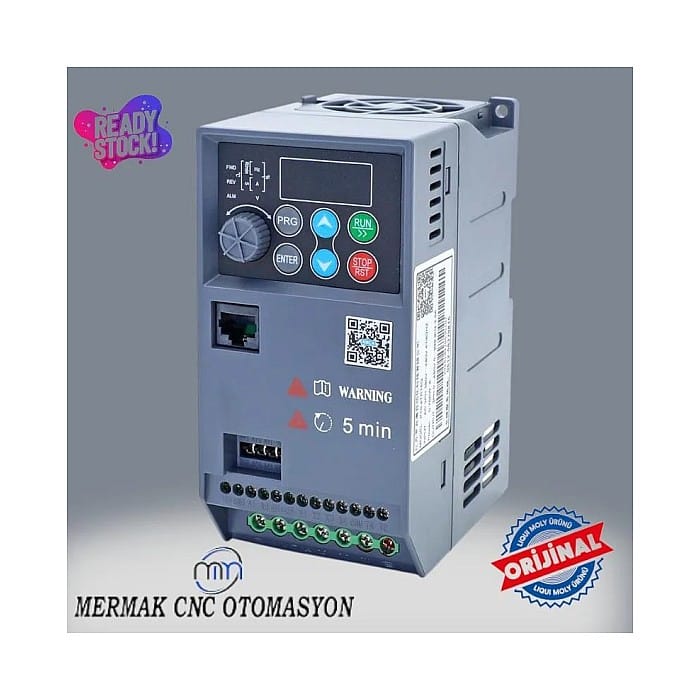
While LNC is often known as a brand name, in this context, it represents integrated panel-type industrial CNC controllers. Such systems are standalone units that run on specially designed embedded hardware and typically have their own operating systems. They are integrated with an HMI (Human-Machine Interface) panel, allowing the operator to control the machine directly from the panel, load G-codes, and monitor machining processes. LNC-type controllers offer high reliability, stability, and EMI (electromagnetic interference) resistance. They typically feature closed-loop control capabilities, meaning motor positions are continuously monitored and corrected via feedback sensors (encoders). This ensures higher precision and machining quality. Their modular design allows for easy integration and expandability. Programming is usually done through their proprietary interfaces or a specific industry standard (e.g., FANUC or Siemens compatible G-code). Thanks to high-performance processors and optimized algorithms, they are ideal for complex 3D machining and high-speed cutting applications. Initial costs may be higher than Mach3, but long-term operational reliability and low maintenance requirements can offset this cost.
DSP (Digital Signal Processor) Based Control Cards
DSP-based control cards, as the name suggests, are specialized hardware that uses Digital Signal Processors to execute motion control algorithms and G-code interpretation processes. These cards usually come in the form of a handheld pendant and connect directly to the machine, without dependency on a computer. DSPs, thanks to their high-speed mathematical operations and real-time data processing capabilities, provide precise and continuous pulse generation, offering excellent motion control performance. They are particularly preferred for applications such as engraving, relief carving, and complex 3D surface machining. They offer higher pulse frequencies and more stable operation compared to Mach3. Compared to LNC-type systems, they may have a simpler interface, and some advanced automation or network integration features might be limited. G-code files are typically loaded onto the controller via a USB stick. Advantages include compact size, portability, low EMI sensitivity, and excellent real-time performance. Disadvantages may include a generally limited HMI (small screen, keypad), fewer flexible software options, and in some cases, more complex debugging processes.
| Parameter | Mach3 (with External Control Card) | LNC (Industrial Panel Type) | DSP (Handheld Pendant Type) |
|---|---|---|---|
| Control Type | PC-Based Software + External Hardware | Embedded Hardware + Integrated HMI | Embedded Hardware + Handheld Pendant |
| Operating System | Windows (on Host PC) | Proprietary Embedded OS | Proprietary Embedded OS |
| Real-Time Capability | High (thanks to external card) | Very High (Hardware-based) | Very High (Hardware-based) |
| Max. Number of Axes | 3-6 Axes (varies by card) | 3-8 Axes (varies by model) | 3-5 Axes (varies by model) |
| Max. Pulse Frequency | 100 kHz – 2 MHz (varies by card) | 200 kHz – 4 MHz (varies by model) | 100 kHz – 2 MHz (varies by model) |
| HMI Integration | PC Monitor and Keyboard/Mouse | Integrated Touch Panel | Small LCD Screen and Keypad |
| Programming Language | Standard G-code, M-code, Macros | Standard G-code, M-code, Special Functions | Standard G-code, M-code |
| Cost Range | Low – Medium | Medium – High | Medium |
| Typical Application Areas | Hobby, Prototyping, Small Workshops | Industrial Production, High-Volume Machining | Wood/Stone Processing, Engraving, Advertising |

Considerations in the Field
- Environmental Conditions and Durability: Industrial automation environments can often be dusty, humid, and subject to fluctuating temperatures. Commercial PCs used in Mach3-based systems are more sensitive to these conditions; therefore, industrial-grade PC cases, filtering, and appropriate cooling solutions are critical. LNC and DSP-based controllers are generally manufactured to more robust industrial standards, making them more resistant to such environmental factors. Electromagnetic interference (EMI) is also a significant factor; good grounding, shielded cables, and ferrite beads play a vital role in reducing interference-induced errors for all systems.
- Maintenance and Support: When selecting a control card, the ease of technical support, spare parts availability, and software updates offered by the manufacturer or distributor should be considered. While Mach3 has extensive community support, official support and warranties depend on external card manufacturers. Industrial solutions like LNC and DSP typically have a more structured technical support and service network, which means faster intervention and minimal production loss in case of malfunctions. For long-term operations, maintenance costs and ease throughout a system’s lifespan can make a significant difference.
- Ease of Integration and Expandability: Compatibility with existing automation systems, sensors, tool changers, automatic part loaders, or other peripherals can be decisive in choosing a control card. LNC-type controllers generally offer easier integration with richer I/O (input/output) options and standard industrial communication protocols (Modbus, Profibus, etc.). While Mach3 can provide certain integrations with appropriate external cards and macro programming, complexity can increase. The potential for future expansion or adding additional axes should also be evaluated; some controllers offer easier upgrade possibilities due to their modular structures.
- Operator Training and Ease of Use: The control card’s interface directly affects how efficiently operators can use the machine. Mach3’s graphical interface and Windows-based structure are generally intuitive for those accustomed to using computers. LNC-type panel controllers typically feature touch-screen and visually rich interfaces optimized for industrial use, which simplifies operator training. DSP handheld pendants, however, may have a more limited visual interface, and getting used to keypad navigation might take some time. Operators’ existing skill sets and training costs are important factors in the selection process.
- Safety Protocols: How emergency stops (E-stop), limit switches, door interlocks, and other safety functions are integrated into the control card and how reliably they operate is of vital importance. Industrial-grade controllers (LNC and some DSPs) typically have safety inputs compliant with safety standards like ISO 13849 and internal safety logic. Safety integration in Mach3-based systems depends on the external card’s features and the system designer’s implementation, requiring extra attention.
Common Issues and Solutions
Each type of CNC control card has its unique advantages, as well as potential problems that may arise during operation. Knowing these issues and their solutions is crucial for minimizing production downtime and optimizing system performance.
Mach3 Based System Issues and Solutions
- PC Freezes and Real-Time Issues: Especially in older Mach3 setups using a parallel port, machine pauses, axis shifts, or delays can occur due to the non-real-time nature of the Windows operating system.
- Solution: Use Ethernet or USB-based external motion control cards instead of a parallel port. These cards take over the pulse generation task from the PC, ensuring real-time performance. Dedicate the computer running Mach3 solely for CNC use, disconnect internet access, disable automatic updates, and disable unnecessary background programs. Using an industrial-grade PC can also increase stability.
- EMI-Induced Errors: Electromagnetic interference, especially noise from motor drivers and the spindle motor, can disrupt signal integrity, leading to erroneous movements or axis shifts.
- Solution: Use shielded cables for all wiring (especially signal cables) and route them separately from motor power cables. Ensure proper grounding of the entire system and machine chassis. Using ferrite beads and signal isolators can also be beneficial.
- Low Pulse Frequency Limits: For some applications, the maximum pulse frequency achievable by Mach3 (especially with a parallel port) may be insufficient, causing problems in high-speed and precise machining.
- Solution: Use high-performance external motion control cards that support high pulse frequencies. These cards can often reach frequencies of 1 MHz or higher.
LNC (Industrial Panel Type) Control Card Issues and Solutions
- Proprietary Software Limitations: LNC-type controllers often come with their own proprietary software, which can sometimes mean a lack of flexibility for customization or specific automation tasks.
- Solution: Before purchasing, thoroughly review all features, programming capabilities, and supported macro/script languages of the controller. If necessary, contact the manufacturer to confirm whether your specific requirements can be met.
- High Initial Cost and Spare Parts Access: The initial investment cost of these systems can be higher, and due to specialized components, obtaining spare parts can sometimes be time-consuming or expensive.
- Solution: Procure from a reliable and established manufacturer or distributor. Reduce risks by entering into long-term warranty and service agreements. Consider keeping a spare inventory for critical parts.
- Limited Third-Party Integration: Some LNC systems may have limited integration capabilities with third-party devices outside of specific brands or technologies.
- Solution: Check the communication protocols (RS485, Ethernet/IP, Modbus, Profinet, etc.) and I/O expansion options supported by the controller. Ensure that all devices requiring integration are compatible with the controller.
DSP (Digital Signal Processor) Based Control Card Issues and Solutions
- Limited HMI and Complex G-code Debugging: Small screens and keypad interfaces can make error detection and editing difficult, especially for long and complex G-code programs.
- Solution: Thoroughly check G-codes with computer-based simulation software before loading them onto the machine. Break down programs into small, manageable parts. Carefully read error messages and warnings, and consult the manufacturer’s manual.
- File Transfer Difficulties: Since file transfer is usually done via USB stick, transferring large files can be time-consuming, or issues may arise due to memory corruption.
- Solution: Use high-quality and reliable USB sticks. Do not cut power to the controller during file transfer. Some DSPs may also support file transfer over a network; evaluate this option if available.
- Limited Automation and Feedback Options: DSP controllers are generally focused on basic CNC motion control and may offer fewer options for advanced automation tasks or closed-loop feedback systems.
- Solution: Determine your application’s automation and feedback needs in advance. If closed-loop control or complex automation is required, LNC or advanced Mach3 systems might be more suitable. When choosing a DSP, check the model’s I/O and feedback (encoder) input capacities.
A common issue for all systems is missing steps or poor surface quality. These situations typically result from incorrect motor driver settings, mechanical backlash in the machine, insufficient rigidity, or inappropriate cutting parameters. The solution is to correctly adjust motor drivers, eliminate mechanical backlash, strengthen the machine structure, and optimize cutting parameters (feed rate, RPM, depth of cut). Closed-loop systems (LNC or Mach3/DSP with encoder feedback) can largely eliminate missing step issues.
Expert Advice
There is no single answer to the question of which CNC control card is “right” for you; it depends entirely on your application’s specific requirements, budget, precision expectations, operational environment, and future expansion plans. In the industrial automation sector, efficiency and reliability are paramount, and choosing the right control card directly impacts your business’s competitiveness.
If your budget is limited, you have prototyping or hobby uses, and especially if you have access to support from a comprehensive user community, a Mach3-based system (preferably with an Ethernet or USB external motion control card) is a very suitable and flexible option for starting. However, you must consider the potential risks associated with PC dependency (operating system instability, viruses, EMI sensitivity) and take measures such as using an industrial PC, good grounding, and shielded cabling to minimize these risks. Mach3, when used with the correct external card, can offer surprisingly high performance, but it still does not have the “plug and play” reliability of an industrial controller.
For medium to high-volume production, high precision, continuous operation, and demanding industrial environments, LNC-type integrated panel controllers offer the most suitable solution. These systems come with superior stability, advanced safety features, easy integration capabilities, and generally a better operator experience. Their closed-loop control capabilities ensure consistency in machining quality. Although the initial investment cost is higher, long-term low maintenance costs, high uptime, and increased production efficiency can more than amortize this cost. Having a reliable manufacturer and a strong technical support network is a critical factor for LNC-like systems.
If you have specialized applications, for example, if you need a portable machine, if pulse frequency and real-time performance are critical but you don’t need a complex HMI or extensive automation integration, DSP-based handheld pendant controllers can be an excellent choice. Especially in niche areas such as engraving, woodworking, and advertising, DSPs stand out for their simplicity, robustness, and cost-effectiveness. However, it is important to remember that programming and debugging processes may be less visual and more text-based.
As expert advice, when choosing a CNC control card, you should look for the one that is “most suitable for your application” rather than the “cheapest” or “most powerful.” Total Cost of Ownership (TCO) should include not only the purchase price but also installation, training, maintenance, energy consumption, and potential production losses. Before making a decision, be sure to review demos of different systems, inquire about reference projects, and if possible, ask existing users to share their experiences. By considering your future business growth and technological developments, choosing a solution that meets your current needs and can adapt to future requirements will be the key to your long-term success. Request a quote on WhatsApp.
FAQ
What is a Mach3 based CNC control system?
Mach3 is a PC-based software control system that, when paired with an external motion control card (Ethernet or USB), sends precise pulse and direction signals to motor drivers. It's known for its user-friendly interface and customization options, suitable for hobbyists and small workshops.
What are LNC (Industrial Panel Type) CNC control cards?
LNC control cards represent integrated panel-type industrial CNC controllers. These are standalone units with embedded hardware and their own operating systems, often featuring an HMI panel. They offer high reliability, stability, and closed-loop control for superior precision in industrial production.
What are DSP (Digital Signal Processor) based CNC control cards?
DSP-based control cards utilize Digital Signal Processors for real-time motion control, typically in a handheld pendant format. They are ideal for applications requiring high-speed mathematical operations and precise pulse generation, such as engraving and complex 3D surface machining, without PC dependency.
How do I choose between Mach3, LNC, and DSP for my CNC router machine?
For hobbyists and small workshops with budget constraints, Mach3 with an external motion control card is a flexible option. For high-volume industrial production requiring high precision and reliability, LNC-type integrated panel controllers are recommended. DSP handheld pendants are excellent for specialized applications like engraving where portability and real-time performance are key.
What are the common challenges with each CNC control card type?
Mach3 systems are more susceptible to PC-related issues like operating system instability and EMI. LNC systems may have higher initial costs and proprietary software limitations. DSP systems often have limited HMI and can make G-code debugging more challenging due to smaller screens.