Does a Loose Timing Belt Cause Measurement Errors?
Contents
A loose timing belt in industrial automation and CNC machinery can significantly impact precision. It leads to measurement errors, positioning inaccuracies, backlash, and synchronization problems, directly affecting production quality and efficiency. This article explores the causes, technical implications, and solutions for maintaining optimal timing belt tension.
Practical notes for CNC router, automation and industrial motion systems.
Understanding Measurement Errors from a Loose Timing Belt
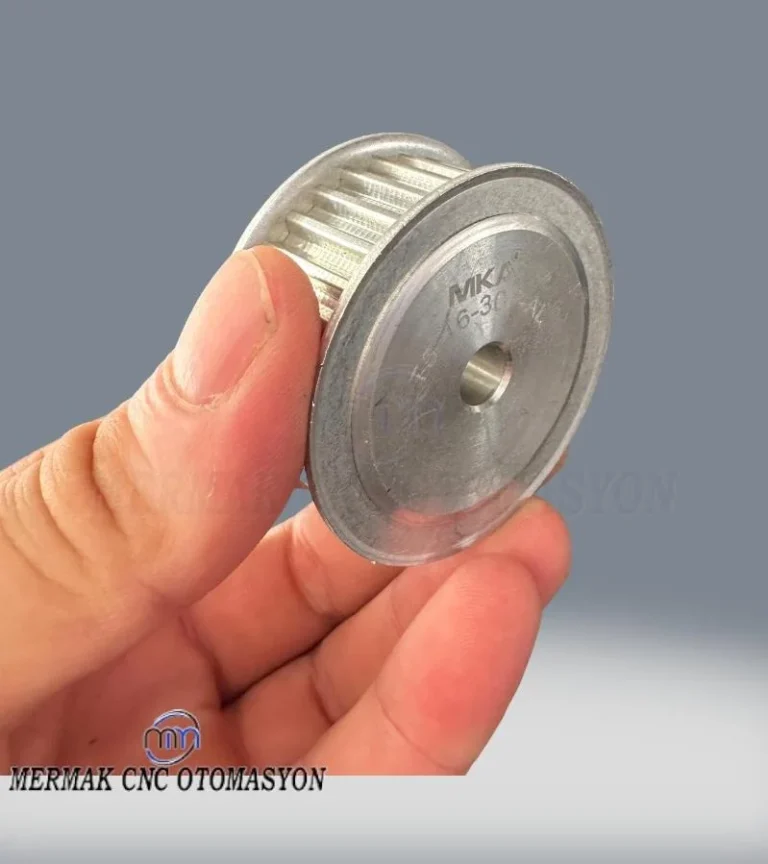
In industrial automation systems, timing belts (also known as synchronous belts) are critical components for transmitting power and synchronized motion from motors to actuators or moving parts. They are extensively used in servo motors, stepper motors, CNC machines, robotic systems, and conveyor lines requiring precise positioning. These belts feature teeth that engage with pulleys (sprockets) to ensure non-slip power transmission. However, a loose timing belt disrupts this principle, causing the system to deviate from its expected accuracy. A slack belt prevents the teeth from fully seating into the pulley grooves, creating a gap. This gap translates to a delay or inconsistency between the motor’s rotation and the load’s movement, resulting in deviations from target positions, loss of repeatability, and a general decline in system performance. For applications demanding sub-millimeter precision, these errors can be unacceptable.
Timing Belt Principles and Technical Data
Timing belts are typically made from rubber or polyurethane, reinforced with high-strength tension members like steel, Kevlar, or fiberglass. This construction minimizes stretching or deformation under high torque. The core principle involves the motor-driven pulley (drive sprocket) engaging its teeth with the belt’s teeth, transferring motion synchronously to a driven pulley. This toothed design, unlike friction-based belts, creates a positive connection, preventing slippage and enabling precise angular positioning.
The belt’s tension is fundamental to this operation. Insufficient tension allows a gap to form between the belt teeth and pulley teeth. This gap represents backlash – the distance the belt must travel before engaging the pulley teeth when the direction of load changes (e.g., a robot arm reversing direction). Backlash becomes evident as measurement errors, especially during rapid directional changes or when precise positioning is required. For instance, on a CNC machine requiring 0.01 mm precision, 0.05 mm of backlash can push the machining process outside acceptable tolerances.
A loose timing belt also increases the risk of tooth jumping. Under high torque loads or during sudden acceleration/deceleration, the belt teeth can skip over the pulley teeth. This completely disrupts synchronization between the driven and driving components, leading to significant positioning errors and potentially system failure. Tooth jumping is more common in open-loop stepper motor systems but can still cause issues in closed-loop servo systems, leading to control system instability, vibration, or overheating, even with encoder feedback.
Technically, belt tension is specified in Newtons or Hertz (vibration frequency of the belt’s free span). Manufacturers provide ideal tension ranges for each belt type and application. Deviating from these ranges not only shortens belt life but also causes performance issues. For example, excessive elastic deformation and elongation occur with a loose belt, leading to precision loss under dynamic conditions. Belt material, profile (e.g., HTD, GT2, MXL, XL, L, T), width, and pitch all directly influence system accuracy. Profiles like GT2 and HTD are designed for higher precision and torque transfer.
| Parameter | Value/Description |
|---|---|
| Backlash | With a loose belt, backlash can increase from 0.05 mm to 0.5 mm or more. Unacceptable in precision systems. |
| Positioning Accuracy | Targeting ±0.01 mm, but looseness can cause deviations of ±0.1 mm or more. |
| Repeatability | A loose belt causes inconsistencies in returning to the same position repeatedly. |
| Belt Tension | Varies by manufacturer and belt type, typically 4-10 N/mm (per width) or measured by frequency. |
| Tooth Jump Torque | Can decrease by up to 50% with a loose belt; risk of jumping increases under sudden loads. |
| System Noise & Vibration | Looseness can induce resonance and vibrations, increasing noise and mechanical stress. |
| Belt Lifespan | Incorrect tension (both too loose and too tight) can reduce belt life by 30-50%. |

Field Considerations for Timing Belts
- Correct Tension Adjustment and Monitoring: Proper timing belt tension is paramount for performance. Adhere strictly to manufacturer-specified tension values. Use specialized belt tension meters or acoustic measurement devices (frequency meters) that measure the vibration frequency of the belt’s free span. Overtightening places excessive load on bearings and motor shafts, causing premature wear, while undertightening leads to the measurement errors discussed. Tension must be checked after installation and at regular intervals.
- Periodic Visual and Mechanical Inspections: Regular visual inspection of belts is essential. Check for wear, cracks, tears on the teeth, or abrasion on the side surfaces. A shiny or polished appearance on the belt surface can indicate slippage. Also, periodically inspect pulley alignment, bearing play, and the condition of other drive system components. If the belt easily comes off the pulley or exhibits noticeable play by hand, it’s a sign of looseness.
- Environmental Factor Impact: Ambient temperature, humidity, chemical vapors, or contaminants like oil and grease can degrade timing belt materials and alter their properties. High temperatures can cause belts to elongate, while low temperatures can make them brittle and prone to cracking. Chemicals and oils reduce belt strength and flexibility. Selecting belts with appropriate material properties for the operating environment and controlling these conditions are crucial for belt longevity and performance. Use protective covers or enclosures in dirty environments.
- Proper Belt and Pulley Selection: Choosing the correct timing belt profile (e.g., HTD, GT2, T5), width, pitch, and material (neoprene, polyurethane) for each application is critical. For high torque, speed, or precision requirements, opt for specially designed belts (e.g., steel-reinforced polyurethane belts). Pulleys must perfectly match the belt profile, and factors like surface quality and tooth depth significantly impact belt life and system accuracy. An incorrectly selected belt or pulley can cause performance issues even with correct tension.
- Adherence to Installation Procedures: Installing timing belts correctly, following manufacturer guidelines, is vital. This includes proper alignment of pulleys, correct tensioning methods, and ensuring no foreign objects interfere with the belt or pulley engagement during installation. Incorrect installation can lead to premature wear, noise, vibration, and performance degradation from the outset.
Maintaining the correct tension and condition of your timing belts is not just about preventing measurement errors; it’s about ensuring the overall reliability, accuracy, and efficiency of your industrial machinery. Regular checks and proactive maintenance are key to optimal performance.
For robust and precise motion control solutions, explore Mermak CNC’s range of industrial CNC routers and automation components. If you need expert advice or a custom solution for your application, request a quote on WhatsApp today!
Related product categories: Genel · 16 Mm Triger Dişli Kasnak · 16 mm Triger Dişli Kasnak