What Happens If a Coupling Set Screw Loosens? – Mermak CNC

Contents
A loose coupling set screw can disrupt power transmission, leading to increased vibration, noise, component wear, and costly production downtime. Understanding the causes and effects is crucial for maintaining your industrial CNC router’s performance.
Practical notes for CNC router, automation and industrial motion systems.
The Critical Role of Coupling Set Screws in CNC Machines
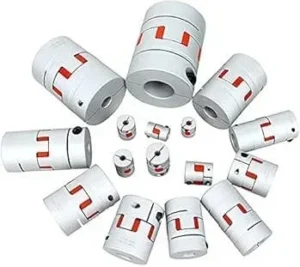
In industrial automation and general machinery, couplings are essential components that connect two rotating shafts, facilitating the transfer of power and motion. These shafts typically link a motor to a pump, gearbox, conveyor, or other driven equipment. A key element ensuring the secure connection of the coupling to the shaft is the set screw, or other fastening mechanisms like keyways or taper bushings. The primary function of a coupling set screw is to firmly secure the coupling to the shaft, ensuring reliable torque transmission. If this set screw loosens over time due to vibration, improper installation torque, material fatigue, or thermal expansion/contraction, it can have detrimental effects on the machine’s operation.
A loosening set screw weakens the connection between the coupling and the shaft, initially causing micro-slips. These micro-slips manifest as noticeable increases in vibration and abnormal noises (clicking, grinding) within the machine. As the loosening progresses, the slips become larger, leading to intermittent power transmission. The synchronization between the motor shaft and the driven shaft is compromised, reducing machine efficiency and potentially causing severe damage.
Consequences of a Loose Coupling Set Screw
- Excessive Vibration and Noise: This is often the first noticeable symptom. A loose connection creates dynamic imbalance, generating vibrations that propagate throughout the machine structure, shortening the lifespan of other components.
- Power Transmission Loss and Reduced Efficiency: When the coupling is not fully seated on the shaft, a portion of the transmitted torque is lost. This means the motor expends more energy to perform the same task, or the machine fails to achieve its expected performance levels.
- Component Wear and Damage: Vibration and slippage accelerate wear on the coupling itself, the shafts (keyways and surfaces), and the bearings, seals, and other sensitive parts of the motor and driven equipment. Bearing life is particularly susceptible to dramatic reduction.
- Shaft Slippage and Misalignment: If the set screw completely loosens, the coupling can slip on the shaft or detach entirely. This leads to a complete loss of shaft alignment, causing sudden machine stoppages.
- Machine Failures and Production Downtime: The cumulative effect of these issues can lead to sudden machine failure, resulting in production line stoppages, costly repairs, and significant time loss.
- Safety Risks: In high-speed rotating equipment, a loose coupling can pose serious safety risks, potentially causing parts to fly off or the machine to move erratically.
Therefore, the condition of coupling set screws is vital for the safe, efficient, and uninterrupted operation of industrial machinery. Regular inspections and correct installation practices are essential to mitigate these risks.
Operating Principles and Technical Data
The fundamental principle of couplings is to transfer rotational motion and torque from one shaft to another with minimal loss and maximum efficiency. For this transfer to be effective, the coupling must be rigidly fixed to both shafts. The set screw is one of the most common and straightforward methods for achieving this fixation. The screw is inserted into a threaded hole in the coupling body, pressing against the shaft surface or a keyway (if present) to create frictional force, thereby locking the coupling to the shaft.
While set screw couplings are common, modern industrial applications also utilize other mounting methods such as taper bushings, interference fits, or hydraulic clamping. However, set screws remain a popular choice for small to medium power transmission systems due to their cost-effectiveness and ease of installation and removal. The effectiveness of a set screw depends on the applied torque and the friction between the screw and the shaft. Insufficient torque or loosening reduces this friction, weakening the coupling’s grip on the shaft.
Technical data critical for machine reliability and longevity when designing and installing couplings include:
| Parameter | Value/Description |
|---|---|
| Coupling Set Screw Torque | Manufacturer-specified torque (Nm) required for secure shaft fixation. Overtightening or undertightening can cause damage. |
| Shaft Alignment Tolerances | Maximum allowable angular and parallel shaft deviations (mm), varying by coupling type. A loose screw exacerbates these tolerances. |
| Maximum Vibration Levels | Allowable RMS speed (mm/s) or acceleration (g) per ISO 10816 standards. A loose coupling significantly increases these levels. |
| Material Properties (Coupling/Screw) | Material of the coupling and screw (steel, cast iron, aluminum, stainless steel) and their mechanical strengths (tensile strength, hardness). |
| Operating Temperature Range | Minimum and maximum temperatures (°C) at which the coupling and screw can operate without deformation or loss of properties. Thermal expansion/contraction can lead to loosening. |
| Power Transmission Efficiency | Percentage of power lost during torque transfer. Efficiency drops significantly with loose couplings (e.g., from 90% to 50%). |
| Dynamic Balance Class | Balance quality of the coupling per ISO 1940 standards. A loose screw increases imbalance, triggering vibration. |
Field Considerations for Prevention
- Periodic Visual and Manual Inspections: During machine downtime or maintenance intervals, visually inspect coupling set screws for signs of rust, deformation, cracks, or looseness. If possible, check screw tightness with a wrench. Any detected looseness should be addressed by re-tightening to the manufacturer’s specified torque. This simple check can identify potential failures early.
- Correct Installation and Torque Application: A critical step in coupling installation is applying the correct torque to the set screws. Each coupling type and size has specific torque values defined by the manufacturer. Always use a calibrated torque wrench to achieve these values. Overtightening can damage the screw or shaft, while undertightening leads to easy loosening. Ensure shaft surfaces and keyways are clean and free of grease before installation.
- Shaft Alignment Precision: Even with a tightly secured set screw, if the shafts are not properly aligned (angular or parallel offset), it creates continuous stress on the coupling. This stress can accelerate screw loosening over time and cause wear on the coupling and connected components. Use laser alignment tools to ensure precise shaft alignment. Correct alignment extends the life of the coupling and screw, reduces vibration, and improves energy efficiency.
- Vibration Monitoring and Analysis: As part of a predictive maintenance strategy in industrial automation, continuous monitoring of machine vibrations is essential. Early detection of abnormal vibration patterns can indicate a loosening coupling or other impending issues. Implementing a vibration analysis program allows for proactive intervention before a failure occurs, preventing costly downtime.
By understanding the critical role of coupling set screws and implementing rigorous maintenance and installation procedures, you can significantly enhance the reliability and longevity of your CNC router machines and other industrial equipment.
For expert advice on maintaining your CNC machinery or to inquire about high-quality components, request a quote on WhatsApp today!
Related product categories: Genel · Mekanik · 25 Mm Lineer Kızak, Rulman Ve Yataklar