No products in the cart.
Linear Rail vs. Shaft Guide: Which to Choose for Your CNC Machine?
Contents
Choosing between linear rails and shaft guides is crucial for industrial CNC machine performance. Linear rails offer high precision, load capacity, and rigidity for demanding applications. Shaft guides are a more cost-effective solution for simpler, lighter-duty needs. This guide helps you select the optimal system based on your project’s specific requirements.
Mermak CNC Technical Guide
Practical notes for CNC router, automation and industrial motion systems.
Linear Rail vs. Shaft Guide: Understanding the Core Differences
In the realm of industrial automation and machine design, achieving precise linear motion is fundamental. Two primary mechanisms facilitate this: linear rails (also known as profile rails or ball/roller guides) and shaft guides (comprising smooth shafts and linear bushings). While both systems move a load along a defined path, they differ significantly in their construction, performance characteristics, application suitability, and cost. Making the right choice directly impacts a project’s overall efficiency, accuracy, and budget. This guide aims to clarify these distinctions for engineers and technical professionals to select the most appropriate solution.
Operating Principles and Technical Specifications
Linear motion systems are foundational to industrial automation and precision machine engineering. The two main categories, linear rails and shaft guides, offer distinct operating principles and technical specifications, catering to a wide array of applications.
Linear Rails (Profile Rails / Ball Guides)
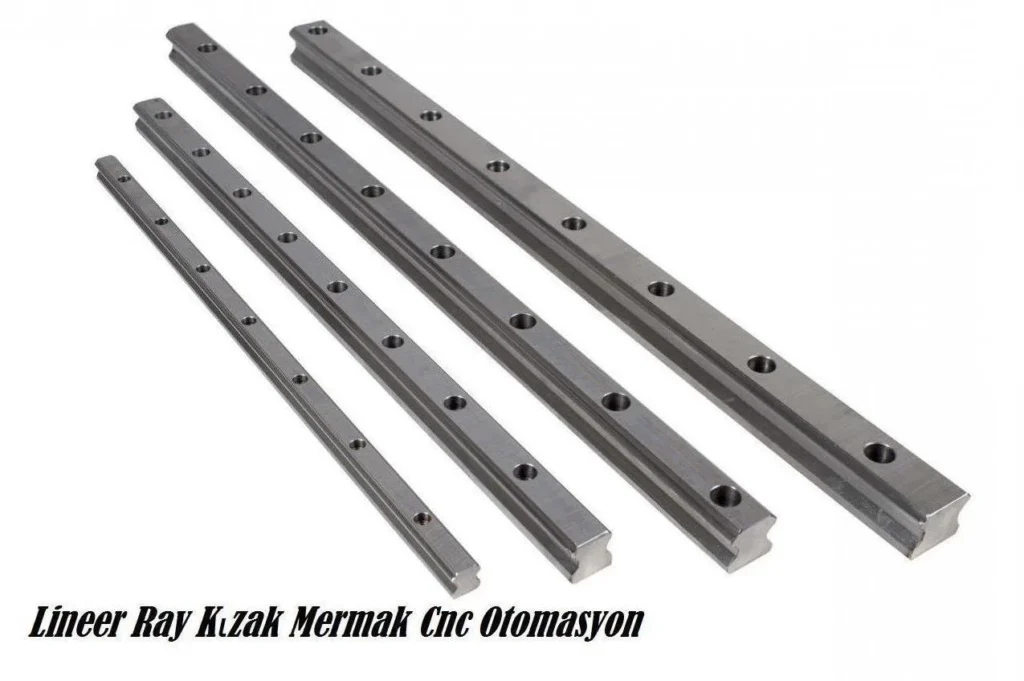
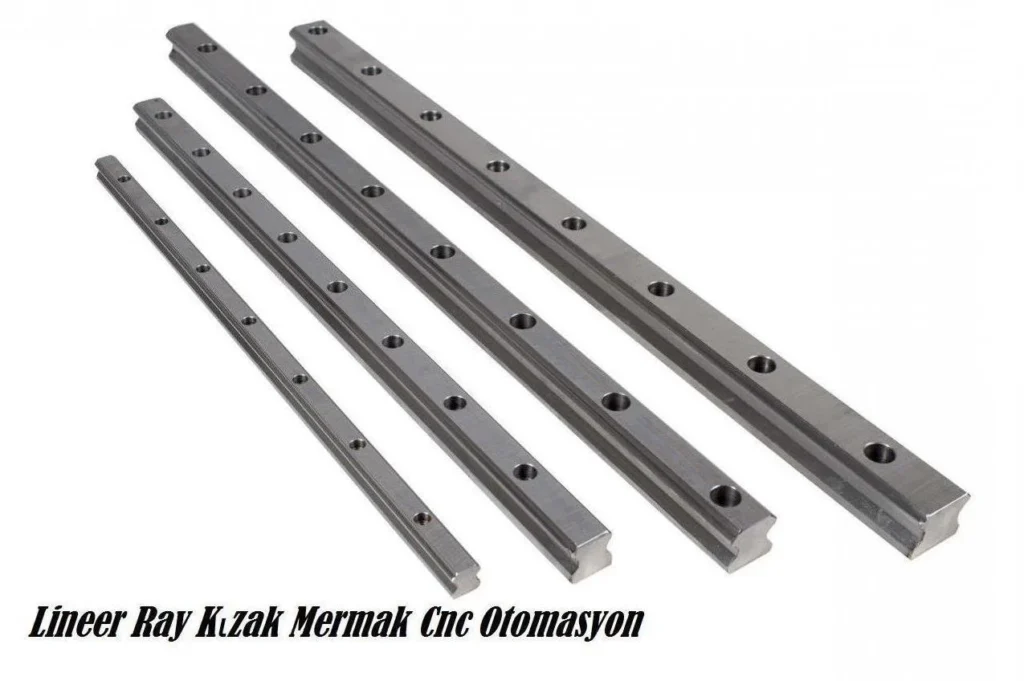
Linear rail systems typically consist of a hardened steel profile rail and a carriage (block) that travels along it. The contact between the carriage and the rail is maintained by precision balls or rollers. These recirculating balls or rollers move within precisely machined grooves on the rail, enabling highly accurate and repeatable linear motion with minimal friction. Closed-loop ball recirculation systems allow for minimal play (preloaded) even under load, ensuring high rigidity, high load capacity, and excellent precision. The broad contact surface of the rail and the distribution of load across numerous balls enhance the system’s resistance to heavy radial and moment loads. Linear rails are the preferred choice for applications demanding high performance, such as CNC machines, robotic arms, precision measuring instruments, and automated assembly lines.
Shaft Guides (Smooth Shafts and Ball Bushings)
Shaft guide systems typically involve a hardened and ground steel shaft paired with linear bushings that slide or roll along it. The bushings contain small balls that rotate against the shaft’s surface to provide linear motion. These systems are generally simpler in construction than linear rails. They are often easier to install and align. However, due to the shaft’s diameter and the bushing’s internal design, they offer lower rigidity and limited load capacity compared to linear rails. Shaft guides are more adept at handling radial loads on a single shaft and are sensitive to moment loads, often requiring support from dual shafts or supported shaft configurations. Their cost-effectiveness and straightforward design make them common in 3D printers, packaging machines, medium-precision automation systems, and general machine applications.
Comparison Table: Linear Rails vs. Shaft Guides
| Parameter | Linear Rail (Ball Guide) | Shaft Guide (Smooth Shaft & Bushing) |
|---|---|---|
| Load Capacity | Very High (Radial, Lateral, Moment Loads) | Low – Medium (Primarily Radial Loads) |
| Precision & Repeatability | Very High (Micron level) | Medium (Often dependent on shaft diameter) |
| Rigidity | Very High (Minimal deflection) | Low – Medium (Dependent on shaft deflection) |
| Mounting & Alignment | Requires precise surface machining and alignment | Easier, less critical surface machining may suffice |
| Cost | Higher (Initial and installation) | Lower (Initial and installation) |
| Vibration & Shock Resistance | High | Medium |
| Service Life | Long (With proper sizing and maintenance) | Medium (Dependent on load, speed, and environment) |
| Typical Applications | CNC, Robotics, Precision Automation, Medical Devices | 3D Printers, Packaging, General Machinery, Light Automation |
Key Considerations in Practice
- Load Capacity and Direction: The magnitude and direction of loads your application must handle are critical. Linear rails excel at supporting high radial, lateral, and moment loads, making them resistant to bending and torsional forces. Shaft guides are primarily designed for radial loads; moment loads can lead to shaft deflection or excessive bushing wear. For heavy or unbalanced loads, linear rails are the superior choice.
- Precision and Repeatability Requirements: For applications demanding high accuracy, such as machining, measurement, or assembly, linear rails provide micron-level precision and repeatability. Their precisely ground surfaces and recirculating ball systems ensure minimal play and smooth motion. Shaft guides typically have wider tolerances and are suitable for less critical positioning tasks. If positioning to within a tenth of a millimeter is necessary, linear rails are indispensable.
- Rigidity and Vibration Damping: The overall rigidity of a machine system is vital for machining quality and dynamic performance. Linear rails offer high rigidity due to their wide base and ball arrangement, helping to dampen vibrations during high-speed movements or cutting operations. The rigidity of shaft guides depends on the shaft’s diameter and support; thinner shafts are more prone to deflection and offer less vibration damping. For high-acceleration movements or impact loads, linear rails provide a more stable platform.
- Mounting and Alignment Tolerances: Installing linear rails requires a high-precision mounting surface and careful alignment. Parallelism and flatness between rails are crucial for performance and longevity. Misalignment can cause binding, excessive friction, and premature wear. Shaft guides are more forgiving in terms of mounting tolerances and can often be installed on less critical surfaces, making them advantageous for prototyping or lower-cost, less demanding applications.
- Environmental Conditions and Contamination: The operating environment significantly influences system selection. Linear rails often feature integrated seals and lubrication points to protect against dust, dirt, and moisture. Stainless steel options are available for corrosive or wet environments. Shaft guides, with their exposed shafts and bushings, are more susceptible to contamination. Dusty or chip-laden environments may require additional protective measures like bellows or covers to prevent abrasive particles from accelerating wear.
- Cost and Maintenance: Initially, shaft guide systems are generally more economical than linear rails. However, the total cost of ownership (TCO) should consider maintenance, lifespan, and potential failure costs. Linear rails, when properly installed and lubricated, offer long service life with minimal maintenance. Shaft guides, especially under high loads or in contaminated environments, may require more frequent inspection and replacement.
Ultimately, the choice between a linear rail and a shaft guide system depends on a thorough evaluation of your specific application’s demands. For industrial CNC routers and machines requiring high precision, heavy load capacity, and exceptional rigidity, linear rails are the standard. For less demanding tasks where cost is a primary driver and precision requirements are moderate, shaft guides can be a viable option.
At Mermak CNC, we understand the critical role of motion control systems in the performance of your industrial CNC router machines. Whether you require the ultimate precision of linear rails or the cost-effectiveness of shaft guides, our expert team can help you specify the right components for your application. Explore our range of CNC solutions and ensure your machinery operates at peak efficiency.
Ready to optimize your machine’s linear motion? Request a quote on WhatsApp today!
Related product categories: General · Electronics · Combination Packages