No products in the cart.
How to Remove a Stuck Collet from a Spindle Motor Shaft Without Damage

Contents
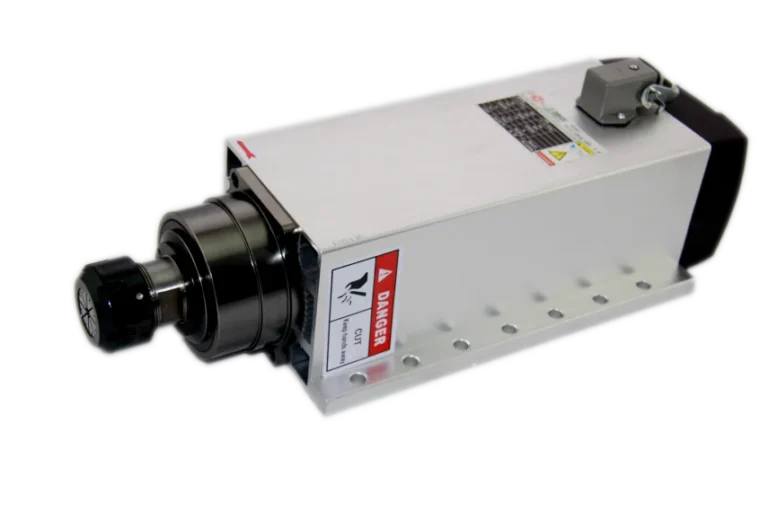
- Spindle Motor Shaft: How to Remove a Stuck Collet Without Damage – Introduction and Technical Analysis At the heart of industrial automation, CNC machines, milling machines, lathes, and other precision machining equipment rely on critical components to hold cutting tools with high accuracy. One such component is the **collet**, a clamping element responsible for securely and centrally attaching cutting tools to the spindle motor shaft. However, collets can occasionally become stuck in the spindle shaft due to various reasons, leading to significant disruptions in production processes, costly downtime, and even equipment damage. This comprehensive field guide and technical article provides an in-depth analysis of how to remove a collet stuck in a spindle motor shaft **without breaking, bending, or damaging** either the collet or the spindle motor. Our aim is to provide a practical, step-by-step resource with expert advice for maintenance technicians, operators, and engineers in the industrial automation sector. Applying the correct techniques will not only resolve the immediate problem but also offer a crucial roadmap for preventing similar issues in the future. This guide specifically focuses on preserving the health of the spindle and collet, which is of critical importance for **precision machining**, **tool life optimization**, and **machine efficiency**. How to Remove a Stuck Collet from a Spindle Motor Shaft Without Damage: Working Principle and Technical Data
- How to Remove a Stuck Collet from a Spindle Motor Shaft Without Damage: On-Site Considerations
- How to Remove a Stuck Collet from a Spindle Motor Shaft Without Damage: Common Problems and Solutions
- How to Remove a Stuck Collet from a Spindle Motor Shaft Without Damage: Conclusion and Expert Advice
- Request a Quote on WhatsApp
- FAQ
Spindle Motor Shaft: How to Remove a Stuck Collet Without Damage – Introduction and Technical Analysis
At the heart of industrial automation, CNC machines, milling machines, lathes, and other precision machining equipment rely on critical components to hold cutting tools with high accuracy. One such component is the **collet**, a clamping element responsible for securely and centrally attaching cutting tools to the spindle motor shaft. However, collets can occasionally become stuck in the spindle shaft due to various reasons, leading to significant disruptions in production processes, costly downtime, and even equipment damage. This comprehensive field guide and technical article provides an in-depth analysis of how to remove a collet stuck in a spindle motor shaft **without breaking, bending, or damaging** either the collet or the spindle motor. Our aim is to provide a practical, step-by-step resource with expert advice for maintenance technicians, operators, and engineers in the industrial automation sector. Applying the correct techniques will not only resolve the immediate problem but also offer a crucial roadmap for preventing similar issues in the future. This guide specifically focuses on preserving the health of the spindle and collet, which is of critical importance for **precision machining**, **tool life optimization**, and **machine efficiency**.
How to Remove a Stuck Collet from a Spindle Motor Shaft Without Damage: Working Principle and Technical Data
Collets typically feature a conical design that seats into the internal tapered surface of the spindle motor shaft. Internally, they have a cylindrical bore designed to grip the tool shank. When the outer part of the collet is tightened, usually via a collet nut or directly by a drawbar mechanism, the collet’s slots flex inward, securing the tool shank with high **gripping force**. This mechanism ensures the tool rotates stably without **runout**, even at high RPMs. Primary reasons for collet seizure include **over-tightening**, insufficient or incorrect lubrication, metal fatigue, **corrosion**, chip or foreign material accumulation, and **thermal expansion/contraction** differentials. Over-tightening, in particular, can cause the collet’s conical surfaces to adhere excessively to the spindle shaft, triggering a **galling** effect from metal-on-metal friction. Prolonged operation at high speeds can lead to heating of both the collet and the spindle; the subsequent contraction during cooling can cause the collet to seize even more tightly. This situation can be observed in various collet types, such as **ER (ERIKSON)** series collets, **TG (Tremendous Grip)** collets, or **5C** collets. Each collet type has specific tolerance and tightening torque values, and failure to adhere to these values increases the risk of seizure. While the spindle motor shaft is typically manufactured from high-carbon alloy steel, collets are produced from higher hardness spring steel or special alloy steels. These material differences can result in varying coefficients of thermal expansion during thermal cycles. Understanding these engineering principles and applying the correct techniques is vital for a successful removal operation.
| Parameter | Value/Description |
|---|---|
| Collet Type | ER (ERIKSON), TG (Tremendous Grip), 5C, R8, etc. (Conical and cylindrical types) |
| Collet Material | Spring Steel, Alloy Steel – Typically 55-62 HRC |
| Spindle Shaft Material | High Carbon Alloy Steel – Typically 45-55 HRC |
| Taper Tolerance | ISO 1947, DIN 69871, ANSI B5.50 (AT3, AT4 precision classes) |
| Recommended Tightening Torque | Varies by collet type and size (e.g., 20-30 Nm for ER16, 60-80 Nm for ER32) |
| Surface Roughness | For spindle and collet taper surfaces Ra < 0.8 |
| Max. Operating Temperature | Typically 150-200°C for collet and shaft material (Short-term) |
| Recommended Lubricant | Anti-seize compounds, MoS2 or boron nitride based greases (Resistant to high temperature and pressure) |

How to Remove a Stuck Collet from a Spindle Motor Shaft Without Damage: On-Site Considerations
- **Safety Precautions and Pre-Operation Preparation:** Before attempting any intervention, completely cut off the machine’s power supply and implement **LOTO (Lockout/Tagout)** procedures. This is a critical step for the safety of both yourself and the equipment. Prevent the spindle motor from rotating and avoid any unexpected movements. Use appropriate **Personal Protective Equipment (PPE)** during the process, especially safety glasses and gloves. Clean the work area and ensure all necessary tools are at hand. Clear the area around the spindle motor of chips, oil, and other debris.
- **Accurate Diagnosis and Problem Source:** Understanding why the collet is stuck is essential for choosing the correct removal method. Was the collet over-tightened? Is there corrosion? Are chips or foreign objects trapped inside? Did it seize after prolonged high-speed operation? Carefully inspect the outer surface of the collet and the inner taper of the spindle for any **scratches, dents, or deformation**. Visual inspection and manual checks can help you understand the root of the problem. For example, if the collet nut was tightened with excessive torque, the collet’s conical surface might have “welded” to the spindle’s conical surface.
- **Selection of Appropriate Tools and Materials:** Having the right tools for collet removal increases the chance of success and reduces the risk of damage. Standard collet wrenches, torque wrenches, **soft-faced hammers (plastic, rubber, or copper hammers)**, specialized collet pullers, penetrating oils, rust removers, a heat gun, or industrial freeze sprays may be required. Never strike the collet or spindle directly with a steel hammer or hard metal tools; this can lead to irreversible damage. Penetrating oils can help reduce tension between metal surfaces in cases of corrosion or seizure, aiding in loosening.
- **Gradual and Controlled Approach:** Always begin the collet removal process with the least invasive method and gradually move to more aggressive ones. First, loosen the collet nut (if present). If the collet is still stuck, try **gentle and controlled taps** with a soft hammer on the edges of the collet or collet nut, ensuring no damage to the spindle. These taps can help break the tension between the metal surfaces. Apply penetrating oil and wait a few minutes. Allow time for the lubricant to penetrate between the seized surfaces. Afterward, you might consider gently heating the spindle shaft externally with a heat gun (not the collet itself) or cooling the collet with freeze spray. These thermal shock methods can help loosen the collet by creating different expansion/contraction rates.
- **Documentation and Preventive Maintenance:** Document every removal attempt, the methods used, the time spent, and the results. These records will be a valuable reference point for future similar issues. After a successful removal, carefully clean the surfaces of the collet and spindle taper and check for any signs of damage or wear. A damaged collet or spindle can negatively affect tool holding accuracy and, consequently, machining quality. To prevent future seizures, clean collets after each use, tighten them with the correct torque values, and use an appropriate **anti-seize compound** or special collet oil. Include cleaning and inspection of collet and spindle taper surfaces in periodic maintenance schedules.

How to Remove a Stuck Collet from a Spindle Motor Shaft Without Damage: Common Problems and Solutions
When encountering a collet stuck in a spindle motor shaft, different problems and solution approaches may arise depending on the complexity of the situation. One of the most common issues is the collet “welding” to the spindle taper due to **over-tightening**. In this scenario, standard collet wrenches are often insufficient. As a solution, first loosen the collet nut as much as possible, and then gently tap the outer edges of the collet or the collet nut with a **soft hammer (plastic or copper)** in a circular motion, ensuring no damage to the spindle. These impacts help break the friction and adhesion between the surfaces. If this doesn’t work, specially designed **collet pullers** or hydraulic extraction systems can be employed. These tools operate on the principle of pulling the collet with controlled force, either directly or by using the collet nut.
Another common problem is the formation of **corrosion or galling** between the collet and the spindle taper. This is particularly seen in machines used for extended periods or operating in humid environments. As a solution, apply a generous amount of **penetrating oil** or rust remover to the seized area and wait at least 15-30 minutes for the oil to penetrate between the metal surfaces. Repeat this process if necessary. After lubrication, try to loosen the collet by making gentle taps with a soft hammer or by slowly rotating the collet nut (if present) with an appropriate wrench. **Thermal shock** methods can also be beneficial in corrosion cases: gently heating the spindle shaft externally with a heat gun (up to approximately 80-100°C) and then applying **industrial freeze spray** to the inside of the collet can create a gap between the metal surfaces due to different expansion coefficients. This method causes the collet to contract and the spindle to expand, alleviating the seizure. However, excessive heat or cold should be avoided, and temperature changes should be gradual and controlled.
Sometimes, **chips or foreign objects** can get trapped inside the collet, preventing it from fully loosening. In this case, after loosening the collet nut, try to clean all debris inside and outside the collet using a thin wire brush, air gun, or a special cleaning tool. Using an **endoscope** for visual inspection can help pinpoint the location and type of the trapped foreign object. If the collet itself is deformed or there is visible damage to the spindle taper, removing the collet can be more challenging, and this usually necessitates replacing the collet. Severe damage to the spindle taper may imply a more extensive repair or spindle replacement, which is a much more costly operation. In such situations, consulting a specialist or seeking support from the machine manufacturer’s service department is the most appropriate approach. Always start with the least damaging method and gradually move to more aggressive ones to minimize potential harm to your equipment.
How to Remove a Stuck Collet from a Spindle Motor Shaft Without Damage: Conclusion and Expert Advice
Removing a stuck collet from a spindle motor shaft without damage is a challenging yet solvable problem encountered in industrial automation environments. This process is more than just a mechanical task; it is an engineering challenge that requires **detailed knowledge**, **correct tools**, **patience**, and a **systematic approach**. The steps and techniques discussed in this guide provide maintenance technicians and operators with a comprehensive roadmap to confidently address such situations. It is important to remember that each seizure case can present unique circumstances; therefore, making a situation-specific diagnosis and choosing the appropriate method is critically important. Avoiding excessive force, always starting with the least invasive method, and meticulously adhering to safety procedures ensures both personnel safety and the protection of valuable equipment.
As expert advice, we emphasize that the best strategy for removing a stuck collet is to prevent the situation from occurring in the first place. **Preventive maintenance** is the most effective way to avoid such problems. Regular cleaning of collets and spindle taper surfaces, using appropriate lubricants, tightening with correct torque values during every tool change, and periodically inspecting collets for signs of wear or damage will significantly reduce the risk of seizure. Furthermore, providing operators and technicians with regular training on collet usage and maintenance will enhance their competence in dealing with such issues. Instead of panicking when a collet gets stuck, applying the steps outlined in this guide sequentially and carefully will yield the most efficient results in terms of both time and cost. Remember, the spindle motor is one of the most expensive and critical components of a CNC machine; therefore, the care given to it directly impacts your machine’s overall **performance**, **accuracy**, and **longevity**. With the right knowledge and application, overcoming a stuck collet will ensure production continuity by minimizing unexpected breakdowns.
Request a Quote on WhatsApp
For further assistance or to inquire about Mermak CNC products and services, please do not hesitate to request a quote on WhatsApp. Our team of experts is ready to provide you with tailored solutions for your industrial CNC router needs.
FAQ
Why do collets get stuck in a spindle motor shaft?
A collet can get stuck due to over-tightening, insufficient lubrication, metal fatigue, corrosion, accumulation of chips or foreign material, and thermal expansion/contraction differences between the collet and the spindle shaft.
What are the initial steps to remove a stuck collet without damaging it?
Always start with safety: ensure the machine is powered off and locked out (LOTO). Begin with the least invasive methods like loosening the collet nut, applying penetrating oil, and gentle tapping with a soft-faced hammer. If unsuccessful, consider controlled thermal shock (heating the spindle, cooling the collet) or using specialized collet pullers.
What should I avoid when trying to remove a stuck collet?
Avoid using excessive force or steel hammers directly on the collet or spindle, as this can cause irreversible damage. Do not apply extreme or uncontrolled heat/cold, as it can warp components. Always ensure the machine is de-energized before any intervention.
How can I prevent collets from getting stuck in the future?
Regular cleaning of collets and spindle taper surfaces, using appropriate anti-seize compounds or collet oils, tightening collets with the correct torque values, and periodically inspecting them for wear or damage are crucial preventive maintenance steps.
When should I seek professional help for a stuck collet?
If the collet is severely corroded, deformed, or if there's visible damage to the spindle taper, it's best to consult a specialist or the machine manufacturer's service department. These situations may require specialized tools or replacement of components.