


















































































How Nesting Software Reduces Material Waste in Industrial CNC Manufacturing
📑 Table of contents (Click to open)
- How Nesting Software Reduces Material Waste: Introduction and Technical Analysis
- How Nesting Software Reduces Material Waste: Operating Principle and Technical Data
- How Nesting Software Reduces Material Waste: On-Site Considerations
- How Nesting Software Reduces Material Waste: Common Issues and Solutions
- How Nesting Software Reduces Material Waste: Conclusion and Expert Advice
- FAQ
How Nesting Software Reduces Material Waste: Introduction and Technical Analysis
In the industrial automation and manufacturing sector, minimizing material waste, reducing production costs, and enhancing sustainability are critically important. Particularly in areas such as metal processing, woodworking, textiles, composites, and glass cutting, the efficient use of raw materials directly impacts a company’s competitiveness. In this context, Nesting Software has become an indispensable technology developed to dramatically reduce material waste, commonly known as “scrap” or “offcut,” by optimizing material usage in production processes. Material waste typically refers to the quantity of material that becomes unusable or is discarded during the manufacturing process. This not only represents a financial loss but also increases the environmental footprint and negatively affects production capacity.
Nesting software operates with computer-aided design (CAD) and computer-aided manufacturing (CAM) integration, utilizing complex algorithms to efficiently arrange parts of different geometries onto a specified raw material sheet or roll. These software solutions offer optimization capabilities far superior to manual layout methods. In traditional methods, layouts performed based on an operator’s experience and visual judgment inevitably leave more gaps and, consequently, generate more waste. In contrast, nesting software can evaluate thousands of different combinations in seconds, finding the arrangement that ensures the highest material utilization rate. This directly translates into significant savings in raw material costs and increases the profitability of businesses.
From an industrial automation perspective, nesting software not only reduces material waste but also enhances the efficiency of the entire production line. Thanks to automated nesting, cutting machines (laser, plasma, waterjet, guillotine, etc.) can operate more smoothly and continuously with less downtime. Tool path optimization shortens cutting times and extends machine life. Furthermore, it reduces the margin for error, eliminating the need for rework. This, in turn, shortens total production time, lowers labor costs, and optimizes delivery schedules. Industrially, especially for large-scale and high-volume manufacturers, nesting software is one of the key elements for gaining a competitive advantage and increasing market share. This technology has become accessible not only to large corporations but also to SMEs, becoming a vital part of digital transformation.
How Nesting Software Reduces Material Waste: Operating Principle and Technical Data
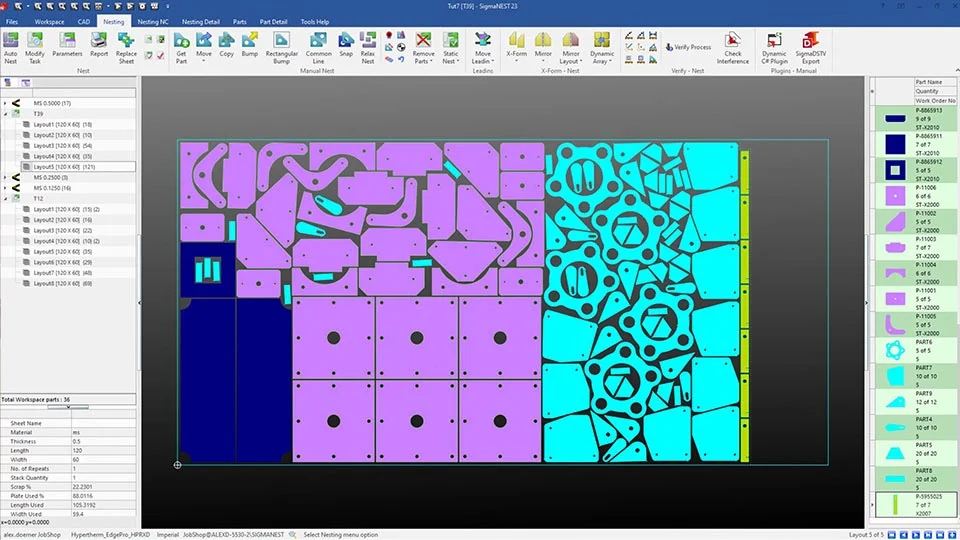
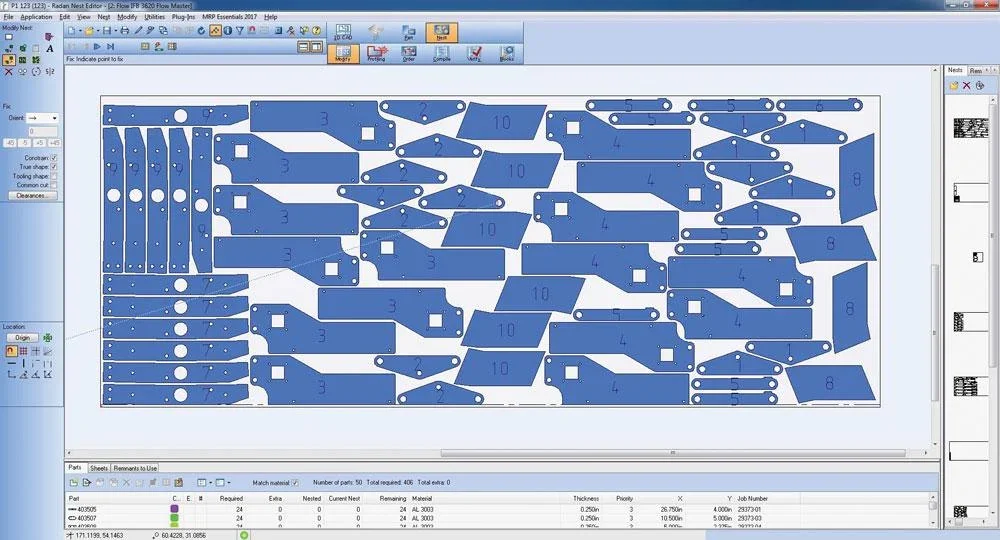
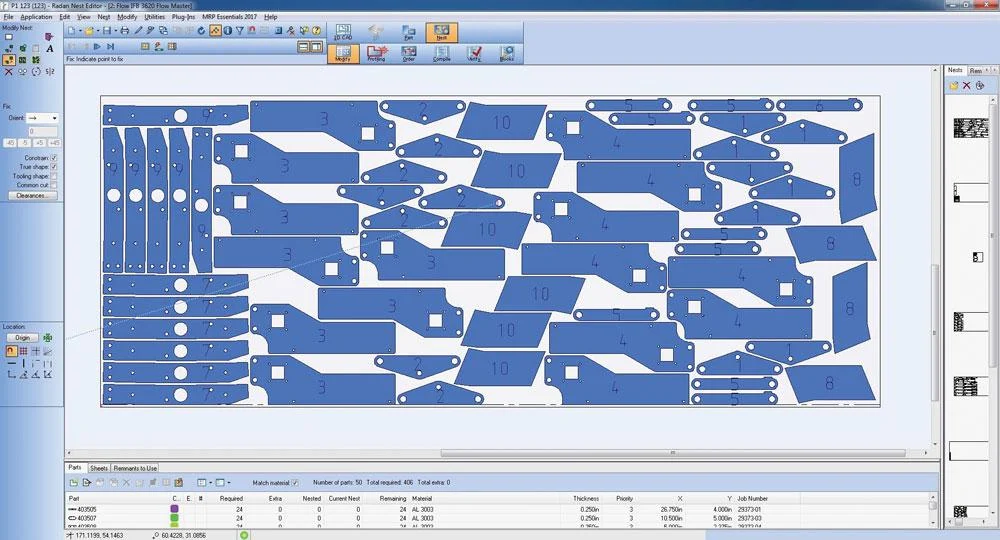
The fundamental operating principle of nesting software is the automatic arrangement of one or more parts with different geometric shapes onto a raw material sheet or roll of specific dimensions, minimizing material waste. This process typically consists of several main steps: First, CAD models of the parts to be produced are imported into the software. These models contain the precise dimensions, shapes, and cutting contours of the parts. Next, the dimensions and properties of the raw material sheet (thickness, material type, kerf allowance, etc.) are defined. The software then begins to apply complex geometric algorithms and optimization techniques using this data. Modern nesting software not only arranges parts side-by-side but also uses advanced strategies such as rotation, mirroring, and even interlocking to achieve the highest possible material fill rate.
Technically, nesting algorithms are often supported by artificial intelligence (AI) and machine learning (ML) techniques. These algorithms evaluate thousands of possible layout combinations in seconds. Among the most common algorithms are genetic algorithms, simulated annealing, and heuristic approaches. These algorithms optimize the proximity of parts to each other, the cutting order, and the movement paths of cutting tools (tool path). For example, the common cut feature allows two adjacent parts to be separated by a single cutting line, reducing both cutting time and waste. Some advanced systems offer more comprehensive optimization by considering additional constraints such as part thicknesses, bending allowances, or subsequent processing steps.
The application areas are quite broad and cover many branches of industrial automation. It is actively used in sheet metal processing (laser cutting, plasma cutting, cutting before press brake bending), wood panel processing (CNC router machine), textile and leather cutting, glass cutting, composite material cutting, and even cardboard cutting in the packaging industry. Although each sector has its unique requirements, the primary goal is always the same: to maximize material utilization and minimize waste. Nesting software typically works with CAD/CAM integration. This integration allows parts created during the design phase to be directly transferred to the nesting software, and the optimized layout plan is converted into G-code or other machine codes understandable by the CNC machine and sent for production. This seamless workflow minimizes human error and increases production speed.
From an engineering data perspective, the benefits provided by nesting software are concretely measurable: On average, an increase of 5% to 25% in material utilization rate can be observed compared to manual layouts. This directly translates to a proportional reduction in waste. These rates can be much higher, especially in productions with a high density of complex geometric parts. Furthermore, they offer the potential for a 10-15% reduction in cutting time, a 5-10% increase in tool life, and a 15-20% improvement in overall production efficiency. These technical data clearly show that nesting software is more than just a cost-reduction tool; it is a strategic investment that also increases production capacity and quality.
| Parameter | Value/Description |
|---|---|
| Optimization Algorithm Type | True Shape, Rectangular, Genetic Algorithms, AI-Powered Heuristic Approaches |
| Typical Material Utilization Improvement | 5% – 25% (Compared to manual nesting, varies by part geometry) |
| Typical Waste Reduction | 10% – 30% (Depends on production volume and part complexity) |
| Supported Material Types | Sheet Metal (steel, aluminum, stainless), Wood Panel, Glass, Composites, Textiles, Plastic Sheet |
| Integration Capabilities | CAD/CAM Systems, ERP (Enterprise Resource Planning), MES (Manufacturing Execution Systems), CNC Machines (G-Code Output) |
| Average Calculation Speed | Seconds to minutes (Depends on part count, complexity, and hardware power) |
| Key Features | Common Cut, Bridge Cutting, Automatic Part Rotation/Mirroring, Remnant Material Management |
How Nesting Software Reduces Material Waste: On-Site Considerations
- Accurate Data Entry and CAD Model Precision: The performance of nesting software is directly proportional to the accuracy of the data provided. CAD models of parts to be produced must be created with millimeter, or even micron-level precision, and should not contain any geometric errors. Incomplete or erroneous drawings can lead to incorrect layouts or reduced optimization rates by the software. Furthermore, correctly entering parameters such as material thickness, cutting kerf (cut width), and tool diameter directly affects the actual waste rate in production. Therefore, strong communication and a data validation process between the design and production departments are critically important.
- Machine Integration and Post-Processor Settings: The optimized layout plan generated by the nesting software must output in a format understandable by the CNC cutting machine (typically G-code). The post-processor that provides this output must be correctly configured according to the machine’s specific requirements (number of axes, tool change mechanism, cutting speeds, start/end points, etc.). Incorrect post-processor settings can lead to machine malfunction, reduced cutting quality, and even serious safety risks. Periodic checking and updating of post-processor settings in cooperation with the machine manufacturer are essential.
- Operator Training and Software Awareness: Even the most advanced nesting software cannot reach its full potential without operators who can use it effectively. Operators must understand the software’s interface, optimization parameters, different nesting strategies, and error messages. Knowledge of the flexibility and manual intervention options offered by the software enables them to make correct decisions in critical situations or for special production requirements. Continuous training and knowledge sharing will guarantee efficient use of the software and prevent potential sources of waste from the outset.
- Material Stock Management and Actual Dimensions: Nesting software typically optimizes based on standard sheet sizes. However, the actual dimensions and quality of supplied materials may differ from standards. The actual dimensions, surface condition, and any defects (rust, scratches, etc.) of the material in stock must be accurately entered into the system. Furthermore, effective management of remnant (recyclable) material pieces and their inclusion in future nesting plans have the potential to further reduce the total waste rate.
- Performance Tracking and Continuous Improvement: The optimization rates provided by nesting software should be regularly tracked and analyzed. Actual production data (amount of material used, number of parts produced, amount of waste generated) should be used to evaluate the software’s performance. In light of this data, improvements can be made to the software’s settings, algorithmic strategies, or production processes. The most suitable configuration can be found through methods such as A/B testing or comparing different nesting scenarios.
How Nesting Software Reduces Material Waste: Common Issues and Solutions
While nesting software is advanced, it is possible to encounter some issues in the field. Recognizing these problems and implementing correct solutions is vital for maintaining software efficiency.
1. Issue: Lower-than-expected Optimization Rates and High Waste.
Solution: This situation usually arises from several reasons. Firstly, overly complex part geometries or attempts to nest very small parts on large sheets can complicate optimization. In such cases, simplifying part designs or implementing “mini nesting” strategies that group similar small parts can be beneficial. Secondly, the software’s default optimization algorithms or parameters may not be suitable for your current production needs. Trying different nesting strategies (e.g., focusing on material optimization rather than time optimization), relaxing rotation constraints (if the material is not grain-dependent), or adjusting common cut tolerances can provide a solution. Thirdly, incorrect entry of stock material dimensions into the system or deformations in actual sheets can also increase waste. Stock verification processes should be tightened.
2. Issue: Incompatibilities or Errors Between CNC Machine and Nesting Output.
Solution: This is typically a post-processor-related issue. The G-code generated by the nesting software may not be correctly interpreted by the CNC machine’s control unit. First, ensure that the post-processor used is fully compatible with the machine’s brand, model, and control unit. If necessary, contact the machine manufacturer or nesting software provider to request post-processor updates or customizations. It is also important to ensure that parameters such as cutting speeds, tool compensations, and start/end points are within machine limits. Carefully examining error messages will help in identifying the root cause of the problem.
3. Issue: Excessively Long Nesting Calculation Times.
Solution: Calculation times can be extended, especially when working with a high number of parts or very complex geometries. To solve this problem, first ensure that the hardware used (processor, RAM) meets the software’s requirements; if necessary, a hardware upgrade can be performed. Reducing the optimization level in the software settings (for a faster but perhaps slightly less efficient result), utilizing parallel processing capabilities, or dividing large jobs into smaller nesting groups can also be solutions. Some software may offer “fast mode” options that provide quicker but approximate results.
4. Issue: Difficulties in Remnant Material Management and Unusable Recyclable Parts.
Solution: Nesting software should also support the management of “remnant” pieces that are left over from large sheets and can be used in the future. If the system does not effectively identify and catalog these remnant pieces, this can become a source of waste. Actively use the software’s remnant material management features. Accurately recording the dimensions and shapes of leftover pieces after cutting into the system and using these pieces as “raw material” in future nesting plans will significantly reduce total waste. If necessary, a system for physically labeling and storing remnant pieces should be established.
5. Issue: Operators Struggling to Use the Software or Making Errors.
Solution: This can result from insufficient training or complex user interfaces. Regular and comprehensive operator training should be organized. Training materials or on-site support can be requested from the software provider. Software with user-friendly interfaces should be preferred. Additionally, taking operator feedback into account, customizations or workflow improvements can be made to increase the software’s ease of use. Automatic validation steps or warning systems can be integrated to reduce the likelihood of errors.
How Nesting Software Reduces Material Waste: Conclusion and Expert Advice
In today’s competitive landscape of industrial automation, Nesting Software has evolved beyond being merely a technological tool to become a strategic investment and a fundamental component of sustainable manufacturing practices. The high material utilization rates and the dramatic reduction in waste offered by these software solutions directly impact businesses’ raw material costs, thereby increasing their profitability. However, the benefits are not limited to cost savings; they also boost production speed, reduce labor costs, extend machine life, and play a key role in achieving environmental sustainability goals. Our field experience shows that to gain maximum efficiency from nesting software, simply purchasing the software is not enough; an integrated approach, correct implementation, and a culture of continuous improvement are essential.
As expert advice, when selecting nesting software, focus not only on the initial cost but also on the software’s flexibility, integration capabilities (especially with your existing ERP, MES, and CAD/CAM systems), the quality of technical support, and its future scalability potential. The software’s ability to not only nest parts but also to manage remnant materials, optimize cutting order, provide common cutting capabilities, and support different material types will increase the return on investment (ROI) in the long run. During the implementation phase, starting with small pilot projects is critical to understanding how the software adapts to your company’s specific needs. Comprehensive training for personnel will ensure they utilize the software’s full potential and minimize potential errors. Furthermore, continuously monitoring nesting performance by regularly analyzing production data and dynamically optimizing software settings is key to keeping the waste rate consistently at the lowest level. In the journey of digital transformation, nesting software offers businesses a unique advantage in reducing material waste and achieving operational excellence. We hope this guide serves as a valuable resource for industrial automation professionals in understanding and effectively implementing this powerful technology.
FAQ
What is nesting software and how does it work?
Nesting software is a specialized CAD/CAM application that optimizes the layout of multiple parts onto a raw material sheet or roll to minimize waste. It uses advanced algorithms to arrange parts, considering rotations, mirroring, and common cuts, to achieve the highest possible material utilization rate.
How much material waste can nesting software typically save?
Nesting software significantly reduces material waste by optimizing part placement on raw material sheets. It can achieve 5% to 25% better material utilization compared to manual methods, directly translating to lower raw material costs and increased profitability for industrial manufacturers.
Which industries benefit most from using nesting software?
Nesting software is widely used across various industrial sectors, including sheet metal fabrication (laser cutting, plasma cutting), woodworking (CNC router machines), textile and leather cutting, glass processing, composite material manufacturing, and packaging production.
What are the critical factors for maximizing the efficiency of nesting software?
Key factors include accurate CAD models, proper post-processor configuration for your CNC machine, comprehensive operator training, effective remnant material management, and continuous performance tracking and optimization of software settings.
What are common challenges when implementing nesting software and how can they be resolved?
Common issues include lower-than-expected optimization (often due to complex geometries or incorrect parameters), incompatibility with CNC machines (post-processor issues), long calculation times (hardware or algorithm settings), and difficulties in managing remnant materials. Solutions involve refining parameters, updating post-processors, upgrading hardware, and utilizing remnant management features.