No products in the cart.
How to Measure and Eliminate Backlash in Industrial CNC Machines

Contents
- Introduction and Technical Analysis
- Operating Principle and Technical Data
- Effects of Backlash
- Backlash Measurement Methods
- 1. Dial Indicator Method
- 2. Laser Interferometer Method
- 3. Encoder-Based Measurement
- 4. Acoustic or Vibration Analysis
- Eliminating Backlash in Industrial Systems
- 1. Mechanical Adjustments and Replacements
- 2. Software Compensation (Backlash Compensation)
- 3. Advanced Control Strategies
- Practical Industrial Examples
- CNC Router Machines
- Robotic Arms
- Medical Devices Manufacturing
- Conclusion
- FAQ
Introduction and Technical Analysis
In industrial automation systems, particularly in applications requiring precise positioning and motion control, backlash, also commonly known as axial play, is a critical factor that directly impacts system performance. Backlash refers to the clearance or lost motion between driving and driven elements in a mechanical system. This clearance causes the driven element to delay its response when the direction of motion changes, even after the driving element has started to move. These mechanical clearances, naturally occurring in gearboxes, ball screws, couplings, and other motion transmission mechanisms, can negatively affect the precision, repeatability, and overall performance of automation systems. Especially in applications such as CNC machines, robotic arms, medical devices, and precision assembly lines, where movements with thousandths of a millimeter accuracy are critical, accurately measuring, understanding, and eliminating backlash is of paramount importance. This field guide and technical article aims to explain, step-by-step, what axial play is, how it is measured, and how it can be effectively eliminated for engineers and technicians in the industrial automation sector. Our goal is to provide the necessary technical knowledge and practical solutions to extend machine life, improve production quality, and reduce maintenance costs.
Operating Principle and Technical Data
Axial play (backlash) is the intentional or unintentional clearance between two mechanical parts. It is most commonly encountered in gear systems as the clearance between the teeth of one gear and the teeth of another. However, this condition is not limited to gears; it is also observed in many mechanical motion systems such as ball screws and nuts, splined shafts, couplings, linear guides, and even bearing assemblies. The primary causes of backlash include imperfect fitting of parts, manufacturing tolerances, wear, or improper assembly. This clearance leads to a delay in the response of the driven element (e.g., a spindle motor) when the direction of motion is reversed, even if the driving element (e.g., a servo motor) has started to move. This delay can cause positioning errors, vibrations, noise, and instability in system control.

Effects of Backlash
- Loss of Positioning Accuracy: Especially in multi-axis systems, the accumulation of backlash in each axis can lead to significant deviations from the target position. This reduces the quality of the final product.
- Repeatability Issues: Causes different results to be obtained when the same command is given, making process control difficult.
- Vibration and Noise: Mechanical elements colliding at the moment of direction change lead to vibration and noise. This shortens machine life and negatively affects the working environment.
- Premature Wear: High impact loads and friction cause faster wear of gears, ball screws, and other moving parts.
- Control Instability: In servo systems, the controller’s attempt to detect and compensate for clearance can lead to oscillations and instability in the control loop.
Backlash Measurement Methods
Accurate measurement of backlash is the first step for troubleshooting and preventive maintenance. Various methods are available:
1. Dial Indicator Method
This is one of the most common and straightforward methods for measuring backlash. It involves using a dial indicator to directly measure the mechanical play.
- Procedure:
- Mount a dial indicator securely on the machine frame, ensuring its probe makes contact with the moving part (e.g., the machine table or spindle housing) along the axis being measured.
- Move the axis in one direction (e.g., positive X) by a small amount, ensuring the mechanism is fully engaged and under load.
- Zero the dial indicator.
- Reverse the direction of motion (e.g., negative X) very slowly until the dial indicator needle just begins to move. The reading on the dial indicator at this point represents the backlash.
- Repeat the measurement several times and at different points along the axis to ensure consistency and identify any variations.
- Advantages: Simple, cost-effective, and provides direct measurement.
- Disadvantages: Can be operator-dependent, susceptible to measurement errors if not performed carefully, and may not capture dynamic backlash.
2. Laser Interferometer Method
For high-precision applications, laser interferometers offer superior accuracy in backlash measurement. This method uses the interference patterns of laser beams to detect minute displacements.
- Procedure:
- Set up the laser interferometer system with a reflector mounted on the moving axis.
- Move the axis in one direction, record the position data from the interferometer.
- Reverse the direction of motion. The difference between the commanded position and the actual position measured by the interferometer, before the axis starts moving in the new direction, indicates the backlash.
- Sophisticated software typically automates this process, providing detailed backlash profiles.
- Advantages: Extremely high accuracy, non-contact measurement, suitable for dynamic analysis.
- Disadvantages: Expensive equipment, requires specialized knowledge for setup and operation, sensitive to environmental conditions.
3. Encoder-Based Measurement
Many modern CNC machines are equipped with high-resolution encoders on their servo motors and/or linear axes. These can be used to measure backlash indirectly.
- Procedure:
- Command the axis to move a short distance in one direction (e.g., +1000 encoder counts).
- Record the actual position reported by the linear encoder (if available) or calculate the expected position based on the motor encoder and lead screw pitch.
- Reverse the command to move the same distance in the opposite direction (e.g., -1000 encoder counts).
- The difference between the expected position and the actual position when the motor reverses direction, before the linear axis begins to move, indicates the backlash.
- Many CNC controllers have built-in functions or diagnostic tools to perform this measurement automatically.
- Advantages: Utilizes existing machine hardware, can be integrated into control software, provides real-time data.
- Disadvantages: Accuracy depends on encoder resolution and linearity, may not differentiate between mechanical backlash and control system delays.
4. Acoustic or Vibration Analysis
While less direct for quantitative measurement, analyzing acoustic or vibration signatures can help identify the presence and severity of backlash, especially in systems where it causes knocking or rattling.
- Procedure:
- Mount accelerometers or microphones near the suspected backlash source.
- Operate the machine through direction reversals.
- Analyze the vibration or sound spectrum for characteristic frequencies or impacts associated with backlash.
- Advantages: Can detect issues early, useful for condition monitoring.
- Disadvantages: Not a direct quantitative measurement of backlash magnitude, requires interpretation by experienced personnel.
Eliminating Backlash in Industrial Systems
Once backlash is measured and understood, several strategies can be employed to reduce or eliminate its effects, thereby improving machine performance.
1. Mechanical Adjustments and Replacements
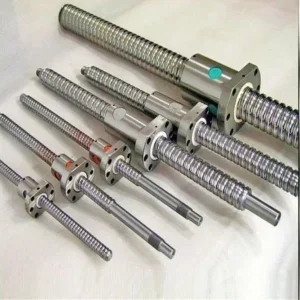
- Preloaded Ball Screws: Using preloaded ball screws is one of the most effective mechanical solutions. Preloading involves applying a constant axial force to the ball nut, which eliminates the clearance between the balls and the screw threads. This ensures continuous contact and removes backlash.
- Anti-Backlash Nuts: For lead screws, anti-backlash nuts are designed with spring-loaded mechanisms that push the nut halves apart, taking up the clearance in the threads.
- Adjustable Gear Meshing: In gearboxes, backlash can sometimes be adjusted by carefully setting the center distance between gears or by using eccentric bushings. However, this must be done precisely to avoid excessive friction and wear.
- Tapered Gibs and Wedges: In linear guide systems, tapered gibs can be adjusted to reduce clearance and improve rigidity, minimizing play.
- High-Precision Components: Upgrading to higher-precision components, such as ground ball screws, precision gearboxes with reduced backlash, and high-quality linear guide rails, can significantly mitigate backlash issues from the outset.
- Regular Maintenance and Lubrication: Proper lubrication reduces wear, which is a common cause of increasing backlash over time. Regular inspection and replacement of worn components (bearings, gears, ball nuts) are crucial.
2. Software Compensation (Backlash Compensation)
Modern CNC controllers and motion control systems often include software features to compensate for known backlash values.
- How it Works: When the direction of an axis changes, the controller adds a small, pre-programmed extra movement in the new direction. This additional movement is equal to the measured backlash value, effectively taking up the mechanical play before the actual commanded motion begins.
- Implementation: The backlash value is typically entered into the CNC controller’s parameters for each axis. The controller then automatically applies this compensation during direction reversals.
- Advantages: Cost-effective, as it uses existing control hardware; can be easily adjusted.
- Disadvantages: Only compensates for static backlash; does not address dynamic effects or wear; if the backlash value changes due to wear, the compensation needs to be updated. It can also lead to jerky movements if not tuned correctly.
3. Advanced Control Strategies
- Closed-Loop Control with Linear Encoders: While motor encoders provide feedback on motor position, linear encoders mounted directly on the moving axis provide feedback on the actual position of the machine table or tool. By closing the control loop around the linear encoder, the control system can directly measure and compensate for any discrepancy between the motor’s movement and the actual linear movement, including backlash.
- Adaptive Control: Some advanced control systems can dynamically estimate and compensate for backlash based on real-time feedback and machine dynamics, adjusting compensation values as wear occurs.
Practical Industrial Examples
CNC Router Machines
In industrial CNC router machines, backlash in the X, Y, and Z axes can lead to inaccurate cuts, poor surface finish, and dimensional errors in machined parts. For instance, when routing a square pocket, backlash might cause the corners to be rounded or oversized when the machine changes direction. Implementing preloaded ball screws and precise backlash compensation in the CNC controller is critical for achieving the tight tolerances required in woodworking, plastics, and light metal fabrication.
Robotic Arms
Robotic arms used in assembly, welding, or pick-and-place operations require high repeatability. Backlash in the joints (gearboxes) of a robotic arm can lead to significant end-effector positioning errors, making it impossible to perform delicate tasks or precisely place components. High-precision, low-backlash planetary gearboxes and harmonic drives are often employed, coupled with advanced servo drives and control algorithms that incorporate backlash compensation.
Medical Devices Manufacturing
The manufacturing of medical devices often involves micro-machining and intricate assembly, demanding extreme precision. Backlash in the motion systems of these machines can have severe consequences for product quality and patient safety. Here, laser interferometers are frequently used for initial calibration and ongoing monitoring, and systems often feature direct-drive motors or highly preloaded mechanical components to virtually eliminate backlash.
Conclusion
Backlash is an inherent challenge in mechanical motion systems, but its impact on industrial automation can be significantly minimized through careful design, precise measurement, and effective mitigation strategies. Understanding the causes and effects of backlash is fundamental for engineers and technicians aiming to optimize machine performance, extend equipment life, and ensure product quality. By combining robust mechanical solutions like preloaded ball screws and high-precision components with advanced control techniques such as software compensation and closed-loop feedback, industrial CNC router machines and other automation systems can achieve the high levels of accuracy and repeatability demanded by today’s manufacturing environment. Regular maintenance and recalibration are also essential to sustain these performance levels over time.
For inquiries about Mermak CNC industrial solutions and how to optimize your machine’s performance, request a quote on WhatsApp.
FAQ
What is backlash in industrial CNC machines?
Backlash, or axial play, is the lost motion or clearance between mechanical components in a drive system. When the direction of motion reverses, the driving component moves a small distance before the driven component begins to respond, due to this inherent play.
What are the main effects of backlash on CNC machine performance?
Backlash leads to positioning errors, reduced repeatability, vibrations, noise, and premature wear of components. In CNC machines, this translates to inaccurate cuts, poor surface finish, and dimensional inaccuracies in manufactured parts.
How is backlash typically measured in an industrial setting?
Common methods include using a dial indicator for direct measurement, laser interferometers for high-precision applications, and encoder-based measurements that utilize the machine's existing feedback systems. Acoustic or vibration analysis can also help detect its presence.
What are the most effective ways to eliminate or reduce backlash?
Backlash can be eliminated or reduced through mechanical adjustments (e.g., preloaded ball screws, anti-backlash nuts, adjustable gear meshing), software compensation in the CNC controller, and advanced control strategies like closed-loop control with linear encoders.
Is software backlash compensation sufficient, or are mechanical solutions necessary?
While software compensation can account for a known static backlash value, it doesn't address the root mechanical cause or dynamic effects. Mechanical solutions like preloaded ball screws provide a more fundamental and robust solution by physically removing the clearance.