How Much Does a Hobby CNC Machine Cost in 2024? An In-Depth Analysis

📑 Table of contents (Click to open)
- How Much Does a Hobby CNC Machine Cost in 2024? Introduction and Technical Analysis
- How Much Does a Hobby CNC Machine Cost in 2024? Operating Principle and Technical Data
- How Much Does a Hobby CNC Machine Cost in 2024? On-Site Considerations
- How Much Does a Hobby CNC Machine Cost in 2024? Common Problems and Solutions
- How Much Does a Hobby CNC Machine Cost in 2024? Conclusion and Expert Advice
- FAQ
How Much Does a Hobby CNC Machine Cost in 2024? Introduction and Technical Analysis
For professionals operating in the industrial automation and manufacturing sectors, understanding fundamental engineering principles and machine control dynamics is paramount. With advancing technology, Computer Numerical Control (CNC) technology, once exclusive to large factories, has now permeated hobby workshops and personal projects. This article provides a detailed analysis of the cost of building a hobby CNC machine as of 2024, from an industrial automation perspective. A hobby CNC project offers more than just building a machine; it provides a comprehensive learning and application platform that brings together the disciplines of mechatronics, **electronics,software, andmechanical design**. The cost of such a project varies widely depending on the quality of selected components, size, precision, and overall performance expectations. Our aim is to transparently present this complex cost structure, offering both a technical guide and an evaluation of potential hidden costs and investment returns.
A hobby CNC machine can be utilized in numerous applications, from prototyping to small-scale production, artistic endeavors to educational demonstrations. This enhances professionals’ abilities to work with new materials, experiment with different machining strategies, or test specific automation scenarios under real-world conditions. When conducting a cost analysis, it is essential to consider not only hardware acquisition costs but also factors such as labor time, learning curve, and ancillary equipment. As of 2024, fluctuations in global supply chains, changes in raw material prices, and the availability of electronic components directly impact the costs of CNC components. Therefore, this guide aims to assist in realistic budgeting by considering current market conditions. While a hobby CNC project may initially appear as a cost item, it represents a significant investment for personal and professional development in the long run.
How Much Does a Hobby CNC Machine Cost in 2024? Operating Principle and Technical Data
The operating principle of a hobby CNC machine is fundamentally the same as its industrial counterparts: converting numerical instructions, known as G-code, generated by a computer into mechanical movements to perform a specific machining operation. These operations can include cutting, engraving, drilling, or shaping materials. The main components of a CNC system can be listed as the mechanical structure (chassis), motion system (linear rails, ball screws, stepper/servo motors), control electronics (drivers, control board), spindle or laser module, and software (CAM and control software). The selection of each component directly affects the machine’s final cost, precision, and machining capability.
Mechanical Structure (Chassis): The chassis, forming the foundation of a CNC machine, must absorb vibrations generated during machining and possess high rigidity. For hobby-level machines, materials such as aluminum extrusion profiles, plywood, or MDF are commonly used. Aluminum extrusions are popular due to their modular nature and relatively easy assembly, but their costs are higher compared to wood-based solutions. Steel or cast iron chassis are preferred in industrial applications and can be both costly and difficult to process for hobbyists. The size of the chassis determines the working area (e.g., 30×40 cm, 60×90 cm), which in turn affects the length and cost of other components (rails, screws).
Motion System: This system converts the rotational motion from motors into linear motion. Its main components include:
- Stepper Motors: The most commonly used motors in hobby CNCs. They come in various sizes and torque values, such as Nema 17 and Nema 23. As torque increases, so does the cost. They do not require a feedback mechanism for precise positioning (open-loop control).
- Servo Motors: More expensive but offer higher precision, speed, and torque due to closed-loop control. They are common in industrial applications and can be preferred for high-end hobby or semi-professional CNCs.
- Motor Drivers: Electronic components that control stepper motors and provide power to them. They offer smoother movement through micro-stepping features.
- Linear Guides: Ensure the accuracy of motion. V-wheels (V-groove wheels) and aluminum profiles are low-cost options. For higher precision and load-bearing capacity, supported linear rails (SBR/HGR series) and linear bearings are used. These components significantly affect the overall rigidity and machining quality of the machine.
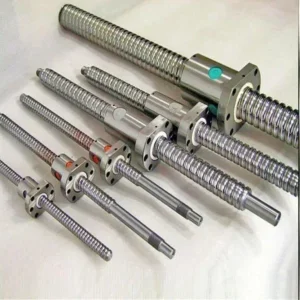
- Ball Screws: Ball screws, which transmit motor motion to the machining axes, are typically of the TR8 (Trapezoidal screw) or ball screw type. Ball screws offer less friction, higher precision, and longer life but are much more expensive than TR8 screws. Ball screws are preferred to minimize backlash issues.
Control Electronics: The brain of a CNC, the control board manages motor drivers, limit switches, emergency stop buttons, and spindle control.
- Arduino GRBL Control Boards: One of the most cost-effective and popular solutions. A simple and effective control system can be created with Arduino Uno-based boards and a CNC Shield combination. GRBL (G-code Ripper / Basic Line) is an open-source firmware.
- Mach3/LinuxCNC Based Control Boards: These boards, operating via parallel port or Ethernet, offer more advanced features and greater control flexibility. They are generally preferred for more powerful and stable systems.
- DSP Control Boards: Typically found in more professional hobby or small workshop machines. They offer the ability to run G-code without relying on a computer and provide a more stable operating environment.
Power Supply is critical for providing stable power to all electronic components.
Spindle or Laser Module: Selected according to the material to be processed and the task to be performed.
- Trim Routers (Hand Routers): The most cost-effective solution. Sufficient for wood and soft materials, but limited in terms of precision, noise level, and lifespan.
- DC Spindle Motors: With powers such as 300W-500W, these motors, usually equipped with an ER11 collet system, offer quieter and controllable speed.
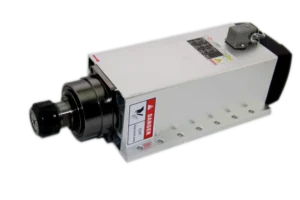
- AC Spindle Motors: Available in powers such as 0.8kW, 1.5kW, 2.2kW, they come with water or air cooling. They offer high power, precision, and long life, ideal for more demanding applications like metal machining, but are more expensive due to their cost and the need for an inverter (VFD).
- Laser Modules: Used for engraving or cutting. They typically have powers ranging from 5W to 40W+. They can work on materials such as wood, acrylic, and leather.
Software:
- CAM Software (Computer-Aided Manufacturing): Converts 2D or 3D designs into G-code. Options include Fusion 360 (free version available for hobby users), Estlcam, VCarve, Carbide Create.
- Control Software: Sends G-code to the CNC machine and controls its movement. Universal Gcode Sender (UGS), Candle, Mach3, LinuxCNC are popular options. Open-source software reduces costs, while commercial software can offer more features and support.
The selection of all these components directly determines the project’s budget. For example, a small wood-working CNC can be started with a budget in the 300-500 USD range, while a high-precision system capable of machining metal may require budgets of 1500-3000 USD and above. As of 2024, exchange rates and global market conditions are important factors affecting these costs.
| Parameter | Value/Description (2024 Estimated Cost Range – USD) |
|---|---|
| Mechanical Chassis (Frame) | Wood/MDF (50-150), Aluminum Extrusion (200-600), Kits (400-1500) |
| Stepper Motors (Nema 17-23, 3 units) | Low Torque (60-120), Medium Torque (120-250) |
| Motor Drivers (DRV8825/A4988 or TB6600, 3-4 units) | Integrated (20-50), External Module (50-150) |
| Control Board (GRBL compatible/Mach3/DSP) | Arduino GRBL Shield (30-80), Mach3 Parallel/Ethernet (100-300), DSP Controller (300-800) |
| Linear Guides and Ball Screws (X, Y, Z axis) | V-Wheel/Trapezoidal Screw (100-300), Supported Rail/Ball Screw (300-1000) |
| Spindle or Laser Module | Trim Router (50-150), DC Spindle (80-250), AC Spindle (300-800+), Laser (100-500) |
| Power Supply, Cables, Limit Switches, etc. | General Electronics and Fasteners (50-200) |
| Software (CAM/Control) | Open Source (0), Commercial Software (100-500+) |
| Total Estimated Cost Range (Minimum-Maximum) | 350 USD (Basic Wood) – 4000+ USD (High-Precision Metal Machining) |
How Much Does a Hobby CNC Machine Cost in 2024? On-Site Considerations
- Realistic Budget Planning and Hidden Costs: When embarking on a hobby CNC project, it is crucial to account not only for the cost of main components but also for hidden costs such as shipping fees, customs duties (especially for international purchases), hand tools required for assembly, consumables (router bits, collets, clamps), and safety equipment (protective glasses, hearing protection, dust mask). Allocating 20-30% more than the initial budget typically provides a buffer for unexpected situations. Additionally, the cost of spare parts or upgrade costs in case of component failure should be considered.
- Appropriate Component Selection and Compatibility: Ensuring all components work harmoniously is critical for machine performance. For example, if high-torque stepper motors are chosen, drivers and power supplies with appropriate current capacity must be used. The more rigid the mechanical structure, the more precisely the motion system (linear rails, ball screws) will operate. A weak chassis will render even the best motor and rail system inefficient. Spindle power should be suitable for the hardness of the material to be processed and the cutting depth. An overly powerful or insufficient choice leads to inefficiency in both cost and performance.
- Safety Protocols and Occupational Health: CNC machines pose potential hazards due to rotating cutting tools, high-voltage electrical components, and moving parts. Safety measures such as an Emergency Stop (E-Stop) button, limit switches, proper grounding, cable management, and a dust/chip extraction system should never be overlooked. Good ventilation of the working area and the use of personal protective equipment (PPE) are mandatory. As industrial automation experts, compliance with safety standards should be a priority even in hobby projects.
- Software Selection and Learning Curve: The software used for CNC control (CAM and control software) plays a significant role in project success. Open-source and free software (hobby version of Fusion 360, Estlcam, UGS, Candle) reduce the budget, but their learning curves can be steeper, and support resources may be limited. Commercial software generally offers more user-friendly interfaces and comprehensive support but comes at a cost. Software selection should be proportional to the user’s technical proficiency and the complexity of the project. Correct configuration of the software, motor settings, and step/mm calibration are critical for precise machining.
- Modularity and Upgradeability: Designing the machine with a modular structure is beneficial for future needs or improvements. For example, starting with a more affordable DC spindle and having the option to upgrade to a more powerful AC spindle later provides long-term cost-effectiveness. Aluminum extrusion profiles are the most suitable chassis materials for such modularity. This approach reduces initial investment costs while offering the flexibility to increase machine capacity over time.
- Community and Support Resources: Hobby CNC communities, forums, YouTube channels, and open-source projects are invaluable resources for knowledge and experience sharing. Seeking support from these communities when encountering a problem or wanting to add a new feature can accelerate project progress and reduce costly trial-and-error processes. A wide online support network is available, especially for GRBL-based systems.
How Much Does a Hobby CNC Machine Cost in 2024? Common Problems and Solutions
When building and using a hobby CNC machine, it is possible to encounter some fundamental issues, similar to those seen even in industrial automation systems. Most of these problems can be resolved with correct diagnosis and a systematic approach.
- Problem: Lost Steps and Position Loss: Motors skipping expected steps and losing position, especially at high speeds or under heavy loads. Solution:
- Motor Driver Current: Ensure that the motor driver’s current settings are appropriate for the motor’s nominal current. Insufficient current leads to torque loss, while excessive current causes the motor to overheat.
- Mechanical Friction: Ensure that linear rails, ball screws, and bearings move freely. Lack of lubrication, misalignment, or mechanical binding increases friction.
- Speed and Acceleration Settings: Reduce the maximum speed and acceleration values in the control software (GRBL settings, etc.) according to the capacity of the motors and mechanical system.
- Power Supply: Ensure that the power supply provides sufficient and stable power to the motors. Voltage drops or insufficient current capacity can lead to this problem.
- Problem: Poor Surface Quality and Vibration Marks: Roughness, undulations, or vibration marks appearing on the surface of the processed part. Solution:
- Mechanical Rigidity: Ensure that the chassis and all connections are sufficiently robust. Loose connections or a weak chassis will cause vibration. Increase rigidity with additional reinforcements if necessary.
- Spindle and Collet: Ensure that the spindle has low runout and that the collet used is tightly seated on the tool. Poor quality collets or damaged spindle bearings can cause runout.
- Cutting Tool (Router Bit): Dull, incorrect type, or worn-out cutting tools lead to poor surface quality. The correct tool type and sharpness for the material should be checked.
- Cutting Parameters (Feed/Speed): Cutting speed (feed rate) and spindle speed settings appropriate for the material to be processed, cutting tool, and spindle power should be made. Too fast a feed or too slow a speed can cause vibration and poor surface quality. Optimize these parameters in the CAM software.
- Problem: Electronic Noise and Control Problems (EMI): The control board or motor drivers behaving unexpectedly, intermittent communication, or random stops. Solution:
- Cable Management: Separate motor cables (high current) and signal cables (low voltage) and, if possible, use shielded cables to minimize electromagnetic interference (EMI).
- Grounding: Ensure that all electronic components and the machine chassis are properly grounded.
- Ferrite Beads: You can reduce noise by adding ferrite beads to sensitive signal lines.
- Power Supply Filtering: Using a quality and filtered power supply reduces noise from the mains.
- Problem: Software and Configuration Errors: G-code errors, CAM software output problems, or the control software failing to communicate correctly with the machine. Solution:
- G-code Validation: The generated G-code should be checked for accuracy by running it in a simulator or a safe area (with the spindle off).
- CAM Settings: Ensure that settings such as tool paths, tool diameter, offsets, and safety heights are correctly set in the CAM software.
- Control Software Settings: Ensure that GRBL settings (steps/mm, maximum speed, acceleration, etc.) or Mach3/LinuxCNC calibrations are appropriate for your machine’s physical characteristics. The travel distance of each axis should be manually checked and calibrated.
- Driver Updates: Ensure that the drivers on your computer are up to date, especially for USB or Ethernet-based control boards.
How Much Does a Hobby CNC Machine Cost in 2024? Conclusion and Expert Advice
As we have seen, the cost of building a hobby CNC machine in 2024 spans a wide range. While a basic system capable of woodworking can be started with a budget in the 350-700 USD range, a system capable of machining metal, offering high precision and a more professional experience, may require an investment ranging from 1500 USD to over 4000 USD. These costs reflect not only the direct prices of components but also global supply chain dynamics, exchange rates, and local taxation policies. As an expert in the industrial automation sector, based on my field experience, I can clearly state that a hobby CNC project offers much more than just building a machine. It is an opportunity to practically experience fundamental engineering principles such as mechanical tolerances, electronic signal integrity, control algorithms, and materials science. The knowledge and skills gained during this process will provide you with an invaluable advantage in the design, integration, and troubleshooting processes of automation systems in your professional career.
As expert advice, needs analysis and detailed research are critically important before embarking on such a project. Clarifying what materials you want to process, how much working area you need, and what level of precision you expect will enable you to make the right component selections. Remember that choosing the cheapest option may not always be the most cost-effective solution; low-quality components can create more problems, time loss, and additional costs in the long run. Instead, strive to select components that offer the best performance and reliability within your budget. Leveraging open-source projects and extensive hobby CNC communities will both increase your knowledge and help you solve potential problems. Never neglect safety precautions and always use protective equipment. In conclusion, building a hobby CNC machine is not just a hobby but also a valuable investment for your personal and professional development. This investment will provide you with a unique experience by enabling you to deeply understand the fundamental principles of the automation world and bring complex systems to life with your own hands.
FAQ
What is the estimated cost range for a hobby CNC machine in 2024?
The cost of building a hobby CNC machine in 2024 can range from approximately 350 USD for a basic woodworking setup to over 4000 USD for a high-precision system capable of metal machining. This wide range depends on component quality, size, and desired precision.
What are the main components that influence the cost of a hobby CNC machine?
Key components include the mechanical chassis (frame), motion system (stepper/servo motors, linear guides, ball screws), control electronics (control board, drivers), spindle or laser module, and software (CAM and control software). Each component's selection significantly impacts the overall cost and performance.
Are there any hidden costs to consider when building a hobby CNC machine?
Hidden costs often include shipping fees, customs duties (for international purchases), necessary hand tools for assembly, consumables like router bits and clamps, and essential safety equipment (protective glasses, hearing protection, dust masks). It's advisable to budget an additional 20-30% for these unforeseen expenses.
What are common problems encountered with hobby CNC machines and how can they be solved?
Common issues include lost steps and position loss (due to insufficient motor current, mechanical friction, or incorrect speed settings), poor surface quality (from weak chassis, spindle runout, or incorrect cutting parameters), and electronic noise (EMI) affecting control. Proper calibration, robust mechanical design, and shielded cabling are crucial for resolution.
How can building a hobby CNC machine benefit industrial automation professionals?
For professionals, a hobby CNC project offers practical experience in mechatronics, electronics, software, and mechanical design. It enhances understanding of mechanical tolerances, electronic signal integrity, control algorithms, and material science, providing invaluable skills for industrial automation careers.