No products in the cart.
HGR20 vs HGR25 Linear Guide Rails: Technical Differences and Application Insights
Contents
- Introduction and Technical Analysis of HGR20 vs HGR25 Linear Guide Rails
- Operating Principle and Technical Data: HGR20 vs HGR25 Linear Guide Rails
- Field Considerations for HGR20 and HGR25 Linear Guide Rails
- Common Issues and Solutions for HGR20 and HGR25 Linear Guide Rails
- Conclusion and Expert Advice on HGR20 vs HGR25 Linear Guide Rails
- FAQ
Introduction and Technical Analysis of HGR20 vs HGR25 Linear Guide Rails
As fundamental components in industrial automation and precision machine design, linear guide rails critically impact the performance, accuracy, and lifespan of motion control systems. These systems are widely utilized across various applications, from CNC router machines and robotic arms to automated assembly lines and precision measuring devices. While numerous linear guide rail series and sizes are available, the HGR series stands out for its high load-carrying capacity, rigid structure, and extended service life. Among the popular members of this series, the HGR20 and HGR25 models frequently present a selection dilemma for design engineers and field technicians. This article aims to assist in making the correct choice by thoroughly examining the fundamental technical differences, engineering principles, application areas, and field-focused considerations between HGR20 and HGR25 linear guide rails. Although both guide rail models share a similar basic operating principle, subtle differences in their dimensions create significant and distinguishing effects on load capacity, rigidity, precision, and application performance. This detailed analysis serves as a comprehensive guide for industrial automation experts and decision-makers to determine the most suitable linear motion solution for their project requirements.
Operating Principle and Technical Data: HGR20 vs HGR25 Linear Guide Rails
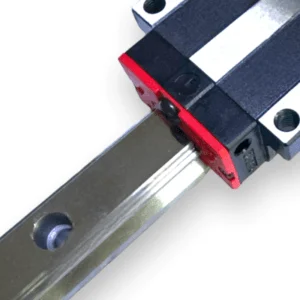
Linear guide rails typically consist of two main components: a rail (guide) and a carriage (block) that moves along this rail. HGR series linear guide rails are based on a four-row ball bearing principle. In this design, the balls housed within the guide block move in a circulating motion along specially machined rail grooves, minimizing friction and ensuring smooth, precise linear movement. This four-row ball arrangement provides high load-carrying capacity and resistance to moment loads in all directions (up, down, and sideways). The continuous circulation of the balls reduces maintenance requirements and ensures long-lasting operation.
The primary difference between HGR20 and HGR25, as their names suggest, is their rail width. In the HGR20 model, the nominal rail width is 20 mm, while in the HGR25 model, this value is 25 mm. This 5 mm difference not only affects the physical size but also leads to variations in the number of balls, ball diameter, and overall block geometry. These changes directly impact the engineering performance parameters of the linear guide system:
- Load Capacity: HGR25, compared to HGR20, has a wider rail base and typically features larger diameter balls or a greater number of balls, resulting in significantly higher dynamic (while in motion) and static (while stationary) load capacities. Generally, the dynamic load capacity of HGR25 can be 30% to 50% higher than that of HGR20. This means HGR25 can carry heavier workpieces or withstand higher acceleration/deceleration forces.
- Rigidity: Thanks to its wider base and larger ball elements, HGR25 exhibits less deflection or deformation under external forces. This is a critical feature, especially for applications requiring precise positioning or machining operations with high cutting forces. High rigidity reduces vibration, improves machining quality, and ensures longer tool life.
- Moment Capacities: Linear guide rails are not only subjected to vertical or horizontal loads but can also experience moment loads such as roll, pitch, and yaw. The wider base and larger internal geometry of HGR25 make it much more resistant to these moment loads than HGR20. This makes HGR25 a more suitable option for cantilever-type applications where a single guide block operates under a large moment load, or in systems where multiple blocks are used on a single rail.
- Dimensions and Mounting: HGR25 has a wider and generally taller profile compared to HGR20. This means it will occupy more space in the mounting area. Mounting bolt holes and spacing also differ. Therefore, existing space constraints and the compatibility of the mounting surface must be carefully evaluated during the design phase.
- Weight: Due to their larger dimensions and greater material usage, HGR25 guide rail systems are heavier than their HGR20 counterparts. This factor should be considered, especially in high-speed or energy-efficiency-focused applications where moving mass is critical.
Both guide rail models are manufactured from high-precision ground and heat-treated steel, guaranteeing their durability and performance. However, these technical differences clearly demonstrate why each model should be preferred in specific application scenarios. For example, in an automation system requiring fast and precise movement of light loads, HGR20 might be a sufficient and more cost-effective solution. In contrast, for heavy-duty machine tools or robotic manipulators that demand high load capacity and rigidity, HGR25 is an indispensable choice.
| Parameter | HGR20 Linear Guide Rail | HGR25 Linear Guide Rail |
|---|---|---|
| Nominal Rail Width | 20 mm | 25 mm |
| Block Width (Typical) | Approx. 44-48 mm | Approx. 58-60 mm |
| Dynamic Load Capacity (C) | Medium (e.g., 15-20 kN) | High (30-50% higher than HGR20, e.g., 20-30 kN) |
| Static Load Capacity (Co) | Medium (e.g., 25-35 kN) | High (30-50% higher than HGR20, e.g., 35-50 kN) |
| Rigidity | Good | Very Good (Higher moment resistance) |
| Moment Capacities (MR, MP, MY) | Suitable for medium moment loads | Very suitable for high moment loads |
| Typical Application Areas | Light to medium loads, fast movements, small CNC machines, 3D printers, automation systems | Heavy loads, high rigidity applications, large CNC router machines, robotic arms, precision machining centers |
| Cost (Relative) | More affordable | Higher |
Field Considerations for HGR20 and HGR25 Linear Guide Rails
- Mounting Precision and Surface Preparation: The performance of linear guide rails is directly related to the flatness and parallelism of the mounting surface and the care taken with bolt tightening torques. Especially in more rigid systems like HGR25, even thousandths of a millimeter deviations on the mounting surface can shorten system life, increase friction, and reduce precision. The parallelism and co-planarity of the guide rails are critically important. Tightening mounting bolts to specified torque values, in a crosswise and gradual manner, ensures balanced distribution of internal stresses. Mounting surfaces must be clean, crack-free, and sufficiently rigid for the guide rail system to achieve its expected performance.
- Load Calculations and Safety Factors: Accurately calculating the maximum dynamic and static loads in the application is vital. Not only vertical loads but also horizontal loads, moment loads (roll, pitch, yaw), and impact loads must be considered. In addition to calculated load values, an appropriate safety factor (typically between 1.5 and 3) should be applied for unexpected impacts or vibrations. Since HGR20 and HGR25 have different load capacities, these calculations directly influence the correct model selection. Overloading leads to premature fatigue, wear on ball and rail surfaces, and system failure.
- Lubrication and Maintenance Routines: Linear guide rails require regular lubrication to reduce friction and extend their lifespan. The type of lubricant (grease or oil) and the lubrication interval should be determined according to manufacturer recommendations and operating conditions (speed, load, ambient temperature, contamination). In the field, ensure that lubrication ports are clean and that the lubricant adequately penetrates the guide block’s interior. Dirty or insufficient lubrication causes guides to bind, operate noisily, and wear prematurely. Automatic lubrication systems are highly recommended, especially for applications with long operating hours or in hard-to-reach locations.
- Environmental Conditions and Protection: Dust, chips, moisture, chemicals, or extreme temperature variations in the operating environment can negatively impact linear guide rail performance. The sealing gaskets (end seals and side seals) at the ends of the guide blocks play a crucial role in preventing contaminants from entering. However, in very dirty environments, additional protective bellows or telescopic covers may be necessary. High temperatures can cause the lubricant to lose its properties, while low temperatures can increase oil viscosity, raising movement resistance. Stainless steel or specially coated guide rails should be considered for corrosive environments.
- Rigidity and Vibration Analysis: Especially in applications requiring high speed and precision, the overall system rigidity and vibration behavior are critically important. The higher rigidity of HGR25 can reduce vibration amplitude, providing more stable operation. However, other components of the system (machine frame, fasteners) must also have sufficient rigidity. Dynamic analyses of the system should be performed to avoid resonance frequencies, and damping elements should be used if necessary.
Common Issues and Solutions for HGR20 and HGR25 Linear Guide Rails
Common problems with linear guide rails in industrial automation systems typically stem from incorrect selection, faulty installation, inadequate maintenance, or unsuitable operating conditions. Early diagnosis and correct resolution of these issues are critical for extending system life and minimizing unplanned downtime.
- Premature Wear and Noisy Operation:
- Scenario: Abnormal noises from guide blocks, increased friction, rough movement.
- Causes: Insufficient or incorrect lubrication, contamination (dust, chips), overloading, incorrect mounting (rail non-parallelism, surface unevenness), damaged balls.
- Solutions: Check lubrication routines and apply the correct lubricant in the proper amount. Implement additional protective measures (bellows, covers) against environmental contamination. Verify mounting precision with laser alignment devices and remount if necessary. Ensure load capacity is not exceeded. Replace damaged blocks or rails.
- Movement Sticking or Binding:
- Scenario: Guide block sticking at certain points, interrupted or completely stopped movement.
- Causes: Non-parallelism or unevenness in rail mounting, foreign objects entering the guide, damage to the internal mechanism of the guide block (ball displacement), thermal expansion due to overheating.
- Solutions: Correct mounting errors. Clean rail and block surfaces, remove foreign objects. Disassemble the guide block to inspect its internal mechanism, checking for damage to ball guides or balls. Replace the block or rail if necessary. Keep operating temperature under control.
- Loss of Precision and Vibration:
- Scenario: Backlash in machine movements, decreased machining precision, visible vibrations in the system.
- Causes: Wear on guide elements (balls, rail surfaces), loosened mounting bolts, insufficient overall system rigidity, incorrect preload setting.
- Solutions: Check and tighten all mounting bolts to specified torque values. Observe wear on guide elements; if significant wear is present, replace the guide system. Ensure the correct preload level is selected for the application; use higher preloaded guides if necessary. To increase system rigidity, thicker profiles or more rigid guides like HGR25 should have been chosen. Dynamic analyses can be performed to identify sources of vibration.
- Corrosion and Rusting:
- Scenario: Rust spots on guide rails or block surfaces, discoloration of the metal.
- Causes: Humid or chemical vapor environments, insufficient lubrication or lack of anti-corrosion protection, direct contact with corrosive substances.
- Solutions: Choose stainless steel guides or specially coated guides (e.g., chrome plating) suitable for environmental conditions. Use regular and appropriate lubricants with anti-corrosion properties. Implement environmental measures to control moisture or chemical vapors in the surroundings.
Most of these problems can be prevented with correct product selection, meticulous installation, and regular maintenance. Field technicians and engineers knowing these potential issues and their solutions will shorten troubleshooting times and increase production efficiency.
Conclusion and Expert Advice on HGR20 vs HGR25 Linear Guide Rails
The choice between HGR20 and HGR25 linear guide rails is a critical engineering decision for the design and performance of industrial automation systems. As evident from this detailed analysis, the 5 mm difference in rail width is not merely a nominal measurement but profoundly impacts the system’s load-carrying capacity, rigidity, resistance to moment loads, precision, and consequently, overall application performance. HGR20 is generally preferred for applications with lighter loads, moderate precision, and speed requirements, owing to its cost-effectiveness and compact structure. Small CNC router machines, 3D printers, automatic doors, or light assembly systems might fall into this category. On the other hand, HGR25 offers higher load capacity, superior rigidity, and better resistance to moment loads, making it an indispensable solution for heavy-duty machine tools, large robotic arms, high-precision machining centers, mold machines, or systems subjected to high dynamic loads. Our field experience indicates that an incorrect guide rail selection can lead to a range of negative outcomes, from shortening system lifespan and failing to achieve desired precision to causing unplanned production downtimes.
As expert advice, when selecting linear guide rails, it is essential to holistically evaluate not only the instantaneous load capacity but also all dynamic loads, moments, impact loads, environmental conditions (dust, moisture, temperature), desired precision levels, speed and acceleration values, and expected service life. Meticulous attention to mounting precision, regular and correct lubrication routines, and environmental protection measures are key to the long-lasting and trouble-free operation of the system, regardless of the chosen guide rail model. In particular, detailed engineering calculations performed at the project’s initial stage and potential growth or capacity increase scenarios should also be considered. It should be remembered that a solution like HGR25, which might seem slightly more expensive initially, can reduce the total cost of ownership (TCO) in the long run by offering less maintenance, higher production quality, and a longer system life. In conclusion, the choice between HGR20 and HGR25 must be made by balancing technical requirements, cost constraints, and long-term operational goals; always focusing on the most suitable engineering solution for the specific needs of the application. This approach will guarantee the reliability and efficiency of your industrial automation systems.
FAQ
What is the main technical difference between HGR20 and HGR25 linear guide rails?
The primary difference lies in their nominal rail width: HGR20 has a 20 mm rail, while HGR25 has a 25 mm rail. This difference significantly impacts load capacity, rigidity, and moment resistance.
Which linear guide rail, HGR20 or HGR25, has a higher load capacity and rigidity?
HGR25 offers significantly higher dynamic and static load capacities (typically 30-50% more) and superior rigidity compared to HGR20 due to its wider base and often larger or more numerous ball bearings.
What are the typical applications for HGR20 versus HGR25 linear guide rails?
HGR20 is suitable for light to medium loads, smaller CNC machines, 3D printers, and general automation. HGR25 is ideal for heavy loads, large industrial CNC router machines, robotic arms, and high-precision machining centers requiring superior rigidity and moment resistance.
What critical factors should be considered during the installation and operation of HGR series linear guide rails?
Key considerations include precise mounting surface preparation, accurate load calculations (including dynamic and moment loads), regular and appropriate lubrication, and protection against environmental contaminants like dust and moisture.
What are common problems encountered with HGR linear guide rails and how can they be resolved?
Common issues include premature wear, noisy operation (often due to poor lubrication or contamination), movement sticking (due to misalignment or foreign objects), and loss of precision (from wear or loose bolts). Solutions involve proper maintenance, correct installation, and ensuring the right guide rail is selected for the load.