




































































Gear Motor vs. Direct Drive: Which is More Accurate for Industrial Applications?
📑 Table of contents (Click to open)
Choosing between a gear motor and a direct drive system is crucial for industrial automation. Gear motors excel in high torque, low-speed applications, while direct drives offer superior precision and speed. This article breaks down their principles, technical specs, and ideal use cases to help you make the right choice for your CNC router machine or other industrial equipment.
Practical notes for CNC router, automation and industrial motion systems.
In industrial automation, controlling motion is fundamental. When transferring motor power to mechanical loads, two primary approaches dominate: using gear motors and direct drive (gearless) systems. Each method is developed based on different engineering philosophies and application requirements, possessing distinct advantages and disadvantages. The question of “which is more accurate?” is answered by the specific dynamics, environmental conditions, and performance expectations of the application. A thorough understanding of the fundamental principles, technical specifications, and application areas of both systems is critical for making the correct selection. This article serves as a comprehensive guide for industrial automation professionals.
Operating Principles and Technical Data
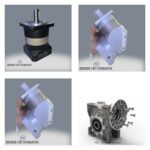
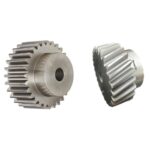
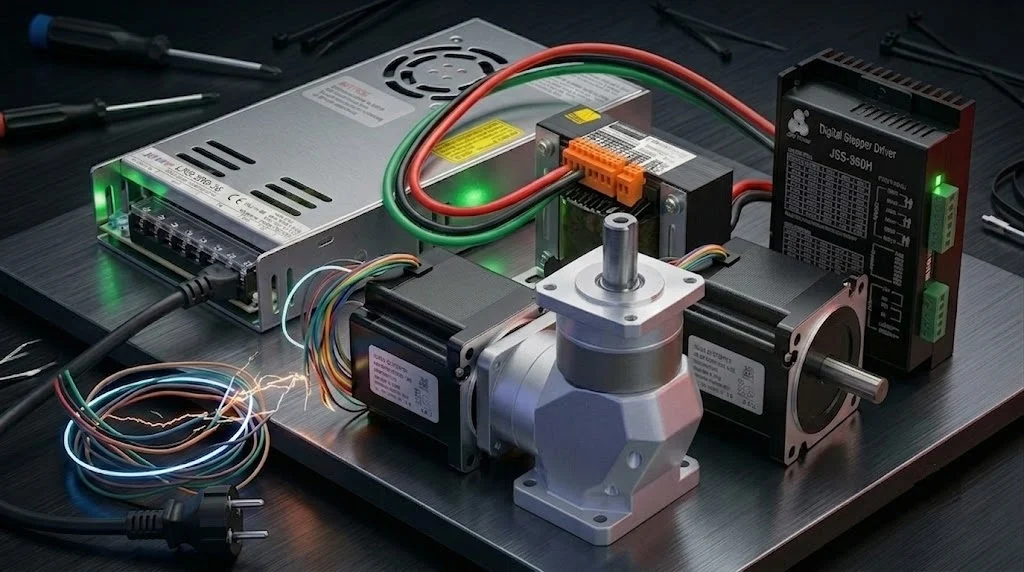
Gear Motors: These systems consist of an electric motor integrated with a gearbox (reducer). The gearbox’s primary function is to convert the motor’s high-speed, low-torque output into the lower-speed, high-torque output required by the application. This is achieved by multiplying the motor’s torque and dividing its speed through gear ratios. Gear motors are typically chosen for applications requiring high torque and low speed, such as conveyor systems, mixers, hoists, heavy lifting platforms, palletizing machines, and general machine drives. The gearbox allows the motor to operate within its more efficient speed range (usually higher RPMs), potentially optimizing energy consumption and enabling the movement of larger loads with a smaller motor. This can offer advantages in terms of initial investment and operating costs. However, disadvantages include some efficiency loss due to gear friction (typically 5-20%), a degree of rotational play known as backlash, and the need for periodic maintenance (oil changes, gear inspection, seal replacement). Additionally, the gearbox itself adds weight and bulk to the system, potentially creating installation constraints and often resulting in higher noise levels compared to direct drive systems.
Direct Drive Systems: In direct drive systems, the electric motor’s shaft is directly connected to the driven load, meaning there is no gearbox or intermediate gearing. This approach transfers the motor’s torque and speed directly to the load. Direct drive is generally preferred for applications demanding high speed, high precision, zero or very low backlash, and superior dynamic response. Areas where direct drive is commonly used include CNC machines, precision robotic arms, printing presses, semiconductor manufacturing equipment, and optical positioning systems. The absence of a gearbox significantly increases the system’s overall mechanical efficiency (typically 95-99%), substantially reduces maintenance requirements, and provides quieter operation. Furthermore, the lack of or minimal backlash enables very high repeatability and positioning accuracy. However, to achieve the same torque as a geared system, direct drive often requires larger, more powerful motors, which can increase initial cost and size. The motor’s speed must also directly match the required load speed, limiting operational flexibility if load speed requirements vary significantly.
Key Differences and Application Suitability
The fundamental difference lies in how torque and speed are managed. Gear motors use mechanical reduction to amplify torque at the expense of speed and introduce some backlash. Direct drives transmit power directly, prioritizing speed, precision, and minimal backlash, often requiring larger motors for high torque needs.
When to Choose a Gear Motor:
- Applications requiring very high torque at low speeds (e.g., heavy conveyors, mixers, crushers).
- When initial cost is a primary concern and slight backlash is acceptable.
- Situations where motor speed needs to be significantly reduced for the application.
- When the motor can operate more efficiently at higher speeds, with the gearbox providing the necessary reduction.
When to Choose a Direct Drive:
- High-precision positioning and motion control are critical (e.g., CNC machining, robotics, laser cutting).
- Zero or minimal backlash is essential for accuracy and repeatability.
- High-speed operation is required.
- Reduced maintenance and quieter operation are desired.
- Applications where the motor’s inherent speed and torque characteristics match the load requirements.
Industrial CNC Router Example
Consider a CNC router machine used for intricate wood carving or aluminum machining. For the axis movements (X, Y, Z), high precision and minimal backlash are paramount to achieve smooth cuts and accurate details. A direct drive system, often utilizing servo motors with high-resolution encoders and linear guide rails, would be the preferred choice. This ensures that commands from the motion control system are translated into immediate, precise movements of the cutting tool, with virtually no delay or play. The servo drive precisely controls the motor’s position and speed. In contrast, a gear motor might introduce too much backlash, leading to inaccuracies in fine details and potentially rougher surface finishes. While a gear motor could provide the necessary torque, the precision requirements of CNC machining typically favor the direct, responsive nature of direct drive technology.
Conclusion
The choice between a gear motor and a direct drive system is not about which is universally “more accurate,” but rather which is more appropriate for the specific demands of the application. Gear motors are robust solutions for high-torque, lower-speed tasks where efficiency and cost-effectiveness are key. Direct drive systems are indispensable when precision, speed, and minimal backlash are non-negotiable, particularly in advanced automation and CNC applications. By carefully evaluating your application’s torque, speed, accuracy, and dynamic response requirements, you can select the optimal drive system for your industrial machinery, ensuring peak performance and reliability.
Ready to optimize your industrial machinery’s performance? Request a quote on WhatsApp for tailored drive solutions from Mermak CNC.
Related product categories: General · Electronics · Combination Packages