No products in the cart.
CNC in Woodworking: From Craftsmanship to Digital Manufacturing
Contents
- Introduction and Technical Analysis Woodworking has endured as a craft throughout human history, forming a significant part of our cultural heritage. However, in today’s era of industrial automation, this ancient craft is undergoing a revolutionary transformation with the integration of Computer Numerical Control (CNC) technologies. The precision and aesthetics of traditional craftsmanship, combined with the speed, repeatability, and complex processing capabilities offered by digital technology, are opening new horizons in wood product design and manufacturing. For the industrial automation sector, this transformation not only optimizes production processes but also enables the market introduction of high-value, customized, and mass-producible wood products. CNC machines have been integrated into woodworking workshops not merely as production tools, but as intelligent systems that enhance design freedom, minimize errors, and improve occupational safety. This integration has enabled the creation of geometries and levels of detail previously impossible, especially in the production of furniture, decoration, architectural details, modeling, and art pieces. The digitalization process has culminated in the seamless integration of CAD (Computer-Aided Design) and CAM (Computer-Aided Manufacturing) software with CNC machines. This allows a designer’s or craftsman’s ideas to be materialized in a digital environment and then transformed into physical products via CNC router machines. This guide will delve into the technical depths, operational principles, and opportunities presented by CNC in woodworking from an industrial automation perspective. Operational Principles and Technical Data
- Key Considerations in the Field
- Common Problems and Solutions
- Expert Advice
- FAQ
Introduction and Technical Analysis
Woodworking has endured as a craft throughout human history, forming a significant part of our cultural heritage. However, in today’s era of industrial automation, this ancient craft is undergoing a revolutionary transformation with the integration of Computer Numerical Control (CNC) technologies. The precision and aesthetics of traditional craftsmanship, combined with the speed, repeatability, and complex processing capabilities offered by digital technology, are opening new horizons in wood product design and manufacturing. For the industrial automation sector, this transformation not only optimizes production processes but also enables the market introduction of high-value, customized, and mass-producible wood products. CNC machines have been integrated into woodworking workshops not merely as production tools, but as intelligent systems that enhance design freedom, minimize errors, and improve occupational safety. This integration has enabled the creation of geometries and levels of detail previously impossible, especially in the production of furniture, decoration, architectural details, modeling, and art pieces. The digitalization process has culminated in the seamless integration of CAD (Computer-Aided Design) and CAM (Computer-Aided Manufacturing) software with CNC machines. This allows a designer’s or craftsman’s ideas to be materialized in a digital environment and then transformed into physical products via CNC router machines. This guide will delve into the technical depths, operational principles, and opportunities presented by CNC in woodworking from an industrial automation perspective.
Operational Principles and Technical Data
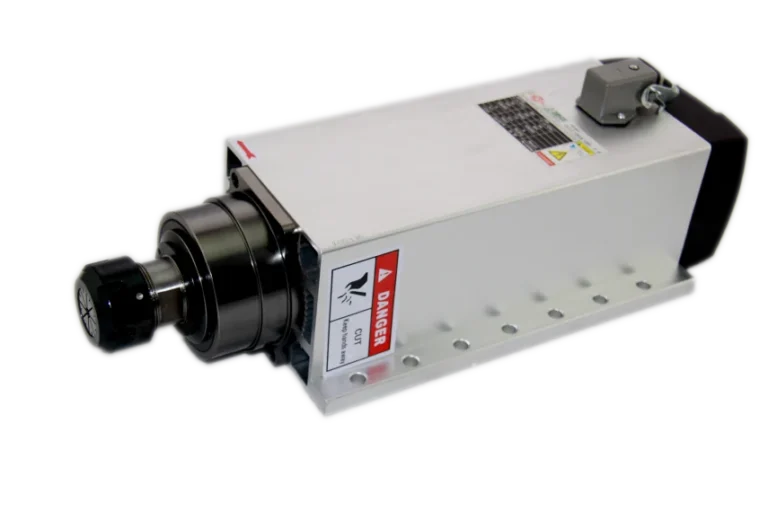
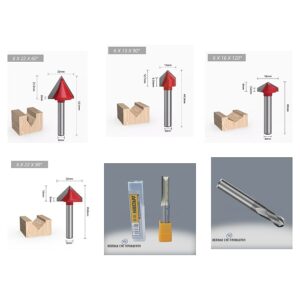
Woodworking CNC machines fundamentally consist of a cutting tool (spindle) and a worktable combination, moving via a language called G-code, which contains machining instructions generated by a computer. These industrial CNC router machines typically possess 3-axis (X, Y, Z) movement capability, though 4- or 5-axis models are available for more complex geometries. The X and Y axes generally control horizontal plane movement, while the Z-axis determines vertical cutting depth. The 4th and 5th axes usually provide additional degrees of freedom by rotating the workpiece or cutting tool, enhancing carving and complex surface machining capabilities. CNC routers operate with a high-speed spindle motor and various router bits attached to this motor. Spindle speed (RPM) can be adjusted according to the type of wood being processed, the diameter of the cutting bit, and the desired surface quality. Generally, higher RPM is preferred for harder woods and smaller diameter bits, while lower RPM may suffice for softer woods and larger diameter bits. Cutting bits range widely, from flat end mills, V-bits, ball nose mills, to specialized profile cutters. Each bit is optimized for a specific cutting operation, surface quality, or level of detail.
Machine motion control is achieved through stepper motors or more precise and feedback-enabled servo motors. Servo motor systems offer higher precision, speed, and repeatability due to their closed-loop control. The design to be machined is first created in a CAD software (e.g., AutoCAD, SolidWorks, Fusion 360). Subsequently, this design is transferred to a CAM software (e.g., ArtCAM, VCarve, Mastercam). The CAM software calculates appropriate toolpaths based on the design’s geometry, the cutting bit to be used, the wood type, and the desired surface quality, then converts these toolpaths into G-code. The G-code is loaded into the machine’s control unit (e.g., Mach3, GRBL, Fanuc, Siemens Sinumerik), and the control unit sends these codes to the motor drivers to ensure precise machine movement. The worktable used in woodworking CNC machines is typically equipped with a vacuum table or mechanical vise/clamp systems for workpiece fixturing. A vacuum table is ideal for quickly and securely holding large, flat wood panels, and it helps minimize vibration during machining, leading to higher quality results. From an industrial automation perspective, these machines can often be equipped with additional features such as Automatic Tool Changers (ATC), laser alignment systems, automatic material feeding units, and dust extraction systems to transform them into fully integrated production lines. This level of automation increases production efficiency and safety by reducing human intervention.
| Parameter | Value/Description |
|---|---|
| Spindle Power | 3 kW – 12 kW (Typically air or water-cooled) |
| Max. Feed Rate | 10 – 60 m/min (Varies by material and cutting tool) |
| Number of Motion Axes | 3, 4, or 5 axes (According to application requirements) |
| Working Area (X, Y) | From 1300×2500 mm to 2000×4000 mm (Customizable) |
| Positioning Accuracy | ±0.02 mm – ±0.05 mm (Depends on machine quality) |
| Repeatability | ±0.01 mm – ±0.03 mm (Better in servo motor systems) |
| Control System | Mach3, DSP, Syntec, Fanuc, Siemens (According to application and budget) |
| Tool Change System | Manual or Automatic Tool Changer (ATC, 6-12 tool capacity) |
| Compatible Materials | Solid Wood, MDF, Plywood, Acrylic, PVC, Aluminum Composite Panels |
| Power Supply Requirement | 3 Phase 380V, 50/60 Hz (Must be checked against manufacturer datasheet) |
Key Considerations in the Field
- Material Selection and Preparation: The type, density, moisture content, and grain structure of wood directly impact machining parameters. Especially with solid wood, attention must be paid to grain direction, and natural defects like knots should be planned for in toolpaths. Material flatness and proper clamping are critical for machining accuracy. Warped or twisted materials can lead to errors or tool breakage during machining.
- Cutting Tool Selection and Maintenance: Choosing the correct cutting bit (router bit) is vital for machining quality and tool life. Bits with appropriate diameter, length, number of cutting edges, and coating properties should be used according to the wood’s hardness, cutting depth, and desired surface quality. Dull or damaged bits result in poor cut quality, excessive heat, tool breakage, and unnecessary strain on the machine. Regular inspection, sharpening, or replacement of tools is essential. Tool holders (collets) must also be clean and undamaged.
- Workpiece Clamping Methods: Securely and vibration-free clamping of the workpiece to the machine table is fundamental for machining accuracy and safety. If using a vacuum table, ensure the vacuum pump has sufficient power and the table surface is sealed. If mechanical clamps or jigs are used, ensure the workpiece receives adequate support from all points and does not move during machining. Incorrect clamping can lead to the workpiece flying off, tool breakage, and machine damage.
- Dust and Chip Management: Woodworking generates significant amounts of dust and chips. These particles pose risks to both operator health and machine performance. An effective dust extraction system (dust collector) keeps the work area clean, prevents contamination of machine components (linear guide rails, ball screws, motors), and helps maintain a smooth machined surface. Regular emptying and cleaning of dust collection bags or filters are important for maintaining system efficiency. Periodic cleaning is essential to prevent flammable dust accumulation.
- CAM Software and Toolpath Optimization: Toolpaths generated in CAM software have a direct impact on machining time, material waste, and surface quality. Intelligent toolpath strategies (e.g., nesting for material efficiency, spiral or helical entries for tool life) reduce production costs and increase efficiency. Parameters such as cutting depth (stepdown), stepover, and feed rate must be correctly set according to the tool and material properties used. Incorrect parameters can lead to tool breakage, material burning, or poor surface quality.
- Operator Training and Safety Protocols: CNC machines are high-precision yet potentially dangerous equipment. Operators must fully understand the machine’s operational principles, G-code interpretation, CAM software usage, and emergency procedures. The use of personal protective equipment (ear protection, safety glasses, masks) must be mandatory, and machine guards should never be removed. Unauthorized personnel should be prevented from entering the machine’s operating area.
Common Problems and Solutions
Problems encountered in woodworking CNC machines can generally be mechanical, electrical, software-related, or operator-induced. Here are common issues and proposed solutions:
- Poor Surface Quality and Vibration (Chatter):
- Problem: Roughness, scratches, burn marks, or waves on the machined surface. Abnormal vibration noises from the machine.
- Solution:
- Cutting Tool: Check the sharpness of the tool. Replace or sharpen dull bits. If an unsuitable or incorrect diameter bit is being used for the wood type, change it. Ensure the tool holder (collet) is clean and tight. Check for tool runout.
- Machining Parameters: Optimize the feed rate or spindle RPM. Generally, too low a feed rate leads to burning, while too high a feed rate can cause tool breakage or poor surface quality. If spindle RPM is too low, tearing may occur on the surface; if too high, burning may result.
- Machine Rigidity: Check the rigidity of the machine bed, worktable, and gantry. Tighten any loose connections.
- Workpiece Clamping: Ensure the workpiece is securely clamped to the table. Use additional supports to prevent vibration.
- Dimensional Errors and Positioning Deviations:
- Problem: Dimensions of the machined part differ from the CAD design or inconsistencies in repetitive operations.
- Solution:
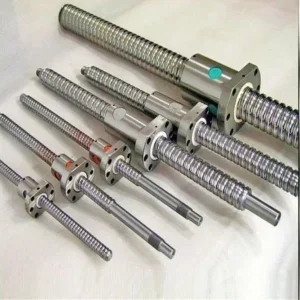
- Mechanical Inspection: Check and adjust axial backlash. Eliminate looseness in ball screws or belt drive systems. Ensure linear guide rails and bearings are clean and lubricated.
- Motor Calibration: Check the calibration (steps/mm settings) of stepper or servo motors and recalibrate if necessary.
- Temperature Changes: Thermal expansion of the material or machine components during long machining operations of large parts can cause dimensional errors. Try to maintain a stable ambient temperature.
- Tool Zeroing: Ensure the tool length sensor is working correctly and that the operator is performing manual zeroing operations accurately.
- Tool Breakage or Excessive Wear:
- Problem: Sudden tool breakage during machining or much faster wear than expected.
- Solution:
- Machining Parameters: Feed rate and depth of cut may be too high. Reduce these parameters. If spindle RPM is too low, chip evacuation becomes difficult, and the tool may break.
- Tool Selection: An unsuitable tool may be used for the material to be machined and the operation. The tool’s diameter, length, and number of cutting edges may be insufficient for the material.
- Material Properties: Unexpected hardness variations within the material, such as knots, metal particles, or density differences, can cause tool breakage.
- Tool Runout: If tool runout in the collet is excessive, it leads to unbalanced tool rotation and breakage. Ensure the collet and tool are clean and properly installed.
- Machine Errors or Alarm Conditions:
- Problem: Machine suddenly stops, error codes or alarm messages appear on the control panel.
- Solution:
- Error Code Analysis: Refer to the control unit’s user manual to understand the meaning of the error code. These typically arise due to limit switch triggering, motor drive errors, emergency stop button activation, or power supply issues.
- Cabling and Connections: Ensure all electrical cables, sensor connections, and motor cables are secure and properly connected. Loose connections can cause interruptions in electrical signals.
- Limit Switch Check: Ensure limit switches are not physically damaged, dirty, or misadjusted.
- Software and Firmware: Ensure the control software or machine firmware is up-to-date. Sometimes software bugs can cause unexpected shutdowns.
Expert Advice
The use of CNC technology in woodworking represents a revolutionary step, bridging traditional craftsmanship with the capabilities of the digital age. For the industrial automation sector, this not only accelerates production processes and reduces costs but also redefines market dynamics by offering an unprecedented level of design freedom and precision. CNC machines guarantee repeatability in mass production while also making the individual production of customized, complex, and highly artistic products economically viable. This transformation enhances the competitiveness of the woodworking industry and paves the way for new business models. However, to fully utilize the potential of this technology, simply investing in a machine is not enough. A comprehensive approach, including continuous operator training, mastery of CAD/CAM software, correct tool selection and maintenance, effective dust management, and strict safety protocols, is vital. Understanding the machine’s technical parameters, knowing the properties of the material being processed, and effectively utilizing software optimizations are key to quality and efficient production. Our field experience demonstrates that successful CNC integration requires not only hardware but also knowledge and operational excellence. The woodworking sector, by embracing these powerful tools offered by automation, will both preserve the legacy of traditional craftsmanship and adapt to the digital manufacturing standards of the future. As expert advice, businesses should prioritize enhancing operator competencies, investing in software integrations, and adopting a philosophy of continuous improvement, rather than solely focusing on machine acquisition. This way, a sustainable and innovative production ecosystem can be built, where the natural beauty of wood merges with digital precision.
FAQ
How do industrial CNC router machines work in woodworking?
CNC router machines use computer-generated G-code to control a high-speed spindle motor and various cutting bits. The design is created in CAD software, converted to toolpaths in CAM software, and then executed by the CNC machine's motion control system, often featuring servo drives and linear guide rails for precision.
What are the typical technical specifications of a woodworking CNC machine?
Key technical specifications include spindle power (3 kW – 12 kW), maximum feed rate (10 – 60 m/min), number of motion axes (3, 4, or 5), working area (e.g., 1300×2500 mm to 2000×4000 mm), positioning accuracy (±0.02 mm – ±0.05 mm), and repeatability (±0.01 mm – ±0.03 mm). Control systems vary, including Mach3, DSP, Syntec, Fanuc, and Siemens.
What are the most important factors for successful CNC woodworking operations?
Critical considerations include proper material selection and preparation, choosing the right cutting tools and maintaining them, secure workpiece clamping methods (like a vacuum table), effective dust and chip management, optimizing toolpaths with CAM software, and ensuring comprehensive operator training and strict safety protocols.
What are common problems encountered with woodworking CNC machines and how can they be resolved?
Common issues include poor surface quality (roughness, burn marks, chatter), dimensional errors, and tool breakage. Solutions involve checking tool sharpness, optimizing feed rates and spindle RPM, ensuring machine rigidity, verifying workpiece clamping, calibrating motors, and analyzing error codes from the motion control system.
What are the main benefits of integrating CNC technology into woodworking?
CNC technology offers unparalleled precision, repeatability, and the ability to create complex geometries not possible with manual methods. It significantly reduces production time, minimizes material waste through nesting, and allows for both mass production and highly customized, artistic pieces, enhancing overall efficiency and market competitiveness.