No products in the cart.
CNC Wood Door and Cabinet Door Machining Techniques (Nested Projects)
Contents
Introduction and Technical Analysis
One of the most significant turning points in industrial automation within the woodworking sector is the integration of CNC router technologies and, particularly, the adoption of the Nested Projects approach. This field guide and technical article focuses on an in-depth analysis of the Nested Projects methodology in CNC wood door and cabinet door production, its technical details, and the added value it brings to the industry. The woodworking industry has gained unprecedented efficiency, flexibility, and precision in its production processes with the transition from traditional methods to digitalization. Material optimization and production speed are critical for furniture, kitchen, bathroom, and interior door manufacturers. Nested Projects is a production strategy that directly addresses these needs, enabling the placement of parts of various dimensions and shapes onto a single board with minimal waste, facilitated by CAD/CAM software. This approach not only minimizes material waste but also accelerates production processes, reduces labor costs, and standardizes product quality. From an industrial automation perspective, Nested Projects plays a central role in increasing the overall efficiency of the production line, ensuring alignment with digital integration and Industry 4.0 principles. This technique offers significant advantages from inventory management to final product delivery, especially in mass production and high-volume custom manufacturing.
Principle of Operation and Technical Data
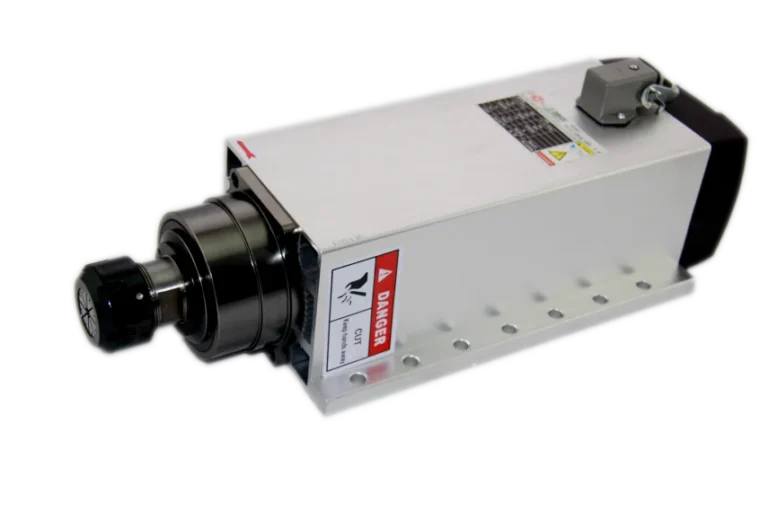
In CNC wood door and cabinet door machining techniques, Nested Projects is fundamentally a combination of an optimization algorithm and automatic toolpath generation processes. The workflow begins with the digital design of door and cabinet parts in CAD (Computer-Aided Design) software. During the design phase, the geometry, dimensions, machining tolerances, and necessary drilling or milling details of each part are determined with millimeter precision. These designs are then transferred to CAM (Computer-Aided Manufacturing) software. The Nesting module within the CAM software virtually arranges different door and cabinet parts (e.g., cabinet doors, drawer fronts, side panels for a kitchen cabinet) onto a single standard wood board (typically sheet materials like MDF, particleboard, plywood) in the most efficient manner. This arrangement involves positioning the parts as close as possible to each other, usually according to principles of minimum cutting lines or common cutting lines. The goal is to leave the least amount of empty space on the board, thereby reducing the material waste rate. This optimization covers not only straight cuts but also complex geometries and internal cutouts. Once the nesting process is complete, the CAM software generates the optimal toolpaths for each part. This includes determining which cutting tool (e.g., milling bit, drill bit) will be used, the cutting depth, feed rate, and spindle RPM. When generating toolpaths, the type of material, its thickness, and the desired surface quality are considered. For instance, a different cutting strategy might be applied for MDF than for solid wood. Finally, these toolpaths are converted into a language that the CNC machine understands, such as G-code or M-code (machine codes). These codes instruct the CNC router step-by-step on where and how to cut, drill, or profile the parts. The CNC machine interprets these codes and performs the cutting operation using high-precision servo drives and a powerful spindle motor. The machine’s vacuum table holds the sheet material securely during processing, preventing vibration and slippage, which enhances cutting quality. The Automatic Tool Changer (ATC) feature allows for the use of multiple cutting tools for different operations without manual intervention, reducing production time and increasing the level of automation. Nested Projects, particularly in door and cabinet production, enables the simultaneous production of different models or variations of the same model on a single sheet, maximizing production flexibility and efficiency.
| Parameter | Value/Description |
|---|---|
| Spindle Power | 9 kW – 12 kW (Air or Water Cooled) |
| Max Spindle RPM | 18,000 – 24,000 RPM |
| Max Traverse Speed | 60 – 100 m/min |
| Max Working Speed | 20 – 40 m/min (Depends on material and tooling) |
| Vacuum Pump Power/Flow Rate | 7.5 kW – 11 kW / 250 – 500 m³/h (Dry or Oil-type) |
| Tool Magazine Capacity (ATC) | 8 – 12 tools (Linear or Rotary Type) |
| Working Area (X-Y) | 1300×2500 mm – 2100×4200 mm (Varies by machine model) |
| Material Thickness Range | 3 mm – 50 mm (Up to 100 mm with special tooling and strategies) |
| Nesting Optimization Rate | 90% – 98% (Depends on software algorithm and part geometry) |
| Control System | Siemens, Fanuc, Osai, Syntec (Varies by manufacturer and model) |
On-Site Considerations
- Material Selection and Preparation: The quality, moisture content, and flatness of the wood board to be machined directly affect the cutting quality. Warped or deformed boards may not be securely fixed to the vacuum table, leading to cutting errors. Selecting cutting parameters (speed, feed rate) and tooling appropriate for the material type (MDF, particleboard, solid panel, etc.) is critical.
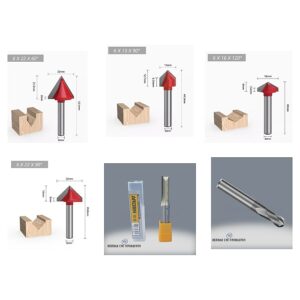
- Tool Management: Choosing the correct cutting tool is vital for the success of Nested Projects. The diameter, tip type (straight, conical, compression), cutting direction (up-cut, down-cut), material compatibility, and sharpness of the milling bit determine the final product’s surface quality and tool life. Dull tools can cause poor cutting quality, material burning, and tool breakage. Regular tool inspection, sharpening, or replacement schedules must be meticulously followed.
- Vacuum System Optimization: Securely and stably fixing the sheet to the vacuum table in Nested Projects is essential to prevent parts from shifting during cutting. The vacuum pump must have sufficient power, vacuum hoses and connections must be airtight, the vacuum table surface must be flat and clean, and unused areas must be properly sealed (with masking or sealing strips). Vacuum power becomes even more critical when cutting small parts.
- CAD/CAM Software and Nesting Algorithms: Having up-to-date and high-performance nesting software directly impacts the material waste rate. It is important for operators to be able to use the software effectively, perform manual nesting optimizations, and experiment with different strategies. Additionally, simulating the generated toolpaths allows for the early detection of potential collisions or errors.
- Machine Calibration and Maintenance: The CNC machine must be regularly calibrated and maintained to ensure precision and longevity. This includes checking the alignment of linear guide rails, the condition of servo drives, the accuracy of the spindle motor, and the overall structural integrity of the machine. Proper maintenance reduces downtime and ensures consistent production quality.
Nested Projects is a sophisticated yet highly effective method for optimizing the production of wood doors and cabinet doors. By leveraging advanced CAD/CAM software and precise CNC machinery, manufacturers can achieve significant improvements in material utilization, production speed, and overall product quality. This approach is fundamental for businesses aiming to stay competitive in the modern industrial landscape.
For more information on how Mermak CNC routers can enhance your production with Nested Projects, request a quote on WhatsApp today!