No products in the cart.
CNC Spindle Motor Repair and Bearing Replacement Guide

Contents
- CNC Spindle Motor Repair and Bearing Replacement: A Field Guide and Technical Article CNC router machines are indispensable components of industrial automation and modern manufacturing, having transformed production processes with high precision and efficiency. The heart of these machines, spindle motors, directly determine the speed, power, and accuracy of machining operations. The performance of spindle motors is closely related to the condition of their bearings. Under high speeds, heavy loads, and continuous operating conditions, bearings can wear out and fail over time. This leads to a decrease in production quality, increased machine downtime, and significant costs. This comprehensive field guide and technical article thoroughly addresses the repair processes of CNC spindle motors, with a particular focus on bearing replacement, for experts and technicians in the industrial automation sector. Our goal is to extend the lifespan of these critical components, optimize machine performance, and provide quick and accurate intervention in case of malfunctions. Working Principle and Technical Data
- On-Site Considerations
- Common Problems and Solutions
- Expert Advice
- FAQ
CNC Spindle Motor Repair and Bearing Replacement: A Field Guide and Technical Article
CNC router machines are indispensable components of industrial automation and modern manufacturing, having transformed production processes with high precision and efficiency. The heart of these machines, spindle motors, directly determine the speed, power, and accuracy of machining operations. The performance of spindle motors is closely related to the condition of their bearings. Under high speeds, heavy loads, and continuous operating conditions, bearings can wear out and fail over time. This leads to a decrease in production quality, increased machine downtime, and significant costs. This comprehensive field guide and technical article thoroughly addresses the repair processes of CNC spindle motors, with a particular focus on bearing replacement, for experts and technicians in the industrial automation sector. Our goal is to extend the lifespan of these critical components, optimize machine performance, and provide quick and accurate intervention in case of malfunctions.
Working Principle and Technical Data
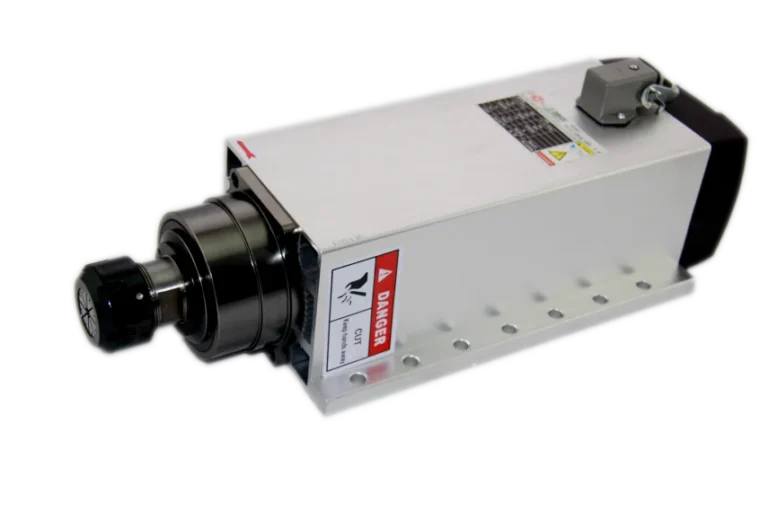
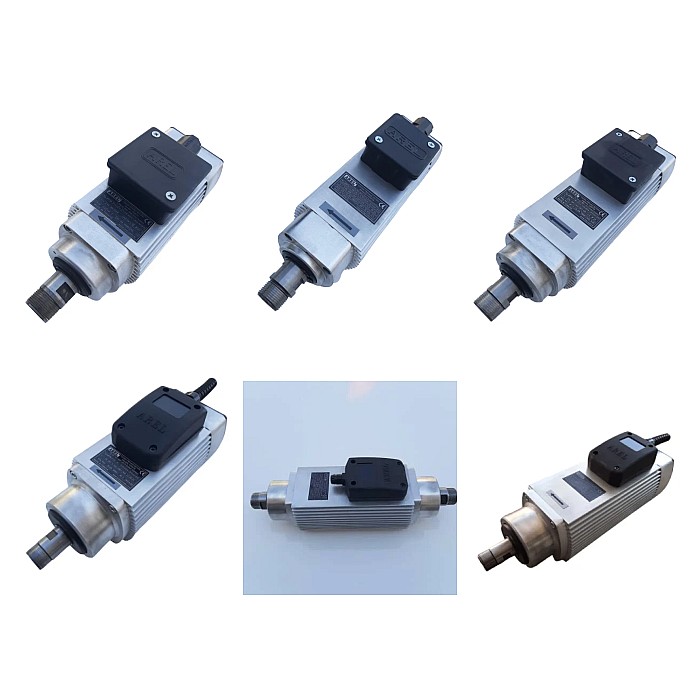
CNC spindle motors are typically high-frequency asynchronous or synchronous servo motors that provide the necessary power and speed for rotating the cutting tool. These motors consist of a stator and a rotor; current passing through the stator windings creates a magnetic field that rotates the rotor. The most critical mechanical components of the spindle motor are the bearings that support the rotor shaft and enable its rotational movement. In these motors, operating at high speeds (typically between 10,000 RPM and 80,000 RPM), low-friction, high-precision bearings capable of carrying radial and axial loads are used. Generally, angular contact ball bearings are preferred because they can carry both radial and axial loads simultaneously, and their rigidity can be increased with preload. In some high-performance applications, ceramic ball or hybrid bearings, which are more resistant to higher speeds and temperatures, are used. The lifespan of bearings depends on correct installation, appropriate lubrication (usually grease or oil-air lubrication systems), effective cooling, and operating conditions. Spindle motors are equipped with an internal cooling system (liquid or air), feedback sensors such as an encoder or resolver for precise speed and position control, and thermal sensors to prevent overheating. Each of these components has a direct impact on the overall performance and lifespan of the spindle. Bearing failure manifests as increased vibration, overheating, noisy operation, and loss of machining accuracy, and if not addressed in time, can lead to complete motor failure.
| Parameter | Value/Description |
|---|---|
| Motor Type | Asynchronous or Synchronous Servo Motor (Frequency controlled) |
| Bearing Type (Front) | Typically Precision Angular Contact Ball Bearings (e.g., 70xx Series, P4/ABEC7 or higher class) |
| Bearing Type (Rear) | Typically Precision Angular Contact Ball Bearings or Deep Groove Ball Bearings |
| Maximum Speed (RPM) | 10,000 – 80,000 RPM (Varies by motor model and bearing type) |
| Cooling System | Liquid Cooling (water/antifreeze), Air Cooling (fan-assisted), Oil-Air Cooling |
| Bearing Lubrication Method | Grease Lubrication (lifetime or periodic), Oil-Air Lubrication System |
| Torque Capacity | Must be checked according to manufacturer’s datasheet (in Nm) |
| Sensors | Encoder (speed/position), Thermistor (PT100/PT1000 – temperature), Vibration Sensor (in some models) |
| Shaft Runout | Typically between 1-5 microns (new and post-repair values) |
On-Site Considerations
- Safety Precautions and Occupational Health and Safety (OHS): Before any intervention, ensure that the machine’s electrical connection is cut off and that LOTO (Lockout/Tagout) procedures are fully implemented. High voltage, rotating parts, and heavy components pose serious injury risks. Necessary personal protective equipment (PPE) must be used: gloves, safety glasses, steel-toed shoes, etc.
- Documentation and Technical Manuals: Always refer to the detailed technical manuals, schematic drawings, parts lists, and assembly/disassembly procedures provided by the spindle motor manufacturer. Each spindle motor may have its unique disassembly sequence, torque values, and bearing installation techniques. These documents are critical for ordering the correct parts and ensuring an error-free repair process.
- Use of Special Tools and Equipment: Spindle motor repair requires specialized equipment beyond standard hand tools. These include precision bearing pullers (internal/external pullers), induction heaters or controlled ovens (for bearing installation), hydraulic presses, micrometers, dial indicators (for shaft runout control), torque wrenches, and special assembly fixtures. Incorrect tool usage can cause permanent damage to the bearings or shaft.
- Cleanliness and Controlled Environment: Spindle motors and bearings are extremely sensitive to even the smallest dust or particle. Repair operations should ideally be performed in an environment close to cleanroom conditions, free of dust, moisture, and with controlled temperature. Bearing packaging should not be opened until the moment of installation. Cleanliness is one of the most important factors directly affecting bearing life.
- Bearing Preload and Adjustment: Correct preload adjustment in angular contact ball bearings is vital for spindle rigidity, accuracy, and lifespan. Preload is usually applied with a specific torque value or by using distance shims. Incorrect preload can cause bearings to overheat, wear prematurely, or fail to provide sufficient rigidity. Manufacturer-specified preload values must be strictly adhered to.
- Inspection of Shaft and Housing Surfaces: After old bearings are removed, the bearing seating surfaces, tapers, and cylindricity of the shaft must be inspected with micron precision. If there are scratches, dents, wear, or corrosion on the surfaces, this can shorten the life of new bearings. If necessary, the shaft may need to be ground or replaced. Similarly, the bearing seats in the motor housing should also be cleaned and inspected.
- Lubrication System Check and Refill: If the spindle has an oil-air lubrication system, air filters, oil dosing units, and pipelines should be checked. For grease-lubricated systems, high-quality grease of the type and quantity recommended by the manufacturer must be applied using the correct method. Excessive or insufficient lubrication is a primary cause of bearing failures.

Common Problems and Solutions
A significant portion of the problems encountered in CNC spindle motors are directly or indirectly related to bearings. Here are some common issues and proposed solutions:
- Problem: Excessive Noise and Vibration.
Symptom: A sound different from normal (humming, hissing, squeaking) when the spindle is running, vibrations felt on the machine table or the workpiece.
Cause: Most common cause is worn, damaged, or dirty bearings. Incorrect bearing preload, shaft imbalance, or loose mounting can also be contributing factors.
Solution: Stop the spindle and perform a detailed acoustic and vibration analysis. Inspect the bearings and replace if necessary. Adjust bearing preload according to manufacturer specifications. Check the dynamic balance of the shaft and rebalance if necessary. Ensure all mounting bolts are tightened to the correct torque. - Problem: Overheating.
Symptom: Temperature increase above normal in the spindle motor housing, thermal sensor alarm.
Cause: Insufficient lubrication, excessive bearing preload, incorrect bearing installation, cooling system failure (clogged filter, low coolant level, faulty pump or fan), or electrical problems in motor windings.
Solution: Check the lubrication system, verify grease level or oil flow. Check and adjust bearing preload. Inspect the cooling system (liquid level, filters, pump, fan) and replace faulty components. Check motor windings with electrical tests. - Problem: Loss of Machining Accuracy and Shaft Runout.
Symptom: Poor surface quality on machined parts, dimensional deviations, reduced tool life. High runout values measured at the spindle nose or tool holder with a dial indicator.
Cause: Damaged or worn bearings, bent or damaged shaft, imbalance of the tool holder or the tool itself, incorrect bearing installation.
Solution: Replace the bearings. Check the straightness and runout of the shaft at micron level; if necessary, the shaft may need to be ground or replaced. Inspect, clean, or replace tool holders and tools. Ensure bearings are correctly installed and preload is adjusted. - Problem: Motor Failure to Operate or Low Performance.
Symptom: Spindle not rotating at all, failing to reach desired RPM, or stopping under load.
Cause: Complete locking of bearings, short circuit or open circuit in motor windings, encoder failure, drive (inverter) failure, thermal protection triggered due to cooling system failure.
Solution: Check electrical connections, motor windings (resistance, insulation test), and encoder signals. Manually rotate the bearings to check for free rotation. Disassemble the motor and inspect internal components (bearings, rotor, stator). Check or test the drive. In case of bearing lock-up, complete bearing replacement and shaft inspection are essential.
Expert Advice
The repair of CNC spindle motors, especially bearing replacement, is a critical, high-precision maintenance activity in industrial automation facilities. This process not only avoids the costly purchase of a new spindle but also directly affects production continuity and quality. Successful repair requires expertise, correct equipment, meticulous work, and strict adherence to manufacturer specifications. Our field experience shows that a large proportion of bearing failures are caused by incorrect installation, insufficient or improper lubrication, unsuitable bearing selection, or environmental factors (dust, moisture, excessive temperature). Therefore, establishing preventive maintenance programs, regular vibration analysis, temperature monitoring, and lubrication checks are vital for early diagnosis of potential failures and prevention of costly downtime. Furthermore, the use of original or equivalent quality, certified bearings in spare parts selection is indispensable for long-lasting and trouble-free operation. Cheap or low-quality bearings can fail again in a short period, leading to greater costs and production losses. As experts and technicians operating in the industrial automation sector, we hope that the information provided in this guide will serve as a reference for spindle motor maintenance and repair processes, contributing to your machines always operating at peak performance. It should be remembered that any intervention on precision machinery must be carried out by experienced personnel with the utmost care.
FAQ
How do I know when to replace the bearings in my CNC spindle motor?
CNC spindle motor bearings typically need replacement when symptoms like excessive noise, vibration, overheating, or loss of machining accuracy occur. Regular preventive maintenance, including vibration analysis and temperature monitoring, can help identify issues early.
What are the most critical steps for a successful CNC spindle bearing replacement?
Key considerations include ensuring proper safety procedures (LOTO), consulting manufacturer's technical manuals, using specialized tools for disassembly and assembly, maintaining a clean and controlled environment, and precisely adjusting bearing preload according to specifications.
My CNC spindle motor is overheating. What could be the cause and how can I fix it?
Overheating can be caused by insufficient lubrication, excessive bearing preload, incorrect bearing installation, or a faulty cooling system. Check the lubrication system, adjust preload, inspect the cooling system components (filters, pump, fan), and test motor windings.
Why is my CNC machine losing machining accuracy, and how can the spindle motor be related?
Loss of machining accuracy often stems from damaged or worn bearings, a bent shaft, or an unbalanced tool holder/tool. Replace bearings, check shaft straightness and runout, and ensure tool holders and tools are clean and balanced.
Is it important to use specific types of bearings for CNC spindle motor repair?
Always use original or certified equivalent quality bearings. Cheap or uncertified bearings may lead to premature failure, increased downtime, and higher overall costs due to their inability to withstand the high speeds and loads of industrial CNC applications.